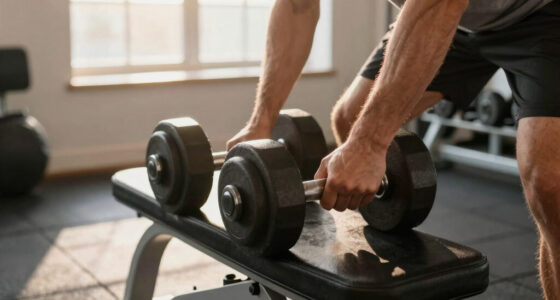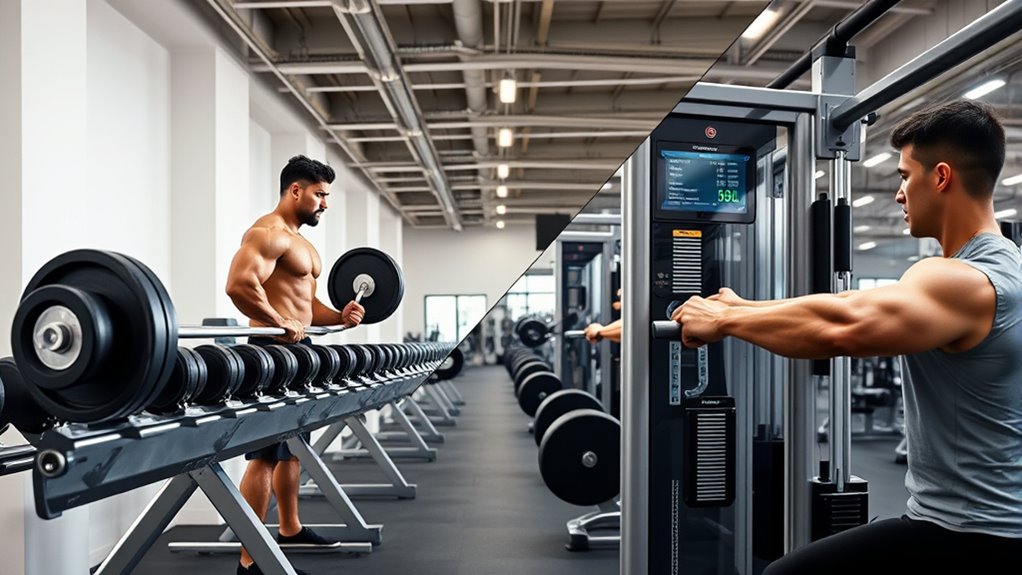

When choosing between free weights and machines for strength, consider that free weights engage more muscles and challenge your stabilizers, promoting functional strength and better coordination. Machines, on the other hand, offer safer, controlled movements that can be easier for beginners and for targeting specific muscles. Both tools have their benefits, so understanding their differences helps you tailor your workouts more effectively—if you keep exploring, you’ll uncover which option suits your goals best.

Get workout gear delivered free with Prime
- Fast, free delivery on millions of items
- Prime Video, Amazon Music and more included
- Member-only deals all year
Key Takeaways
- Free weights activate more muscles, including stabilizers, for comprehensive strength development.
- Machines provide controlled, targeted movements, reducing injury risk and aiding beginners.
- Free weights enhance core engagement and natural movement patterns, boosting functional strength.
- Machines offer adjustable settings for precise progression and safer training environments.
- Combining both methods optimizes strength gains and balances muscle activation and safety.
As an affiliate, we earn on qualifying purchases.
Advantages of Free Weights for Building Strength
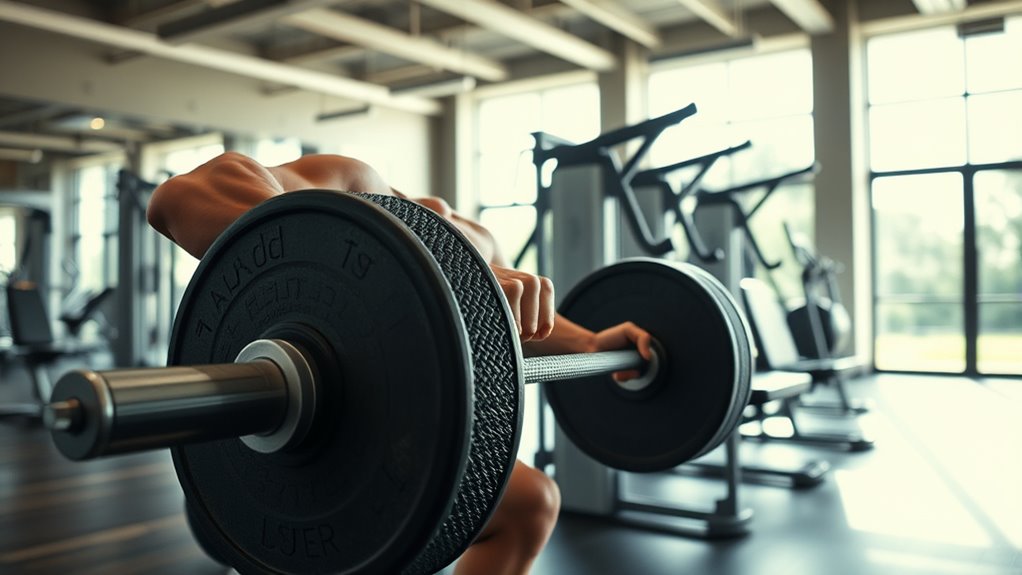
Free weights are highly effective for building strength because they engage multiple muscle groups simultaneously, requiring your stabilizer muscles to work harder. This is especially true during compound movements like squats, deadlifts, and bench presses, which activate multiple joints and muscles at once. As you perform these exercises, your stabilizer muscles kick in to maintain balance and proper form, enhancing overall muscular coordination. Unlike machines, free weights force you to control the movement through a greater range of motion, challenging your core and smaller muscles alongside your primary ones. This integrated effort not only builds strength more effectively but also improves functional fitness, making everyday tasks easier and reducing injury risk. Additionally, connected training with free weights can enhance neural adaptations, leading to faster strength gains. In short, free weights promote all-encompassing muscle engagement that’s essential for strength development. Incorporating muscle engagement through free weights can lead to more balanced and resilient musculature.
As an affiliate, we earn on qualifying purchases.
Benefits of Machines in Strength Training
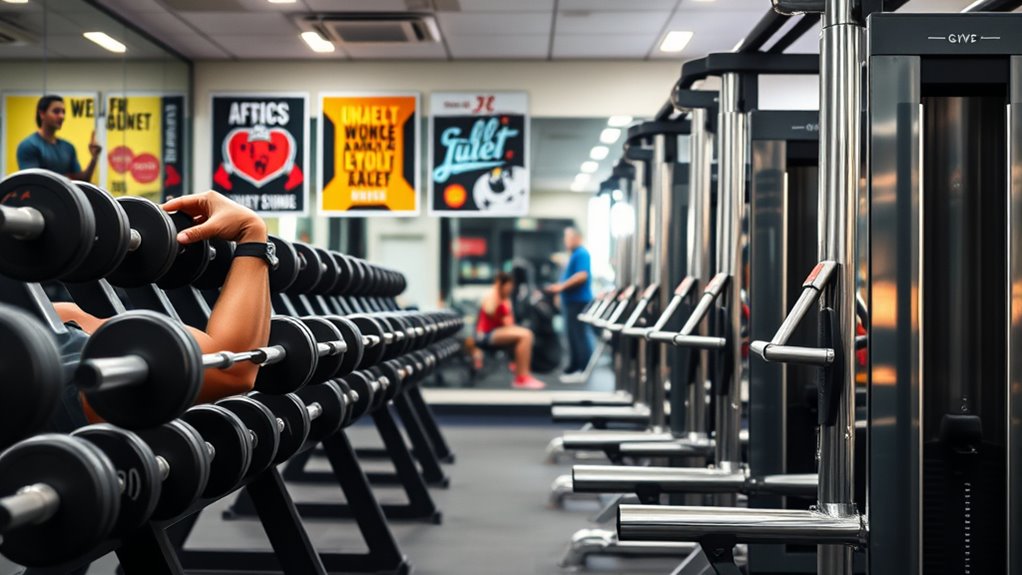
Machines offer a safe and controlled environment for strength training, making them ideal for beginners or those recovering from injury. They provide excellent machine versatility, allowing you to target specific muscle groups with minimal risk of improper form. This setup makes workout customization easier because you can adjust weights, seats, and settings to fit your body and goals precisely. Unlike free weights, machines guide your movements, reducing the chance of injury while building strength. They’re great for isolating muscles, helping you focus on specific areas that need improvement. Plus, machines enable you to quickly switch exercises and modify intensity, giving you flexibility in your training routine. Overall, they make strength training accessible, safe, and adaptable to your individual needs. Proper form is easier to maintain on machines, which further decreases the risk of injury.
As an affiliate, we earn on qualifying purchases.
Comparing Muscle Activation and Engagement
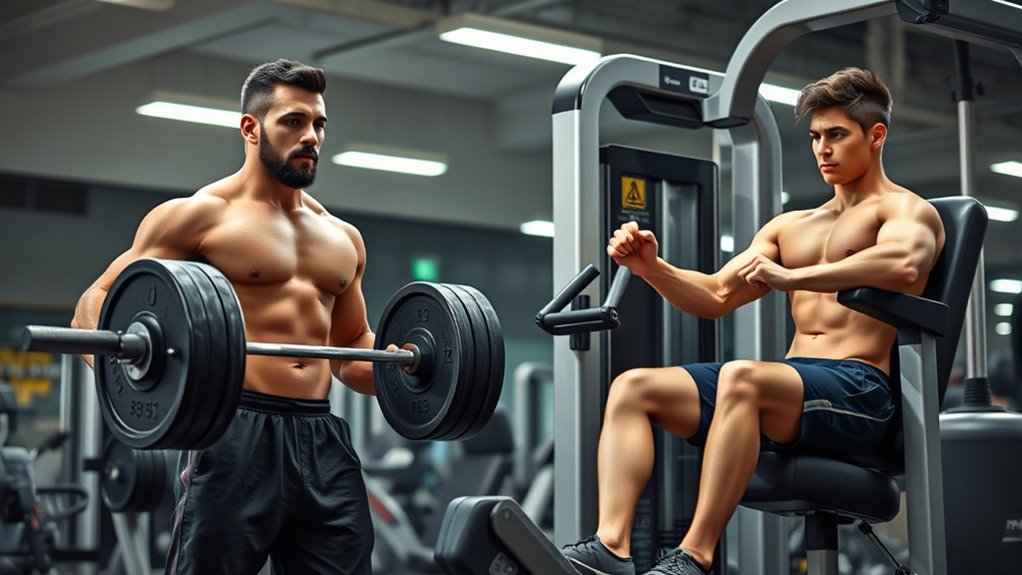
While machines excel at isolating specific muscles and providing a controlled environment, they may not always engage your muscles as dynamically as free weights do. With free weights, you activate more muscles to maintain balance, core stabilization, and proper form. This results in a more exhaustive workout. Consider these points:
Free weights engage more muscles and promote better stability than machines.
- Free weights require greater core stabilization, engaging your abs and lower back.
- They allow a natural range of motion, adapting to your body’s movements.
- Muscle activation tends to be more balanced, involving stabilizers and synergists.
- Connected fitness technology can enhance your training by providing real-time feedback and tracking progress, making workouts more effective and engaging.
In contrast, machines often restrict movement paths, limiting engagement of stabilizing muscles and reducing overall muscle activation. This makes free weights better for functional strength and engaging more muscle groups simultaneously.
muscle activation resistance bands
As an affiliate, we earn on qualifying purchases.
As an affiliate, we earn on qualifying purchases.
Safety and Accessibility Considerations
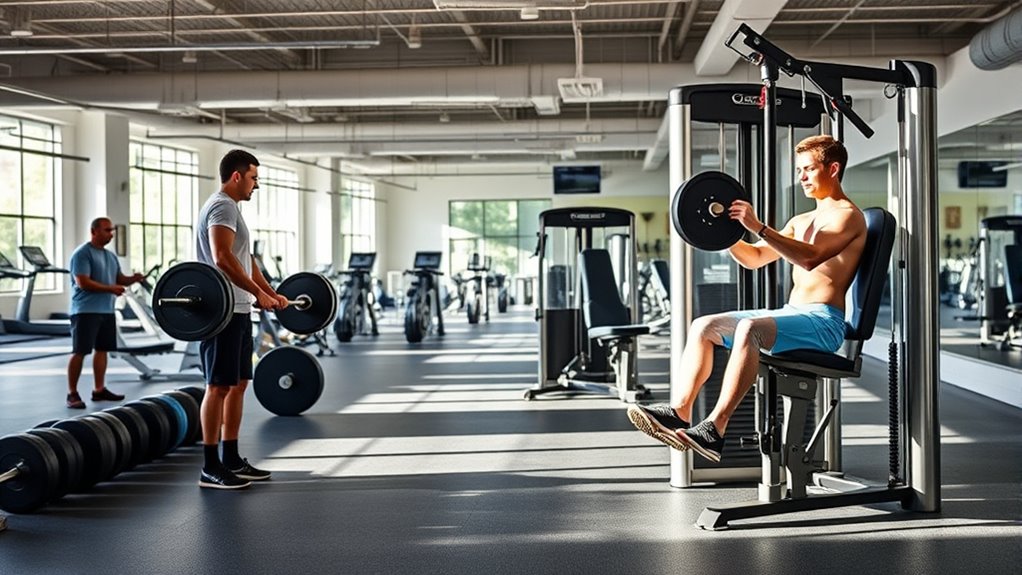
When considering safety and accessibility, free weights require proper technique and awareness to prevent injuries, especially for beginners. Balance concerns are critical; without proper control, you risk losing stability or dropping weights, leading to injury risks. Free weights demand more coordination, so if your form isn’t correct, you could strain muscles or joints. Additionally, proper technique is essential for both safety and effectiveness during free weight exercises. Using correct posture can significantly reduce the likelihood of injury and enhance workout efficiency. Incorporating training guidance can further improve safety and help you develop proper form from the start. Proper progression is vital to avoid overexertion and injury, especially when starting new routines. Machines, on the other hand, often offer guided movements that reduce injury risks and help maintain proper form. Accessibility can also be a factor—free weights may be harder to use without supervision if you’re unfamiliar, while machines tend to be more user-friendly for beginners. Furthermore, modern technology can be incorporated into workout routines to enhance safety and form monitoring. However, both options require attention to safety protocols. Prioritize proper technique and gradual progression to minimize injury risks, regardless of whether you choose free weights or machines.
Choosing the Right Approach for Your Goals
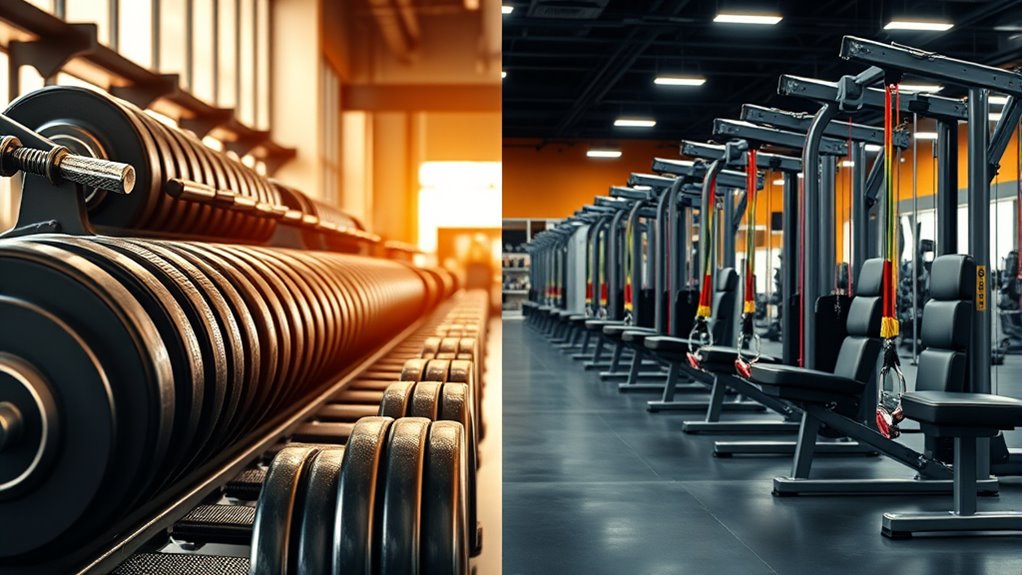
Choosing the right approach depends largely on your specific fitness goals. To maximize progress, focus on progression planning—gradually increasing weight or reps to build strength. If your aim is overall fitness or muscle balance, incorporating workout variety helps prevent plateaus and keeps you motivated. Consider these key points:
- Define your goals clearly—whether building strength, endurance, or muscle tone.
- Plan your workouts to include both free weights and machines, balancing progression and variety. Incorporating home gym equipment can provide additional flexibility for your routine.
- Adjust your approach based on your experience level and any safety or accessibility needs.
- Remember that understanding the benefits of each equipment type can help tailor your workout plan effectively for optimal results.
Frequently Asked Questions
Which Type of Equipment Offers Better Long-Term Strength Gains?
You’ll find that free weights offer better long-term strength gains because they maximize muscle activation and improve workout flexibility. Free weights force you to stabilize muscles, leading to more all-encompassing strength development over time. Machines may help isolate muscles initially, but they limit movement and engagement. For sustained progress, incorporating free weights allows you to adapt and challenge your muscles in various ways, promoting stronger, more functional gains in the long run.
How Do Free Weights and Machines Impact Injury Risk Differently?
It’s no coincidence that free weights often pose a higher injury risk compared to machines, especially if you don’t focus on injury prevention. Free weights challenge your joint stability more, which can lead to strains or sprains if you’re not careful. Machines offer guided movement, reducing joint stress and helping you maintain proper form. To stay safe, prioritize injury prevention and listen to your body during workouts.
Can Beginners Effectively Use Free Weights Without Supervision?
Yes, beginners can effectively use free weights without supervision if they focus on proper form and start with lighter weights. Building beginner confidence is key, so take your time to learn correct techniques and avoid rushing. Watching tutorials, asking for guidance, and practicing in a safe environment help prevent injuries. Remember, gradual progress and prioritizing form over heavy weights set a strong foundation for future strength gains.
Do Free Weights or Machines Provide More Functional Strength?
Imagine trying to balance a spinning plate; free weights are like that, demanding your core and stabilizers, making them ideal for functional strength. They mimic real-life movements, enhancing balance training and working multiple muscles at once. Machines, on the other hand, focus on muscle isolation but don’t challenge your stability as much. So, if you want strength that translates outside the gym, free weights are the better choice.
How Does Workout Variety Influence Strength Development With Each?
Workout variety keeps your muscles guessing, which boosts strength development with both free weights and machines. Mixing up exercises encourages progression strategies, helping you break plateaus and stay motivated. Consistent variation prevents adaptation, making your training more effective over time. By incorporating different movements, you target muscles from various angles, enhancing overall strength. Whether you prefer free weights or machines, variety is key to maximizing gains and maintaining steady progress.
Conclusion
Ultimately, whether you choose free weights or machines, remember the story of Hercules forging his strength through raw, unyielding effort. Both tools can help you build power, but it’s your dedication and intention that shape your journey. Like a sculptor chiseling marble into art, you craft your strength piece by piece. So, pick what motivates you most, and let your progress be a declaration to your perseverance—your own myth in the making.
Columbus Day / Indigenous Peoples' Day Picks
long weekend sales
As an affiliate, we earn on qualifying purchases.