To increase your bench press without a spotter, focus on mastering proper technique, such as engaging your core, planting your feet firmly, and using correct grip variations. Use safety equipment like power racks with safety bars set below chest level, and develop a consistent setup routine. Incorporate accessory exercises and keep your environment focused and distraction-free. With these strategies, you can lift more safely and effectively. Continue exploring these tips to release your full strength potential.

Get workout gear delivered free — and shop member deals
- Fast, free delivery on millions of items
- Access to Prime Big Deal Days deals on October 6–7
- Prime Video, Amazon Music and more included
Key Takeaways
- Use a power rack with safety bars set just below chest level to catch the bar if you fail.
- Incorporate accessory exercises like dumbbell presses and push-ups to build pressing strength safely.
- Practice proper breathing and core engagement to enhance stability and control during lifts.
- Gradually increase weight while maintaining proper form to improve strength without risking injury.
- Develop a consistent setup routine to ensure proper positioning and prevent accidents during lifts.
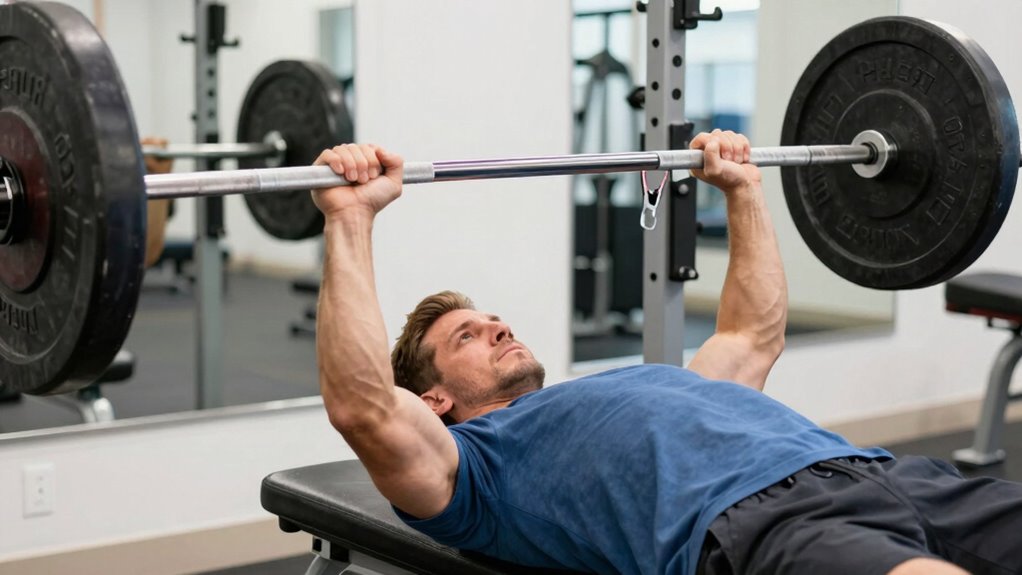
If you want to boost your bench press, focusing on simple, effective strategies can make a big difference. One of the most fundamental yet often overlooked aspects is proper breathing. When you lift, remember to breathe in deeply as you lower the bar, filling your lungs to create a solid base of stability. Exhale forcefully as you press the weight up, engaging your core and maintaining tightness throughout the movement. Proper breathing not only helps you generate more power but also keeps your muscles oxygenated and reduces the risk of dizziness or losing control during a lift. Practice this controlled breathing pattern consistently, and you’ll notice increased strength and endurance over time.
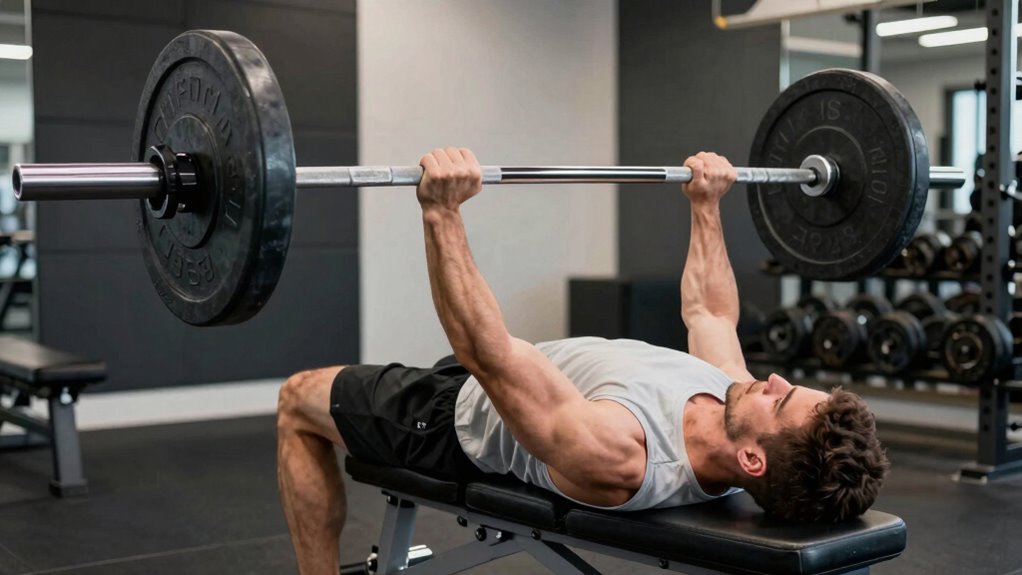
Another key element is experimenting with grip variations. Your grip can significantly influence your bench press performance and safety, especially when you’re training without a spotter. A standard grip, with your hands shoulder-width apart, is common, but trying wider or narrower grips can activate different muscle groups and help you find the most comfortable position. A wider grip emphasizes the chest muscles, potentially allowing for a more powerful press, but it also places more stress on your shoulders. Conversely, a narrower grip shifts the emphasis to your triceps and can help you lift heavier weights with less shoulder strain. When you switch grips, do so gradually to avoid injury and ensure you’re maintaining proper form.
Without a spotter, safety becomes even more important, so consider using grip variations that you can control confidently. You might also want to incorporate accessory movements like dumbbell presses or push-ups to build supporting muscles, improving your overall stability. Using a power rack with safety bars is another smart move; set the bars at a height slightly below your chest so you can rerack the weight if you hit failure mid-lift. This way, you don’t have to rely on a spotter to bail you out, giving you peace of mind to push your limits safely. Additionally, paying attention to your training environment and eliminating potential distractions can help you stay focused and lift more effectively. Creating a dedicated workout space can also enhance your focus and consistency, leading to better progress over time. Incorporating visual cues, such as markings on the bar or mirrors, can further reinforce proper form and technique.
Finally, focus on your setup. Plant your feet firmly on the ground, keep your shoulder blades pinched together, and ensure your grip is secure before unracking. These details, combined with proper breathing and grip variations, form a strong foundation for increasing your bench press safely on your own. Additionally, understanding the importance of contrast ratio in your training environment can help optimize your focus and performance by controlling lighting and minimizing distractions. Developing a consistent training routine and paying close attention to your body’s signals will help you track your progress and avoid overtraining. Stick with consistent practice, stay mindful of your body’s signals, and you’ll find yourself progressing steadily without the need for a spotter.
As an affiliate, we earn on qualifying purchases.
Frequently Asked Questions
Can I Safely Bench Press Alone at Home?
Yes, you can safely bench press alone at home if you follow safety precautions and optimize your technique. Make sure to use a spotter arm or safety rack to catch the bar if you struggle. Focus on proper form and controlled movements to prevent injuries. Start with lighter weights to build confidence and strength gradually. Always listen to your body, and avoid pushing beyond your limits without assistance.
What Equipment Can Help Lift Heavier Safely?
Think of safety equipment and lifting aids as your loyal guardians in the gym, ready to catch you if you stumble. Using safety bars, spotter arms, or a power rack creates a sturdy fortress around your bench press, allowing you to push heavier confidently. Dumbbell collars, wrist wraps, and lifting belts support your grip and core, turning a risky lift into a safe challenge. These tools transform your workout into a controlled, powerful journey upward.
How Do I Avoid Injuries While Lifting Alone?
To avoid injuries when lifting alone, use spotter alternatives like safety bars or a power rack, which provide support if you can’t complete a lift. Always warm up properly, focus on proper form, and lift within your limits. Listen to your body and don’t push through pain. Injury prevention relies on these precautions, ensuring you stay safe and avoid accidents while training solo.
What Are Alternative Exercises to Improve Bench Press?
Think of alternative exercises to boost your bench press like different tools in your workout toolbox. Focus on incline dumbbell presses, push-ups, and dips to target similar muscles. Incorporate progressive overload by gradually increasing reps or weight, and try grip variations—like wide or close grip—to challenge muscles differently. These methods help build strength safely, especially when you’re training alone, making your bench press progress steady and effective.
How Often Should I Increase Weight Safely?
You should increase weight based on your progression strategies, typically adding small, safe weight increments—around 2.5% to 5%—every one to two weeks. Listen to your body and guarantee proper form before progressing. If you experience pain or fatigue, hold off on increasing weight. Consistent, gradual increases help prevent injury and build strength steadily. Prioritize safety over speed to maximize gains without risking harm.
As an affiliate, we earn on qualifying purchases.
Conclusion
Even if you don’t have a spotter, you can still push your limits and grow stronger. It’s like lifting weights solo in a gym—challenging but rewarding. Just as a ship navigates rough waters to reach its destination, your dedication and smart techniques will help you surpass your bench press goals. So, stay disciplined, prioritize safety, and remember: your strength grows not just in the gym, but in your perseverance.
As an affiliate, we earn on qualifying purchases.
As an affiliate, we earn on qualifying purchases.
Fall Picks
fall essentials
As an affiliate, we earn on qualifying purchases.