To get the best results and stay safe, avoid skipping warm-up and cool-down routines, as they prepare your muscles and prevent soreness. Use proper form and don’t lift weights that are too heavy for your current strength. Incorporate gradual progress, rest days, and recovery. Set clear goals and track your progress to stay motivated. Also, don’t overlook your nutrition and hydration — mastering these tips will help you achieve your fitness goals efficiently. Keep going to learn more.

Get workout gear delivered free with Prime
- Fast, free delivery on millions of items
- Prime Video, Amazon Music and more included
- Member-only deals all year
Key Takeaways
- Incorporate rest days to allow muscle recovery and prevent overuse injuries.
- Always warm up properly and focus on correct technique to avoid strains and enhance efficiency.
- Use appropriate weights and progress gradually to prevent injury and ensure continuous strength gains.
- Set clear goals, track progress, and maintain proper nutrition for motivation and optimal results.
- Follow a structured workout plan with consistency and proper recovery to ensure sustainable long-term progress.
Skipping Warm-Up and Cool-Down Routines

Skipping warm-up and cool-down routines can considerably increase your risk of injury and reduce your overall workout effectiveness. Proper warm-up prepares your muscles through dynamic stretching, which helps increase blood flow and promotes muscle activation. This process primes your body for heavier lifts, reducing the chance of strains or pulls. Skipping this step can lead to stiff muscles that don’t respond well to stress. Additionally, implementing smart workout routines that include proper warm-up and cool-down can optimize your performance and recovery. Likewise, cooling down helps your muscles recover and prevents soreness. It gradually lowers your heart rate and stretches tight muscles, aiding in muscle activation and flexibility. Without these routines, you miss out on essential preparation and recovery, leaving your body vulnerable to injury and hampering your progress. Incorporating dynamic stretching and gentle cool-down exercises can help prevent muscle strain and keep your workouts safe and effective. Paying attention to post-exercise recovery is also vital for maintaining long-term strength and preventing injury. Furthermore, engaging in mindful stretching during cool-down can enhance flexibility and promote relaxation. Recognizing the importance of proper hydration during these routines is also essential for optimal muscle function and recovery.
Using Improper Form and Technique

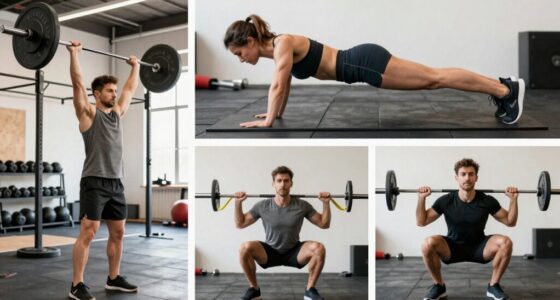
Using improper form and technique can undermine your efforts and increase your risk of injury. To lift safely, focus on maintaining a proper grip; a secure grip ensures control and reduces strain on your joints. Pay attention to your breathing techniques—inhale during the easier part of the movement and exhale as you lift or exert force. Avoid rushing through sets or using momentum, which can cause instability and poor form. Keep your back straight and engage your core to support your spine. Use a controlled motion rather than jerking or bouncing weights. Proper form isn’t just about safety; it maximizes effectiveness, helping you build strength more efficiently. Always prioritize technique over heavier weights to prevent setbacks and keep your workouts safe at home. Incorporating energy-efficient equipment can also enhance your workout safety and sustainability. Developing an awareness of your body’s positioning is essential for preventing muscle strain and ensuring you perform each movement correctly. Additionally, understanding paint sprayer maintenance principles, like proper oil use and filtration, can help maintain your equipment’s performance and safety. Proper technique and workout safety measures go hand-in-hand with effective training, especially when exercising independently. Furthermore, paying attention to the contrast ratio of your home entertainment setup can enhance your visual experience, making your workouts and relaxation time more enjoyable.
Lifting Weights Too Heavy Too Soon

Jumping into heavy weights too quickly can lead to injuries and hinder your progress. To avoid this, focus on proper progression planning, gradually increasing the weight as your strength improves. Proper weight selection is essential; choosing weights that are too heavy can compromise your form and increase the risk of strains or tears. Instead, start with manageable weights that allow you to perform exercises with control and good technique. As you build strength and confidence, slowly add more weight in small increments. Rushing this process can set back your progress and cause setbacks. Patience and careful progression planning help you develop strength safely and effectively, ensuring you avoid unnecessary injuries and achieve consistent gains over time. Additionally, paying attention to body piercing health and safety can prevent discomfort and complications that might interfere with your workout routine. Recognizing the importance of proper form when lifting weights can further reduce injury risk and improve overall effectiveness. Incorporating progressive overload ensures steady improvements while minimizing injury risk. Being aware of training volume and managing it properly can also help prevent overtraining and injuries.
Neglecting to Progressively Overload

If you don’t challenge your muscles gradually, your progress stalls. Tracking your workouts helps you see when it’s time to increase weight or reps. Without this, you miss out on the essential gains that come from consistent overload. Incorporating progressive overload principles ensures continuous improvement and helps prevent plateaus in your training. Paying attention to training intensity can also help you determine when to push harder or ease up, optimizing your results. Additionally, understanding the importance of muscle recovery can prevent overtraining and enhance overall progress. Recognizing the significance of net worth growth can motivate you to stay committed to your fitness journey and financial goals.
Progressive Overload Essentials
Neglecting to progressively overload your muscles is a common mistake that can stall your strength gains and overall progress. To effectively apply progressive overload, you need to focus on increasing training intensity and adjusting workout frequency. Here are four essentials to keep in mind:
- Gradually increase resistance or weight to challenge your muscles.
- Adjust workout frequency to allow sufficient recovery and growth.
- Vary your exercises to target muscles differently.
- Track your progress consistently to identify when to push harder.
Tracking Your Progress
Tracking your progress is essential to guarantee you’re consistently challenging your muscles and making gains. Without it, you risk stagnation and losing motivation. Incorporate exercise variety and goal setting to assure continuous improvement. Regularly record your workouts, noting reps, sets, and weights. This helps you identify when to increase intensity or change exercises for better results. Use a simple table like this:
| Week | Progress Notes |
|---|---|
| 1 | Started with basic squats |
| 2 | Increased weight on deadlifts |
| 3 | Added variety with lunges |
| 4 | Improved reps on bench press |
| 5 | Achieved personal record |
This visual helps you stay accountable and motivated, ensuring you avoid neglecting progressive overload through goal setting and exercise variety.
Ignoring Rest Days and Recovery

Skipping rest days might seem like a way to accelerate progress, but it can actually hinder your gains and increase your risk of injury. Rest is essential for muscle soreness recovery and injury prevention. Without proper recovery, your muscles don’t repair fully, leading to fatigue and overtraining. Additionally, trusted resources emphasize the importance of scheduled rest to maintain consistent progress. Consider these points: 1. Rest days allow muscles to rebuild stronger. 2. They prevent overuse injuries caused by continuous strain. 3. Adequate recovery boosts your performance and progress. 4. Ignoring rest can lead to burnout and setbacks. Incorporating proper recovery techniques and understanding muscle repair science ensures your training remains effective and sustainable. Recognizing the signs of overtraining can help you tailor your rest days more effectively to avoid setbacks and optimize results. Moreover, understanding the benefits of rest can motivate you to prioritize recovery as part of your overall training plan.
Not Setting Clear Goals and Tracking Progress

Without clear goals, it’s easy to lose focus and motivation in your home weightlifting routine. Goal setting helps you define what you want to achieve, whether it’s increasing strength, building muscle, or improving endurance. Without specific targets, you might find yourself stuck or losing interest. Progress tracking is equally essential; it allows you to see how far you’ve come and adjust your plan accordingly. Keep a workout journal or use apps to monitor weights, reps, and sets. This accountability keeps you motivated and ensures you’re moving in the right direction. Setting clear goals and tracking your progress prevents stagnation and helps you stay committed to your fitness journey at home. Incorporating proper form and technique is also crucial to avoid injuries and maximize results.
Overlooking the Importance of Nutrition and Hydration

Have you considered how much nutrition and hydration influence your weightlifting results? Proper meal planning ensures your body gets the energy and nutrients needed for recovery and strength. Staying hydrated prevents fatigue and muscle cramps, keeping you consistent. To optimize your routine, focus on these four points:
Proper nutrition and hydration are key to maximizing your weightlifting performance and recovery.
- Prioritize balanced meals with protein, carbs, and healthy fats.
- Choose supplements wisely—like protein powders or electrolytes—to support your goals.
- Drink water regularly, especially before, during, and after workouts.
- Avoid neglecting hydration, which can impair performance and recovery.
Neglecting nutrition and hydration hampers progress, no matter how diligent your workouts are. Paying attention to these elements amplifies your gains and helps you avoid setbacks.
Frequently Asked Questions
How Can I Prevent Injuries During Home Weightlifting?
To prevent injuries during home weightlifting, focus on proper form at all times. Start with lighter weights to master the technique before increasing intensity. Warm up thoroughly and listen to your body to avoid overexertion. Use a mirror if possible to check your posture and guarantee correct movements. Incorporating injury prevention strategies like proper form helps keep you safe and ensures effective workouts.
What Equipment Is Essential for Safe Home Weight Training?
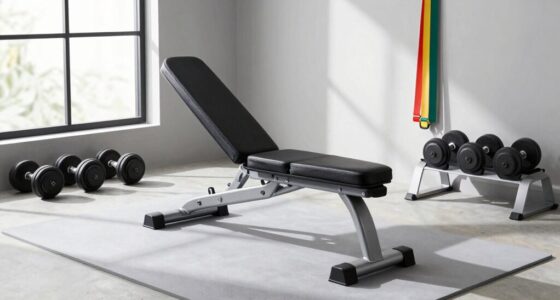
You might think you need fancy gear, but basic equipment suffices for safe home weight training. To guarantee proper grip and avoid accidents, invest in adjustable dumbbells, a sturdy bench, and resistance bands. Regularly maintain your equipment by cleaning and checking for wear. With these essentials, you stay safe and get the most out of your workouts, even without a gym membership. Proper gear and maintenance make all the difference.
How Do I Choose the Right Weight for My Level?
To choose the right weight for your level, start with a manageable load that allows you to maintain proper form. As you become more comfortable, gradually increase the weight using progressive overload principles, challenging your muscles without risking injury. Pay attention to how your body feels during each set; if you struggle to complete reps with proper form, it’s time to move to a lighter weight.
Can I Do Weight Training Without a Spotter?
You can definitely do weight training without a spotter, but safety precautions are essential. While a spotter isn’t always necessary for lighter weights or exercises like bodyweight moves, for heavy lifts, it’s wise to have someone nearby or use safety equipment like power racks. This helps prevent injuries and guarantees your workout remains safe. Always listen to your body, and don’t push beyond your limits without proper support.
How Often Should I Change My Workout Routine?
You should change your workout routine every 6 to 8 weeks to keep progressing and prevent plateaus. Incorporate progression planning by gradually increasing weights or reps, and add workout variety to target different muscle groups. This approach keeps your muscles challenged and engaged, helping you avoid stagnation. Listen to your body, and if you notice a slowdown in gains or boredom, it’s time to update your routine.
Conclusion
So, next time you’re lifting weights at home, remember these pitfalls—because who wouldn’t want to turn a productive workout into a frustrating injury or plateau? Skipping warm-ups, lifting too heavy, or ignoring recovery might seem tempting, but ironically, they’re the fastest way to stall your progress. Stay smart, listen to your body, and avoid these mistakes—after all, the only thing worse than lifting wrong is lifting wrong and not getting stronger.
Halloween Picks
halloween
As an affiliate, we earn on qualifying purchases.