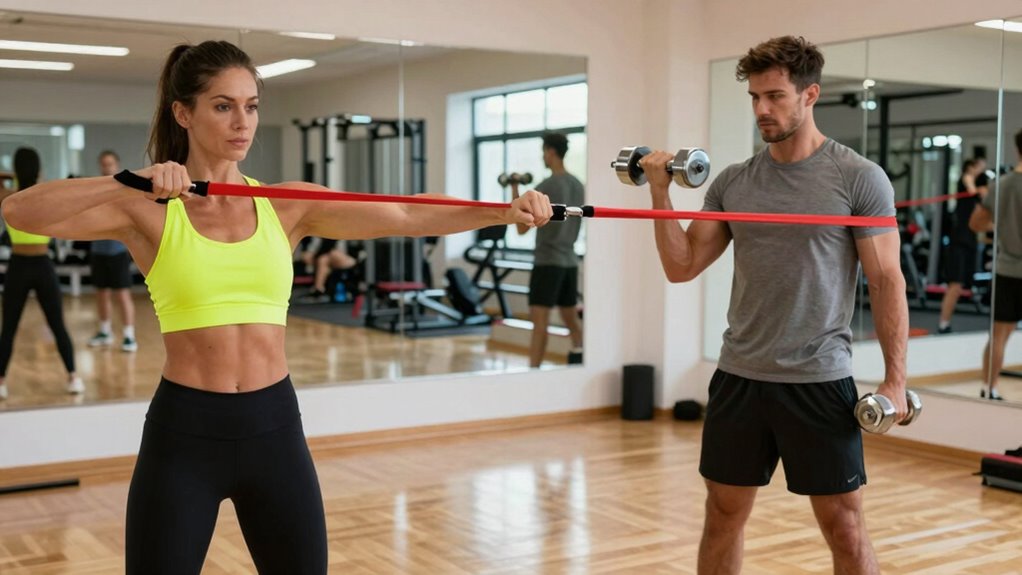

Training with resistance bands helps you engage stabilizer muscles, offers controlled resistance, and is gentler on joints, making it great for injury prevention and rehab. Free weights allow you to lift heavier, mimic real-life movements, and build maximum strength and hypertrophy. Both add value depending on your goals—resistance bands improve endurance and flexibility, while free weights boost overall strength. Keep exploring how to use each tool effectively; you’ll discover which best suits your fitness journey.
Key Takeaways
- Resistance bands provide constant tension and engage stabilizer muscles, enhancing muscle activation and endurance.
- Free weights allow for a wider range of motion and are more effective for building maximum strength and hypertrophy.
- Resistance bands are gentle on joints, reducing injury risk, while proper technique is essential for safe free weight training.
- Bands are highly portable and versatile for targeted exercises; free weights are less portable but better for heavy lifting.
- Both methods improve functional strength when used correctly, but free weights require more control to prevent injury.
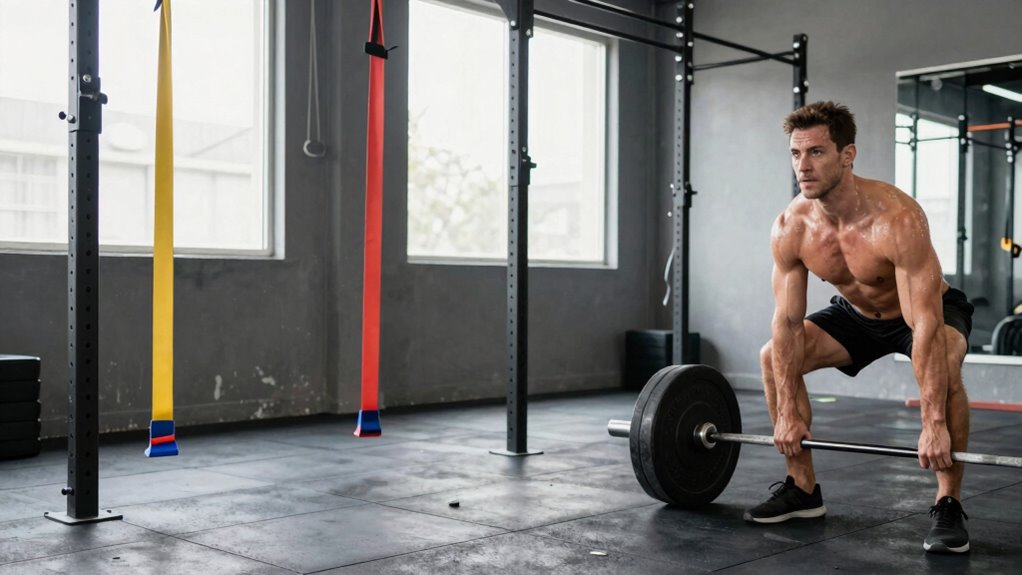
When it comes to building strength and improving fitness, choosing between resistance bands and free weights can be a pivotal decision. Both options offer unique advantages that influence how you activate your muscles and prevent injuries. Resistance bands provide constant tension throughout movements, which enhances muscle activation by engaging stabilizer muscles that might be overlooked with free weights. This means you’re not just working the primary muscles but also supporting muscles, leading to more balanced strength development. Because resistance bands are gentle on joints and provide controlled resistance, they can be especially helpful if you’re recovering from an injury or aiming to prevent one altogether. Their low-impact nature reduces strain on ligaments and tendons, making injury prevention more manageable. Additionally, resistance bands can be used to target specific muscle groups, providing tailored workouts for different needs. Incorporating resistance bands can also improve muscle endurance, which complements strength training and enhances overall performance.
On the other hand, free weights allow for a wide range of motion and mimic real-life movements more closely. They often enable you to lift heavier loads, which can be essential for building maximum strength. However, lifting heavier weights requires proper technique to avoid injury, as poor form can lead to strains or other issues. When used correctly, free weights can improve muscle activation by forcing you to stabilize your body during exercises, which recruits more muscle fibers. This added demand on stabilizer muscles can be beneficial for overall functional strength but also increases the risk of injury if you’re not cautious or lack proper supervision.
Resistance bands are highly portable and versatile, making them ideal for targeting specific muscle groups or adding resistance to bodyweight exercises. They also help in injury prevention by allowing controlled, smooth movements that minimize the risk of sudden jolts or overstretching. Conversely, free weights are often more effective for hypertrophy and building raw strength, but they require more attention to technique and control to prevent injuries. Using free weights improperly can lead to acute injuries, especially during heavy lifts, but when managed well, they promote muscle activation that translates to real-world strength gains.

WHATAFIT Resistance Bands, Exercise Bands,Resistance Bands for Working Out, Work Out Bands with Handles for Men and Women Fitness, Strength Training Home Gym Equipment
DIFFERENT COLOR ADJUSTABLE RESISTANCE BANDS: The exercise bands come with 5 different resistance level 10lbs, 20lbs, 30lbs, 40lbs…
As an affiliate, we earn on qualifying purchases.
As an affiliate, we earn on qualifying purchases.
Frequently Asked Questions
Which Training Method Is Better for Injury Rehabilitation?
For injury rehabilitation, resistance bands are often better because they allow for controlled, gentle movements that minimize strain. They help you focus on muscle hypertrophy while maintaining training consistency without risking further injury. Bands provide adjustable resistance, making them versatile for different recovery stages. Free weights may be too intense initially, risking setbacks, but can be gradually incorporated as you regain strength and stability.
Can Resistance Bands Replace Free Weights Entirely?
Resistance bands can’t replace free weights entirely; they’re like a superhero sidekick, not the main hero. While they excel in muscle activation and offer great training versatility, free weights provide the load and stability needed for maximal strength gains. Combining both gives you the best of both worlds, ensuring balanced development and reducing injury risk. So, use resistance bands to complement, not replace, your free weight routine.
Are There Specific Exercises Better Suited for Bands or Free Weights?
Some exercises are better suited for resistance bands, especially for muscle isolation, because they allow for constant tension and targeted engagement. Free weights excel in providing workout variety and enabling compound movements that build overall strength. For ideal results, combine both tools in your routine. Use bands for isolating smaller muscles and adding variety, while free weights help with large muscle groups and functional strength development.
How Do Resistance Bands Affect Joint Health Compared to Free Weights?
You might be surprised how resistance bands influence your joint health. They promote better joint stability by offering controlled resistance, reducing the risk of overextension. Unlike free weights, bands encourage constant muscle engagement through smooth, adjustable tension, sparking a safer workout. This dynamic engagement helps protect your joints, especially during complex movements. So, if joint health matters, resistance bands could be your secret weapon for safer, more effective training.
What Equipment Is More Portable for Travel Workouts?
Resistance bands are more portable for travel workouts because they offer greater travel convenience and equipment versatility. You can easily pack them into your luggage or carry-on, making them ideal for workouts on the go. Free weights, on the other hand, are bulkier and less convenient to transport. With resistance bands, you can perform a variety of exercises anywhere, maximizing your travel fitness routine without sacrificing effectiveness or space.

UNNMIIY Adjustable Dumbbells, 20/30/45/70/90lbs Free Weight Set with Connector,5 in1 Dumbbells Set Used as Barbell, Kettlebells, Push up Stand, Fitness Exercises for Home Gym Suitable Men/Women
5 in 1 Multifunctional Dumbbell Set:With UNNMIIY adjustable dumbbell set, you can get a pair of dumbbells also…
As an affiliate, we earn on qualifying purchases.
As an affiliate, we earn on qualifying purchases.
Conclusion
Both resistance bands and free weights offer unique benefits, but did you know that studies show people using resistance bands experience similar muscle gains in just 8 weeks? If you’re looking for versatility and lower-impact workouts, bands might be your best bet. However, free weights excel for building maximum strength. Ultimately, mixing both can give you a well-rounded routine, keeping your workouts effective and engaging. So, why not incorporate both into your fitness journey?

Pilates Bar Kit with Resistance Bands, Multifunctional Yoga Pilates Bar with Heavy-Duty Metal Adjustment Buckle, Portable Home Gym Pilates Resistance Bar Kit for Women Full Body Workouts -Pink
[Superior Yoga Pilates Bar Kit]: COFOF Pilates bar composed of 3 steel pipes, with high-density non-slip protection pad,…
As an affiliate, we earn on qualifying purchases.
As an affiliate, we earn on qualifying purchases.
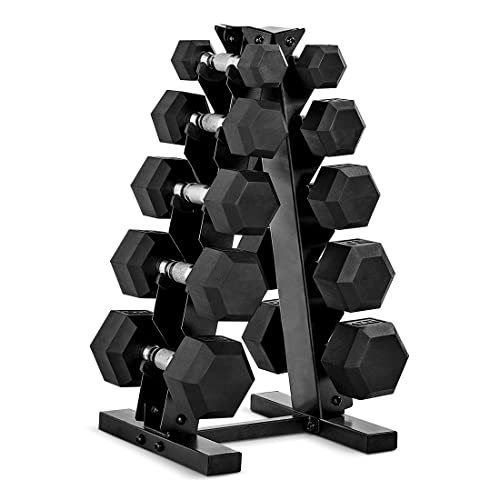
CAP 150 LB Rubber Coated Hex Dumbbell Hand Weight Set with Vertical Storage Rack – Chrome Handle | Black Rack
SET INCLUDES – A pair of 5-pound, 10-pound, 15-pound, 20-pound, and 25-pound rubber hex dumbbells with a black…
As an affiliate, we earn on qualifying purchases.
As an affiliate, we earn on qualifying purchases.