
TL;DR

Get workout gear delivered free with Prime
- Fast, free delivery on millions of items
- Prime Video, Amazon Music and more included
- Member-only deals all year
A new 3-week, minimalistic workout plan offers a straightforward way to restart exercise habits. It emphasizes consistency with just four movements and walking, adaptable for busy schedules and setbacks.
A new 3-week fitness restart plan has been introduced, offering a straightforward approach for those looking to reestablish exercise routines. The plan emphasizes just four movements and walking, requiring about 20 to 30 minutes per session, and includes adaptable ‘floor’ versions for weeks when life gets in the way. Its goal is to help individuals meet public health guidelines for strength and aerobic activity with minimal equipment and time commitment.
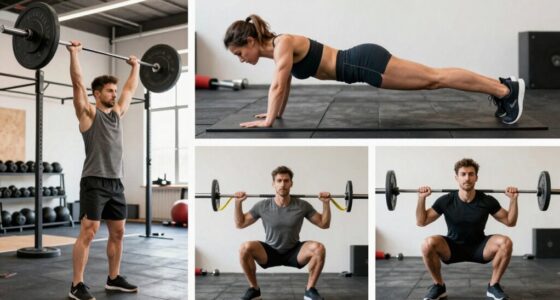
The plan involves two sessions per week for the first two weeks, increasing to three in the third week, with each session comprising four key movements: squat, hinge, push, and carry. These movements target major muscle groups, supporting strength development across the body. The plan also incorporates walking, which contributes to aerobic activity goals, totaling 150 to 300 minutes weekly. The design ensures that even in challenging weeks, individuals can perform a simplified ‘floor’ version—focusing on fewer repetitions and shorter walks—to keep progress steady.
Developed based on public health recommendations, the plan emphasizes starting lighter than expected, stopping sets early when form deteriorates, and using movement cues rather than estimating reps in reserve. It also includes guidance for handling setbacks: if a session is missed, a quick ‘floor’ version should be completed within 48 hours to prevent long breaks. The plan’s simplicity and flexibility aim to make exercise accessible and sustainable for busy or inconsistent schedules.
Restart your fitness journey—one repeatable session at a time.
A minimal plan built around four movements, regular walking, and a fallback for difficult weeks. The objective is not a dramatic transformation in 21 days—it is rebuilding the habit of showing up.
Short enough to fit a busy schedule.
Squat, hinge, push, and carry.
Use the floor version after a missed session.
Three weeks to restore your rhythm
Keep the exercise menu stable while gradually increasing frequency. Repetition reduces decision fatigue and gives technique time to improve.
Return gently
Begin lighter than you think you need. Learn the four patterns, finish each set before technique slips, and leave the session feeling capable of returning.
Repeat reliably
Use the same session structure. Add a small amount only when movement remains controlled—never at the expense of posture, comfort, or confidence.
Expand the habit
Add a third strength day while preserving the simple four-movement format. The win is completing the week consistently, not chasing exhaustion.
Four patterns. One full-body foundation.
Use bodyweight or simple household resistance. Select a version you can perform with steady control and no sharp pain.
Squat
Sit toward a sturdy chair, keep your feet planted, then stand tall with control.
Hinge
Send the hips back with a long spine, then drive through the feet to stand.
Push
Use a wall, counter, bench, or floor variation that allows smooth repetitions.
Carry
Walk tall while holding balanced grocery bags or another manageable household load.
Protect continuity with a floor version
A disrupted week does not require a restart. Reduce the dose, preserve the routine, and return to the normal plan when your schedule allows.
Make “something” the floor
Complete a brief version instead of abandoning the week. Fewer repetitions, easier variations, and a shorter walk still reinforce the identity of someone who exercises.
Use movement quality as your guide
The plan prioritizes sustainable effort over exact repetition targets. Adjust the movement, load, or session whenever control begins to fade.
| Situation | Recommended response | Avoid |
|---|---|---|
| Starting after a long break | ✓Choose an easier variation and lighter load | ~Testing your maximum ability |
| Form begins to deteriorate | ✓End the set while control remains | ~Forcing extra repetitions |
| A planned session is missed | ✓Use the floor version within 48 hours | ~Writing off the entire week |
| Sharp pain or unusual symptoms appear | ✓Stop and seek appropriate professional guidance | ~Trying to push through pain |
Early sessions should feel manageable enough that you are willing to repeat them.
End the set when alignment, range, breathing, or control noticeably changes.
Change one variable at a time: repetitions, resistance, walking time, or frequency.
What to know before day one
The framework is intentionally simple, but individual health conditions, mobility, and recovery needs still matter.
Do I need special equipment?
No. Bodyweight variations, a sturdy chair, a wall or counter, and household items for carries can be enough.
Can this plan support weight loss?
More activity may support weight management, but body-weight change also depends on nutrition, sleep, health, and other lifestyle factors.
What if I miss an entire week?
Return with the previous manageable week or the floor version. Avoid compensating with an unusually hard workout.
How do I stay motivated?
Schedule sessions, make the starting step easy, record completions, and treat reduced sessions as legitimate wins.
Is the plan appropriate for everyone?
Not necessarily. Its long-term effectiveness and suitability across different populations still require evaluation. People who are pregnant, recovering from injury, living with chronic conditions, or concerned about symptoms should seek individualized medical or exercise guidance before starting.
The framework aims toward widely used adult activity targets: muscle-strengthening activity on at least two days per week and approximately 150–300 minutes of moderate aerobic activity weekly. Build toward those levels gradually according to your current capacity.
Why This Simple 3-Week Plan Matters for Fitness Rebuilders
This plan offers a practical solution for individuals struggling to maintain exercise routines amid busy lives, setbacks, or lack of motivation. Its minimalistic structure aligns with public health guidelines, making it easier for people to meet recommended activity levels without overwhelming commitment. By focusing on consistency and adaptability, it helps reduce the common barrier of feeling overwhelmed or discouraged after a break, potentially increasing long-term adherence to physical activity.
Moreover, the plan’s emphasis on doing just four movements ensures that beginners or those returning after a hiatus can rebuild strength gradually, reducing injury risk and boosting confidence. The inclusion of walking also supports cardiovascular health, making the plan comprehensive despite its simplicity. Overall, it addresses the gap between intent and action, providing a realistic pathway back into regular exercise for many.
As an affiliate, we earn on qualifying purchases.
Background on Exercise Restart Strategies and Public Health Guidelines
Research shows that many people find it difficult to restart exercise routines after a break, often due to feeling overwhelmed or lacking guidance. Public health agencies recommend muscle-strengthening activities on at least two days per week, along with 150-300 minutes of moderate aerobic activity weekly. However, traditional programs can seem intimidating or time-consuming for beginners or those returning after inactivity.
Previous efforts to promote exercise have emphasized lengthy or complex routines, which often lead to early dropout. Recent studies suggest that simple, scalable plans that accommodate setbacks and prioritize consistency are more effective. The current plan builds on these insights, offering a flexible, evidence-based approach tailored to real-world challenges faced by busy adults.
As an affiliate, we earn on qualifying purchases.
What Aspects of the Plan Are Still Being Evaluated?
While the plan is grounded in public health recommendations and recent research, its long-term effectiveness and adaptability across diverse populations remain to be formally studied. It is not yet clear how well individuals will stick to the plan beyond the initial three weeks or how it compares to more comprehensive programs in terms of health outcomes. Additionally, individual variations in fitness levels, health conditions, and lifestyle constraints could influence its success, and further guidance may be needed for special populations.
As an affiliate, we earn on qualifying purchases.
Next Steps for Implementation and Evaluation of the 3-Week Restart Plan
Researchers and health professionals plan to monitor user feedback and adherence rates over the coming months to assess the plan’s effectiveness. There may be updates or adaptations based on real-world results, especially for specific groups such as older adults or those with chronic conditions. Additionally, digital tools or apps might incorporate this framework to facilitate wider adoption. The plan’s simplicity makes it a promising candidate for integration into community health initiatives or workplace wellness programs.
resistance bands for strength training
As an affiliate, we earn on qualifying purchases.
As an affiliate, we earn on qualifying purchases.
Key Questions
Can this plan help me lose weight?
This plan is designed primarily to restart exercise habits and meet physical activity guidelines. While increased activity can support weight management, weight loss depends on multiple factors, including diet and overall lifestyle. Consult a healthcare professional for personalized advice.
Is it safe to start with only four movements?
Yes, the plan emphasizes gradual progression and listening to your body. Starting with basic movements reduces injury risk and builds confidence. Always stop if you experience pain or discomfort, and consult a professional if needed.
What if I miss a session or week?
If you miss a session, complete the ‘floor’ version within 48 hours to stay on track. The plan is flexible, and quick adjustments prevent long gaps in activity, supporting sustained progress.
Do I need special equipment?
No, the plan requires only bodyweight exercises and a walk. You can use household items like a sturdy chair or grocery bags for the carry movement.
How do I stay motivated for three weeks?
Focus on consistency, celebrate small wins, and remember that even short sessions contribute to your health. Setting a routine and tracking progress can also boost motivation.
Source: rss
Halloween Picks
halloween
As an affiliate, we earn on qualifying purchases.