Reverse hypers are a great way to strengthen your posterior chain, hitting your glutes, hamstrings, lower back, and erector spinae. You control the movement to promote stability, avoid overextending your back, and focus on hip extension. Proper form is key—brace your core and squeeze your muscles at the top. Using different equipment variations can keep your workout effective and prevent plateaus. Keep exploring to discover even more tips for maximizing your posterior chain strength.
Key Takeaways
- Reverse hypers target the glutes, hamstrings, and lower back, strengthening the entire posterior chain.
- Proper technique involves controlled hip extension, avoiding overextension and lower back strain.
- Equipment options include specialized machines, stability balls, Roman chairs, or hyperextension benches.
- Core engagement and stable form are essential for safe, effective posterior chain activation.
- The exercise enhances functional strength, stability, and injury prevention through multi-muscle engagement.
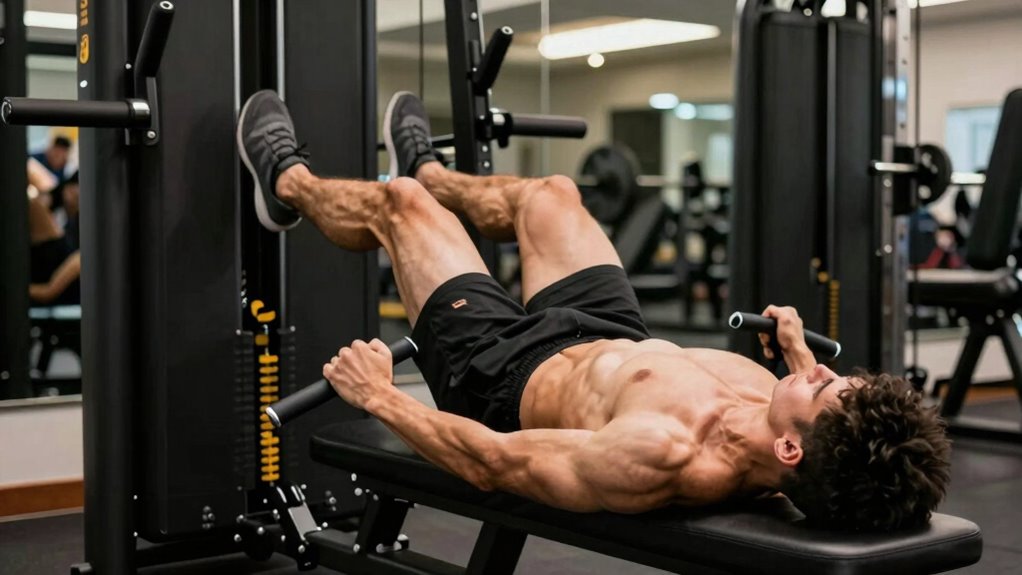
If you’re looking to strengthen your posterior chain, reverse hypers are a highly effective exercise to include in your routine. This movement targets your glutes, hamstrings, lower back, and erector spinae, making it an essential way to build overall posterior strength. Unlike traditional exercises that isolate specific muscles, reverse hypers promote functional strength by engaging multiple muscle groups simultaneously. As you perform the movement, core engagement becomes vital for stability and control, helping prevent injury and confirming you activate the right muscles. Maintaining a tight core keeps your spine in a safe position, allowing for smooth, controlled movement through each rep.
Reverse hypers build posterior strength, engaging glutes, hamstrings, and lower back for improved stability and functional fitness.
One of the benefits of reverse hypers is their versatility with equipment variations. You don’t need specialized gear to start, as many gyms have a reverse hyperextension machine designed specifically for this movement. These machines typically allow you to hang your hips off the pad and lift your legs behind you, focusing on hip extension. If you don’t have access to this equipment, there are alternatives. For example, you can use a stability ball, placing your hips on the ball and lifting your legs in a controlled manner. Some also perform reverse hypers on a Roman chair or hyperextension bench, adjusting the setup to suit their strength and comfort levels. Proper equipment variation can help target muscles from different angles and prevent training plateaus. Additionally, understanding posterior chain anatomy can help you optimize your exercise technique for better results. Incorporating knowledge of muscle engagement can further enhance your effectiveness and reduce the risk of injury during the movement.
As you perform reverse hypers, focus on controlled, deliberate movements rather than rushing through reps. You want to lift your legs with strength, squeezing your glutes and hamstrings at the top of the movement. Avoid overextending your lower back; instead, think of hinging at the hips and using your posterior chain for the lift. This focus on proper form ensures you’re maximizing muscle engagement and minimizing the risk of strain. Remember, proper core engagement is key—brace your abs as if preparing for a gentle punch to the stomach. This stabilizes your spine and allows your hips and legs to do the work effectively.
As an affiliate, we earn on qualifying purchases.
Frequently Asked Questions
Can Reverse Hypers Help With Lower Back Pain?
Yes, reverse hypers can help with lower back pain, especially if you have a lower back injury or want to improve spinal stability. They strengthen your posterior chain muscles, including the glutes and hamstrings, which support your lower back. By enhancing these muscles, reverse hypers reduce strain on your spine, promote better posture, and help alleviate pain. Just make certain you perform the exercise with proper form to avoid further injury.
How Often Should I Incorporate Reverse Hypers Into My Routine?
You should incorporate reverse hypers into your routine 2 to 3 times a week, balancing core activation with flexibility benefits. Regular use helps strengthen your posterior chain, improve spinal stability, and enhance flexibility, which prevents injuries. By consistently adding reverse hypers, you target muscles needed for daily movements and athletic performance. Keep your routine varied and listen to your body, ensuring you avoid overtraining while reaping full benefits.
Are Reverse Hypers Suitable for Beginners?
Yes, reverse hypers can be suitable for beginners if you focus on proper form technique. Start with light resistance, and avoid common mistakes like overextending your back or using momentum. Keep your movements controlled, engage your posterior chain, and listen to your body. It’s best to learn the exercise under supervision or with guidance to prevent injury and make sure you’re performing it correctly as a beginner.
What Equipment Is Needed for Reverse Hypers?
You’ll need a reverse hyperextension machine or a sturdy bench with a specialized leg attachment for reverse hypers. It’s crucial to keep your equipment well-maintained for safety and effectiveness. If you don’t have access to the equipment, consider alternative exercises like superman holds or glute bridges. Investing in quality gear guarantees longevity and peak performance, making your posterior chain workouts more powerful than a superhero’s punch!
Can Reverse Hypers Improve Athletic Performance?
Yes, reverse hypers can improve your athletic performance by enhancing core stability and muscle activation in your posterior chain. When you perform this exercise, you strengthen key muscles like your glutes, hamstrings, and lower back, which are essential for explosive movements and injury prevention. As your core stabilizes better, you gain more control and power, translating into improved performance in sports that require strength, agility, and endurance.
stability ball for posterior chain
As an affiliate, we earn on qualifying purchases.
As an affiliate, we earn on qualifying purchases.
Conclusion
Think of reverse hypers as a bridge connecting strength and resilience, sturdy enough to carry you through any challenge. As you incorporate them into your routine, you’re building a fortress around your posterior chain, safeguarding your movement and power. Let each rep be a stone laid with intention, creating a foundation that supports you beyond the gym. Embrace this exercise, and watch as your strength becomes a symbol of unwavering perseverance.
Roman chair hyperextension bench
As an affiliate, we earn on qualifying purchases.
As an affiliate, we earn on qualifying purchases.
hyperextension exercise equipment
As an affiliate, we earn on qualifying purchases.
As an affiliate, we earn on qualifying purchases.