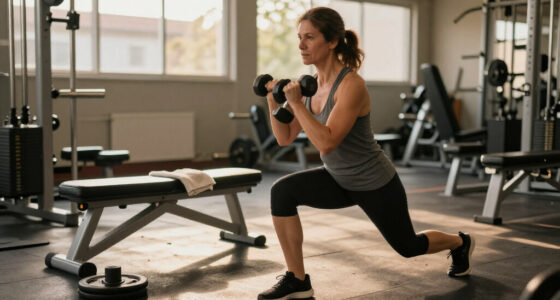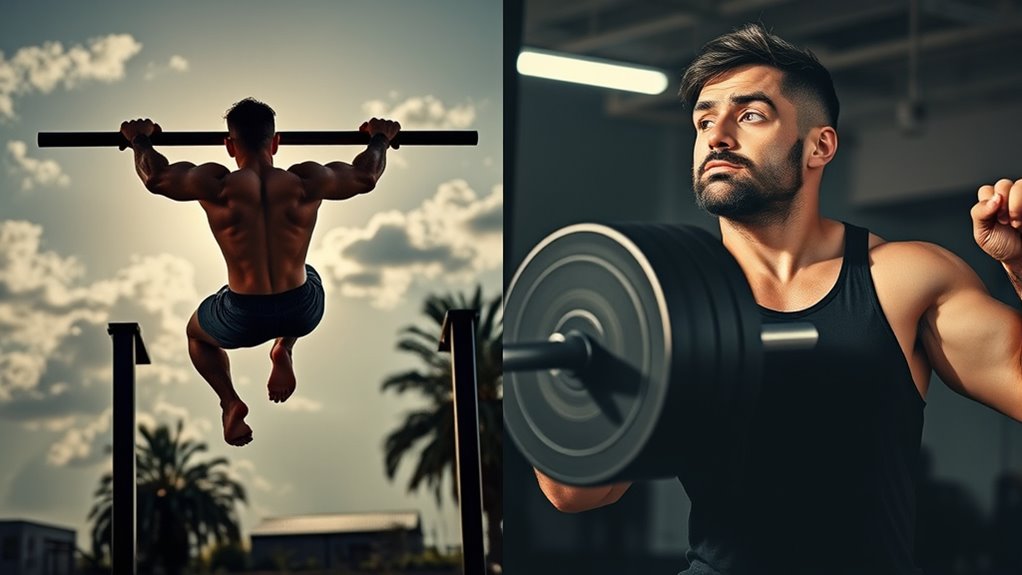

Calisthenics and weightlifting each have their pros and cons. Calisthenics requires no special equipment and focuses on building strength, mobility, and flexibility using your body weight. It’s portable and great for functional fitness. Weightlifting, on the other hand, allows for targeted muscle growth but needs external weights and equipment, which can limit workout options outside the gym. Depending on your goals and preferences, either method can enhance your training. Keep exploring to uncover more about each approach!

Get workout gear delivered free with Prime
- Fast, free delivery on millions of items
- Prime Video, Amazon Music and more included
- Member-only deals all year
Key Takeaways
- Calisthenics requires no equipment, making it accessible and cost-effective for home workouts, while weightlifting often requires gym access or equipment investment.
- Calisthenics enhances mobility and flexibility, promoting overall functional fitness, whereas weightlifting focuses on muscle mass and targeted strength gains.
- Both methods effectively build strength, but calisthenics supports movement quality and injury prevention, while weightlifting allows for structured muscle development.
- Calisthenics is versatile and portable, suitable for various environments, unlike weightlifting, which may limit options outside a gym setting.
- Choosing between both should align with personal goals and preferences, as mixing methods can create a balanced and engaging workout plan.
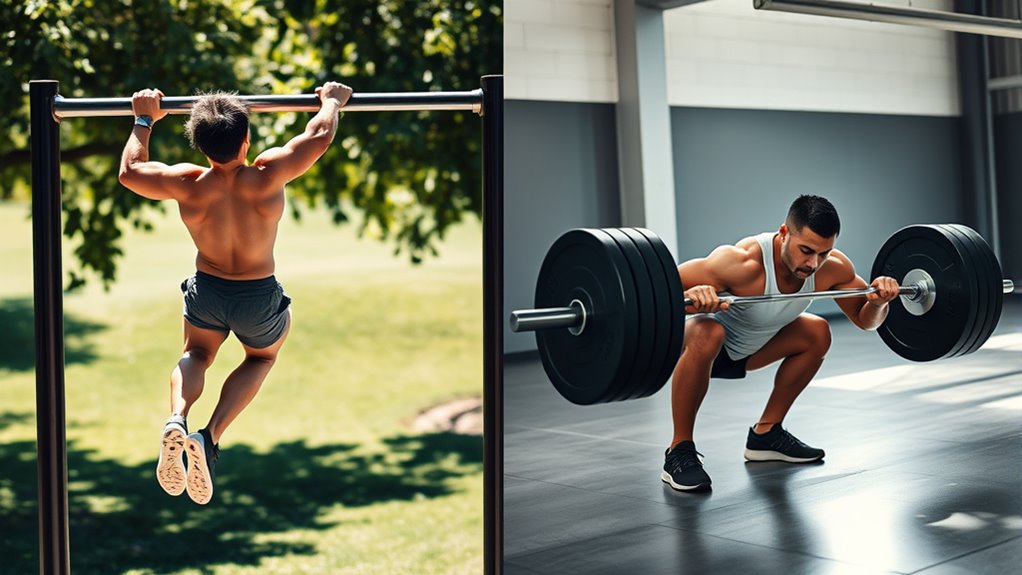
When it comes to choosing a workout routine, how do you decide between calisthenics and weightlifting? Both offer unique benefits, but understanding their differences can help you make an informed choice. Calisthenics focuses on using your body weight for resistance, while weightlifting involves external weights. If you value strength training without the need for equipment, calisthenics is a great option. You won’t need a gym or a lot of fancy gear; just your body and some open space.
Mobility training is a significant aspect of calisthenics. Many exercises, like pull-ups and push-ups, require you to engage multiple muscle groups and promote flexibility. This can enhance your overall range of motion and reduce the risk of injury. You’ll find that incorporating mobility drills into your routine can improve your performance in various physical activities, making calisthenics a versatile and functional choice.
On the other hand, weightlifting tends to have a higher degree of equipment dependency. You’ll need access to weights, benches, and possibly machines. This can limit your workout options if you don’t have a gym membership or the means to invest in home equipment. However, weightlifting allows for more targeted muscle building, which can lead to faster strength gains for specific areas of your body. If your goal is to increase muscle mass and you enjoy the structure of lifting weights, you might lean toward this option.
Both methods can effectively build strength, but it’s crucial to weigh your goals. If you’re looking for an efficient way to increase strength while also improving mobility, calisthenics might be the way to go. Alternatively, if you aim for bulkier muscle gains and don’t mind investing in equipment, weightlifting could suit you better.
Incorporating cultural content into your fitness journey can also provide inspiration and motivation, enhancing your overall experience.
Ultimately, the best workout routine is one that aligns with your lifestyle, goals, and preferences. Think about what you enjoy doing and what keeps you motivated. Mixing both approaches could also be beneficial, allowing you to reap the rewards of each method. As you experiment, you’ll discover what works best for you, creating a balanced and effective workout routine that keeps you engaged and progressing.
As an affiliate, we earn on qualifying purchases.
Frequently Asked Questions
Which Is Better for Beginners, Calisthenics or Weightlifting?
For beginners, calisthenics is often better because it builds body awareness and focuses on mastering your own weight. You engage multiple muscle groups, which aids in developing strength and flexibility while minimizing the risk of injury. It’s easier to modify exercises based on your fitness level, allowing you to progress at your own pace. Plus, you can do it anywhere, making it a convenient starting point for your fitness journey.
Can Calisthenics Build Muscle Mass Like Weightlifting?
Yes, calisthenics can build muscle mass like weightlifting, especially if you focus on progressive overload. By increasing the difficulty of your bodyweight exercises, you can stimulate muscle growth effectively. Incorporating variations like pull-ups, push-ups, and dips challenges your muscles, promoting training effectiveness. While weightlifting often allows for more targeted muscle gains, calisthenics can still provide impressive results when done consistently and with intensity. So, don’t underestimate its potential!
How Much Time Should I Dedicate to Either Training?
You’ll want to dedicate around three to five sessions a week for ideal results. Consider each workout lasting from 30 to 60 minutes, depending on your fitness goals and energy levels. Embrace a training frequency that feels right for you, mixing intensity and recovery. This way, you’re not just lifting weights or mastering moves; you’re crafting a balanced routine that nurtures both strength and endurance, making every minute count.
Is Equipment Necessary for Calisthenics Workouts?
No equipment’s necessary for calisthenics workouts, making them incredibly accessible. You can use your body weight for exercises like push-ups, squats, and lunges. However, minimal equipment like resistance bands or a pull-up bar can enhance your routine and add variety. Ultimately, you can achieve great results with just your body or a few simple tools. It’s all about your goals and how creative you want to get with your training!
Can I Combine Calisthenics and Weightlifting in My Routine?
Absolutely, you can combine calisthenics and weightlifting in your routine! Think of it as a powerful recipe for body transformation. By blending strength training with flexibility training, you’ll enhance your overall fitness. Start with weightlifting to build strength, then switch to calisthenics for mobility and endurance. This dynamic duo not only boosts your performance but also keeps your workouts exciting. So, mix it up and watch your body thrive!
adjustable dumbbells for weightlifting
As an affiliate, we earn on qualifying purchases.
As an affiliate, we earn on qualifying purchases.
Conclusion
In the battle between calisthenics and weightlifting, think of your body as a canvas. Calisthenics paints with fluid, bodyweight strokes, emphasizing agility and balance, while weightlifting carves out strength and definition with bold, heavy brushstrokes. Both styles create a masterpiece of fitness, but the choice is yours. Whether you prefer the graceful lines of movement or the powerful shapes of muscle, embrace what resonates with you, and let your unique art of fitness unfold.
resistance bands for bodyweight exercises
As an affiliate, we earn on qualifying purchases.
As an affiliate, we earn on qualifying purchases.
home gym equipment for strength training
As an affiliate, we earn on qualifying purchases.
As an affiliate, we earn on qualifying purchases.
Halloween Picks
halloween
As an affiliate, we earn on qualifying purchases.