
Strength training and toning have different goals. Strength training‘s all about building muscle mass and overall strength, while toning focuses on defining your muscles for a leaner appearance. Strength training typically uses heavier weights with fewer repetitions, whereas toning involves lighter weights and higher repetitions. Both methods can improve your physique, but understanding their differences helps you tailor your workout to your specific goals. There’s much more to explore about how these approaches can benefit you.
Key Takeaways
- Strength training focuses on building muscle mass and overall strength, while toning emphasizes defining muscles for a leaner appearance.
- Strength training typically involves heavier weights with lower repetitions, whereas toning uses lighter weights with higher repetitions.
- Results from strength training include increased muscle size and strength, while toning aims for a sculpted, defined physique without significant size increase.
- Proper nutrition for strength training includes higher protein intake to support muscle growth, while toning requires monitoring caloric intake for fat loss.
- Both methods offer benefits such as improved metabolism and cardiovascular health, but they target different physical outcomes.
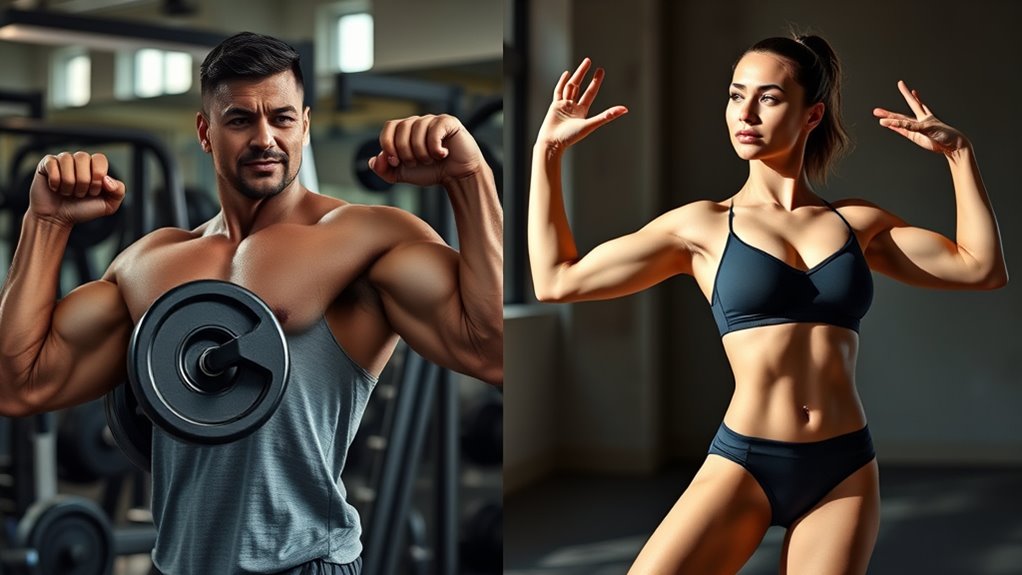
When you plunge into the world of fitness, you might wonder about the difference between strength training and toning. While both methods aim at improving your physique, they focus on different outcomes. Strength training primarily builds muscle mass and increases overall strength, while toning emphasizes defining muscles and achieving a leaner appearance. Understanding these distinctions can help you tailor your workouts to meet your specific goals.
Strength training involves using resistance to stimulate muscle growth. This can be achieved through weights, resistance bands, or even your body weight. The primary objective is to increase muscle size and strength, which in turn boosts your metabolism. You’ll find that as you gain muscle, your body burns more calories even at rest. This is essential if you’re looking to lose weight or maintain a healthy body composition. It’s also worth noting that strength training provides cardio benefits. By engaging multiple muscle groups and performing compound movements, you elevate your heart rate, improving cardiovascular health along the way. Additionally, participating in self-care products that promote recovery can enhance your overall fitness journey.
On the other hand, toning focuses on developing lean muscle without substantially increasing muscle size. You might use lighter weights with higher repetitions or incorporate bodyweight exercises like push-ups and squats. The goal is to create a sculpted look, often leading to a more defined physique. While some people associate toning with weight loss, it’s indispensable to understand that muscle definition often depends on reducing body fat. This means that combining toning with proper nutrition is essential for achieving that slim, toned look.
When it comes to nutritional tips, fueling your body correctly is essential, regardless of your goal. If you’re strength training, consider consuming more protein to support muscle repair and growth. Foods like chicken, fish, beans, and legumes are excellent sources. On the flip side, if your focus is on toning, you’ll want to monitor your caloric intake to promote fat loss while still ensuring you get enough protein and healthy fats to maintain muscle. Incorporating plenty of fruits and vegetables will also provide the necessary nutrients to support your fitness journey.
Frequently Asked Questions
Can I Achieve Toning Without Lifting Heavy Weights?
Yes, you can absolutely achieve toning without lifting heavy weights! By focusing on lightweight workouts, you can effectively sculpt your body while minimizing the risk of injury. Incorporating exercises like resistance bands, bodyweight movements, or lighter dumbbells will help you build muscle endurance and enhance your definition. Consistency is key, so stick to a routine that challenges you but remains manageable. You’ll see improvements in your physique over time, all without heavy lifting!
How Often Should I Train for Strength or Toning?
How often should you train for strength or toning? Aim for at least three to five sessions a week, with each workout lasting 30 to 60 minutes. It’s essential to include rest days to allow your muscles to recover and grow. Balancing intensity and duration helps optimize your results. So, are you ready to commit to a consistent routine that includes both effort and recovery? Your body will thank you!
What Are the Best Exercises for Toning?
To tone your muscles effectively, focus on exercises that enhance muscle endurance, like circuit training, bodyweight exercises, and resistance bands. Incorporate flexibility exercises such as yoga or Pilates to improve your range of motion and prevent injury. Additionally, consider adding high-rep weightlifting with lighter weights. This combination not only helps you achieve a leaner look but also promotes overall body strength and flexibility, giving you a well-rounded fitness routine.
Is Nutrition Important for Strength Training and Toning?
Absolutely, nutrition plays a vital role in both strength training and toning. Imagine you’re preparing for a competition; you’d adjust your caloric intake to support muscle growth and recovery. Eating balanced meals with the right nutrient timing—like consuming protein after workouts—can maximize your results. If you neglect nutrition, you might struggle to see progress, regardless of how hard you train. So, focus on fueling your body properly for peak performance!
Can Beginners Start With Strength Training and Toning Simultaneously?
Yes, you can absolutely start with strength training and toning simultaneously. By focusing on exercises that build muscle endurance while varying your workout intensity, you’ll see great results. Incorporate compound movements and lighter weights to enhance toning while still promoting strength. This balanced approach not only aids in muscle growth but also keeps your workouts interesting. Just remember to listen to your body and adjust as needed to avoid overtraining.
Conclusion
In the end, whether you’re pumping iron to build strength or sculpting your body for that toned look, it’s all about what makes you feel alive. Picture yourself lifting weights, feeling the rush of power coursing through your veins, or gliding through a workout that reveals those sleek muscles beneath your skin. Embrace the journey, find your rhythm, and remember: every rep brings you closer to the masterpiece that is your body. So, which path will you choose?