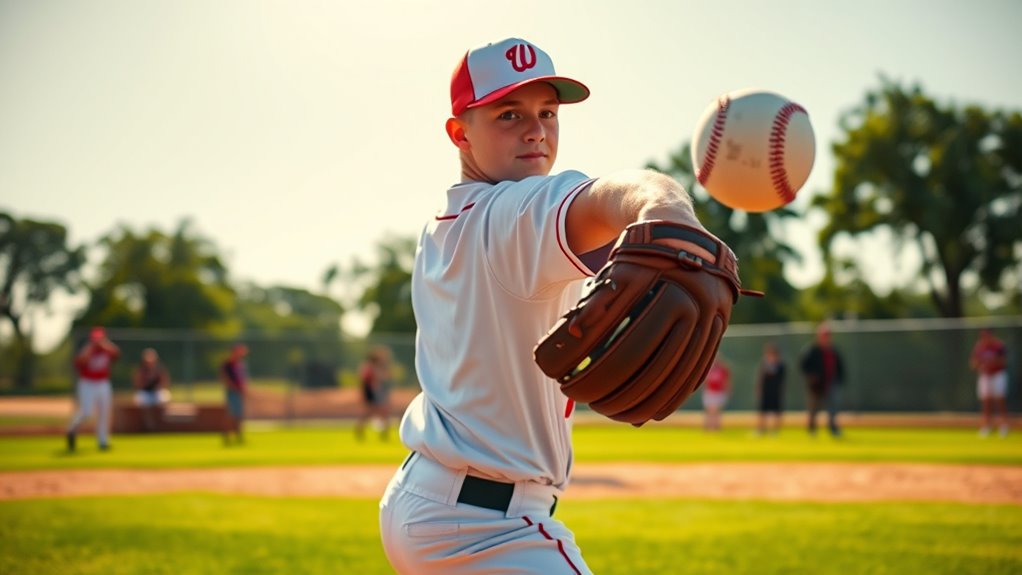

To improve your throwing arm in baseball, focus on building arm strength through resistance bands and dumbbells. Master proper throwing mechanics by using your whole body, not just your arm. During your throw, step forward with your opposite foot and keep your elbow at shoulder height. Consistent practice with drills will refine your technique and develop muscle memory. With dedication, you’ll see noticeable improvements in your throwing power and accuracy. There’s more to discover about enhancing your skills.

Get workout gear delivered free — and shop member deals
- Fast, free delivery on millions of items
- Access to Prime Big Deal Days deals on October 6–7
- Prime Video, Amazon Music and more included
Key Takeaways
- Build arm strength through resistance bands, dumbbells, and bodyweight exercises, focusing on shoulder presses and tricep extensions.
- Master proper throwing mechanics by gripping the ball correctly and using your body to generate power, not just your arm.
- Coordinate leg, core, and arm movements during the throwing phase, stepping forward with the opposite foot for maximum power and control.
- Regularly practice with a partner or against a wall to refine your technique and enhance accuracy and distance.
- Stay dedicated to consistent training, as improved strength and mechanics lead to a stronger and more accurate throwing arm.

Whether you’re aiming for a better performance on the field or just looking to impress your friends, improving your throwing arm can make a significant difference. To start, focus on building arm strength, which is vital for enhancing your throwing capabilities. The more powerful your arm, the further and faster you can throw a ball. Incorporating strength training exercises, such as resistance bands, dumbbells, or even bodyweight exercises, will help you develop the muscles used in throwing. Don’t skip shoulder presses, tricep extensions, and rotator cuff exercises; they’re essential for achieving a balanced and strong throwing arm.
Next, think about your throwing mechanics. Proper mechanics can drastically improve your throw’s accuracy and distance. Start by ensuring you have a good grip on the ball; your fingers should be positioned comfortably across the seams. Stand with your feet shoulder-width apart, and keep your knees slightly bent. As you prepare to throw, rotate your shoulders back, creating a solid wind-up. This motion helps store energy, allowing you to release it during the throw. Remember, it’s not just about your arm; your entire body plays a role in achieving an effective throw.
As you move into the throwing phase, step forward with your opposite foot while you bring your throwing arm forward. This coordinated motion leverages your legs and core, contributing to your arm strength. Keep your elbow at shoulder height as you release the ball, which helps maintain accuracy and velocity. Finally, follow through with your throw; let your arm continue its motion, which will help with both power and control.
Incorporate drills into your practice routine to refine both arm strength and mechanics. For instance, partner up and practice throwing back and forth, focusing on your form and power. You can also use a wall to practice your throwing motion, aiming for specific targets to improve your accuracy. Additionally, consider recording your throws; watching yourself can provide valuable insights into areas that need improvement.
Incorporating these practices into your training regimen will not only enhance your throwing arm but also make you a more formidable player on the field. With dedication and persistence, you’ll see improvements in your arm strength and throwing mechanics, leading to better performance and the ability to impress your friends with your newfound skills.
resistance bands for arm strength
As an affiliate, we earn on qualifying purchases.
As an affiliate, we earn on qualifying purchases.
Frequently Asked Questions
What Are Common Injuries Related to Throwing Arms in Baseball?
Common injuries related to throwing arms in baseball include shoulder impingement and elbow tendinitis. You might notice pain or discomfort in your shoulder when you raise your arm, signaling impingement. Elbow tendinitis, often referred to as “tennis elbow,” can cause pain on the outside of your elbow during throwing. It’s essential to listen to your body and seek proper treatment to prevent these injuries from becoming chronic and affecting your performance.
How Does Diet Affect Throwing Arm Strength?
Your diet directly affects your throwing arm strength. Proper nutrition planning fuels your body, ensuring you have the energy needed for intense training. Nutrient-rich foods promote muscle recovery, helping you bounce back faster after workouts. Incorporating lean proteins, healthy fats, and plenty of fruits and vegetables can enhance muscle growth and repair. When you prioritize your nutrition, you’ll notice improved performance and reduced injury risk, keeping your throwing arm strong and ready for action.
Should I Use Weighted Balls for Training?
Using weighted balls for training can be a game changer for your arm strengthening routine. They can help you develop muscle memory and improve your throwing mechanics, giving your arm that extra oomph. However, be careful not to overdo it; moderation is key. Incorporate them wisely into your workout, and you’ll see progress without risking injury. Just remember, it’s about building strength, not just adding weight. Keep it smart, and you’ll thrive!
How Can I Prevent Arm Fatigue During Games?
To prevent arm fatigue during games, start with a proper arm warm up to get your muscles ready. Incorporate dynamic stretches and light throwing to increase blood flow. Strengthening your grip strength can also help; consider grip exercises during practice. Stay hydrated and take breaks when possible. Monitor your throwing mechanics, ensuring you’re not overexerting yourself. By following these tips, you’ll maintain your performance and keep fatigue at bay.
What Are the Best Stretches for a Throwing Arm?
The best stretches for your throwing arm include dynamic stretching and resistance bands. Start with arm circles and shoulder swings to warm up your muscles dynamically. Then, use resistance bands for external and internal rotations to strengthen your rotator cuff. Incorporate wrist flexor and extensor stretches to maintain flexibility. Always remember to stretch both before and after your practice or game to keep your arm healthy and avoid injury.
dumbbells for shoulder exercises
As an affiliate, we earn on qualifying purchases.
As an affiliate, we earn on qualifying purchases.
Conclusion
In baseball, practice makes perfect, and improving your throwing arm is no exception. By focusing on technique, strength training, and consistent drills, you’ll see significant progress in no time. Remember, every throw counts, so stay dedicated and patient with your development. Keep your eye on the prize, and soon you’ll be throwing like a pro. With determination and the right approach, you’ll transform your game and impress everyone on the field!
baseball throwing mechanics training aid
As an affiliate, we earn on qualifying purchases.
As an affiliate, we earn on qualifying purchases.
As an affiliate, we earn on qualifying purchases.
Fall Picks
fall essentials
As an affiliate, we earn on qualifying purchases.