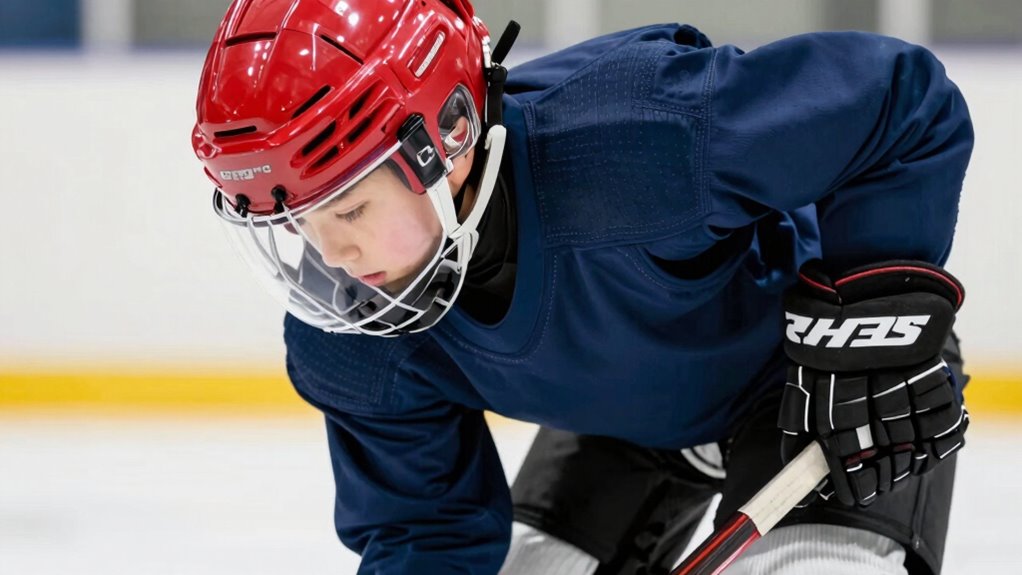

To stay safe on the ice, you need essential protective gear like a helmet with a cage, shoulder and elbow pads, gloves, and padded pants to shield your body from impacts. Skating techniques and gear fit are also vital for confidence and safety. Make sure your equipment is snug, in good condition, and properly maintained. Wearing the right gear reduces injury risks and helps you play comfortably. Keep going to discover even more tips to stay safe and confident during hockey!

Get workout gear delivered free with Prime
- Fast, free delivery on millions of items
- Prime Video, Amazon Music and more included
- Member-only deals all year
Key Takeaways
- Helmets with cages or visors protect the head and face from impacts and falls.
- Leg pads and knee guards absorb high-speed puck hits and prevent injuries.
- Shoulder pads and elbow guards safeguard upper body from collisions and falls.
- Properly fitted gloves and padded shorts ensure hand, wrist, hips, and thigh protection.
- Regular gear maintenance and correct fit maximize safety and comfort during play.
Starting hockey can be exciting, but it’s imperative to prioritize safety from the outset. When you’re just beginning, understanding and investing in the right protective gear helps you enjoy the game while minimizing injury risks. One of the most important pieces of equipment you’ll need is goalie gear, especially if you’re interested in playing as a goalie. Goalie equipment includes a mask or helmet with a cage to protect your head and face, a chest protector to shield your torso, and leg pads that absorb impacts during saves. These pieces are designed to withstand high-speed pucks and collisions, so don’t skimp on quality. Properly fitted goalie gear not only keeps you safe but also enhances your confidence on the ice, allowing you to focus on improving your skills.
Beyond goalie equipment, the foundation of safe hockey play lies in mastering proper skating techniques. Before stepping onto the ice, you should learn how to skate confidently and control your movements. Good skating techniques involve maintaining a balanced stance, keeping your knees slightly bent, and using your edges effectively to turn and stop. These skills help you avoid falls and collisions, which are common sources of injuries among beginners. As you practice, focus on smooth, controlled strides and learn how to brake safely. Developing strong skating skills will make you more agile and responsive, reducing the likelihood of accidents. Remember, even the best protective gear won’t prevent injuries if your skating technique is off; thus, dedicating time to learn proper form is essential.
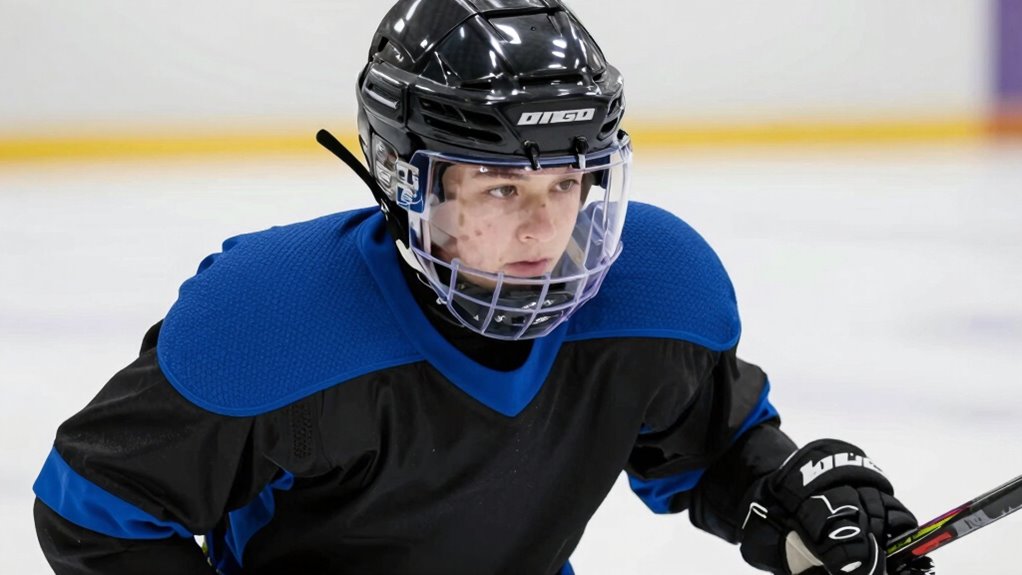
In addition to goalie equipment and skating techniques, donning the right protective gear for your whole body is imperative. This includes a helmet with a cage or visor, shoulder pads, elbow pads, gloves, and padded shorts or pants. Each piece plays an indispensable role in protecting vulnerable areas from impacts and falls. When choosing your gear, ensure it fits snugly but comfortably—ill-fitting equipment can shift during play and leave you exposed or uncomfortable. Regularly check and replace worn or damaged gear to maintain maximum protection. Remember, safety gear is an investment in your health and the longevity of your hockey experience.
hockey protective gear for beginners
As an affiliate, we earn on qualifying purchases.
As an affiliate, we earn on qualifying purchases.
Frequently Asked Questions
How Often Should I Replace My Hockey Protective Gear?
You should replace your hockey protective gear based on wear and tear, usually every 1 to 3 years. Regular gear maintenance is essential—inspect for cracks, tears, or loss of padding, and replace damaged items promptly. Even if gear looks fine, consider replacing items like helmets or gloves more frequently, as their protective ability diminishes over time. Staying proactive ensures your safety on the ice and peak gear performance.
Can I Rent Protective Gear Instead of Buying?
Yes, you can rent protective gear instead of buying, especially if you’re new to hockey or on a budget. Rental safety is usually reliable, but remember to check gear maintenance before each use. Make certain the equipment fits well and is clean. Renting allows you to test different gear types without committing to a purchase, but always inspect rental gear for signs of wear to guarantee your safety on the ice.
What Is the Most Important Piece of Protective Gear for Beginners?
The most important piece of protective gear for beginners is a well-fitting helmet. You need to guarantee helmet fit is snug but comfortable, providing essential protection without restricting movement. Remember, proper helmet fit is vital for safety and comfort. Additionally, prioritize regular equipment maintenance to keep your gear in good condition, preventing injuries and prolonging its lifespan. Always check your helmet and other gear before each use for any damage or wear.
How Do I Properly Fit My Hockey Helmet?
You should start by ensuring your hockey helmet fits snugly without being too tight. Check the helmet fit by gently shaking your head; it shouldn’t move excessively. Adjust the chin strap so it’s snug but comfortable, with your fingers fitting between the strap and your chin. Make sure your forehead is protected, and the helmet sits level on your head. Proper fit and chin strap adjustment keep you safe during play.
Are There Specific Protective Gear Recommendations for Different Age Groups?
You might think all hockey gear is the same, but age-specific safety is essential. Youth gear guidelines help guarantee proper protection for younger players, with smaller helmets, pads, and gloves designed for their size. For teens and adults, you’ll need more advanced, slightly larger equipment. Always follow manufacturer recommendations and league rules to keep safety top priority. Properly fitting gear tailored to your age group minimizes injuries and boosts confidence on the ice.
As an affiliate, we earn on qualifying purchases.
Conclusion
Remember, starting hockey is like stepping onto a new ice rink—you’ll glide more confidently with the right gear. I once watched a beginner skate confidently because they had their helmet and pads; without them, it’s like trying to skate on thin ice. Protective gear isn’t just about safety—it’s your confidence shield. Gear up properly, and you’ll enjoy the game, knowing you’re protected, just like a sturdy boat sailing smoothly through icy waters.
As an affiliate, we earn on qualifying purchases.
As an affiliate, we earn on qualifying purchases.
Halloween Picks
halloween
As an affiliate, we earn on qualifying purchases.