
You should replace your sports gear when it shows signs of wear or damage, like cracks, cuts, or loss of shape in balls, or frayed straps and cracks in pads and helmets. Worn-out shoes lose support, and racquets or bats may have cracks that impair control. Even if gear looks okay, if it feels less protective or safe, it’s time for a replacement. Keep an eye on these signs to stay safe and perform your best as you continue exploring how to maintain your equipment properly.

Get workout gear delivered free with Prime
- Fast, free delivery on millions of items
- Prime Video, Amazon Music and more included
- Member-only deals all year
Key Takeaways
- Replace sports balls when they lose shape, bounce, or show cracks, punctures, or surface damage.
- Swap out protective gear if it has cracks, frayed straps, dents, or feels less secure or comfortable.
- Change footwear when cushioning wears down, soles are worn, or support and grip diminish.
- Discard equipment with structural damage like cracks, loose strings, or compromised control that can affect safety.
- Regularly inspect all gear to identify signs of deterioration early and ensure optimal safety and performance.
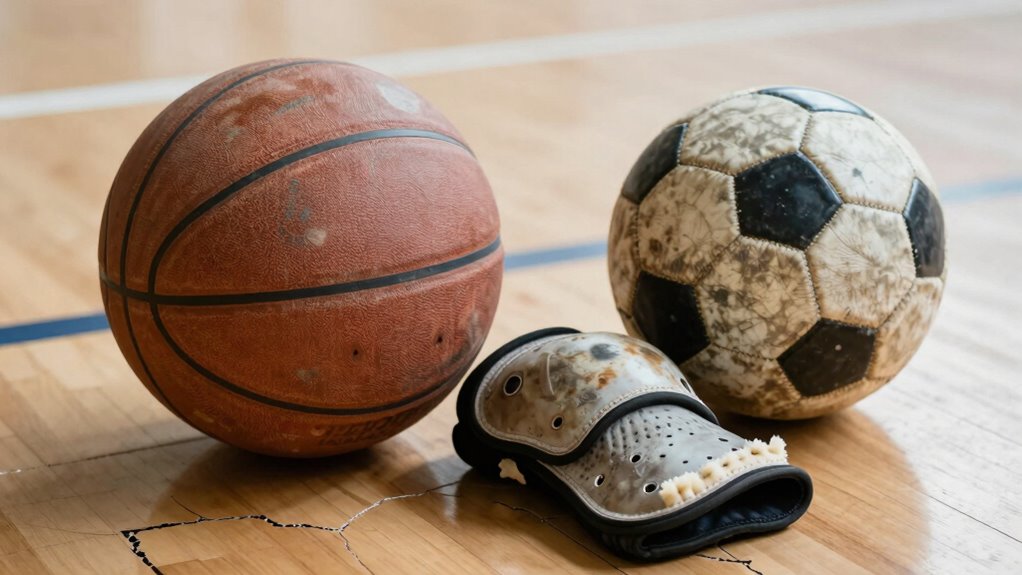
Knowing when to replace your sports gear is essential for both performance and safety. Your gear’s longevity depends on how well you care for it, but even the most durable equipment won’t last forever. Recognizing replacement indicators is key to avoiding injuries and maintaining ideal play. Over time, sports balls, pads, and other gear wear down, and ignoring signs of deterioration can compromise your safety and game quality. Regularly inspecting your gear helps identify when it’s time for a replacement to prevent accidents.
Regularly check your sports gear for signs of wear to ensure safety and optimal performance.
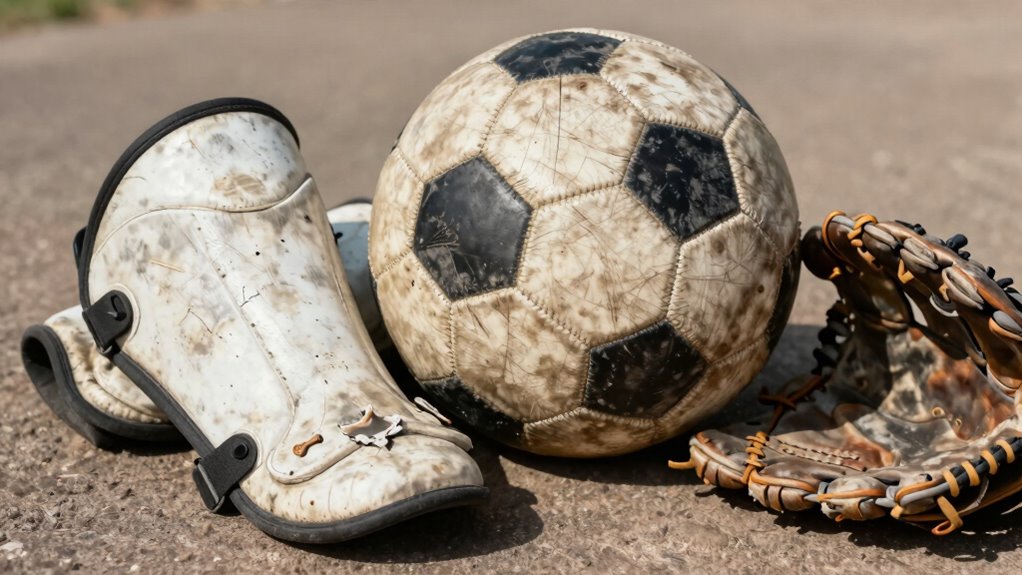
For sports balls, the main indicator of needing a replacement is a loss of shape and bounce. If a ball becomes flat, misshapen, or won’t bounce back after use, it’s time to get a new one. Even if the surface looks intact, worn-out internal materials can impact performance. Regularly check for cracks, cuts, or punctures, as these are clear signs that the ball’s integrity has been compromised. Continuing to use damaged balls not only hampers your game but also increases the risk of injury if the ball bursts or behaves unpredictably. Additionally, understanding gear deterioration helps ensure you replace equipment before it becomes unsafe.
When it comes to protective gear like pads, helmets, or gloves, you need to pay close attention to signs of wear and tear. Overuse causes padding to lose its shock absorption qualities, which can lead to injuries. Cracks, frayed straps, or missing padding are obvious replacement indicators. Helmets, in particular, have a lifespan of a few years regardless of appearance, because the foam inside deteriorates over time, reducing its impact-absorbing ability. If you notice dents, cracks, or if the fit feels less secure, it’s time to replace your helmet. Don’t rely solely on appearance—if gear feels less protective or uncomfortable, it’s better to upgrade.
Other equipment such as shoes or racquets also has a natural lifespan. Shoes lose cushioning and grip, which can cause slips or injuries, especially if the soles are worn smooth. Check the tread and overall structure; if the shoes are visibly worn down or feel less supportive, replacement is necessary. Rackets or bats develop cracks or loose strings, which affect control and power. Regularly inspect these items for structural damage, and replace them if repairs aren’t feasible. Continuing to use compromised gear diminishes your performance and poses safety risks. Proper maintenance and regular inspections can extend the lifespan of your equipment and ensure safety during play.
As an affiliate, we earn on qualifying purchases.
Frequently Asked Questions
How Often Should Sports Gear Be Replaced for Optimal Safety?
You should replace your sports gear based on usage frequency and when equipment shows signs of wear. Regularly clean your gear to maintain safety and longevity, but don’t delay replacing items like balls or pads once they become damaged or lose their shape. If you notice cracks, tears, or decreased padding, upgrade promptly. Keeping track of how often you play helps determine the right replacement schedule, ensuring your safety remains a priority.
Can I Prolong the Life of Sports Equipment With Repairs?
Sure, you can try prolonging your sports equipment’s life with repairs—just don’t expect it to last forever. Equipment maintenance and repair techniques can fix minor issues, but they won’t reverse wear and tear or restore original safety standards. Ignoring signs of deterioration might seem like saving money, but in reality, it’s risking injury. So, while repairs help, knowing when to replace gear ultimately keeps you safer and more prepared.
What Signs Indicate Gear Has Become Unsafe Beyond Visible Wear?
You’ll know your gear has become unsafe beyond visible wear when you notice material degradation like cracks, tears, or fraying, even if they’re not obvious. Hidden damages, such as weakened seams or internal breakdowns, can compromise safety. Always inspect thoroughly, and if you suspect any damage or feel decreased performance, it’s best to replace the item. Using compromised gear increases the risk of injury, so prioritize safety over saving money.
Does Brand or Quality Affect How Long Sports Gear Lasts?
Like a fine wine, quality sports gear often lasts longer. Brand reputation and material durability play crucial roles; reputable brands tend to use better materials, ensuring your gear withstands more wear and tear. Higher-quality gear maintains safety and performance longer, while cheaper options may deteriorate faster. So, investing in trusted brands means your equipment stays safer and more effective, saving you money and hassle in the long run.
Are There Recommended Storage Tips to Extend Gear Lifespan?
To extend your sports gear’s lifespan, follow good storage tips like maintaining cleaning routines and ensuring proper ventilation. After use, wipe down gear to remove sweat and dirt, preventing bacteria buildup. Store items in a cool, dry place with good airflow, avoiding damp or enclosed areas. This prevents mold, odors, and material degradation, helping your gear stay in top condition longer. Regular care makes your equipment last and performs better.
sports protective gear replacement
As an affiliate, we earn on qualifying purchases.
As an affiliate, we earn on qualifying purchases.
Conclusion
Remember, replacing your sports gear at the right time can prevent injuries and improve your performance. Did you know that tennis balls lose their bounce after just 9 hours of play? Keep an eye on signs like wear and tear, or decreased comfort, to know when it’s time for a change. Staying proactive about gear replacement guarantees you stay safe and perform your best—so don’t wait until it’s too late!
athletic shoes with good support
As an affiliate, we earn on qualifying purchases.
As an affiliate, we earn on qualifying purchases.
As an affiliate, we earn on qualifying purchases.
Halloween Picks
halloween
As an affiliate, we earn on qualifying purchases.