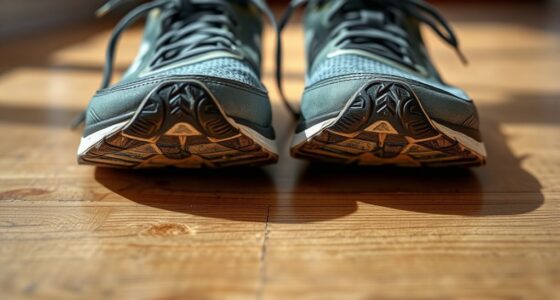

A Couch to 5K plan guides you from walking to running gradually, starting with manageable intervals to build endurance safely. Focus on maintaining proper form—upright posture, relaxed shoulders, and soft landings—to prevent injury and boost efficiency. Choosing supportive shoes suited to your foot type is also key for comfort and injury prevention. By sticking to a consistent routine and paying attention to your body, you’ll develop a sustainable habit that makes running enjoyable and achievable—there’s more to discover to help you succeed.
Key Takeaways
- The Couch to 5K program gradually increases running intensity through walk-run intervals to build endurance safely.
- It typically spans 9 weeks, with scheduled workouts to prevent overexertion and injury.
- Starting with manageable distances and walk breaks helps beginners develop confidence and consistency.
- Tracking progress and celebrating milestones motivate continued effort and habit formation.
- Proper form, supportive shoes, and rest are essential components for safe, sustainable advancement.
Getting Started: Running Form and Proper Shoes

Wondering how to start running and stick with it? The first step is understanding that building a sustainable running habit takes time and patience. To set yourself up for success, you need to focus on proper running form and choosing the right running shoes. These elements are essential because they help prevent injuries, improve efficiency, and make running more enjoyable. Proper running form involves maintaining an upright posture, keeping your shoulders relaxed, engaging your core, and landing softly on your midfoot or forefoot. When you run with good form, you reduce the strain on your joints and muscles, which means fewer aches and less risk of injury. It might feel awkward at first, but with practice, good form becomes second nature. You can start by practicing drills that emphasize posture and stride, like short strides or running with a slight forward lean. Watching your form and making small adjustments as you go along will make your runs smoother and more comfortable. Incorporating proper footwear into your routine is also crucial for a comfortable and injury-free running experience.
Choosing the right running shoes is equally important. Not all shoes are created equal, and the wrong pair can cause discomfort or even lead to injuries like shin splints or plantar fasciitis. When selecting running shoes, consider your foot type—whether you have flat feet, high arches, or neutral arches—and look for shoes that provide appropriate support. Visit a specialty running store where staff can analyze your gait and recommend shoes that fit your foot and running style. Make sure the shoes have good cushioning, especially in the heel and forefoot, to absorb shock during your runs. Comfort should be your top priority; if your shoes feel tight or uncomfortable at first, don’t force it. Properly fitted shoes should leave enough room in the toe box for wiggle room, and you should feel stable and supported without pinching or rubbing.
Once you’ve picked the right shoes and practiced proper running form, it’s time to start your couch to 5K plan. Begin with a walk-run routine, alternating between walking and jogging intervals. Keep your pace manageable, focusing on consistency rather than speed. As your endurance builds, gradually increase your running intervals and decrease walking time. Throughout your journey, pay attention to how your body feels—don’t push through pain, and take rest days when needed. Remember, the goal is to create a sustainable habit, so celebrate small victories and stay motivated. With good form, supportive shoes, and patience, you’ll find yourself running further and feeling better with each step. Soon enough, you’ll be crossing that 5K finish line with confidence and pride.
Frequently Asked Questions
How Do I Stay Motivated During My Running Journey?
You stay motivated by choosing the right running gear that makes you feel comfortable and confident. Listen to your favorite running podcasts to keep your mind engaged and make each session enjoyable. Set small, achievable goals and celebrate your progress along the way. Remember, consistency is key, so remind yourself why you started and focus on how far you’ve come, keeping the journey fun and rewarding.
What Should I Do if I Experience Pain While Running?
If you experience pain while running, stop immediately to prevent injury. Focus on injury prevention by resting and applying ice to reduce swelling. Gentle stretching and over-the-counter pain relief can help manage discomfort. Listen to your body, and don’t push through sharp or persistent pain. If pain continues, consult a healthcare professional to guarantee proper pain management and avoid long-term injuries, making your running journey safer and more enjoyable.
Can I Modify the Plan for Different Fitness Levels?
Yes, you can modify the plan for different fitness levels by creating personalized training that suits your current abilities. Use adaptive pacing to gradually increase intensity or duration, ensuring you stay comfortable and avoid injury. Feel free to add extra rest days or reduce running time if needed. The key is listening to your body and adjusting the plan so it challenges you without overwhelming you.
How Important Is Stretching Before and After Running?
Stretching before and after running is quite important. Proper stretching helps prepare your muscles, increase flexibility, and reduce injury risk. Before a run, focus on dynamic stretches to warm up your muscles, and after running, do static stretches to relax and lengthen them. Incorporating proper stretching into your routine enhances performance and prevents strains, making your running experience safer and more enjoyable.
What Should I Eat Before and After Runs?
Eating the right foods can boost your run and recovery. A small pre-run snack like a banana or toast provides quick energy, supporting your performance. After running, focus on post run recovery with protein and carbs, such as yogurt with fruit or a smoothie, to repair muscles and replenish glycogen. Studies show proper nutrition enhances endurance and reduces soreness, so plan your meals to fuel and recover effectively.
Conclusion
Now that you’ve got the basics down, remember that consistency is key. Imagine Sarah, who started with just a brisk walk and gradually built up her stamina. After a few weeks, she completed her first 5K, feeling stronger and more confident. Keep your focus on proper form and good shoes, and celebrate each milestone. Before you know it, you’ll be crossing that finish line, proud of how far you’ve come.