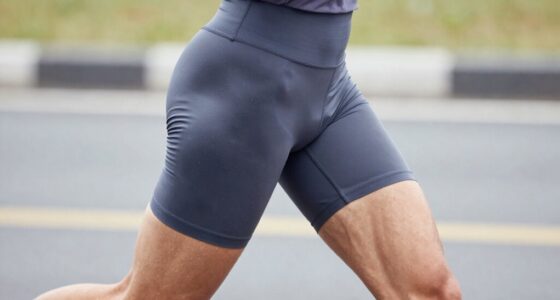
If you get a side stitch while running, focus on deep, controlled breathing—inhale through your nose and exhale through your mouth while slowing down to relax your diaphragm. Maintain good posture, keep shoulders relaxed, and avoid sudden increases in pace. Gently press into the affected area for relief and sip small amounts of water regularly. Staying consistent with these techniques helps prevent and ease stitches, and there’s more you can do to stay comfortable on your runs.
Prime for Young Adults — start your free trial
Fast free delivery, streaming and member deals for eligible 18–24 year olds.
As an affiliate, we earn on qualifying purchases.
Key Takeaways
- Practice deep, rhythmic breathing to relax the diaphragm and reduce muscle tension.
- Slow down immediately to decrease abdominal pressure and ease the stitch.
- Gently press into the affected area to temporarily alleviate pain.
- Maintain good posture with shoulders back and chest open for better airflow.
- Stay hydrated with small sips and electrolytes before and during runs.

Many runners have experienced that sharp, stabbing pain known as a side stitch, which often strikes unexpectedly during a workout. When it hits, it can be incredibly frustrating, making you slow down or stop altogether. The good news is that you can often manage or even prevent side stitches with some simple techniques. One effective approach involves focusing on your breathing. When you feel a stitch coming on, try to slow down and take deep, controlled breaths. Inhale deeply through your nose, filling your lungs fully, then exhale slowly through your mouth. This not only helps relax your diaphragm but also guarantees your muscles get enough oxygen, reducing the likelihood of cramping. Practicing rhythmic breathing—such as inhaling for three steps and exhaling for three steps—can also promote more consistent airflow and stabilize your core, which may prevent the onset of stitches.
Hydration strategies are equally important. Many side stitches are linked to dehydration or electrolyte imbalances, so staying properly hydrated is essential. Before you start running, drink water in small, regular sips rather than gulping large amounts all at once. During your run, continue to hydrate at regular intervals, especially on longer runs. However, avoid drinking too much immediately before or during exercise, as this can cause stomach discomfort and increase the chances of a stitch. Instead, aim for a steady intake of fluids and, if possible, include electrolyte-rich drinks to replenish lost minerals. Proper hydration helps keep your muscles and diaphragm functioning smoothly, reducing the risk of spasms that lead to side stitches.
In addition to breathing and hydration, pay attention to your pacing and body position. Running too fast or with poor posture can put extra strain on your core muscles and diaphragm, increasing the chance of a stitch. Try to maintain a relaxed posture, keeping your shoulders back and chest open, which allows your lungs to expand fully. If you notice a stitch developing, slow your pace immediately and focus on your breathing. Sometimes, gently pressing into the area with your fingers can help alleviate the pain temporarily while you catch your breath.
As an affiliate, we earn on qualifying purchases.
Frequently Asked Questions
Can Dehydration Cause Side Stitches During Running?
Yes, dehydration can cause side stitches during running. When your hydration levels drop, your muscles, including those around your abdomen, can cramp more easily, leading to discomfort. Maintaining proper hydration helps keep your muscles functioning smoothly. Additionally, focus on your running posture—standing tall and relaxed can reduce strain on your core muscles, decreasing the chances of side stitches. Stay consistently hydrated and pay attention to your form for a more comfortable run.
Do Side Stitches Mean I Am Overexerting Myself?
Side stitches don’t always mean you’re overexerting yourself. In fact, research shows that up to 70% of runners experience them at some point. These pains often result from poor breathing techniques or weak core muscles. To prevent or ease side stitches, focus on deep, controlled breathing and incorporate core strengthening exercises into your routine. Listening to your body and pacing yourself can also help avoid unnecessary discomfort.
Are Side Stitches More Common in Beginners or Experienced Runners?
Side stitches are more common in beginners because they haven’t yet mastered proper breathing techniques and maintaining good running posture. As you improve, focusing on deep, rhythmic breaths and keeping your posture upright helps prevent these discomforts. Experienced runners often develop better habits that minimize side stitches. So, if you’re new to running, pay attention to your breathing and posture to reduce the chances of experiencing side stitches during your runs.
Can Certain Foods Trigger Side Stitches While Running?
Ever notice how certain foods seem to cause discomfort mid-run? Diet triggers like high-fat, greasy, or sugary foods can definitely contribute to side stitches, especially if you have gastrointestinal issues. These foods slow digestion and increase bloating, which can irritate your diaphragm and lead to those pesky stitches. To keep running smoothly, avoid eating heavy meals right before your run and opt for easily digestible snacks instead.
How Long Does It Typically Take for Side Stitches to Go Away?
Side stitches usually go away within a few minutes once you pause and focus on deep, controlled breathing. To speed up recovery, try breathing techniques like diaphragmatic breathing, which helps relax your diaphragm. Engaging in core strengthening exercises also reduces the likelihood of side stitches during runs. If the pain persists beyond 10-15 minutes, consider slowing down or stopping to prevent further discomfort.
As an affiliate, we earn on qualifying purchases.
Conclusion
So, next time you feel that dreaded side stitch creeping in, remember these techniques. But here’s the twist—sometimes, the real secret lies in listening to your body and adjusting on the fly. Will your next run be free of discomfort, or will that stitch surprise you again? Keep experimenting, stay mindful, and stay tuned—because the key to conquering side stitches might just be around the corner, waiting to change your running game forever.
running waist belt with water bottles
As an affiliate, we earn on qualifying purchases.
As an affiliate, we earn on qualifying purchases.
As an affiliate, we earn on qualifying purchases.
Fall yard work Picks
leaf blowers
As an affiliate, we earn on qualifying purchases.