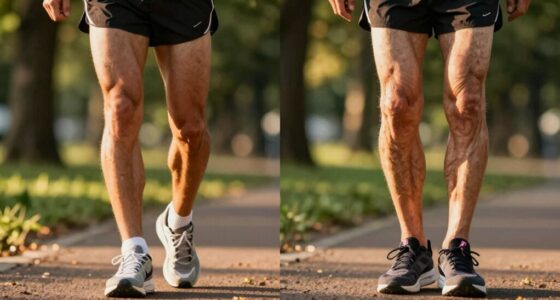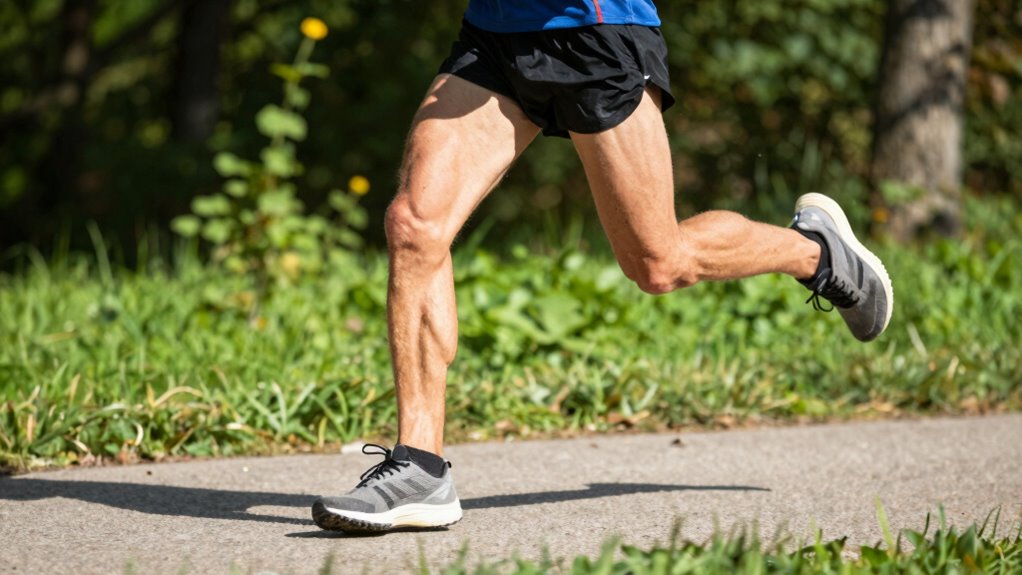
Running cadence is how many steps you take each minute, and it plays a key role in your running efficiency and comfort. A higher cadence, typically around 170 to 180 steps per minute, helps you avoid overstriding and reduces impact on your joints. It can make your run smoother, decrease fatigue, and lower your injury risk. Want to discover simple ways to optimize your cadence and improve your running? Keep going to find out more.
Prime for Young Adults — start your free trial
Fast free delivery, streaming and member deals for eligible 18–24 year olds.
As an affiliate, we earn on qualifying purchases.
Key Takeaways
- Running cadence refers to the number of steps taken per minute during a run.
- It influences running efficiency, comfort, and reduces injury risk by promoting proper stride mechanics.
- An optimal cadence typically ranges from 170 to 180 steps per minute.
- Increasing cadence helps prevent overstriding, decreasing stress on knees and hips.
- Monitoring and adjusting cadence can improve performance and lower fatigue over long distances.
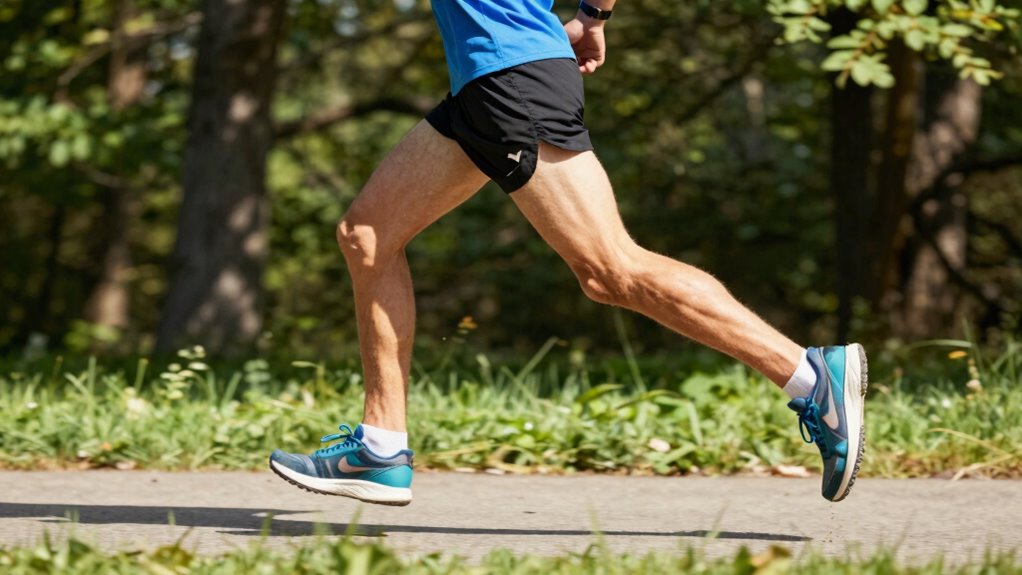
Have you ever wondered how runners maintain their rhythm and efficiency? The secret often lies in running cadence—the number of steps you take per minute. It’s a crucial aspect of running that influences your overall performance and comfort. When you focus on your cadence, you can improve your stride efficiency, which means using less energy to cover the same distance. A higher cadence encourages shorter, quicker steps that allow your muscles to work more efficiently and reduce the impact forces on your joints. This not only helps you run more smoothly but also decreases the risk of injury by preventing overstriding, where your foot lands too far in front of your body, causing unnecessary stress on your knees and hips.
Maintaining an ideal cadence isn’t about sprinting at top speed; it’s about finding a rhythm that feels natural yet efficient. Most runners aim for around 170 to 180 steps per minute, but this can vary depending on your height, running style, and terrain. When you consciously work to increase your cadence, you often find yourself landing more softly and with better control, which directly contributes to injury prevention. Over time, a consistent, higher cadence can help you develop a more balanced gait, reducing the likelihood of common running injuries like shin splints, plantar fasciitis, or stress fractures. It’s a simple adjustment with profound benefits, and you don’t need fancy equipment to get started—just a metronome app or even counting steps can help you find your ideal rhythm.
You can start by gradually increasing your cadence by about 5 to 10 percent, giving your body time to adapt. Pay attention to how your body feels during and after runs to ensure you’re not pushing too hard. A faster cadence naturally encourages you to land beneath your hips rather than reaching forward, which minimizes braking forces and keeps your momentum flowing forward. As you become more conscious of your stride and cadence, you’ll notice improved running economy—that is, using less energy for the same pace—and a reduction in fatigue. Incorporating cadence awareness into your training can also enhance your overall running technique. Additionally, understanding how landings and strides affect your injury risk can motivate you to make deliberate adjustments. Recognizing the importance of proper running mechanics can further prevent overuse injuries and improve your performance. It’s also helpful to be aware that appliance maintenance plans and regular checks on your gear can prevent unexpected issues that might interfere with your training. With consistent practice, you can also leverage technology tools to monitor and optimize your cadence more effectively. Over time, this focus on cadence not only helps you run more efficiently but also makes running feel more effortless and enjoyable. Remember, small, consistent adjustments can lead to big improvements in how you run, keep you injury-free, and make every step count.
As an affiliate, we earn on qualifying purchases.
Frequently Asked Questions
How Can I Measure My Running Cadence Accurately?
To measure your running cadence accurately, use a smartphone app or a fitness tracker that counts steps per minute. Pay attention to your running shoe technology, which can influence stride length and cadence. Running surface impact also plays a role; softer surfaces may cause you to slow down. Focus on maintaining a consistent step rate, ideally around 170-180 steps per minute, to improve efficiency and reduce injury risk.
What’s the Ideal Cadence for Different Running Distances?
The ideal cadence varies by distance; for sprinting, a higher cadence improves running efficiency, while for longer races, slightly lower cadences help maintain energy. Generally, aim for around 170-180 steps per minute to optimize efficiency and prevent injuries. Adjust your cadence based on your comfort and performance, ensuring you avoid overstriding. Consistently monitoring and fine-tuning your cadence enhances injury prevention and keeps you running smoothly over different distances.
Can Adjusting Cadence Prevent Injuries?
Studies show that increasing cadence from 150 to 180 steps per minute can reduce injury risk by up to 30%. Adjusting your cadence can indeed help prevent injuries by promoting better running efficiency and reducing the impact forces on your joints. By focusing on maintaining a ideal cadence, you minimize overstriding and uneven stress, making your runs safer and more comfortable. It’s a simple change with significant injury prevention benefits.
How Does Cadence Vary Between Beginner and Elite Runners?
As a beginner, your running cadence is usually lower, around 150-170 steps per minute, reflecting less refined running form and less training consistency. Elite runners often have a higher cadence, around 180+ steps per minute, thanks to better running form and consistent training. Increasing your cadence gradually can improve efficiency and reduce injury risk, helping you develop a more consistent training routine and better running mechanics over time.
What Tools Are Best for Tracking Running Cadence?
To track your running cadence, consider using a GPS watch or a smartphone app with built-in sensors that monitor your steps per minute. These tools help analyze your running biomechanics and identify how your shoe impact relates to your stride. Wearable devices like Garmin, Fitbit, or Runkeeper provide real-time feedback, making it easy to adjust your cadence for better efficiency and reduced injury risk.
As an affiliate, we earn on qualifying purchases.
Conclusion
Think of your running cadence as the heartbeat of your stride—guiding you through each mile like a steady drumbeat in a symphony. When you find that rhythm, you’re not just running; you’re syncing with your body’s natural tempo. Embrace this rhythm, and your runs become more than motion—they become a dance with your own strength. Keep your cadence steady, and you’ll discover a harmony that propels you forward, mile after mile.
As an affiliate, we earn on qualifying purchases.
As an affiliate, we earn on qualifying purchases.
Fall yard work Picks
leaf blowers
As an affiliate, we earn on qualifying purchases.