
Running cadence is the number of steps you take each minute while running, and it matters because it affects your overall efficiency and performance. A higher cadence usually means shorter strides, which can reduce impact on your joints and lower the risk of injuries. By optimizing your cadence, you can improve your speed and endurance while conserving energy. If you want to learn how to measure and improve your cadence, there’s more to explore.
Key Takeaways
- Running cadence is the number of steps taken per minute, influencing overall running efficiency and performance.
- Higher cadence often leads to shorter strides, reducing impact on joints and the risk of injury.
- An ideal cadence range is between 170 to 180 steps per minute, promoting better running form.
- Increasing cadence minimizes overstriding, allowing for energy conservation and improved pacing over longer distances.
- Optimizing cadence enhances speed, endurance, and overall running performance while supporting better mechanics.
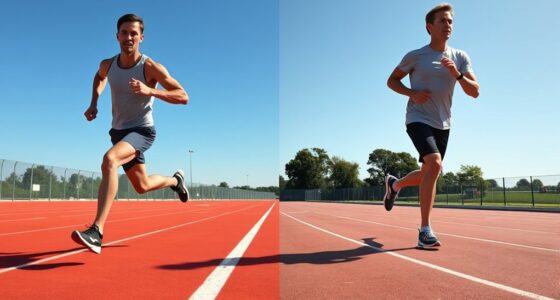
Have you ever wondered how your running cadence affects your performance? If you haven’t, it’s time to start paying attention. Your running cadence, or the number of steps you take per minute, plays a vital role in your overall running efficiency. A higher cadence often translates to shorter strides, which can help reduce the impact on your joints and improve your speed. By focusing on your stride frequency, you can find that sweet spot where efficiency meets performance.
When you increase your cadence, you’re not just taking more steps; you’re adjusting your entire running form. This adjustment can minimize overstriding, which occurs when your foot lands too far in front of your body. Overstriding can lead to wasted energy and increased risk of injury. Instead, by maintaining a higher cadence, you allow your feet to land closer to your center of gravity, promoting a more efficient running style. This not only conserves energy but also allows you to maintain your pace for longer periods.
If you’re looking to improve your running efficiency, consider practicing drills that target your cadence. Start by counting your steps for a minute while running at a comfortable pace. This will give you a baseline to work from. Aim for a cadence of around 170 to 180 steps per minute, which is often cited as an ideal range for many runners. While this might feel challenging at first, incorporating quick short strides into your runs can help you gradually increase your stride frequency without compromising your form.
You might find that increasing your cadence has a ripple effect on your performance. As you become more efficient, you’ll likely notice improvements in your speed and endurance. The less energy you waste on each stride, the more you can allocate to maintaining your pace and pushing through those tough miles. So, next time you lace up your shoes, think about your running cadence. It’s not just about how fast you run; it’s about how efficiently you run.
Incorporating cadence drills into your routine can be a game-changer. By focusing on your stride frequency, you’ll not only enhance your running form but also elevate your overall performance. Additionally, consider how eco-friendly practices can contribute to a healthier environment for your outdoor runs. So, pay attention to those steps—your body will thank you for it.
Top picks for "runn cadence matter"
Open Amazon search results for this keyword.
As an affiliate, we earn on qualifying purchases.
Frequently Asked Questions
How Can I Measure My Running Cadence Accurately?
To measure your running cadence accurately, count your steps for one minute while running at your normal pace. Make sure your running shoe fit is comfortable, as it can affect your stride length and overall performance. You can also use a fitness tracker or running app that monitors your cadence in real-time. By focusing on both your steps and how your shoes feel, you’ll get a clearer picture of your running efficiency.
Does Running Cadence Vary by Different Running Terrains?
Yes, running cadence does vary by different terrains. On softer surfaces like trails, your cadence might decrease due to more cushioning and uneven ground. Conversely, on harder surfaces, you may find your cadence increasing as you adapt to the firm impact. The shoes you wear also play a vital role; well-cushioned shoes can change how your body responds to various running surfaces, ultimately affecting your overall cadence. Pay attention to these factors during your runs!
Can Cadence Improve My Overall Running Performance?
You can definitely improve your overall running performance by focusing on cadence; it’s a game changer. By finding the right running shoe selection that complements your stride, you’ll notice better efficiency and speed. Plus, maintaining an ideal cadence helps with injury prevention, as it encourages proper form and reduces the risk of overstriding. So, keep an eye on your rhythm, and you’ll see the difference in your runs before you know it!
What Is the Ideal Cadence for Sprinting Versus Long-Distance Running?
The ideal cadence for sprinting is typically higher, around 180 steps per minute, while long-distance running often falls between 160-180. For sprinting, you’ll want a shorter stride length to maintain speed and power. In contrast, for long-distance, a longer stride can help conserve energy. Focus on maintaining good running form; a balanced cadence and stride length will enhance your efficiency and performance in both sprinting and longer runs.
Are There Specific Tools or Apps to Track Cadence Effectively?
Yes, there are several tools and apps to track your cadence effectively. Many running apps, like Strava and Runkeeper, offer cadence metrics. You can also use wearable devices like smartwatches or fitness trackers that analyze your running form. Some shoe technology now includes built-in sensors to monitor your cadence in real-time. By leveraging these tools, you can improve your running efficiency and enhance your overall performance.
Conclusion
In the grand symphony of running, your cadence isn’t just a number; it’s the heartbeat of your performance! By mastering your stride rate, you’re not merely taking steps—you’re unlocking the power to fly, defy gravity, and transform into a running superhero! So, don’t underestimate the magic of those little footfalls; they hold the secret to faster times, fewer injuries, and an exhilarating running experience that’ll leave you feeling invincible. Embrace your rhythm and soar!