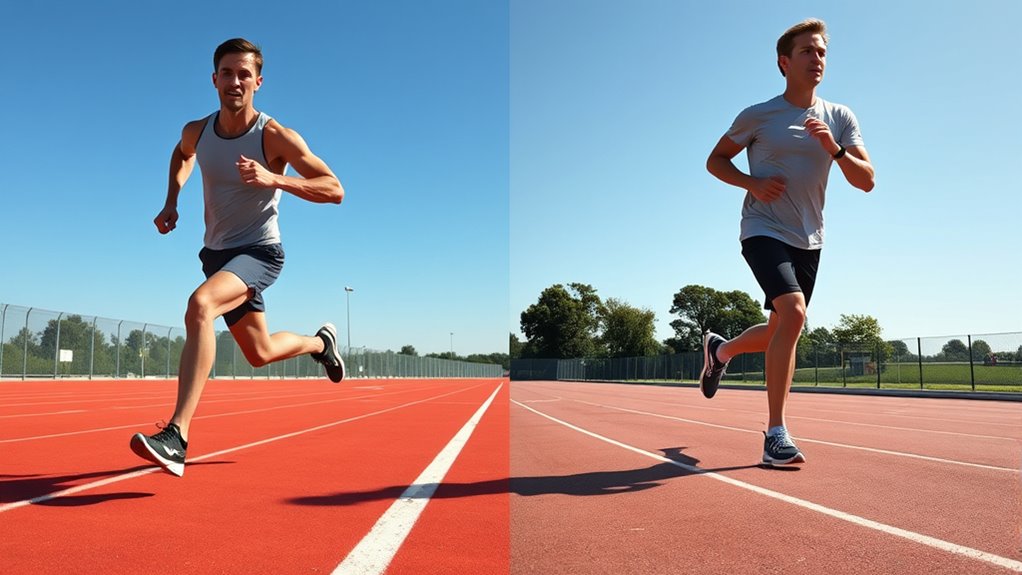

Running and jogging may seem similar, but they differ in pace, impact, and purpose. Running involves faster speeds and more force on joints, while jogging is slower and gentler on your body. Your goals, fitness level, and injury risk influence which activity suits you best. Understanding these differences helps you make better choices and optimize your routines. Keep exploring to discover how to tailor your activity for maximum benefit.
Key Takeaways
- Running is a faster, more intense activity exceeding 6 mph, while jogging is a slower, relaxed pace around 4-5 mph.
- Running involves higher impact and joint stress compared to the lower-impact nature of jogging.
- Both activities burn calories and improve fitness but differ in energy expenditure and intensity levels.
- Proper footwear and technique are essential for both, with running requiring more support due to increased force.
- The main difference lies in speed, intensity, and the impact on muscles and joints during each activity.

Under Armour Men's Charged+ Assert 11 Running Shoe, (001) Black/Black/White, 8, US
- Upper Material: Athletic mesh with leather overlays
- Cushioning: Charged+ midsole for comfort
- Outsole: Rubber with traction and flex grooves
As an affiliate, we earn on qualifying purchases.
As an affiliate, we earn on qualifying purchases.
Defining Running and Jogging

While running and jogging are often used interchangeably, they actually have distinct definitions. Running involves a faster pace, where your running form becomes more dynamic, with a greater emphasis on stride length and ground contact time. Jogging, on the other hand, is a more relaxed activity that focuses on maintaining a comfortable, steady tempo. Your jogging technique typically emphasizes a smoother, more consistent rhythm, with less impact and strain. When you run, your body naturally adapts to higher speeds, engaging more muscles and energy. Conversely, jogging emphasizes endurance and sustainability over speed. Understanding these differences helps you tailor your training, ensuring you focus on proper running form or jogging technique depending on your fitness goals.

New Balance Women's Fresh Foam Arishi V4 Running Shoe, Summer Fog/Nimbus Cloud/Light Gold Metallic, 8
- Cushioned Fresh Foam Midsole: Responsive comfort with every step
- Breathable Mesh Upper: Keeps feet dry with superior airflow
- No-sew Construction: Reduces weight and enhances durability
As an affiliate, we earn on qualifying purchases.
As an affiliate, we earn on qualifying purchases.
Speed and Pace Differences

Running typically involves maintaining a faster pace than jogging, often exceeding 6 miles per hour, whereas jogging usually stays within a comfortable range of 4 to 5 miles per hour. This difference reflects distinct speed thresholds that define each activity. As you increase your pace, you experience greater pace variations, pushing beyond your usual jogging speed into running territory. Jogging keeps you beneath certain speed thresholds, allowing for sustained, relaxed movement. When you shift to running, your pace becomes more intense and challenging, often requiring more effort to sustain. These differences in speed and pace are key in determining the intensity and purpose of your workout. Understanding how pace variations influence your performance helps you tailor your exercise to your fitness goals. Additionally, incorporating AI-powered training tools can help monitor and optimize your running and jogging routines for better results. Recognizing these pace distinctions can also help prevent overexertion and injury during your workouts. Moreover, knowing the benefits of proper pacing can enhance your overall endurance and motivation during exercise sessions.

Running & Sport Insoles for Men & Women – Athletic Sneaker Inserts
- Designed for High-Intensity Sports: Supports running, jumping, cross-training
- Over 47% Energy Return: Provides superior cushioning and shock absorption
- Moisture-Wicking Layer: Keeps feet dry and fresh during activity
As an affiliate, we earn on qualifying purchases.
As an affiliate, we earn on qualifying purchases.
Impact on the Body and Joints

The impact on your body and joints varies considerably between jogging and running, largely due to the differing stresses each activity places on your musculoskeletal system. Running typically generates higher joint stress because of increased force and speed, which can lead to greater muscular impact. This heightened stress may also influence your overall injury risk, especially if proper precautions are not taken. Proper training and technique can significantly reduce the risk of injury during either activity. This is why understanding musculoskeletal stress is essential for injury prevention. Proper technique and gradual progression can help your joints, especially knees and ankles, absorb more shock during running, raising the risk of overuse injuries if not managed properly. Jogging, on the other hand, involves a lower pace and gentler impact, resulting in reduced joint stress and less strain on your muscles. Additionally, impact forces differ between the two activities, affecting how your body adapts over time. However, both activities engage your muscles differently, with running demanding more from your muscular system overall. Understanding these differences helps you choose the activity that best fits your body’s capacity and injury prevention strategies. Additionally, maintaining appropriate training intensity can help prevent overtraining and related injuries during both jogging and running.

EZON GPS Running Watch with Distance Pace Alarm and Calorie Counter and Stopwatch for Men T031B01 Black
- Precise GPS Tracking: Cold start in 1 minute, seamless connection
- Auto Time Synchronization: Automatically syncs time based on location
- Easy Workout Data Access: One-tap to view distance, pace, calories, and time
As an affiliate, we earn on qualifying purchases.
As an affiliate, we earn on qualifying purchases.
Energy Expenditure and Calories Burned

Since running places greater stress on your joints and muscles compared to jogging, it also tends to burn more calories in the same amount of time. Your heart rate rises higher during running, boosting your metabolic rate and increasing energy expenditure. A faster heart rate means your body works harder, burning calories more efficiently. Jogging, being a lower-impact activity, still raises your heart rate, but generally not as much as running, so you burn fewer calories per minute. The actual calories burned depend on factors like your weight, speed, and duration. Overall, if your goal is maximizing calorie burn, running offers a more intense workout, but it’s essential to balance intensity with your fitness level to prevent injury. Incorporating proper training strategies can help improve performance and reduce injury risk during these activities, especially when considering training progression to build endurance safely. Additionally, understanding your energy expenditure can help tailor your exercise routine to meet your specific fitness goals. Recognizing how different activities affect your calorie burn rate can help you optimize your workout plan for better results. For example, understanding the impact on joints can assist in choosing the most suitable activity for your health and injury prevention.
Training Goals and Suitability

Choosing between running and jogging largely depends on your training goals and physical fitness level. If you aim for higher training intensity and faster cardiovascular improvements, running may suit you better. Conversely, if you want a lower-impact activity focused on consistency and injury prevention, jogging fits well. Consider the table below to match your goals with activity type:
| Goal | Suitable Activity |
|---|---|
| Improve speed and endurance | Running |
| Focus on consistency | Jogging |
| Minimize injury risk | Jogging |
| Maximize training intensity | Running |
Your choice impacts your progress and injury prevention strategies. Match your goals with activity intensity, and you’ll optimize your workouts effectively. Additionally, understanding water resistance can help you enhance your training by incorporating aquatic exercises for low-impact conditioning. Moreover, staying informed about sector performance metrics can guide you in diversifying your training routines for better overall fitness. Engaging in cross-training methods can further improve your performance and reduce the risk of overuse injuries. Proper recovery and training variation are also essential for sustained progress and injury prevention.
Equipment and Attire Considerations

Selecting the right equipment and attire is vital to guarantee comfort, safety, and performance during your running or jogging sessions. Your running gear should include moisture-wicking clothing that keeps you dry and prevents chafing. Proper jogging shoes are essential; opt for lightweight, cushioned jogging shoes that provide support and shock absorption. Fit is key—ill-fitting shoes can cause blisters or injuries, so try them on later in the day when your feet are swollen. Consider the weather and choose breathable layers for hot days and thermal gear for cold weather. Avoid cotton, as it traps sweat and can chafe. Investing in quality gear designed for running or jogging can enhance your performance and reduce the risk of injury. Additionally, understanding your personality traits can help tailor your training approach and improve motivation. Paying attention to proper footwear fit can significantly impact your comfort and injury prevention during your runs. Incorporating appropriate clothing materials that wick moisture effectively can further optimize your running experience. Using sound healing science principles, such as listening to calming music or specific frequencies, can also help maintain focus and relaxation during your workout. Choosing apparel made from technical fabrics can help regulate body temperature and keep you comfortable throughout your workout.
Psychological and Motivational Factors

Psychological and motivational factors play a crucial role in maintaining consistency and enjoyment in your running or jogging routine. Your mindset influences how you approach each session, shaping your resilience against setbacks and fatigue. Staying motivated helps you push through tough moments, whether it’s completing a challenging distance or overcoming mental barriers. Developing mental resilience allows you to stay committed even when motivation wanes, turning obstacles into opportunities for growth. Celebrating small victories boosts your confidence and keeps your focus sharp. Visualizing your goals and reminding yourself of your progress can reinforce your dedication. Recognizing the importance of mental resilience can help you develop strategies to stay engaged during tough times. Additionally, understanding net worth and other personal achievements can motivate you by reminding you of what you can accomplish through perseverance. Ultimately, a positive mindset and strong motivation ensure you stay engaged, making running or jogging a sustainable and rewarding part of your lifestyle.
Myths and Common Misconceptions

Many people carry misconceptions about running and jogging that can hinder their progress or lead to frustration. One common myth is that you must fit into specific race categories to benefit from either activity, but that’s not true—both can be tailored to your fitness level. Another misconception involves footwear technology; some believe expensive shoes are necessary for effective running, but proper footwear depends on your gait and comfort, not just price. People also assume jogging is always less intense than running, but both can be adapted to your goals. Understanding these myths helps you choose the right approach without unnecessary worry or expense. Clear knowledge about race categories and footwear technology can make your running or jogging experience more enjoyable and effective.
Frequently Asked Questions
Can Running or Jogging Help With Weight Loss Effectively?
Yes, running or jogging can effectively help with weight loss. You burn calories faster with running due to its higher intensity, but jogging still offers significant calorie burn. Incorporate pace variation to boost your metabolism and maximize fat loss. Consistency matters, so find a comfortable pace you can maintain while gradually increasing intensity for better results. Staying active regularly with either running or jogging supports your weight loss goals.
How Do Running and Jogging Compare in Injury Risk?
Imagine you’re starting a running routine; your risk of injury depends on shoe impact and joint stress. Running generally has a higher injury risk than jogging because it involves greater impact forces, increasing joint stress. For example, a runner with worn-out shoes might experience more stress on knees and ankles, leading to injuries. Choosing proper footwear and gradually increasing intensity helps minimize injury risks in both activities.
Which Is Better for Cardiovascular Health: Running or Jogging?
You’ll likely benefit more from running for cardiovascular health because it improves your running economy and boosts your heart efficiency. Running at a faster pace challenges your cardiovascular system more effectively than jogging, which often maintains a steady jogging cadence. While jogging is gentler and easier to sustain, running pushes your limits, increasing endurance and heart strength over time. Choose based on your fitness level and goals to maximize your cardiovascular benefits.
Do Running and Jogging Require Different Training Plans?
Preparing for running and jogging requires different training plans. You’ll want to tailor your training intensity to match each activity’s demands, pushing harder for running while easing into jogging. Incorporate recovery strategies like rest days and gentle stretching to prevent injury and promote progress. By customizing your training, you’ll build endurance efficiently and enjoy both activities without burnout, ensuring your fitness journey stays focused and fulfilling.
How Does Terrain Affect Running Versus Jogging?
Terrain substantially impacts your running and jogging. On trail terrain, running requires more effort due to uneven surfaces, increasing surface impact and risking injury. Jogging on similar terrain is gentler, reducing impact and making it easier to maintain pace. Flat surfaces lessen surface impact for both, but uneven trail terrain emphasizes the need for proper footwear and caution. Adjust your intensity based on terrain to prevent injury and maximize comfort.
Conclusion
Think of running and jogging as two melodies in a song—you choose the tempo that suits your rhythm. Whether you stride with vigor or move at a gentle pace, each plays its own tune in your fitness symphony. Embrace the harmony, knowing both lead you toward strength and well-being. So, pick your beat, stay in motion, and let your journey compose a masterpiece of health—one step at a time.