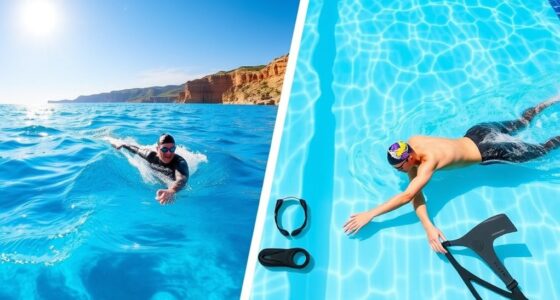
You might hold your breath without fully exhaling or forget to relax your lungs, making breathing tricky. Lifting your head too high or turning sharply can knock your body out of alignment. Sinking hips and poor posture slow you down by creating drag. Overkicking or using inefficient techniques wastes energy, while incomplete arm strokes and splashy movements reduce propulsion. If you keep practicing these tips, you’ll discover how to improve your technique and swim more smoothly.
Key Takeaways
- Exhaling too quickly or without relaxation causes tension and reduces swimming efficiency.
- Incorrect head positioning, like lifting or sharp turns, disrupts body alignment and breathing flow.
- Sinking hips and poor posture increase drag and hinder smooth movement through the water.
- Overkicking or inefficient techniques waste energy and decrease overall speed.
- Incomplete arm strokes and excessive splash limit propulsion and increase fatigue.
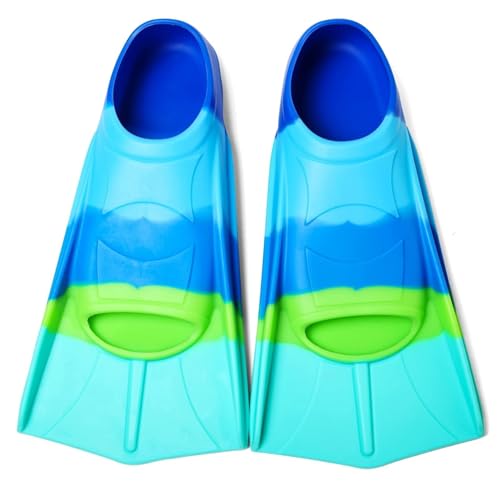
Foyinbet Kids Swim Fins,Short Youth Flippers Swimming Training Fins for Lap Swimming and Training for Children Girls Boys Beginners XS
Kids flippers for swimming – Material of fins is soft,Can hop out easily and move around without tripping,Does…
As an affiliate, we earn on qualifying purchases.
As an affiliate, we earn on qualifying purchases.
Holding Your Breath Without Proper Exhalation
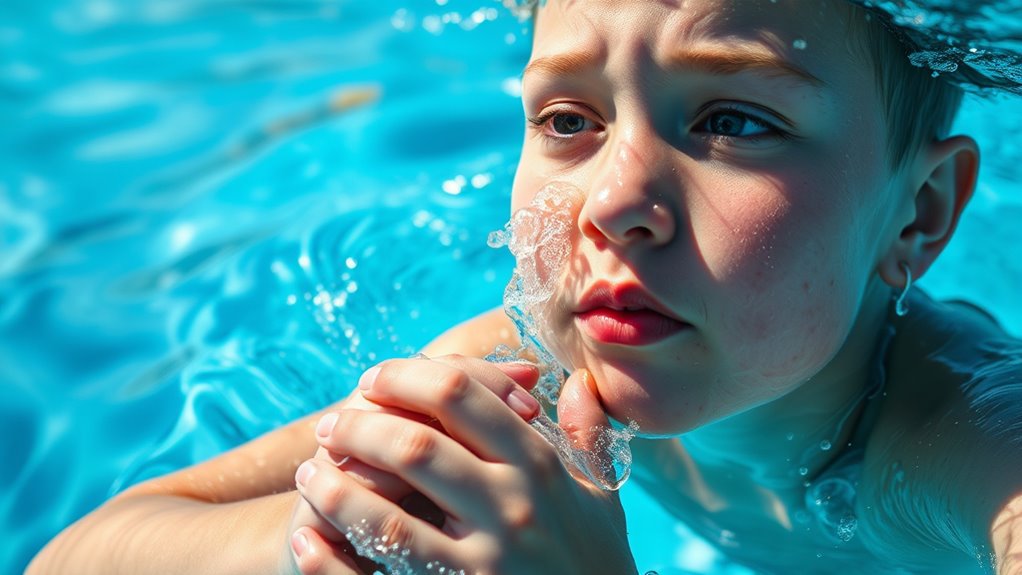
Many beginners hold their breath underwater without focusing on proper exhalation techniques, which can lead to quicker fatigue and poor swimming performance. Instead of exhaling steadily, they often breathe out too quickly or forget to relax their lungs, causing unnecessary tension. To improve, practice controlled exhalation on land first, humming gently as you breathe out to establish a steady pace. This helps you develop a rhythm that you can carry into the water. Remember, exhaling fully into the water makes inhaling easier and more efficient. Consistent, relaxed exhalation reduces the need for rapid, forceful breaths during swimming. By mastering this, you’ll conserve energy, improve your stroke, and swim more smoothly, making your practice more enjoyable and effective.
TYR Classic Kickboard – Swim Training Kickboard for Technique, Kick Strength & Pool Training, Lightweight EVA Foam Construction
FOR ALL AGES: Designed for swimmers of all ages, the TYR Classic Kickboard is ideal for swim training…
As an affiliate, we earn on qualifying purchases.
As an affiliate, we earn on qualifying purchases.
Incorrect Head Position During Breathing
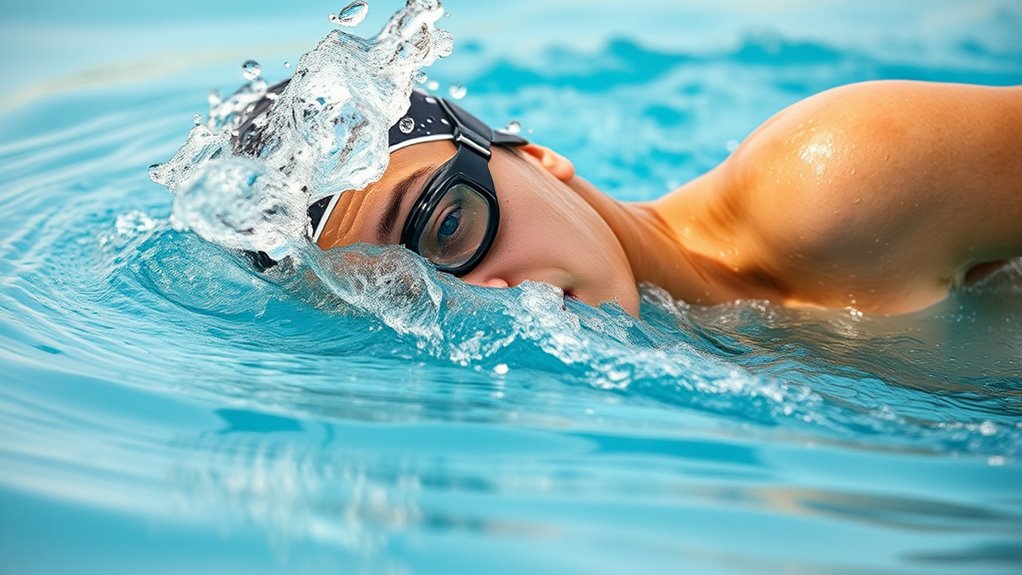
Improper head positioning during breathing disrupts your swimming rhythm and reduces efficiency. When you lift your head too high or turn it sharply, it throws off your body alignment and makes your stroke less smooth. This can cause unnecessary drag and fatigue. To improve, keep your head stable and rotate it gently to the side while keeping your face in the water. Focus on these key points:
Keep your head stable and rotate gently to the side for smoother, more efficient swimming.
- Avoid jerking your head out of the water during breath
- Rotate your head while keeping it in a neutral, aligned position
- Do not lift your chin or tilt your head excessively
- Maintain a steady head position to keep your body streamlined
- Understanding Free Floating and how it influences your swimming technique can help you better visualize your progress in improving your swimming efficiency. Developing a proper body position is essential for maintaining balance and reducing drag throughout your swim. Additionally, ensuring proper ventilation considerations can help you maintain comfortable breathing patterns and overall technique.
Speedo Unisex-Adult Swim Training Snorkel Bullet Head
Engineered with the most hydrodynamic features
As an affiliate, we earn on qualifying purchases.
As an affiliate, we earn on qualifying purchases.
Sinking Hips and Poor Body Alignment
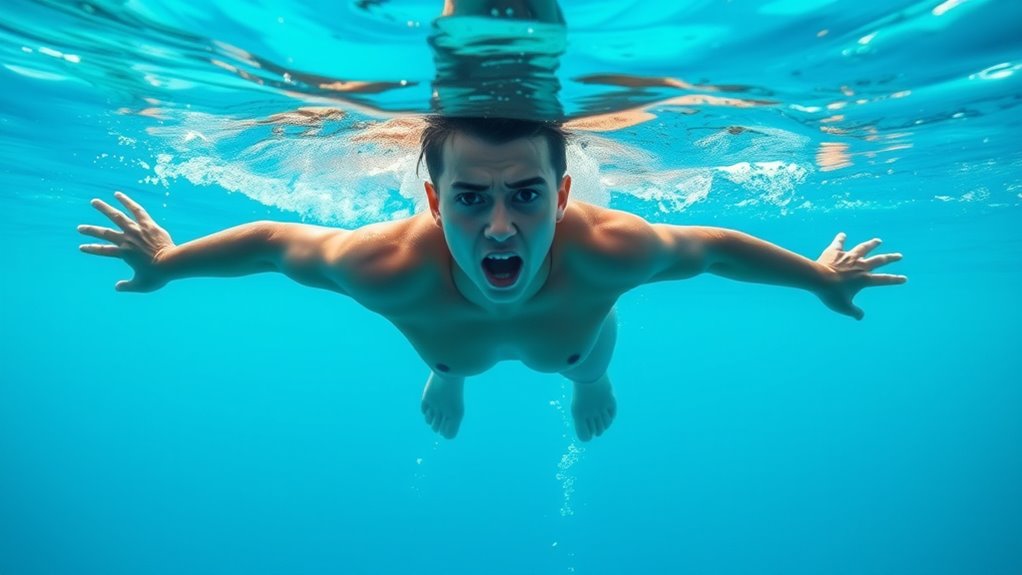
When your hips sink lower in the water, it creates unnecessary drag that slows you down. This poor body position forces your legs to drop, increasing resistance and making every stroke harder. Looking forward while swimming can cause your lower back to arch and your hips to sink, disrupting your alignment. To improve, focus on keeping your hips near the surface by engaging your core and maintaining a streamlined posture. Keep your head in line with your spine, avoiding excessive lifting or looking down. A flat, aligned body reduces water resistance and helps you swim more efficiently. Remember, a stable body position allows your arms and legs to move smoothly, conserving energy and boosting your speed. Proper alignment is key to better, more effortless swimming. Being mindful of your body position throughout your swim can significantly enhance your technique and endurance. Additionally, practicing body awareness exercises can help you develop better control over your posture in the water. Developing a consistent core engagement routine can further support maintaining proper body alignment during your swims.

Contour Swim Paddles Hand, Swim Training Hand Paddles with Adjustable Straps, Swimming Hand Paddles for Women and Men
Premium Quality: The swim hand paddles are made of PC Material, they are light weight, does not impose…
As an affiliate, we earn on qualifying purchases.
As an affiliate, we earn on qualifying purchases.
Overdoing the Kicks or Using Inefficient Kicking Techniques
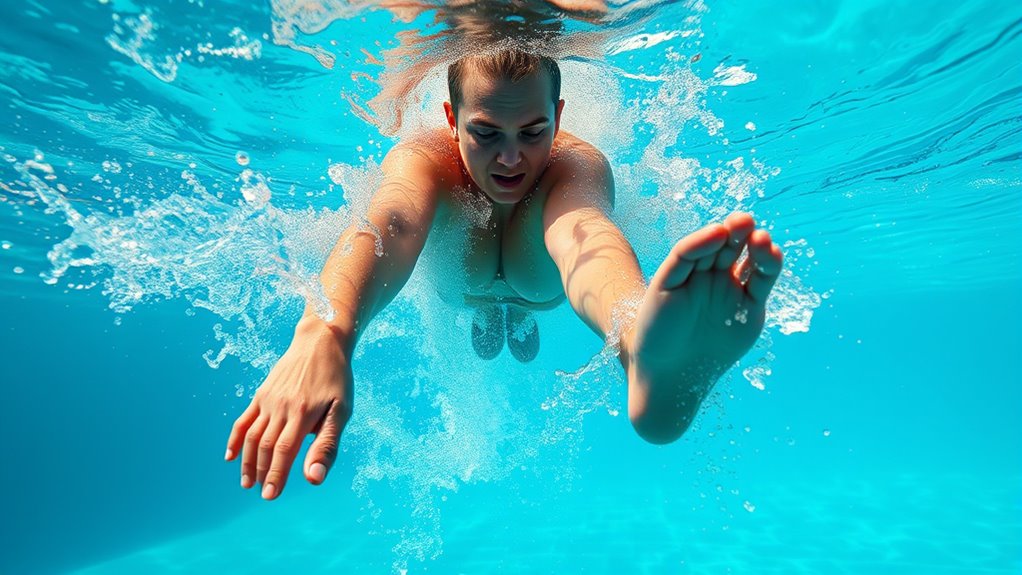
While kicking is essential for maintaining body position and propulsion, overdoing it or relying on inefficient techniques can waste your energy and slow you down. Large, wide kicks may look powerful but actually create more drag, making you less efficient. Short, quick kicks are better for conserving energy and keeping your hips up. Over-kicking also diverts focus from your arm strokes and breathing. Additionally, distance swimmers should minimize kick effort to save energy for longer sets. Excessive kicking can tire you out faster and reduce overall speed. Instead, aim for a steady, controlled rhythm that supports your body position without unnecessary effort. Striking the right balance helps you move efficiently through the water and prevents fatigue.
Incomplete Arm Strokes and Excessive Splashing
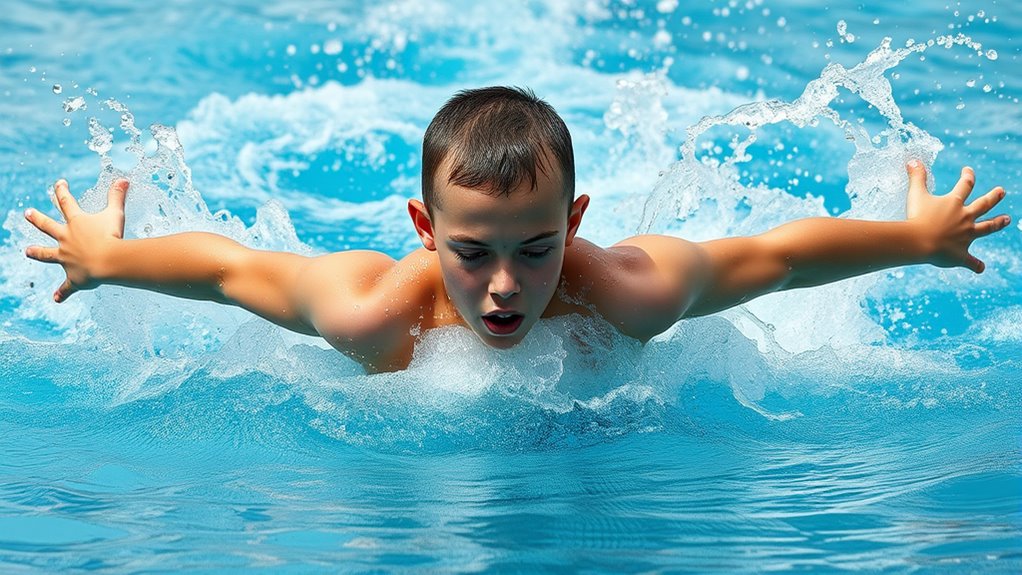
Incomplete arm strokes reduce your swimming efficiency by preventing you from fully harnessing the power of each pull. When you don’t extend your arm completely or pull back to your hip, you miss out on valuable propulsion. Make sure your hand enters the water fingertips first, then glide smoothly into a full stretch before pulling back. Avoid rushing the arm movement; instead, focus on a controlled, continuous motion that maximizes energy transfer. Excessive splashing often results from abrupt hand entry or pulling with stiff, straight arms. Instead, enter the water gently, with fingertips touching first, and keep your hand and forearm relaxed. Aim for minimal splash to reduce resistance and increase your forward speed. Proper arm extension and controlled entry help you swim more efficiently and conserve energy. Additionally, understanding toilet flushing mechanisms can help you troubleshoot minor issues with your bathroom fixtures.
Frequently Asked Questions
How Can I Improve My Breathing Rhythm in Swimming?
To improve your breathing rhythm, focus on exhaling fully and steadily underwater before your next inhale. Practice humming or blowing bubbles on land to develop a controlled exhale. As you swim, turn your head smoothly while keeping it in the water, avoiding jerking or over-rotation. Maintain a consistent pace, timing your breath with your stroke, and keep your body aligned to reduce drag. With regular practice, your breathing will become more natural and efficient.
What Are Common Signs of Poor Body Alignment in the Water?
You notice your hips sinking or your legs dropping lower than your body, which signals poor alignment. If your head lifts too high or your body feels uneven, it throws off your streamline. You might also feel resistance or drag, indicating your body isn’t flat and horizontal. Keep your hips near the water surface, maintain a steady head position, and focus on a streamlined posture to improve your alignment and reduce drag.
How Do I Prevent Over-Rotation During Breathing?
You prevent over-rotation during breathing by keeping your head stable and only rotating it enough to breathe. Focus on turning your face to the side while keeping your body aligned, rather than twisting your entire torso. Practice this movement on land first, then apply it in water. Make certain your body stays steady, and avoid lifting your head too high, which can disrupt your balance and increase drag.
What Are Effective Drills to Reduce Splash and Resistance?
Did you know that water’s density is 800 times greater than air, making splash a major obstacle? To reduce splash and resistance, practice fingertip entry drills, focusing on a gentle, gradual water entry. Keep your fingertips relaxed and touch the water softly, avoiding slapping or splashing. Concentrate on smooth, controlled arm movements, and enter water with fingertips first, which minimizes disturbance and helps you move more efficiently through the water.
How Do I Develop a More Efficient Arm Stroke Technique?
To develop a more efficient arm stroke, focus on long, smooth pulls with a high elbow bend. Make sure your hands enter water fingertips first, gradually, to reduce splash. Reach all the way back to your hip before starting the next stroke. Keep your elbows above the water, and avoid rushing the recovery. Practice drills like catch-up and fingertip drag to improve control, power, and flow in your arm movements.
Conclusion
By avoiding these common mistakes, you’ll transform your swimming experience from a daunting task into a smooth, confident glide. Think of your strokes as a dance—each movement should flow seamlessly. Remember, mastering proper breathing, body position, and technique isn’t just about avoiding errors; it’s about opening your true potential in the water. So, are you ready to make waves and become the swimmer you’ve always wanted to be? Immerse yourself and embrace the journey!