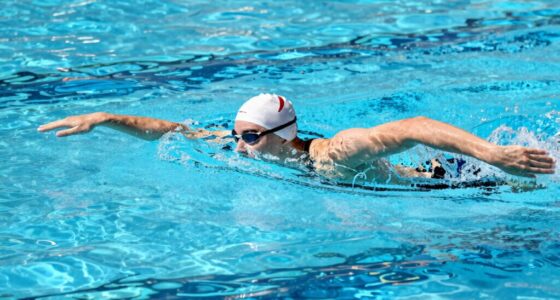
To master the butterfly stroke, start by synchronizing your arm movements. Bring both arms forward, then sweep them back in a wave-like motion. Coordinate your breathing by lowering your chin while inhaling, keeping your head aligned. Maintain a strong body position with your hips near the surface and kick rhythmically. Practicing these elements together will enhance your efficiency in the water. Keep at it, and you’ll discover even more tips to elevate your technique!
Key Takeaways
- Initiate the butterfly stroke by synchronizing both arms moving forward and then sweeping outward and back towards your hips in a wave-like motion.
- Maintain a relaxed grip during the pull phase while focusing on fluid, coordinated arm movements for efficiency and power.
- Keep your hips near the water surface and use a rhythmic dolphin kick to enhance propulsion and balance.
- Coordinate your breathing with arm movements, inhaling quickly as your head lifts while keeping your chin low to maintain alignment.
- Dedicate practice sessions to refine technique, focusing on consistency and synchronization for improved performance over time.
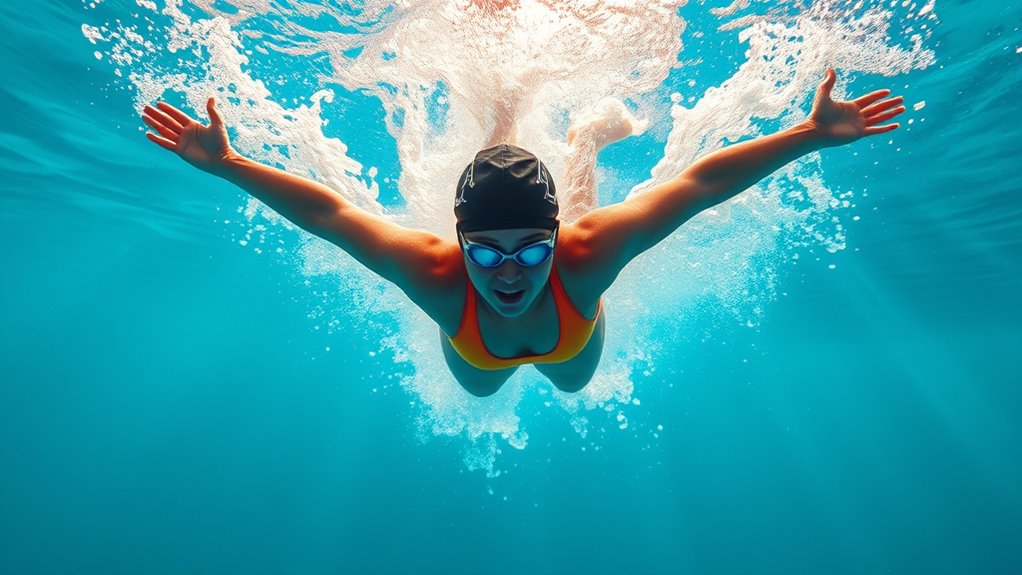
If you’re enthusiastic to master the butterfly stroke, you’re in the right place. This challenging yet rewarding stroke can elevate your swimming skills, but it requires practice and attention to detail. The butterfly stroke is all about combining your movements, especially your arm coordination and breathing rhythm, to create a smooth and efficient technique.
First, let’s focus on your arm movement. As you initiate the stroke, you’ll want to bring both arms forward simultaneously, extending them in front of you. When you’re ready to pull, your arms should sweep outwards and then back toward your hips in a fluid motion. Think of your arms as part of a wave, moving together to generate power. It’s essential to maintain a strong yet relaxed grip. If your arms aren’t coordinated, you’ll find it difficult to gain speed and maintain your rhythm. Practice this movement slowly at first; focus on making it consistent and synchronized.
Focus on synchronized arm movements, sweeping them like waves to enhance your butterfly stroke technique. Practice for consistency and rhythm.
Now, let’s talk about the breathing rhythm. One of the most common mistakes beginners make is lifting their heads too high to breathe. Instead, as your arms reach the end of their stroke, lower your chin just enough to take a breath without disrupting your body’s alignment. Your breathing should feel natural and should fit seamlessly into your stroke. Inhale quickly as you lift your head, then return your face to the water as your arms recover. Finding that balance will help you maintain speed and efficiency.
While practicing, pay close attention to your body’s position in the water. Keep your hips near the surface and kick with a strong, rhythmic dolphin kick. This kick should help propel you forward while your arms and breathing work together. Remember, your legs play a significant role in your overall coordination, so don’t underestimate their importance. In fact, high refresh rates in your swimming training can enhance your overall performance in mastering the butterfly stroke.
As you develop your technique, try to combine the elements of arm coordination and breathing rhythm. This combination is key to mastering the butterfly stroke. It may feel awkward initially, but with consistent practice, you’ll start to notice improvements. Set aside time during your swim sessions to focus solely on these aspects. With dedication and patience, you’ll soon find yourself gliding through the water with confidence, making the butterfly stroke a powerful addition to your swimming repertoire. Keep at it, and enjoy the journey!
swimming butterfly stroke training aids
As an affiliate, we earn on qualifying purchases.
As an affiliate, we earn on qualifying purchases.
Frequently Asked Questions
What Are Common Mistakes Beginners Make in Butterfly Stroke?
Common mistakes you might make in the butterfly stroke include timing errors and arm movement issues. You may find yourself not synchronizing your arms and legs properly, leading to inefficient propulsion. If you lift your arms too high or don’t pull through the water effectively, it can slow you down. To improve, focus on coordinating your movements and practicing your rhythm, ensuring your arms and legs work together seamlessly throughout the stroke.
How Can I Improve My Butterfly Stroke Breathing Technique?
To improve your butterfly stroke breathing technique, focus on perfecting your breathing rhythm. Did you know that swimmers often take about 2-3 breaths per length in competitive settings? For effective inhalation timing, turn your head just before your arms enter the water. This allows you to breathe quickly without disrupting your stroke. Practice this consistently, and you’ll notice how a seamless breath can enhance your overall performance in the water.
What Equipment Is Best for Practicing Butterfly Stroke?
To practice your butterfly stroke effectively, you’ll want to use a few key pieces of equipment. Swimming goggles are essential for clear vision underwater, helping you maintain focus on your technique. Incorporating kickboard drills can also improve your leg strength and body position. Try using a kickboard while focusing on your dolphin kick, which is vital for the butterfly stroke. Combining these tools will enhance your overall performance and boost your confidence in the water.
How Does Butterfly Stroke Compare to Other Swimming Strokes?
Think of the butterfly stroke as a powerful wave crashing against the shore—it’s both beautiful and demanding. Compared to other strokes, butterfly combines grace with intensity, often requiring higher energy expenditure. While its stroke efficiency can be less than freestyle or backstroke, mastering it can boost your overall strength and rhythm in the water. Embrace the challenge, and you’ll find that every powerful motion can elevate your swimming experience.
What Are the Benefits of Mastering the Butterfly Stroke?
Mastering the butterfly stroke offers you numerous benefits. It enhances your mental focus, forcing you to synchronize your movements and breathe effectively. This stroke also builds physical strength, engaging multiple muscle groups, from your core to your shoulders. As you progress, you’ll notice increased endurance and improved overall swimming skills. Plus, mastering such a challenging stroke can boost your confidence both in and out of the pool. You’ll feel accomplished and empowered!
As an affiliate, we earn on qualifying purchases.
Conclusion
Mastering the butterfly stroke might seem intimidating at first, but with practice, you can make it your own. Imagine Sarah, a beginner swimmer who struggled with coordination. After consistent practice, she not only perfected her technique but also won a local swim meet. You can achieve similar results by focusing on your timing and body movement. So plunge in, stay patient, and watch your skills soar as you conquer the butterfly stroke!
As an affiliate, we earn on qualifying purchases.
swimming goggles with low profile design
As an affiliate, we earn on qualifying purchases.
As an affiliate, we earn on qualifying purchases.