
Dryland exercises can markedly boost your swimming performance by enhancing strength, flexibility, and overall conditioning. Incorporating movements like push-ups, planks, and resistance band routines builds key muscles and improves your breathing technique. Plyometric exercises like box jumps increase explosive power for sprints. Don’t forget dynamic stretches and yoga for mobility and flexibility; they help prevent injuries and improve your range of motion. Follow along to discover key exercises and techniques to elevate your swimming game even further.
Key Takeaways
- Incorporate push-ups and resistance band exercises to strengthen key muscles used in swimming strokes and improve overall power.
- Engage in planks to enhance core stability, which is crucial for maintaining a streamlined position in the water.
- Practice controlled breathing techniques during dryland exercises to boost lung capacity and support endurance while swimming.
- Include dynamic stretches and yoga in your routine to improve flexibility, mobility, and reduce the risk of injury.
- Utilize high-intensity plyometric movements like box jumps to develop explosive power for sprinting in the pool.
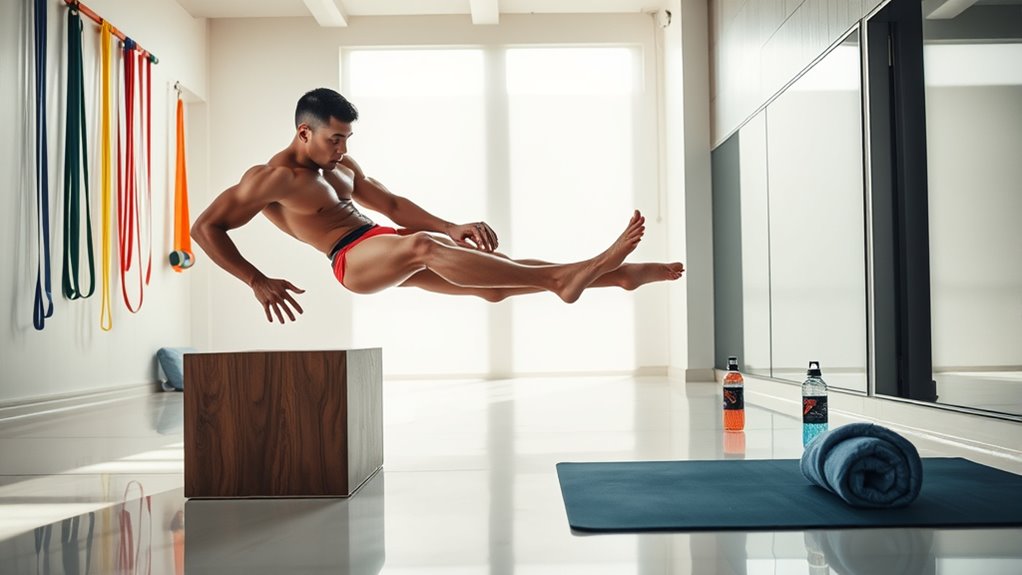
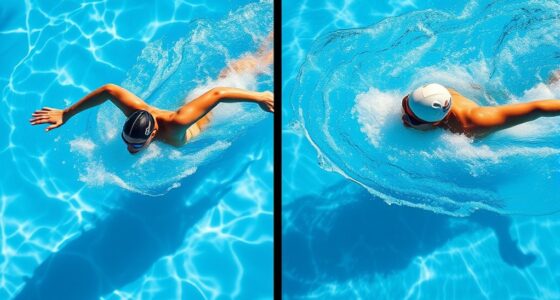
If you want to boost your swimming performance, incorporating dryland exercises into your training routine is essential. Dryland workouts can enhance your strength, flexibility, and overall conditioning, directly translating to improved performance in the water. These exercises help you develop the muscles that you rely on during your swim strokes, and they can also improve your breathing techniques, which are fundamental for efficient swimming.
One of the simplest yet most effective dryland exercises you can do is push-ups. They target your chest, shoulders, and triceps, which are critical for powerful strokes. As you push yourself up and down, focus on your breathing. Inhale as you lower your body and exhale as you push back up. By practicing this rhythm, you’ll reinforce proper breathing techniques that you can carry into your swimming sessions. Similarly, planks strengthen your core, which is essential for maintaining a streamlined position in the water. Holding a plank for extended periods builds not just physical strength but also mental resilience, as you push through discomfort and fatigue.
Push-ups and planks enhance strength and breathing, crucial for powerful swim strokes and maintaining a streamlined position.
Incorporating resistance bands into your routine can also yield significant benefits. Use them for exercises like lateral raises, which help develop your shoulders, or tricep extensions to strengthen your arms. These exercises mimic the movements you make in the water, helping your body adapt to the specific demands of swimming. As you perform these movements, stay focused on breathing steadily, as this will aid in developing better lung capacity for your swims.
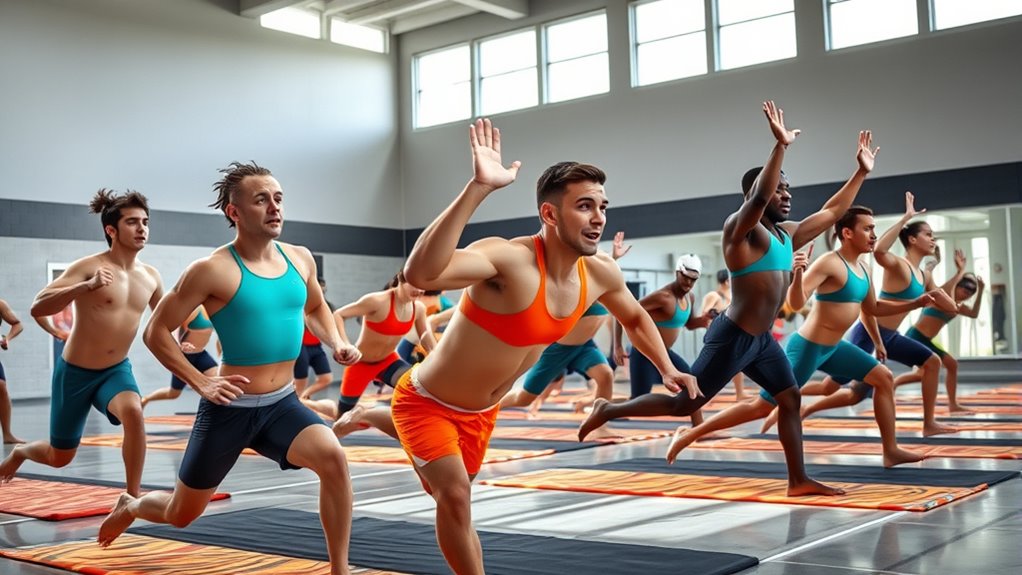
Don’t forget about the importance of mobility work. Incorporate dynamic stretches and yoga into your dryland routine. These activities enhance your flexibility, reducing the risk of injury and allowing for a smoother stroke technique. Additionally, they provide a mental break from the intensity of your usual training, helping to build mental resilience as you learn to listen to your body and respect its limits. Consider enjoying a high-protein breakfast to fuel your workouts effectively.
Lastly, consider adding plyometric exercises like box jumps to your regimen. These explosive movements build power, which is essential for sprinting in the pool. Each jump requires focus and control, reinforcing your mental resilience as you learn to push through physical barriers.

Resistance Bands, Pull Up Assist Bands – Workout Bands, Eexercise Bands for Working Out, Fitness, Training, Physical Therapy for Men Women – Multicolor
100% Natural Latex
As an affiliate, we earn on qualifying purchases.
As an affiliate, we earn on qualifying purchases.
Frequently Asked Questions
How Often Should I Do Dryland Exercises for Swimming?
You should aim to do dryland exercises for swimming around two to three times a week. This training frequency allows you to build strength and flexibility without overdoing it, which is key for injury prevention. Make sure to listen to your body and adjust as needed. Incorporate a mix of strength training, agility drills, and flexibility workouts to enhance your swimming performance while keeping your body safe and healthy.
Can Dryland Exercises Replace Pool Training Completely?
You can’t put all your eggs in one basket; dryland exercises can’t completely replace pool training. While they’re a fantastic training complement, enhancing strength and flexibility, they lack the specific skill development that swimming in water provides. You need both to achieve peak performance. So, keep your pool sessions regular, and incorporate dryland workouts to build a solid foundation. Balance is key to improving your overall swimming abilities.
What Equipment Do I Need for Dryland Exercises?
For effective dryland exercises, you’ll need a few key pieces of equipment. Resistance bands are essential for building strength and improving flexibility, so grab a couple of different resistance levels. Stability balls are great for core workouts and enhancing balance, which is vital for swimming. Additionally, consider having a mat for comfort during floor exercises. With these tools, you can maximize your training and see improvements in your overall performance.
Are Dryland Exercises Safe for All Ages?
Yes, dryland exercises can be safe for all ages, but age considerations are important. For younger athletes, focus on bodyweight movements to promote proper form and avoid injury. Older individuals should adapt exercises to match their fitness levels, prioritizing injury prevention. Always listen to your body and consult with a coach or trainer if you’re unsure. With the right approach, dryland training can be beneficial and enjoyable for everyone.
How Long Should Each Dryland Workout Session Last?
Each dryland workout session should last about 30 to 60 minutes. You might worry that you don’t have enough time, but even a shorter session can be effective if you focus on intensity. When scheduling your workouts, consider your other commitments and find what fits best. Remember, consistency is key, so it’s better to have shorter, regular sessions than infrequent, longer ones. Get moving, and you’ll see improvements!

BalanceFrom 3-in-1 Rotatable Plyometric Box Jumping Exercise Trainer Workout Equipment with Anti Slip Surface & High Density Foam, 16" × 20" × 24", 10-Pound, Multi-Color
3-in-1 Plyo Box: Rotate to instantly switch between 16-inch, 20-inch, and 24-inch jump heights, made for plyometric training,…
As an affiliate, we earn on qualifying purchases.
As an affiliate, we earn on qualifying purchases.
Conclusion
Incorporating dryland exercises into your routine can dramatically enhance your swimming performance. Did you know that swimmers who engage in strength training can improve their sprint speed by up to 15%? Imagine slicing through the water with that extra power, leaving your competition in your wake. By committing to these targeted workouts, you’ll not only build strength and endurance but also boost your confidence in the pool. So, leap in and start reaping the benefits of dryland training today!

OPTP Dynamic Duo Balance & Stability Trainers – Blue, Set of 2, 8 1/4"
Balance trainer set for core strength, foot & ankle strengthening, injury recovery, PT & rehab, Includes slip-resistant base
As an affiliate, we earn on qualifying purchases.
As an affiliate, we earn on qualifying purchases.

Amazon Basics 1/2 Inch Extra Thick Exercise Yoga Mat with Carrying Strap for Home Workouts and Fitness, 74" x 24", Black
Extra thick, cushy floor mat in Black for yoga, gym, and everyday exercise
As an affiliate, we earn on qualifying purchases.
As an affiliate, we earn on qualifying purchases.