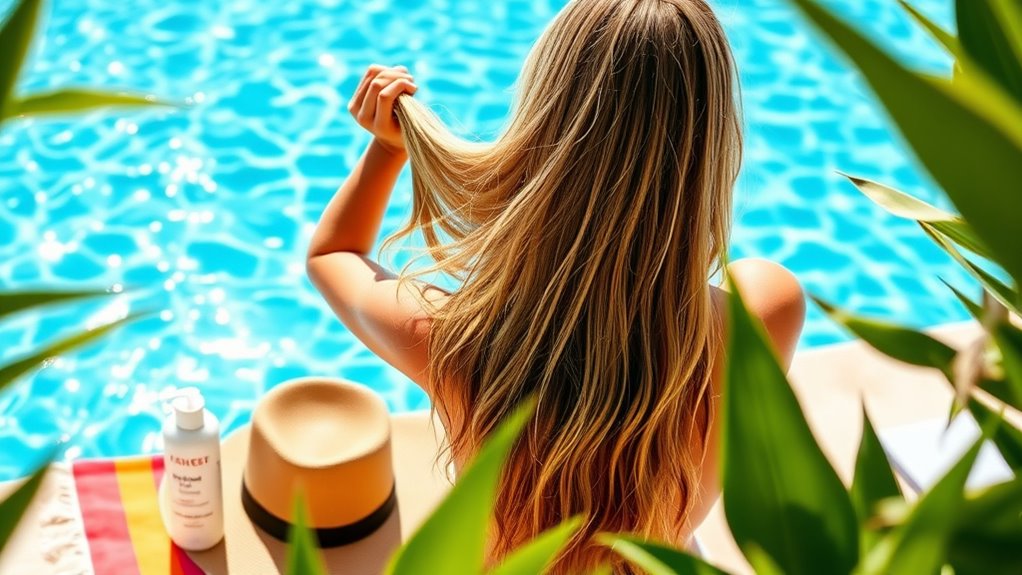

To protect your hair from chlorine damage, wet your hair with fresh water before swimming to reduce chlorine absorption. Apply a leave-in conditioner or silicone-based serum to create a protective barrier. Rinse your hair immediately after swimming, then use a clarifying shampoo sparingly to remove chlorine without stripping moisture. Follow up with a deep conditioner to restore hydration. With these tips in mind, you’ll keep your hair healthy, vibrant, and prepared for what’s next.

Get workout gear delivered free with Prime
- Fast, free delivery on millions of items
- Prime Video, Amazon Music and more included
- Member-only deals all year
Key Takeaways
- Wet your hair with fresh water before swimming to reduce chlorine absorption.
- Apply a leave-in conditioner or silicone-based serum to create a protective barrier.
- Rinse your hair immediately after swimming to remove chlorine residues.
- Use a clarifying shampoo sparingly to avoid stripping moisture from your hair.
- Follow up with deep conditioners or hydrating masks to restore lost moisture.

When you plunge into a pool, you might not think about how chlorine can wreak havoc on your hair. It’s not just the fun of swimming that can leave you feeling fabulous; it’s also the aftermath that can lead to dry, damaged locks. Chlorine, a common disinfectant used in pools, strips your hair of its natural oils, leaving it brittle and prone to breakage. If you’ve ever noticed your hair feeling rough or looking dull after swimming, you’re definitely not alone. But don’t worry, there are effective ways to protect your hair from chlorine damage.
Chlorine can damage your hair, leaving it dry and brittle, but there are effective ways to protect it.
First things first, consider your hair’s porosity. Hair porosity refers to how well your hair absorbs and retains moisture. High porosity hair tends to soak up water quickly but can also lose it just as fast. On the flip side, low porosity hair struggles to absorb moisture, often leading to product buildup. Understanding your hair porosity is vital when selecting the right products to shield your hair from chlorine’s harmful effects. For example, if you have high porosity hair, you might benefit from a protein treatment to help strengthen your strands before diving into the pool.
Before you hit the water, wet your hair with fresh tap water. This simple trick can help reduce the amount of chlorine your hair absorbs. It’s like giving your hair a protective barrier. Applying a leave-in conditioner or a silicone-based serum can also create a shield against chlorine. These products coat your hair, making it more resistant to absorption while providing an extra boost of hydration.
After swimming, don’t forget to rinse your hair immediately. This is vital because chlorine can continue to damage your hair even after you leave the pool. Use a clarifying shampoo to remove any residual chlorine, but be careful not to overdo it, as it can further strip your hair of moisture. Follow up with a deep conditioner or a hydrating mask to replenish lost moisture. If you color your hair, remember that chlorine can interact with certain dyes, sometimes leading to unexpected changes, especially with blonde shades. Hydrogen peroxide is often a concern, as it can lighten or alter your color.
Ultimately, protecting your hair from chlorine damage involves a combination of preparation and post-swim care. By understanding your hair’s needs and taking proactive steps, you can enjoy your time in the pool without worrying about the toll it may take on your beautiful locks. Additionally, using a transfer switch can ensure that your beauty routine is consistently supported, even in unexpected circumstances.
leave-in conditioner for chlorine protection
As an affiliate, we earn on qualifying purchases.
As an affiliate, we earn on qualifying purchases.
Frequently Asked Questions
Can I Use Regular Conditioner After Swimming in Chlorine?
Yes, you can use regular conditioner after swimming in chlorine, but it might not be enough. Chlorine residue can cling to your hair, especially if your hair has high porosity. This means it’s more susceptible to damage. To effectively combat chlorine effects, consider using a clarifying shampoo first to remove the residue, then follow up with a deep conditioner. This’ll help restore moisture and keep your hair healthy and vibrant.
How Often Should I Wash My Hair After Swimming?
You wouldn’t let a sponge soak in water forever, right? Washing your hair after swimming should be just as intentional. Aim for a wash every time you swim, especially if your hair’s porous. This helps maintain scalp health and prevents chlorine buildup. If your hair’s less porous, you might stretch it to every other day. Listen to your hair—it’ll signal what it needs! Keep it fresh to avoid damage and maintain shine.
Will Swimming Caps Completely Protect My Hair From Chlorine?
Swimming caps can offer some protection against chlorine, but they don’t guarantee complete coverage. While they help reduce exposure, water can still seep in around the edges. To enhance hair protection, consider applying a leave-in conditioner or oil before putting on your cap. Rinse your hair immediately after swimming, and use a clarifying shampoo regularly. Combining these tips with a cap will give you the best chance of keeping your hair healthy.
Are There Any Specific Hair Types More Affected by Chlorine?
Curly hair and color-treated hair are particularly vulnerable to chlorine damage. In fact, studies show that 75% of individuals with color-treated hair notice increased dryness after swimming. The chlorine strips away natural oils, leaving your hair more susceptible to frizz and breakage. If you’ve got curly locks, the damage can be even more pronounced, as curls can become brittle and lose their shape. Taking precautions is essential to maintain your hair’s health.
Can I Use Leave-In Products Before Swimming?
Yes, you can definitely use leave-in treatments and hair serums before swimming! Applying these products creates a protective barrier around your hair, helping to minimize chlorine damage. Choose a lightweight leave-in treatment or a nourishing hair serum that suits your hair type. Work it through your strands, focusing on the ends. This way, you’ll keep your hair hydrated and reduce the drying effects of chlorine while you enjoy your swim!
As an affiliate, we earn on qualifying purchases.
Conclusion
Protecting your hair from chlorine damage isn’t just about looking good; it’s about feeling confident and healthy. While chlorine can strip your hair of its natural beauty, simple precautions can make all the difference. Imagine stepping out of the pool with vibrant, shiny locks instead of dry, brittle strands. By taking a few easy steps, you can enjoy the water without sacrificing the integrity of your hair. Embrace the joy of swimming while keeping your hair radiant and strong.
As an affiliate, we earn on qualifying purchases.
As an affiliate, we earn on qualifying purchases.
Halloween Picks
halloween
As an affiliate, we earn on qualifying purchases.