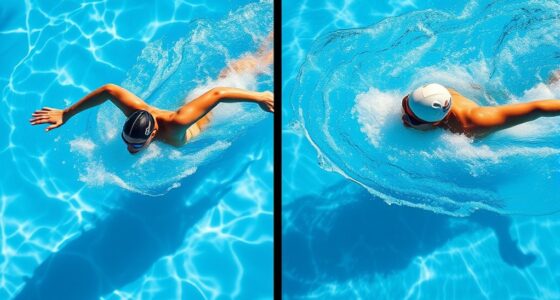
Wearing a swim cap helps protect your hair from chlorine, reduces drag, and can boost your performance, especially if you swim regularly or competitively. Going without one might feel more comfortable or natural, but it increases exposure to chemicals, tangles your hair more, and can cause scalp irritation over time. Choosing whether to wear a cap depends on your routine and comfort. To discover which option best suits you and how to make the most of it, keep exploring your options.
Key Takeaways
- Wearing a swim cap protects hair from chlorine damage and reduces tangling during swimming sessions.
- Going without a cap offers comfort but increases exposure to chemicals and risk of scalp irritation.
- Silicone caps provide a secure fit for competitive swimming, while Lycra caps are better for casual use.
- Properly fitted caps improve performance, prevent slipping, and enhance comfort regardless of material.
- The choice depends on swimming frequency, routine, and personal sensitivities, balancing protection and comfort.
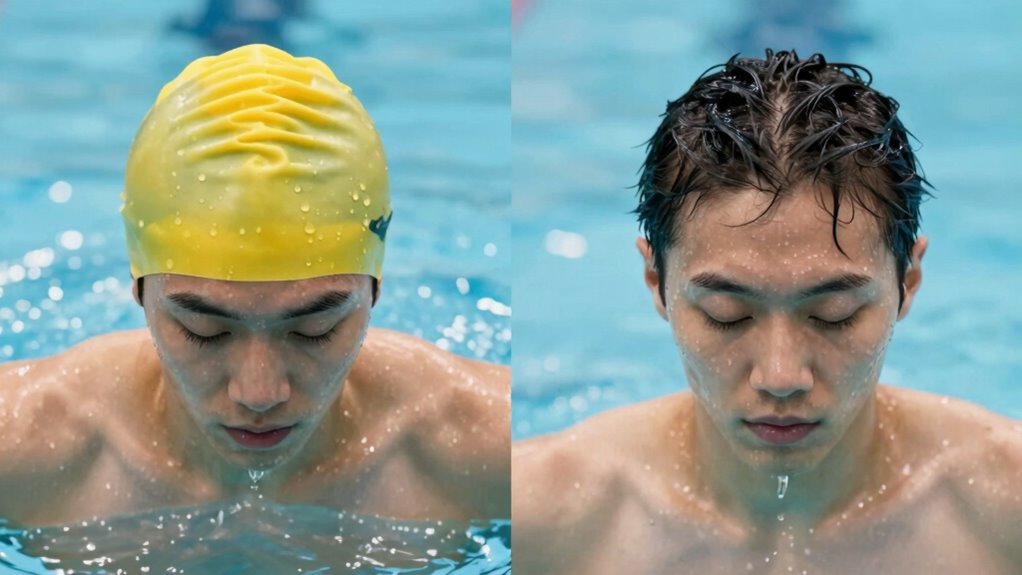
When deciding whether to wear a swim cap or go without, understanding the benefits and drawbacks of each choice can help you make the best decision for your swimming needs. One of the key factors to evaluate is material differences. Swim caps come in various materials, including latex, silicone, and Lycra, each offering different benefits. Latex caps are typically thinner and more affordable but might feel less comfortable and less durable over time. Silicone caps, on the other hand, are thicker, stretchier, and tend to last longer, providing a snug fit that stays in place. Lycra or fabric caps are usually softer and more breathable but don’t provide the same level of water resistance or protection from hair damage. Knowing these material differences helps you select a cap that aligns with your priorities, whether that’s durability, comfort, or budget. Additionally, proper fit adjustment of the cap’s material can significantly impact your swimming experience by reducing water resistance and improving comfort. Proper fit adjustment ensures maximum performance and comfort during your swim. Selecting the right material also involves considering how it interacts with your skin, especially if you have allergies or sensitivities.
Comfort considerations are equally important in your decision-making process. If comfort tops your list, you might prefer a soft Lycra cap for casual swimming or lounging, as it feels lightweight and gentle on the scalp. However, if you need a cap for serious training or competition, a silicone cap might be more suitable because it fits securely without slipping, reducing distractions. Latex caps can be comfortable for some, but they often cause more pressure and can cause discomfort, especially during long sessions or if you have sensitive skin. Going without a cap might seem more comfortable initially, but it can lead to issues like hair tangling, increased exposure to chlorine, and scalp irritation over time. A well-fitting cap can protect your hair from chlorine damage and keep your hair cleaner, which might make it more comfortable in the long run. It’s also important to consider how the material interacts with your skin, especially if you have allergies or sensitivities.
Ultimately, comfort considerations also include how the cap feels against your head and whether it causes headaches or pinching. When trying on different caps, make sure they aren’t too tight or too loose, as improper fit can negate any comfort benefits. Material choices influence how the cap feels and performs, so it’s worth investing in one that matches your swimming routine. If you’re a casual swimmer, a softer Lycra cap might suffice, but for frequent or competitive swimmers, silicone might provide better comfort and performance. Going without a cap might seem simpler, but it often means sacrificing hair protection and water management. Your swimming routine should guide your choice of cap material and fit. By weighing the material differences and comfort considerations, you can decide whether a swim cap is a worthwhile addition to your swim gear or if swimming without one better suits your style.
silicone swim cap for competitive swimming
As an affiliate, we earn on qualifying purchases.
As an affiliate, we earn on qualifying purchases.
Frequently Asked Questions
Can Swim Caps Improve Swimming Speed?
Yes, swim caps can improve your swimming speed by offering aerodynamics benefits, reducing water resistance as you move through the pool. They also protect your hair from chlorine and other chemicals, helping maintain healthier hair. When you wear a swim cap, you streamline your head, which minimizes drag and allows you to glide more efficiently. So, if you’re aiming to enhance your performance, a swim cap is a smart choice.
Are Swim Caps Suitable for All Hair Types?
Think of swim caps as the chameleon of the pool—suitable for many hair types but not all. They provide essential hair protection, especially for long or delicate hair, and come in various style options to match your personality. However, if you have thick or textured hair, some caps might feel tight or uncomfortable. It’s best to choose a cap designed for your hair type to keep your hair safe and your style on point.
How Do I Choose the Right Swim Cap Size?
To choose the right swim cap size, you should consider your head measurements and hair volume. Check material types like silicone, latex, or lycra, which affect stretch and fit. Style variations, such as full-coverage or short-cropped caps, also influence sizing. Measure your head around the widest part, then select a cap that fits snugly without causing discomfort. Proper sizing guarantees comfort, reduces water resistance, and keeps your hair protected.
Do Swim Caps Help Prevent Ear Infections?
Swim caps help prevent ear infections by providing ear protection, keeping water out of your ears and reducing bacteria exposure. They also promote hair preservation by shielding your hair from chlorine and other chemicals. Wearing a swim cap is a smart move—you don’t want to “let the cat out of the bag” when it comes to protecting your ears and hair. It’s a simple step for a healthier swim experience.
Are There Eco-Friendly Swim Cap Options Available?
Yes, eco-friendly swim caps made from sustainable materials are available. You can find options crafted from silicone derived from bio-based sources or recycled rubber, which reduce environmental impact. These sustainable options often maintain durability and comfort while helping you reduce plastic waste. By choosing an eco-friendly swim cap, you support environmentally conscious practices and enjoy your swim knowing you’re making a greener choice.
As an affiliate, we earn on qualifying purchases.
Conclusion
Whether you choose to wear a swim cap or go without, it ultimately depends on your personal needs. Did you know that swimmers with caps can reduce drag by up to 10%, helping them swim faster? If you’re aiming to improve your performance or protect your hair from chlorine, a cap might be worth trying. But if comfort matters most, going without could be the way to go. Consider your goals and preferences to make the best choice.
Lycra swim cap for casual swimming
As an affiliate, we earn on qualifying purchases.
As an affiliate, we earn on qualifying purchases.
As an affiliate, we earn on qualifying purchases.