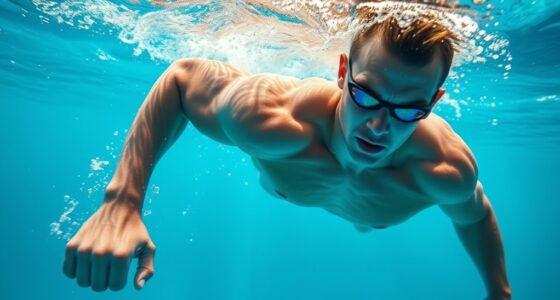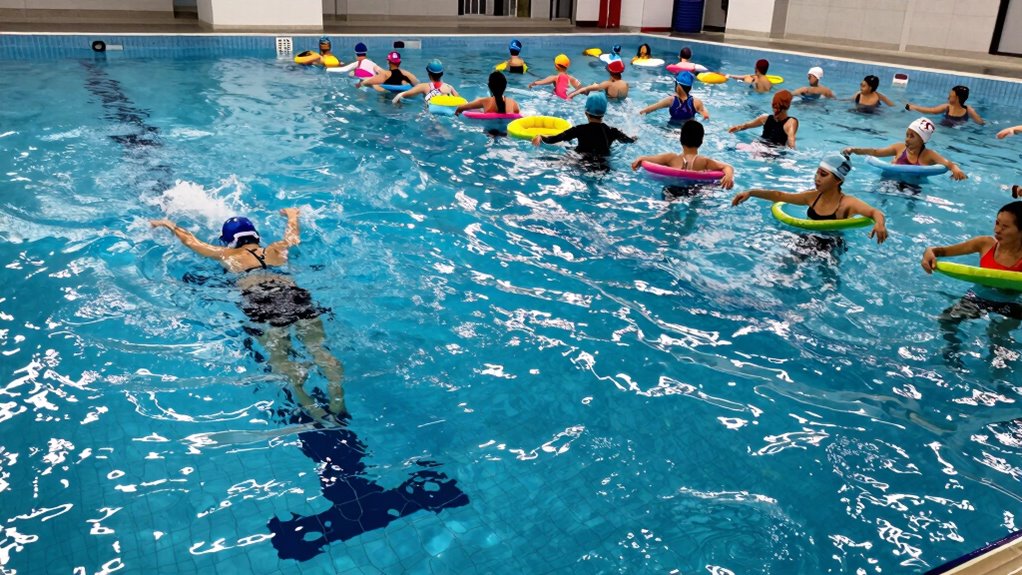

If you’re looking for a more intense workout that builds strength and endurance, swimming laps may be your best choice, as it provides sustained resistance and cardiovascular benefits. If you prefer varied, social routines that enhance flexibility and balance, water aerobics could be better suited to you. Both are gentle on your joints and effective for overall fitness. To discover which suits your goals and preferences best, explore the details of each activity and how they match your lifestyle.
Key Takeaways
- Swimming laps offer higher intensity, focusing on strength and endurance, while water aerobics provide moderate, varied routines for overall fitness.
- Both activities are low-impact, making them suitable for joint health and accommodating physical limitations.
- Swimming emphasizes continuous resistance, building muscle tone and cardiovascular health; water aerobics enhance flexibility and balance.
- Water aerobics are more social and fun, often incorporating music, whereas swimming is more solitary and focused on endurance.
- The best choice depends on individual fitness goals, preferences, and physical conditions.
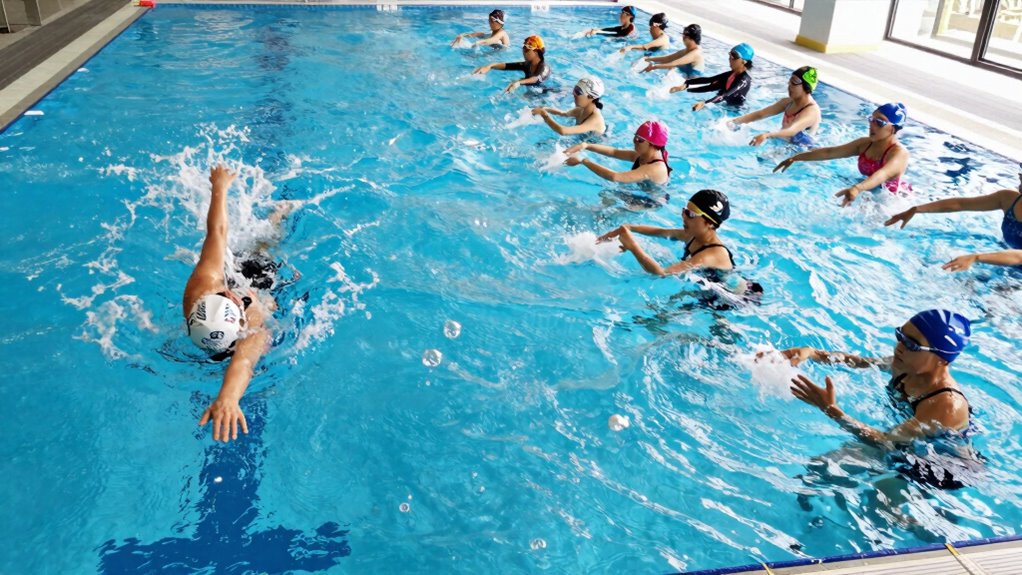
When choosing a water-based workout, you might wonder whether swimming laps or participating in water aerobics is the better fit for your fitness goals. Both activities offer excellent benefits, but they differ in intensity, focus, and how your body engages with the water. Understanding these differences can help you decide which aligns best with your needs.
Choosing between swimming laps and water aerobics depends on your fitness goals and preferred workout style.
If you’re looking for a workout that emphasizes resistance training, swimming laps might be your ideal choice. When you swim, hydrodynamic resistance plays a significant role. The water’s natural drag against your body makes every stroke a form of resistance training, helping to build strength and endurance. This resistance is continuous and uniform, meaning your muscles work harder to push through the water. As you swim laps, aquatic muscle engagement increases, targeting major muscle groups like your shoulders, back, core, and legs in a balanced, low-impact manner. This sustained effort improves muscular endurance and cardiovascular health without stressing your joints, making it suitable if you prefer a more intense, focused workout. Additionally, resistance training in water can help improve muscle tone and overall strength.
On the other hand, water aerobics offers a different kind of challenge. The movements are often more varied, incorporating routines that involve jumping, twisting, and rhythmic arm and leg exercises. These activities leverage hydrodynamic resistance as well, but in a way that emphasizes controlled, dynamic movements rather than continuous strokes. Water aerobics is excellent for engaging multiple muscle groups simultaneously while providing a cardiovascular boost. Because the exercises are typically performed at a moderate pace with added elements like music or group interaction, this workout can be more social and enjoyable, especially if you prefer a less intense, more varied routine. It also reduces impact on your joints, making it accessible to those with arthritis or recovering from injuries.
Additionally, incorporating water-based exercises can improve flexibility and balance**, which are essential components of overall fitness. These improvements can contribute to better posture and reduced risk of falls, especially for older adults. Ultimately, your choice depends on your fitness goals. If you want to build strength and endurance through repetitive, sustained movements, swimming laps are more effective. If you prefer a versatile, engaging workout that improves flexibility, balance, and cardiovascular health with a social aspect, water aerobics might be better. Both workouts harness hydrodynamic resistance and promote aquatic muscle engagement, but they do so in ways that target different aspects of fitness. Consider your preferences, fitness level, and any physical limitations when choosing between them. Either way, you’ll benefit from the natural resistance of water, making your exercise both effective and joint-friendly**.
As an affiliate, we earn on qualifying purchases.
Frequently Asked Questions
Can Water Temperature Affect Workout Effectiveness?
Yes, water temperature can affect your workout effectiveness. Warmer water enhances hydrotherapy benefits by relaxing muscles and improving circulation, making workouts more comfortable. Cooler water helps with temperature regulation, preventing overheating and increasing endurance. If the water’s too cold or too hot, you might not perform your best or risk injury. Adjusting water temperature guarantees you maximize both hydrotherapy benefits and workout efficiency, keeping you safe and comfortable during exercise.
Which Burns More Calories per Session?
You burn more calories per session doing swimming laps than water aerobics, especially when you maintain higher workout intensity. For example, a swimmer at moderate effort might burn around 500 calories in an hour, while water aerobics typically burns about 300-400 calories. Your calorie comparison depends on effort, but swimming generally offers a more vigorous workout, leading to greater calorie expenditure and more effective fat burning.
Are There Age Restrictions for Water Aerobics?
There are generally no strict age restrictions for water aerobics, making it a senior-friendly activity suitable for various ages and fitness levels. If you’re a beginner, you’ll appreciate the gentle, low-impact nature of water exercises. Many classes are designed to accommodate seniors and beginners, offering modifications as needed. Always check with your instructor to confirm the exercises match your comfort level and any health considerations.
How Do Injury Risks Compare Between the Two?
Think of injury risks as different paths through a forest—swimming laps is like walking on a smooth trail, offering lower injury chances, especially for joint safety. Water aerobics, with more varied movements, might pose slightly higher risks if not done with proper form. To prevent injuries, focus on injury prevention strategies, warm-up routines, and proper technique. Both activities are generally safe, but being mindful helps keep you injury-free.
Is One Better for Mental Health Benefits?
Both swimming laps and water aerobics offer mental health benefits, but swimming laps might give you a deeper sense of stress reduction through focused, meditative movement. Water aerobics, on the other hand, promotes social interaction, which can enhance mood and reduce anxiety. Your choice depends on whether you prefer solitary mental clarity or social engagement. Either way, both activities boost your mental well-being and help manage stress effectively.
As an affiliate, we earn on qualifying purchases.
Conclusion
Both swimming laps and water aerobics offer fantastic ways to stay fit, each with its own unique benefits. Think of them as two sides of the same coin—one dives deep into endurance, while the other floats on the surface of fun. Whichever you choose, you’re setting sail on a journey to better health. So, pick what excites you most, and let the waves of your commitment carry you toward your fitness goals.
As an affiliate, we earn on qualifying purchases.
As an affiliate, we earn on qualifying purchases.