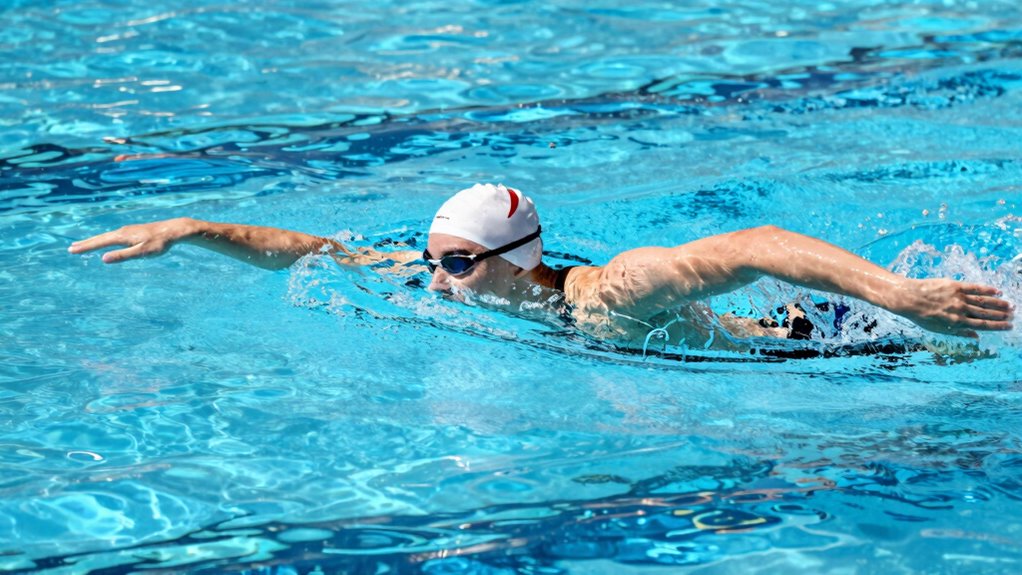

To swim longer without getting tired, focus on proper breath control and steady pacing. Exhale smoothly underwater and match your breathing rhythm to your strokes, avoiding gasping or holding your breath. Find a sustainable pace that balances effort and endurance, breaking your swim into manageable sections with small goals. Combining these techniques helps supply your muscles with oxygen, reduce fatigue, and build stamina over time. Keep practicing these strategies to unleash even greater endurance—more tips await as you continue.
Key Takeaways
- Practice steady, rhythmic breathing techniques to ensure consistent oxygen flow and reduce fatigue.
- Maintain a sustainable pace, breaking your swim into manageable sections with small goals.
- Synchronize your breathing with your stroke pattern to optimize efficiency and endurance.
- Use interval training to build stamina gradually with moderate effort and short rest periods.
- Pay attention to your body’s signals, adjusting your breathing and pace to prevent early exhaustion.
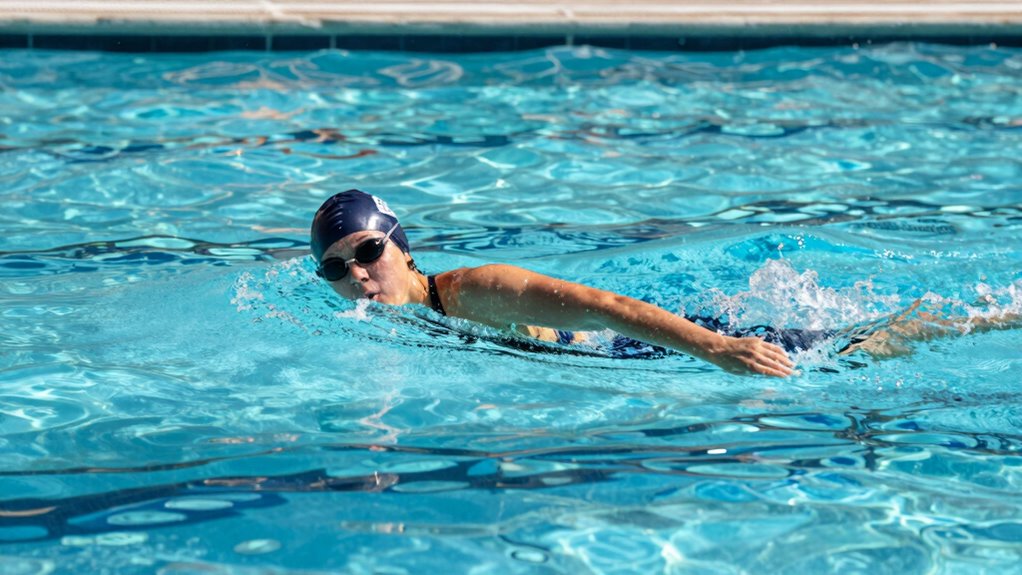
Ever wonder how some swimmers seem to glide effortlessly for long distances while others tire quickly? The secret often lies in their ability to manage breath control and implement effective pacing techniques. When you learn to regulate your breathing, you give your body the oxygen it needs to sustain energy levels during your swim. Instead of gasping or holding your breath sporadically, focus on steady, rhythmic breathing patterns that match your strokes. For example, many swimmers find it helpful to breathe every three or five strokes, creating a consistent rhythm that prevents fatigue and keeps oxygen flowing smoothly to your muscles. Proper breath control also involves exhaling steadily underwater, so you’re ready to inhale quickly when it’s time to breathe again. This reduces unnecessary pauses and helps maintain your momentum.
Pacing techniques are equally crucial. Instead of rushing through your swim, you want to find a sustainable pace that balances effort and endurance. Think of your swim as a marathon, not a sprint. Start by swimming at a pace that doesn’t leave you completely exhausted after a few lengths. As you progress, focus on maintaining this rhythm. Break your swim into manageable sections, and set small goals for each one. For instance, aim to swim a certain number of laps at a consistent pace before resting or changing your breathing pattern. This approach prevents you from overexerting early on, which can cause fatigue to set in quickly. It’s also helpful to incorporate interval training—swimming a set distance or time at a moderate effort, then resting briefly before continuing. These intervals teach your body to recover and help you build endurance over time.
Combining breath control with pacing techniques creates a synergy that allows you to swim longer without tiring. When you breathe efficiently, you supply your muscles with enough oxygen, reducing the buildup of lactic acid that causes fatigue. Meanwhile, pacing ensures you don’t burn out too quickly, helping you sustain a steady effort throughout your swim. As you practice, pay close attention to how your body responds and adjust your breathing and pace accordingly. Over time, you’ll notice that your stamina increases, and you can cover longer distances with less fatigue. Stick with these strategies, and you’ll find yourself swimming further, more comfortably, and with greater confidence.
swimming breath control training aids
As an affiliate, we earn on qualifying purchases.
As an affiliate, we earn on qualifying purchases.
Frequently Asked Questions
What Should I Eat Before Swimming to Boost Endurance?
Before swimming, you should eat easily digestible carbs like a banana or oatmeal to boost endurance. Hydration strategies are key, so drink water or a sports drink to stay hydrated. Avoid heavy, greasy foods that can cause discomfort. Focus on mental focus techniques by visualizing your swim and maintaining steady breathing. These steps help sustain your energy, improve endurance, and keep you comfortable during your swim session.
How Do Breathing Techniques Improve Swimming Stamina?
Did you know proper breathing techniques can boost your endurance by up to 30%? By focusing on controlled breathing patterns, you can optimize your lung capacity, allowing more oxygen to reach your muscles. This means you swim longer without fatigue. When you practice rhythmic breathing, you improve efficiency, reduce fatigue, and conserve energy. The key is to breathe deeply and consistently, coordinating your breaths with your strokes for maximum stamina.
Is It Better to Swim Every Day or Alternate Days?
You should alternate days of swimming rather than swim every day. Training consistency is important, but rest recovery is equally essential to prevent fatigue and injuries. By giving your muscles time to recover between sessions, you enhance endurance and overall performance. This balanced approach allows you to sustain your progress, avoid burnout, and stay motivated, making your swimming practice both effective and enjoyable.
How Can I Prevent Muscle Cramps During Long Swims?
To prevent muscle cramps during long swims, focus on hydration strategies before and after your session, as dehydration can trigger cramps. During swimming, stay well-hydrated and consider electrolyte drinks if you’re swimming for extended periods. Additionally, incorporate muscle stretching exercises into your routine to loosen tight muscles and improve flexibility. Proper hydration and stretching help keep your muscles relaxed, reducing cramp risks and enabling you to swim longer comfortably.
What Gear Can Help Me Swim Longer Without Fatigue?
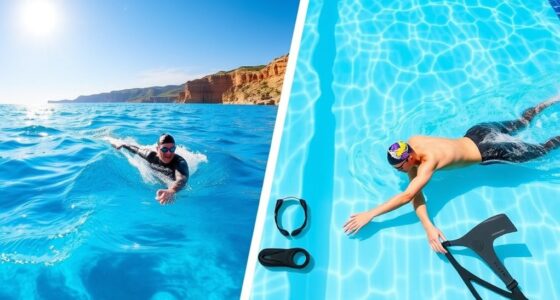
Imagine you’re a modern-day mermaid, equipped with essential swim gear and training accessories that boost your endurance. Use fins to improve kick strength, a pull buoy for upper body stamina, and a swim snorkel to breathe efficiently. These tools help you swim longer without fatigue, allowing you to focus on technique and distance. Incorporating quality gear into your routine makes a noticeable difference in your endurance and overall performance.
As an affiliate, we earn on qualifying purchases.
Conclusion
By focusing on proper technique, consistent training, and controlled breathing, you can swim longer without tiring. Don’t worry if progress feels slow at first—think of it like building a muscle; each session strengthens your endurance. Picture yourself gliding effortlessly through the water, feeling confident and energized after every swim. With patience and persistence, you’ll see your stamina grow, making those longer swims not just possible but enjoyable. Keep practicing, and you’ll reach your goals in no time.
As an affiliate, we earn on qualifying purchases.
As an affiliate, we earn on qualifying purchases.