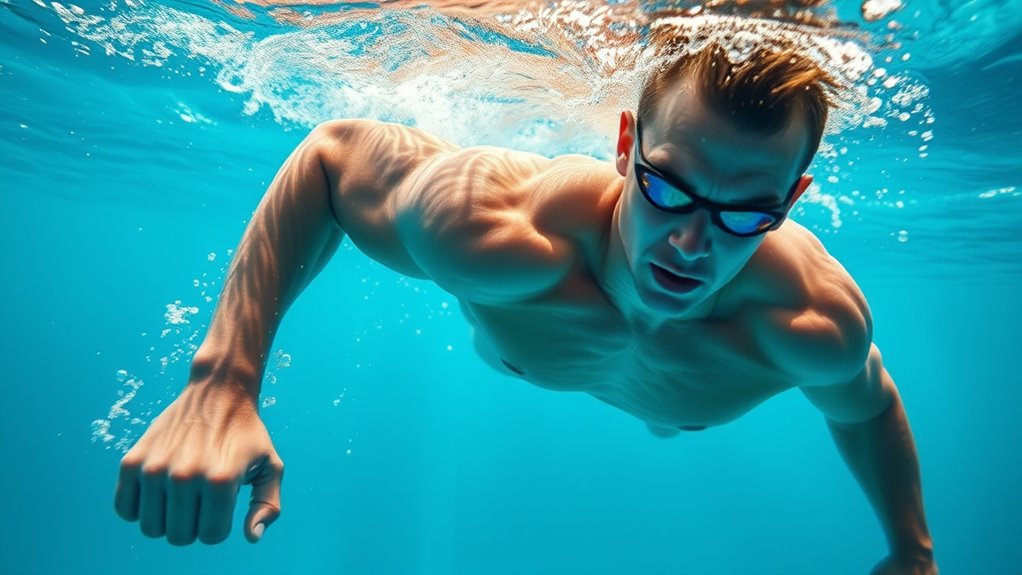

Yes, swimming can definitely build muscle. It engages multiple muscle groups simultaneously, working your arms, shoulders, core, and legs. The water’s resistance forces your muscles to exert more effort than they would on land, promoting strength and endurance. Plus, different strokes target various areas, ensuring balanced muscle development. Swimming is also joint-friendly, allowing for high repetitions without injury. If you want to discover more about how swimming enhances muscle growth and endurance, keep exploring further!

Get workout gear delivered free — and shop member deals
- Fast, free delivery on millions of items
- Access to Prime Big Deal Days deals on October 6–7
- Prime Video, Amazon Music and more included
Key Takeaways
- Swimming provides a full-body workout, engaging multiple muscle groups simultaneously for effective muscle development.
- The resistance of water enhances muscle exertion, promoting muscle growth over time compared to land-based exercises.
- Swimming improves muscle endurance with high repetitions while minimizing the risk of joint injuries.
- Different swimming strokes target various muscle groups, ensuring balanced muscle development throughout the body.
- Regular swimming enhances muscle tone, strength, and overall cardiovascular fitness for all fitness levels.
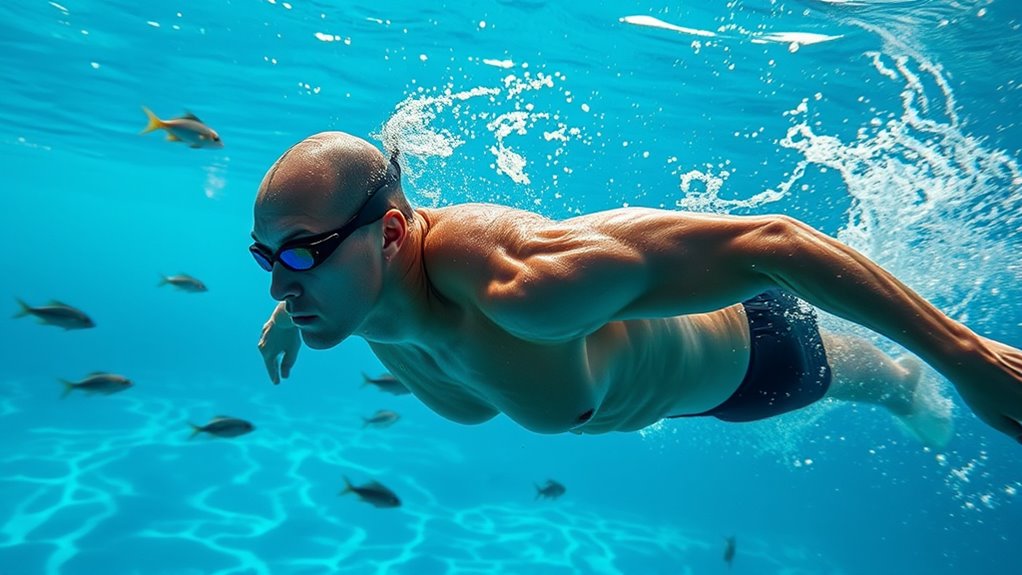
Have you ever wondered if swimming can actually help you build muscle? You’re not alone in this inquiry. Many people assume swimming is primarily an aerobic exercise, but it can also be a powerful tool for muscle development. When you swim, you’re engaging in a full-body workout that utilizes various muscle groups, all while battling against water resistance. This unique aspect of swimming requires your muscles to work harder than they would on land, effectively leading to muscle growth.
When you push against the water, you’re not just gliding along; you’re actively fighting against its resistance. This resistance is considerably greater than air, meaning your muscles have to exert more effort to propel your body forward. Each stroke you take engages your arms, shoulders, core, and legs. Over time, this consistent engagement leads to improved muscle strength and endurance. So, if you’re aiming to build muscle, swimming can certainly contribute to your goals.
Swimming not only challenges your muscles against water resistance but also enhances strength and endurance with every stroke.
Moreover, swimming can enhance your muscle endurance. Unlike traditional weightlifting, swimming allows you to perform high repetitions of movements with minimal strain on your joints. This makes it an excellent option for people looking to increase their muscle endurance without the risk of injury. As you swim regularly, you’ll notice that not only do your muscles grow stronger, but they also become more resilient. This resilience is vital for any athlete or fitness enthusiast, enabling you to perform better in various activities.
Incorporating different strokes into your routine can also diversify the muscles you target. The freestyle stroke emphasizes your chest, shoulders, and arms, while the breaststroke works on your legs and core. The backstroke targets your back muscles, and the butterfly stroke is an intense workout for your upper body. By varying your strokes, you’ll guarantee that you’re developing muscle across all areas of your body, leading to a more balanced physique.
Don’t underestimate the power of swimming as a muscle-building exercise. It’s not just about burning calories or improving cardiovascular fitness; it’s also an effective way to tone and strengthen your body. Whether you’re a seasoned swimmer or just starting out, incorporating swimming into your fitness regimen can yield impressive results in both muscle strength and endurance. So, dive in and embrace the resistance; your muscles will thank you!
swimming resistance training gloves
As an affiliate, we earn on qualifying purchases.
As an affiliate, we earn on qualifying purchases.
Frequently Asked Questions
Can Swimming Alone Replace Weightlifting for Muscle Gain?
Swimming alone can’t fully replace weightlifting for muscle gain. While it improves muscle endurance and enhances your swimming technique, it primarily focuses on cardiovascular fitness and lean muscle tone. Weightlifting builds strength and bulk in specific muscle groups more effectively. If you’re looking to increase muscle size, incorporating resistance training alongside swimming will give you the best results. Balancing both can help you achieve a well-rounded fitness routine.
How Often Should I Swim for Optimal Muscle Growth?
To optimize muscle growth, aim to swim at least three to four times a week. Incorporate different strokes and intensities to challenge your muscles. Don’t forget about recovery strategies—allow at least one rest day between sessions for your muscles to repair and grow. Stay hydrated and consider adding strength training on alternate days to further enhance your results. Balancing training frequency and recovery is key to achieving your muscle-building goals.
Is Swimming More Effective for Toning Than Building Bulk?
Yes, swimming’s more effective for toning than building bulk. When you swim, you’re using water resistance, which helps enhance muscle endurance without adding significant mass. The continuous movement engages various muscle groups, promoting a leaner physique. If you focus on technique and speed, you’ll notice improvements in muscle definition and overall fitness. So, embrace your time in the pool for a toned body rather than aiming for bulk.
What Swim Strokes Are Best for Building Muscle?
If you want to build muscle, focus on strokes like freestyle and butterfly. These techniques’ effectiveness comes from their intensity and full-body engagement. Freestyle builds endurance, while the butterfly targets your chest, shoulders, and core. Incorporating stroke variations, such as backstroke and breaststroke, can also enhance muscle development. By mixing these styles in your workouts, you’ll maximize muscle engagement and promote overall strength, making your swim sessions more effective for muscle growth.
Does Water Temperature Affect Muscle-Building Benefits of Swimming?
Water temperature can definitely affect your muscle development during swimming. When you plunge into warmer water, your muscles relax, allowing for a smoother, more efficient workout. Cooler water, on the other hand, can invigorate you, promoting faster movements and helping build endurance. So, whether you’re gliding through a warm pool or pushing against the chill, you’re shaping your muscles with every stroke. Isn’t it amazing how temperature can play a role in your fitness journey?
swimming hand paddles for muscle building
As an affiliate, we earn on qualifying purchases.
As an affiliate, we earn on qualifying purchases.
Conclusion
In essence, swimming may not sculpt bulging muscles like weightlifting, but it gently carves your physique, enhancing strength and endurance. As you glide through the water, you’re not just exercising; you’re engaging in a harmonious dance that tones your body while nurturing your spirit. So, embrace the fluidity of this activity. You’ll find that each stroke builds resilience and grace, making you not just stronger but more connected to the rhythm of your own body.
water resistance swim training equipment
As an affiliate, we earn on qualifying purchases.
As an affiliate, we earn on qualifying purchases.
As an affiliate, we earn on qualifying purchases.
Fall Picks
fall essentials
As an affiliate, we earn on qualifying purchases.