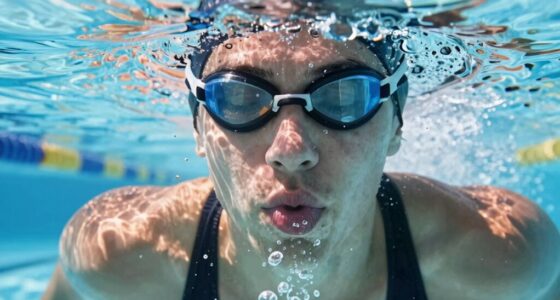
Swimming workouts definitely work for weight loss. The water’s resistance challenges your muscles, helping you burn calories more efficiently. Plus, swimming engages your entire body while being gentle on your joints. Proper technique and breathing habits boost your endurance and workout effectiveness even more. Regularly changing strokes and intensities keeps your progress on track. Stay with it, and you’ll discover how combining these strategies can maximize your results for a healthier, fitter you.

Get workout gear delivered free — and shop member deals
- Fast, free delivery on millions of items
- Access to Prime Big Deal Days deals on October 6–7
- Prime Video, Amazon Music and more included
Key Takeaways
- Swimming burns calories effectively by engaging multiple muscle groups and utilizing water resistance.
- Proper technique and breathing optimize effort, making workouts more efficient for weight loss.
- Consistent swimming routines prevent plateaus and enhance fat-burning over time.
- Low-impact nature allows for longer, high-intensity sessions without joint stress.
- Incorporating varied strokes and interval training boosts calorie burn and overall effectiveness.
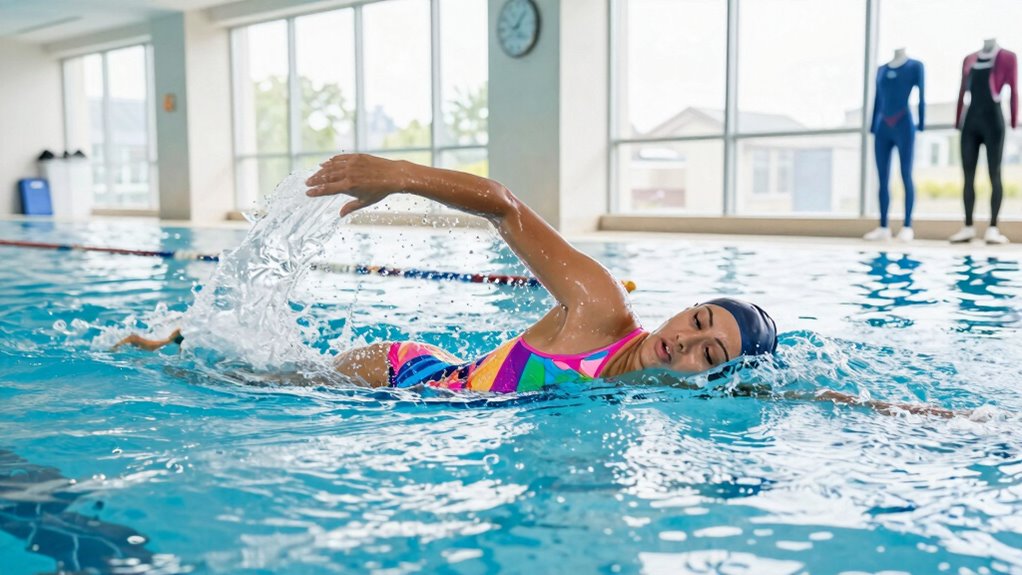
Swimming is one of the most effective ways to burn calories and shed excess weight. When you plunge into the pool, you engage multiple muscle groups, making your workout both efficient and thorough. One of the key factors that make swimming so effective is hydrodynamic resistance. As you move through the water, this resistance constantly pushes back against your body, forcing your muscles to work harder than they would on land. The more you propel yourself forward, the more calories you burn. This resistance isn’t just a challenge; it’s an advantage, helping you tone muscles and increase endurance simultaneously.
Hydrodynamic resistance in swimming boosts calorie burn, tones muscles, and enhances endurance through continuous water engagement.
To maximize the benefits, your breathing techniques play an essential role. Proper breathing helps you maintain a steady rhythm, which is vital for sustaining longer workouts and avoiding fatigue. When you focus on controlled, rhythmic breaths, you guarantee your muscles get enough oxygen, allowing you to swim more efficiently and with less effort. For example, exhaling slowly underwater and inhaling quickly at the turn or during a stroke helps you stay relaxed and conserve energy. Developing good breathing habits also prevents you from getting winded too quickly, which can cut your workout short. Additionally, understanding hydrodynamic resistance can help you optimize your technique to make your workout more effective.
Incorporating specific swimming strokes can enhance weight loss, but the real secret lies in maintaining proper form and technique. When you swim with good technique, you reduce unnecessary drag and make better use of hydrodynamic resistance. This means you’re working smarter, not harder, and your body burns calories more effectively. Combining this with breathing techniques that promote relaxation and endurance allows you to swim longer and at higher intensities. The continuous movement against water resistance ensures your muscles stay engaged, leading to faster fat burning and muscle toning.
Consistency is vital when it comes to swimming workouts for weight loss. Regular sessions that include a variety of strokes and intensities help keep your body challenged and prevent plateauing. Whether you’re doing steady laps or interval training, paying attention to hydrodynamic resistance and breathing techniques guarantees each workout is productive. Over time, you’ll notice improved cardiovascular health, increased muscle definition, and, most importantly, weight loss. The best part is, swimming is low-impact, so you can push yourself without stressing your joints or risking injury.
swimming resistance training equipment
As an affiliate, we earn on qualifying purchases.
As an affiliate, we earn on qualifying purchases.
Frequently Asked Questions
How Often Should I Swim Weekly for Optimal Weight Loss?
You should aim to swim at least three to five times a week for ideal weight loss. Incorporate diet tips like balancing your meals and staying hydrated to boost results. Keep motivation strategies in mind, such as setting small goals or rewarding yourself after milestones. Consistency is key, so find enjoyable routines to stay committed. Swimming regularly, combined with healthy habits, accelerates your weight loss journey effectively.
Can Beginners See Results From Swimming Workouts Quickly?
You can see results quickly with swimming as water resistance challenges your muscles and boosts calorie burn. As you glide through the water, practicing proper breathing techniques helps improve endurance and recovery, speeding up progress. Beginners may notice weight loss and toning within a few weeks if they stay consistent. Imagine feeling stronger and more energized each session, with your body adapting to the resistance, making your efforts more effective over time.
What Are the Best Swimming Strokes for Burning Calories?
The best swimming strokes for burning calories are breaststroke and butterfly. Breaststroke technique is effective because it engages multiple muscle groups, helping you burn calories efficiently. Butterfly, on the other hand, boosts endurance and calorie burn with its high-intensity movements. Incorporate these strokes into your workouts to maximize fat burning, improve cardiovascular health, and build muscle. Consistent practice of breaststroke and butterfly will help you see faster results in your weight loss journey.
Is Swimming Suitable for People With Joint Issues?
They say “a soft answer turneth away wrath,” and swimming proves that soft impact can be powerful. If you have joint issues, swimming is an ideal low-impact exercise because it’s a joint-friendly activity that eases stress on your joints while providing a full-body workout. You can enjoy the benefits without risking pain or injury, making it a safe, effective way to stay active and improve your health.
How Does Swimming Compare to Running for Weight Loss?
Swimming often outperforms running for weight loss because water resistance makes your muscles work harder, increasing calorie burn. Plus, swimming offers excellent cardiovascular benefits with less impact on your joints. While running is effective, swimming provides a full-body workout that can help you shed pounds more efficiently, especially if you’re seeking low-impact exercise. Both are great, but swimming’s resistance and cardio advantages make it a strong choice for weight loss.
As an affiliate, we earn on qualifying purchases.
Conclusion
Swimming workouts can be your secret weapon on the journey to weight loss. Like a gentle tide shaping the shore, consistent effort molds your body and boosts your confidence. Remember, every splash and stroke adds up, transforming your fitness level over time. Stay committed, embrace the rhythm of the water, and watch as your progress flows smoothly—proving that with persistence, you can carve out a healthier, stronger version of yourself, one swim at a time.
swimming goggles with clear vision
As an affiliate, we earn on qualifying purchases.
As an affiliate, we earn on qualifying purchases.
As an affiliate, we earn on qualifying purchases.
Evergreen bestsellers Picks
bestsellers
As an affiliate, we earn on qualifying purchases.