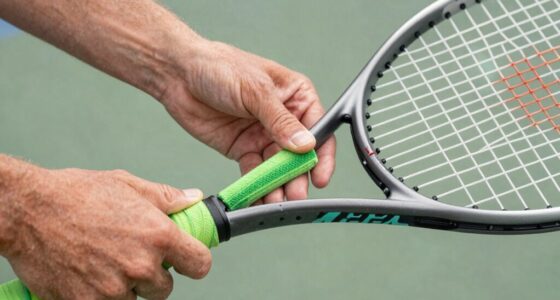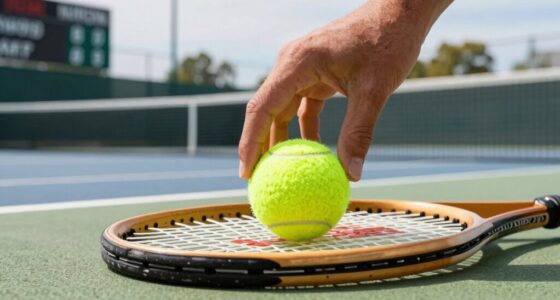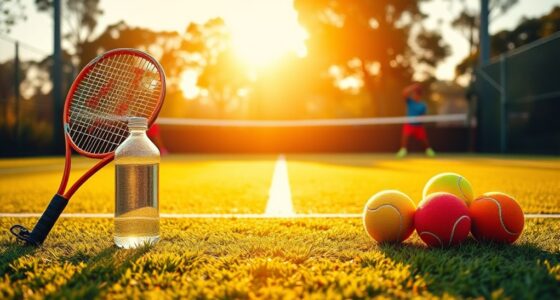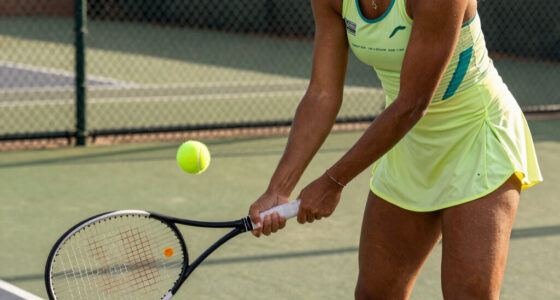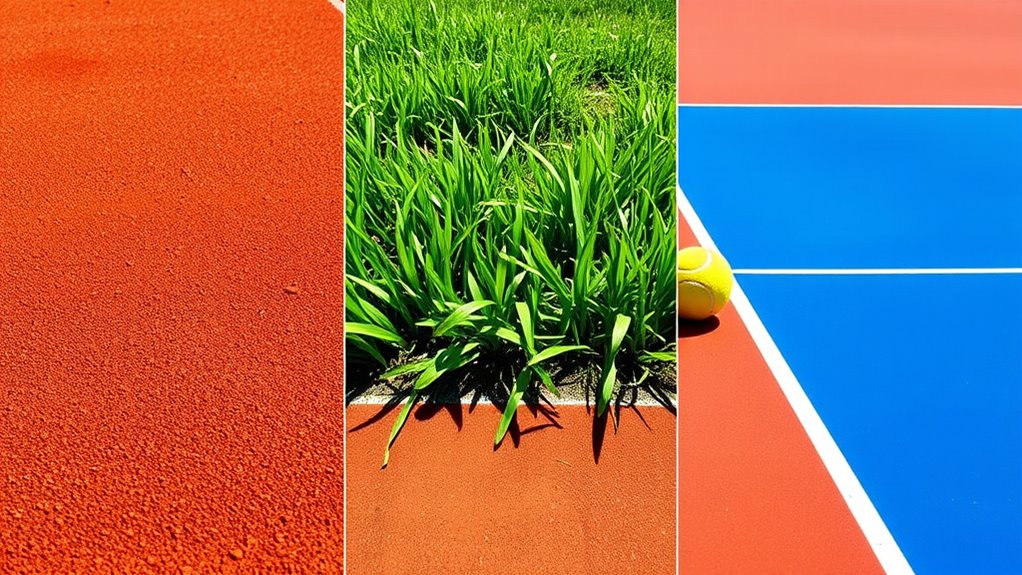

Tennis changes notably across clay, grass, and hard courts. On clay, you’ll face longer rallies due to slower bounces and need agility for quick footwork. Grass demands fast reflexes with low bounces that favor serve-and-volley strategies. Meanwhile, hard courts offer consistent bounces for powerful groundstrokes and efficient navigation. Each surface opens unique challenges and influences your shot selection and overall game strategy. Stick around to uncover more nuances of how these surfaces shape your play.

Get workout gear delivered free — and shop member deals
- Fast, free delivery on millions of items
- Access to Prime Big Deal Days deals on October 6–7
- Prime Video, Amazon Music and more included
Key Takeaways
- Clay courts promote longer rallies with high, slow bounces, enhancing player agility and footwork.
- Grass courts feature lower, faster bounces that require quick adaptation and emphasize serve-and-volley strategies.
- Hard courts provide consistent bounces, merging clay and grass characteristics, allowing for powerful groundstrokes and strategic shot placement.
- Each surface influences player performance, requiring unique skills and strategic adjustments to optimize match outcomes.
- Understanding surface-specific challenges enhances mental focus and overall gameplay effectiveness during matches.

When it comes to tennis, the type of court can profoundly impact your game, so understanding the differences between clay, grass, and hard courts is essential. Each surface requires a unique approach, and knowing how they affect your play can boost your performance. For instance, on clay courts, you need to emphasize your player agility. The slower surface allows for longer rallies, which means you’ll have to be nimble on your feet to chase down shots. Since the ball bounce on clay is high and slow, you’ll have more time to position yourself before hitting your return. This gives you the opportunity to set up your shots strategically.
On the other hand, grass courts present a different challenge. The ball bounce here is lower and faster, meaning you need to adapt quickly. Grass demands a quick reaction time and sharp reflexes. If you’re used to playing on clay, you might find yourself scrambling to adjust your footwork. The slick surface makes it easier to slide into your shots, but you’ll need to maintain your balance while doing so. With grass courts, your serve-and-volley game can shine, but you’ll need to harness your agility to stay one step ahead during those fast-paced exchanges.
Hard courts, in comparison, offer a balanced middle ground. The ball bounce on hard courts is consistent, making it easier to predict the ball’s trajectory. Here, you can still showcase your agility, but it’s often your strategic shot placement that becomes pivotal. You’ll need to navigate the court efficiently, taking advantage of the predictable bounce to set up powerful groundstrokes. Hard courts also tend to wear down your body less than clay or grass, allowing you to maintain your energy throughout longer matches. Sound waves can also influence your focus and mental state during a match, providing an additional layer of preparation.
Understanding how each court affects your game can make a significant difference in your performance. Whether you’re playing on clay, grass, or hard courts, adapting your strategy to the unique characteristics of the surface will enhance your overall game. So, next time you step onto a court, remember how player agility and ball bounce interact with your skills and adjust accordingly. Embrace the challenge each surface presents, and you’ll see improvements in your play.
As an affiliate, we earn on qualifying purchases.
Frequently Asked Questions
Which Surface Is Best for Beginners in Tennis?
For beginners, hard courts are the most beginner-friendly surfaces. They provide a consistent bounce and allow you to focus on developing your strokes without worrying about unpredictable ball behavior. The surface impact on learning is significant; it helps you build confidence and control. Grass courts can be tricky due to their fast nature, while clay can slow down the game. Stick to hard courts to enhance your skills and enjoy the learning process!
How Does Weather Affect Play on Different Court Types?
Weather impacts your play considerably on different court types. On clay, rain can make the surface slippery and slow, affecting your movement. Grass courts can become muddy and unpredictable after wet weather, making it tough to maintain footing. Meanwhile, hard courts may dry quickly but can become too hot, leading to fatigue. Keeping an eye on the weather guarantees you adapt your game and strategy based on the court conditions you face.
What Type of Shoes Are Best for Each Court Surface?
For each court surface, you’ll want court specific footwear. On clay, opt for shoes with herringbone patterns for better traction. For grass, choose shoes with a nubbed sole to prevent slipping. On hard courts, surface optimized shoes with a durable outsole provide excellent grip and support. Each type of footwear enhances your performance and protects you from injury, so make sure you pick the right pair for your game!
Are There Any Health Risks Associated With Each Court Type?
Yes, there are health risks associated with each court type. On hard courts, the increased joint stress can lead to injuries like tendonitis and knee pain. Clay courts may cause ankle sprains due to the softer surface, while grass can lead to slips and falls because of its slickness. You should always consider these injury risks when playing, and it’s smart to wear appropriate footwear and warm up properly to minimize potential issues.
How Do Professional Players Prepare for Different Surfaces?
You’ll find that professional players immerse themselves in intense training, focusing on surface-specific drills that sharpen their skills. They incorporate surface adaptation techniques, adjusting their footwork and stroke mechanics to match each court type. It’s a meticulous process, often revealing surprising challenges. As they shift from one surface to another, you can sense the tension building, knowing their performance hinges on mastering these nuances. Every detail counts, and the stakes have never been higher.
As an affiliate, we earn on qualifying purchases.
Conclusion
In the world of tennis, choosing between clay, grass, and hard courts can drastically change the game’s dynamics. Each surface shapes strategies, strokes, and styles, creating a colorful collage of competition. Clay courts cultivate clever rallies, grass gives grace to quick exchanges, and hard courts harness a happy medium. So, whether you’re a player or a fan, embrace the unique characteristics of each court and enjoy the vibrant variety that tennis offers on every surface!
As an affiliate, we earn on qualifying purchases.
tennis grip for different surfaces
As an affiliate, we earn on qualifying purchases.
As an affiliate, we earn on qualifying purchases.
Fall Picks
fall essentials
As an affiliate, we earn on qualifying purchases.