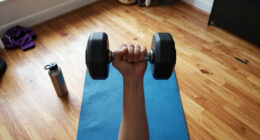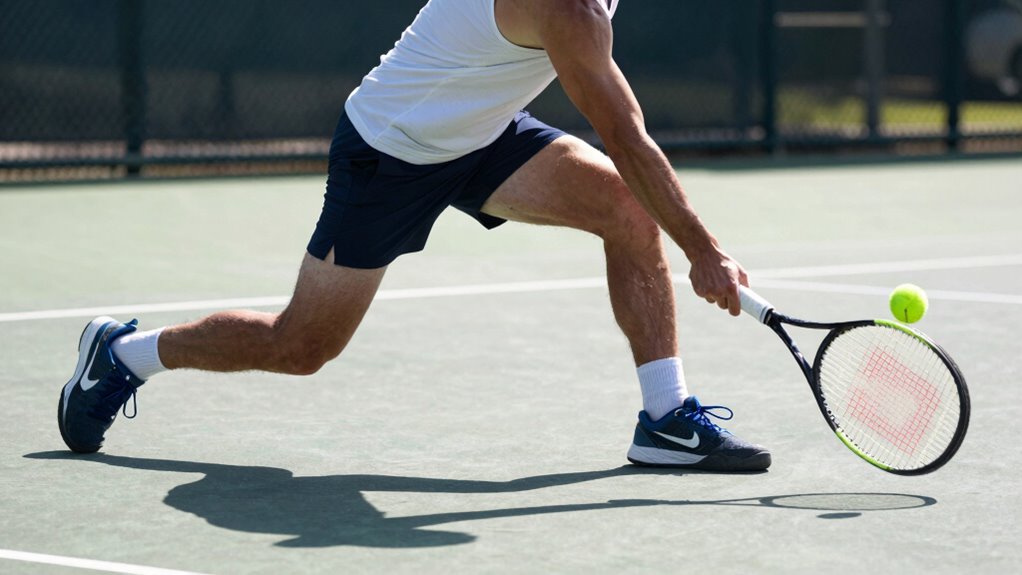
To improve your tennis footwork, incorporate agility drills like ladder and cone exercises to boost quickness and change of direction. Practice lateral movements with side shuffles and quick splits to mimic on-court actions. Combine these with dynamic warm-ups and shadow swings to activate muscles and synchronize your movements. Focusing on proper foot placement and maintaining an athletic stance helps with balance and stability. Keep practicing these movements consistently, and you’ll discover more techniques to elevate your game.

Get workout gear delivered free with Prime
- Fast, free delivery on millions of items
- Prime Video, Amazon Music and more included
- Member-only deals all year
Key Takeaways
- Incorporate ladder drills to enhance quickness, coordination, and agility on the court.
- Use cone drills to practice rapid direction changes and improve footwork precision.
- Perform shadow swings combined with footwork to synchronize movement and stroke mechanics.
- Practice lateral shuffles and quick splits to strengthen side-to-side movements.
- Progress with game-like scenarios to develop reaction time and match-specific footwork skills.
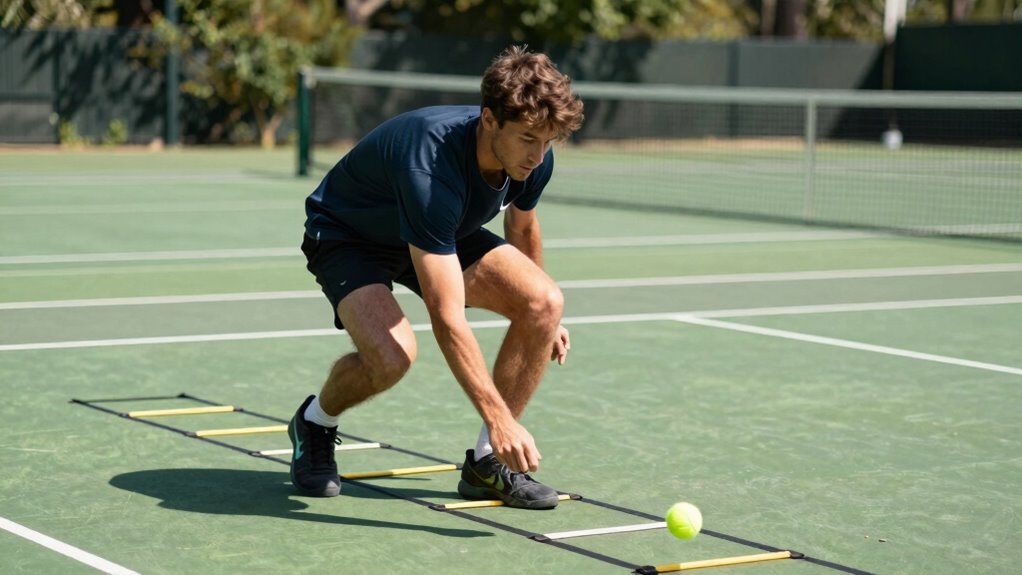
Improving your tennis footwork is essential for moving efficiently on the court and executing shots with precision. The foundation of good footwork starts before you even step onto the court. Incorporate effective warm-up routines that prepare your muscles and joints, reducing the risk of injury and guaranteeing you’re ready to move fluidly. A solid warm-up should include dynamic stretches, light jogging, and specific drills that mimic tennis movements, like side shuffles and quick step-backs. These routines not only warm up your body but also get you mentally prepared, setting the tone for sharp, focused play.
Effective warm-ups prepare muscles and mind for sharp, fluid tennis movements and injury prevention.
Alongside physical preparation, mental focus techniques play an important role in enhancing your footwork. When you’re mentally engaged and alert, you’ll be better at anticipating your opponent’s shots and adjusting your positioning accordingly. Practice breathing exercises or visualization techniques before matches or training sessions. Visualizing yourself moving smoothly and confidently across the court can improve your reaction time and coordination. When your mind is focused, you’re less likely to get distracted or lose your balance, which is essential for maintaining quick, precise footwork. Additionally, research suggests that incorporating visualization techniques can significantly boost athletic performance by reinforcing neural pathways related to movement.
Once you’ve completed your warm-up and mental prep, integrate specific drills to develop your agility and movement efficiency. Ladder drills are excellent for improving quickness and coordination, as they force you to lift your feet rapidly and accurately. Cone drills help enhance your ability to change direction swiftly, simulating the quick stops and starts needed during a match. Incorporate shadow swings during these drills to synchronize your footwork with your stroke mechanics, creating a seamless transition from movement to shot execution.
You should also focus on drills that emphasize lateral movement and split steps. For instance, practice side-to-side shuffles combined with quick splits, mimicking the movements you make when chasing down a wide shot. This not only improves your lateral speed but also trains your body to stay balanced and ready for the next shot. Remember, consistent repetition and mindful practice are key. Pay attention to your foot placement and maintain a low, athletic stance to maximize your stability and power in each movement.
To truly elevate your footwork, combine these physical exercises with ongoing mental focus techniques. Staying present in each drill helps reinforce muscle memory and sharpens your reaction times. Incorporate proper foot placement and deliberate practice into your routine to maximize your gains. Additionally, understanding movement patterns can help you optimize your training sessions and prevent common mistakes. Incorporating effective warm-up routines also ensures your muscles are properly prepared, which is crucial for injury prevention and optimal performance. As you progress, challenge yourself with more complex movement patterns and incorporate game-like scenarios. This holistic approach ensures your footwork becomes more agile, precise, and reliable, ultimately leading to better performance on the court.
agility ladder for tennis training
As an affiliate, we earn on qualifying purchases.
As an affiliate, we earn on qualifying purchases.
Frequently Asked Questions
How Often Should I Practice Tennis Footwork Exercises?
You should practice footwork drills at least three to four times a week to improve your tennis agility effectively. Consistent practice helps build muscle memory and enhances your quickness on the court. Focus on dynamic exercises that target lateral movement and quick changes in direction. Incorporate drills that challenge your agility, and over time, you’ll notice better court coverage and faster reactions during matches.
Can These Exercises Prevent Ankle Injuries During Matches?
Can these exercises really prevent ankle injuries during matches? Yes, they can enhance your ankle stability, which is key to injury prevention. By strengthening the muscles around your ankles and improving balance, you reduce the risk of sprains or twists. Consistent practice helps build the resilience needed for quick, agile movements on the court, making injuries less likely. Prioritize these exercises to keep your ankles strong and injury-free during intense matches.
Are There Specific Exercises for Improving Quick Directional Changes?
Yes, you can improve quick directional changes with agility drills focusing on lateral movements. Incorporate exercises like ladder drills, cone shuffles, and side-to-side jumps to enhance your ability to pivot quickly on the court. These drills strengthen your muscles and improve coordination, helping you react faster and change directions more efficiently. Regular practice of lateral movement exercises will boost your agility, giving you a competitive edge during matches.
How Long Does It Take to See Improvement in Footwork?
With dedicated footwork drills and consistent training, you might notice subtle improvements in a few weeks, but significant progress often takes a couple of months. Your dedication to regular practice is key—training consistency helps your muscles adapt and improve. Be patient, stay committed, and you’ll start feeling more agile and responsive on the court. Remember, steady effort over time results in lasting performance enhancement.
Should Beginners Focus on Footwork Exercises or Basic Skills First?
You should focus on footwork fundamentals first in your beginner training. Mastering basic skills builds a solid foundation for more advanced techniques later. Prioritize exercises that improve your agility, balance, and movement on the court. Once you’re comfortable with these, you’ll notice your overall game improving. Consistent practice of footwork fundamentals helps you react faster and move more efficiently, making your tennis more effective and enjoyable.
conical agility cones for sports drills
As an affiliate, we earn on qualifying purchases.
As an affiliate, we earn on qualifying purchases.
Conclusion
Just like a skilled dancer moves effortlessly across the floor, your tennis footwork can become smooth and swift with practice. Remember, even the pros dedicate time to drills that sharpen their agility—Roger Federer once said that quick feet are the secret to his game. Keep working on these exercises daily, and you’ll find yourself gliding across the court with confidence. Your improved footwork will turn every match into a graceful, winning performance.
tennis shadow swing training aid
As an affiliate, we earn on qualifying purchases.
As an affiliate, we earn on qualifying purchases.
lateral shuffle exercise equipment
As an affiliate, we earn on qualifying purchases.
As an affiliate, we earn on qualifying purchases.
Halloween Picks
halloween
As an affiliate, we earn on qualifying purchases.