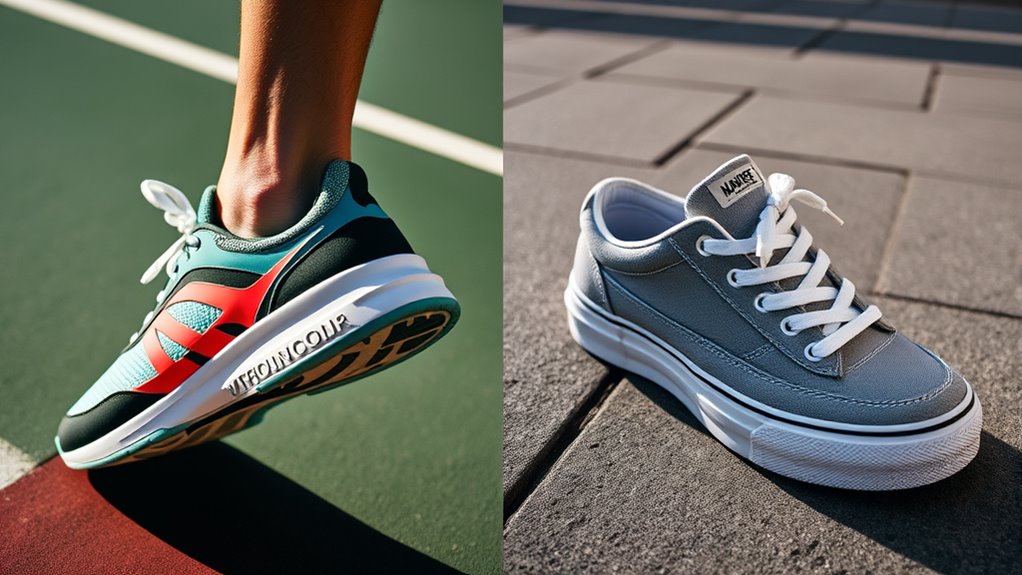

Tennis shoes are purpose-built for the sport, offering superior grip, advanced cushioning, and durability that regular sneakers lack. They support quick lateral movements and protect against injury, ensuring you stay stable during intense play. Regular sneakers, on the other hand, are made for casual wear and don’t provide the same level of performance or support. If you’re serious about your game, it’s worth exploring how tennis shoes can enhance your experience on the court.

Get workout gear delivered free — and shop member deals
- Fast, free delivery on millions of items
- Access to Prime Big Deal Days deals on October 6–7
- Prime Video, Amazon Music and more included
Key Takeaways
- Tennis shoes have specialized outsoles for superior traction, while regular sneakers have flatter soles suited for casual use.
- Advanced cushioning in tennis shoes absorbs impact during play, unlike the basic cushioning found in regular sneakers.
- Tennis shoes are built for durability, with reinforced areas that withstand intense use, while regular sneakers may wear out quickly under similar conditions.
- The design of tennis shoes caters to the sport’s demands, focusing on performance, whereas regular sneakers prioritize style and general comfort.
- Proper tennis shoes enhance performance and reduce injury risks, while regular sneakers may not provide adequate support for athletic activities.

When you’re choosing between tennis shoes and regular sneakers, it’s essential to understand their differences. Both types of footwear may seem similar at first glance, but they serve distinct purposes. Tennis shoes are specifically designed for the demands of the sport, while regular sneakers cater to casual wear and light activities. Knowing what each shoe offers will help you make the right choice for your needs.
First, let’s talk about court grip. Tennis involves quick lateral movements, sudden stops, and rapid direction changes. Because of this, tennis shoes come equipped with specialized outsoles that provide superior traction on various court surfaces. The rubber compounds used in these outsoles are optimized for grip, ensuring that you don’t slip while making those essential plays. In contrast, regular sneakers typically have flatter soles designed for everyday use, which may not offer the same level of grip on a court. If you’re planning to play tennis frequently, investing in a good pair of tennis shoes will enhance your performance and reduce the risk of injury.
Tennis shoes provide superior court grip with specialized outsoles, enhancing performance and minimizing the risk of injury during play.
Next up is cushioning technology. Tennis shoes often feature advanced cushioning systems tailored to the sport’s demands. This technology absorbs impact during intense play and provides support to your feet. Whether you’re serving or sprinting to the net, quality cushioning can make a huge difference in comfort and stability. Regular sneakers may have some cushioning, but they don’t always offer the same level of support needed for high-impact activities. If you’re going to be on the court for extended periods, you’ll want that extra comfort to keep your feet feeling great.
Another important factor is durability. Tennis shoes are built to withstand the rigors of the sport, with reinforced areas in high-wear zones. Regular sneakers, while stylish for casual outings, might not hold up as well on the court. If you’re serious about your game, you’ll want shoes that can endure the wear and tear of frequent play.
As an affiliate, we earn on qualifying purchases.
Frequently Asked Questions
Can Tennis Shoes Be Used for Running or Jogging?
Yes, you can use tennis shoes for running or jogging, but they might not be the best choice. Tennis shoes offer excellent court grip and good ankle support, which is great for lateral movements. However, they’re generally designed for short bursts rather than long-distance running. If you’re planning on jogging regularly, you might want to think about dedicated running shoes for better cushioning and support tailored to your stride.
Are Tennis Shoes More Expensive Than Regular Sneakers?
Tennis shoes often symbolize commitment to performance and style, but when it comes to price comparison, they can be more expensive than regular sneakers. Brand differences play a significant role in this; premium brands typically charge more for specialized features. However, you’ll find affordable options in both categories. Ultimately, it depends on what you value in footwear—performance and durability or casual comfort and cost-effectiveness. Your choice defines your journey.
How Do I Choose the Right Size for Tennis Shoes?
To choose the right size for tennis shoes, you’ll want to make sure you have a proper fit. Start by measuring your feet at the end of the day when they’re slightly swollen. Try on shoes with the socks you plan to wear. Make sure there’s enough room in the toe box—your toes should comfortably wiggle without feeling cramped. Finally, walk around a bit to confirm they feel secure but not tight.
Can Tennis Shoes Be Machine Washed?
Yes, you can machine wash tennis shoes, but it’s best to check the manufacturer’s instructions first. To maintain shoe durability, remove laces and insoles before washing. Use a gentle cycle and cold water. Keep in mind that frequent washing might affect the sole grip over time, so consider spot cleaning for minor stains. After washing, let them air dry to preserve their shape and materials.
What Materials Are Typically Used in Tennis Shoes?
Tennis shoes typically use a combination of rubber and foam for the shoe sole, providing traction and cushioning on the court. The upper materials often include breathable mesh, synthetic leather, or canvas, ensuring flexibility and support. These materials work together to enhance your performance and comfort during games. When choosing tennis shoes, consider how these materials affect your movement and stability, as they play a vital role in your overall experience on the court.
women's tennis shoes with superior grip
As an affiliate, we earn on qualifying purchases.
As an affiliate, we earn on qualifying purchases.
Conclusion
In the battle of tennis shoes versus regular sneakers, it’s clear that each has its own strengths. Tennis shoes, designed for quick lateral movements, grip the court like a dancer’s feet on stage. Regular sneakers, with their all-around comfort, are perfect for casual outings or light workouts. Choosing the right pair depends on your needs—if you’re hitting the court, go for tennis shoes; if you’re just strolling, regular sneakers are your best bet.
durable tennis shoes for advanced players
As an affiliate, we earn on qualifying purchases.
As an affiliate, we earn on qualifying purchases.
cushioned tennis shoes for impact absorption
As an affiliate, we earn on qualifying purchases.
As an affiliate, we earn on qualifying purchases.
Fall Picks
fall essentials
As an affiliate, we earn on qualifying purchases.