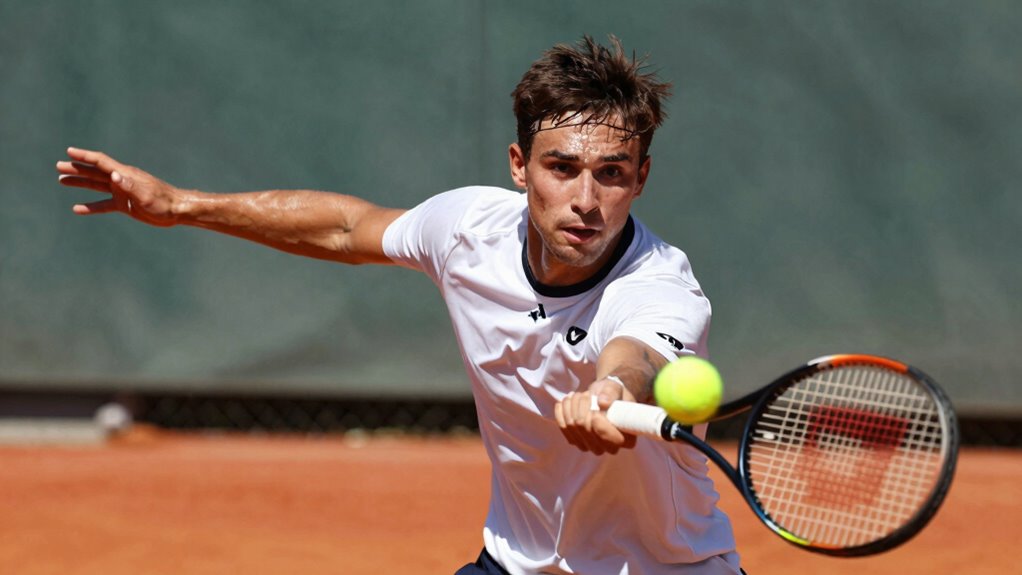

To improve your hand-eye coordination for racket sports, focus on reaction drills, peripheral awareness exercises, and visual training techniques. Practice catching unexpected balls, use decision-making apps, and concentrate on widening your field of view during play. Regularly training these skills sharpens your reaction time and court coverage, boosting confidence and performance. Keep working on these areas, and you’ll discover more strategies to take your game to the next level.

Get workout gear delivered free — and shop member deals
- Fast, free delivery on millions of items
- Access to Prime Big Deal Days deals on October 6–7
- Prime Video, Amazon Music and more included
Key Takeaways
- Incorporate reaction time drills like unexpected ball catches and decision-making apps to enhance quick reflexes.
- Practice peripheral vision exercises, such as focusing on a fixed point while noticing surrounding movements.
- Use visual awareness drills to broaden your field of view and improve tracking of fast-moving objects.
- Combine mental rehearsal with physical drills to strengthen visual processing and anticipation skills.
- Consistent, targeted practice of these techniques boosts hand-eye coordination and overall racket sport performance.
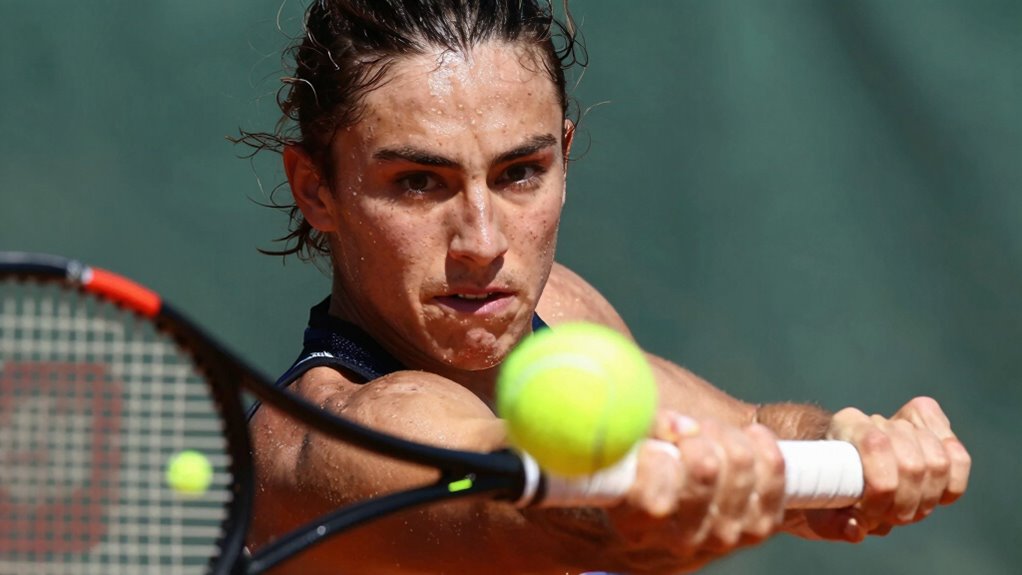
Have you ever wondered why some players seem to react effortlessly on the court while others struggle to keep up? The answer often lies in their reaction time and how well they utilize their peripheral vision. Reaction time is the split-second you need to process incoming information and respond accordingly. The faster your reaction time, the more responsive you’ll be to unpredictable shots, making it easier to position yourself and return the ball effectively. Peripheral vision, on the other hand, allows you to see the court beyond your direct line of sight. It helps you anticipate your opponent’s moves and track the ball even when you’re focused elsewhere, giving you a vital edge during fast-paced exchanges.
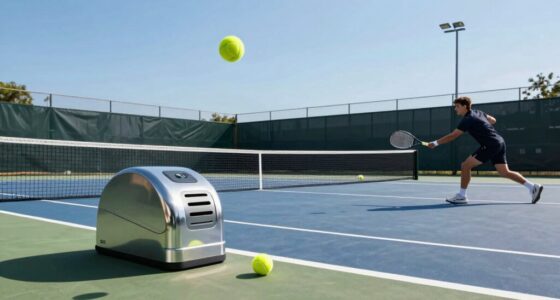
Improving these skills starts with sharpening your awareness. Practice drills that challenge your reaction time, like having a partner randomly hit shots at different areas of the court while you stay alert and ready to move. You can also incorporate reaction-based exercises, such as catching a ball thrown unexpectedly or using apps designed to enhance quick decision-making. The key is to simulate game scenarios that demand rapid responses, training your brain and body to process information faster and act more instinctively.
Peripheral vision can be enhanced through specific drills that force you to broaden your field of view. One effective method is to focus on a fixed point directly in front of you while trying to become aware of objects or movements in your peripheral field. For example, practice rallying with a partner and periodically glance at their position while consciously noticing their movements out of your direct line of sight. Over time, this expands your awareness, allowing you to track the ball and opponent more effectively during real matches. Additionally, understanding the role of peripheral vision in sports performance can motivate targeted practice, helping you recognize and improve these critical skills. Incorporating visual awareness exercises specifically designed to enhance your peripheral perception can further boost your reaction speed.
Another way to develop these skills is through visualization and mental rehearsal. Picture yourself in various game situations, imagining how you’ll react to different shots and how you’ll utilize your peripheral vision to stay alert. Combining mental practices with physical drills creates an all-encompassing approach that sharpens your overall responsiveness. Consistency is essential; dedicating a few minutes daily to reaction and peripheral vision exercises can greatly improve your on-court performance. Moreover, understanding the role of reaction time and peripheral vision in sports performance can motivate targeted practice, helping you recognize and improve these critical skills.
Training your visual processing through specific drills can help your brain interpret incoming information more quickly, leading to faster responses. Ultimately, by consciously working on these aspects—reducing reaction time and expanding your peripheral awareness—you’ll find yourself reacting faster and moving more intuitively. This heightened responsiveness translates into better shot accuracy, quicker court coverage, and a more confident game. With dedication and targeted practice, you’ll develop the skills that make the difference between a good player and a great one.
reaction training balls for racket sports
As an affiliate, we earn on qualifying purchases.
As an affiliate, we earn on qualifying purchases.
Frequently Asked Questions
How Long Does It Typically Take to Improve Hand-Eye Coordination?
It typically takes several weeks to see noticeable improvement in your hand-eye coordination, depending on your dedication. As you practice regularly, your visual motor skills and neuromuscular development enhance, leading to faster reactions and better tracking of the ball. Consistent drills and focused exercises strengthen the connection between your eyes and hands, gradually refining your coordination. Stay committed, and you’ll likely notice progress within a few weeks to a couple of months.
Are There Specific Drills for Different Racket Sports?
Yes, there are sport-specific drills for different racket sports. You’ll find drill variations tailored to tennis, badminton, or squash, focusing on unique movement patterns and shot types. Sport-specific exercises enhance your hand-eye coordination by mimicking real-game scenarios. Incorporate these drills into your routine to target the skills needed for each sport, making your practice more effective and engaging, ultimately helping you improve faster and with more confidence.
Can Age Affect the Ability to Enhance Hand-Eye Coordination?
Yes, age can affect your ability to enhance hand-eye coordination due to age-related decline in neuroplasticity potential. As you get older, your brain’s capacity to form new neural connections slows down, making improvements more challenging. However, consistent practice and engaging in targeted drills can still boost coordination, as neuroplasticity persists throughout life. Stay dedicated, and you’ll continue to sharpen your skills regardless of age.
What Role Does Nutrition Play in Improving Coordination?
Nutrition plays a crucial role in improving your coordination. Proper nutrition timing guarantees your body gets essential nutrients before training, boosting focus and reaction time. Including foods rich in antioxidants and omega-3s helps support brain health, enhancing hand-eye coordination. Supplement benefits, like vitamins B6 and B12, can further improve nerve function and reflexes. Prioritizing balanced meals and strategic supplementation helps optimize your performance and coordination skills.
How Can I Stay Motivated During Training?
Staying motivated during training is like tending a garden—you need consistent care. To keep your mental focus sharp, set clear, achievable goals and celebrate small victories. Remind yourself of your love for the game and how far you’ve come. Regularly mix up your routine to avoid boredom. With consistent practice and a strong mental focus, you’ll find your energy and motivation blooming, pushing you closer to your best performance.
peripheral vision training drills
As an affiliate, we earn on qualifying purchases.
As an affiliate, we earn on qualifying purchases.
Conclusion
By sharpening your hand-eye coordination, you’re sharpening your game, turning each rally into a symphony of precise movements. Think of your skills as the strings of a finely tuned instrument, each one resonating in perfect harmony. Keep practicing consistently, and you’ll find your reflexes quickening like a bird darting through the air. With dedication and focus, your racket will become an extension of your own hand, making every shot more confident and controlled.
As an affiliate, we earn on qualifying purchases.
reaction time training apps for athletes
As an affiliate, we earn on qualifying purchases.
As an affiliate, we earn on qualifying purchases.
Fall Picks
fall essentials
As an affiliate, we earn on qualifying purchases.