The best indoor cycling trainers balance ride feel, smart features, setup demands, and compatibility with your bike. My best overall pick is the Wahoo KICKR CORE 2 with Zwift Cog and Click Shifting, which pairs direct-drive training with convenient virtual shifting. For demanding riders, the Garmin Tacx NEO 2T stands out for its premium feature set, while the Saris M2 offers a wheel-on alternative for riders who want less bike disassembly. The main tradeoffs are smart control versus simplicity, direct-drive stability versus easier storage, and broad compatibility versus setup complexity. Read on for the full breakdown and guidance on choosing the right trainer for your space, bike, and riding goals.

Get workout gear delivered free with Prime
- Fast, free delivery on millions of items
- Prime Video, Amazon Music and more included
- Member-only deals all year
Complete the kit



Key Takeaways
- The Wahoo KICKR CORE 2 with Zwift Cog and Click Shifting is my best overall pick: its virtual shifting makes it a flexible choice for riders who want a smart direct-drive setup without relying on a traditional cassette.
- The two KICKR CORE 2 versions solve different setup problems: choose the Zwift Cog model for virtual shifting, or the 11-speed cassette model if a conventional drivetrain setup better fits your riding and equipment.
- Premium trainers emphasize ride quality and extra capability, not just connectivity: the Tacx NEO 2T, NEO 3M, and Wahoo KICKR V6 are aimed at riders who will make regular use of their advanced features.
- Wheel-on and magnetic options trade convenience or simplicity for a less integrated setup: the Saris M2 and Sportneer may suit riders who want to leave the rear wheel on, while direct-drive models remove tire-to-roller contact.
- The Tacx Nēra is a distinct choice rather than a conventional smart-trainer substitute: its roller format suits riders prioritizing a different indoor riding experience, but it asks for more balance and bike-handling confidence.
| Garmin Tacx Neo 2T Smart Trainer |  | Best for Quiet, High-End Training | Resistance type: Magnetic, with 32 neodymium magnets | Connectivity: ANT+ and Bluetooth | Compatible operating systems: iOS, Android, macOS, and Windows | VIEW LATEST PRICE | See Our Full Breakdown |
| ThinkRider X2Max Smart Bike Trainer, 2000W, Simulates 18% Slope, ANT+ and Bluetooth |  | Best for Steep Virtual Climbs | Resistance mechanism: Electromagnetic | Maximum power: 2000 W | Power accuracy: ±2% | VIEW LATEST PRICE | See Our Full Breakdown |
| Saris M2 Smart Indoor Electromagnetic Bike Trainer |  | Best Smart Wheel-On Pick | Resistance mechanism: Electronic | Resistance accuracy: ±5% | Connectivity: ANT+ FE-C and Bluetooth | VIEW LATEST PRICE | See Our Full Breakdown |
| Sportneer Magnetic Indoor Bike Trainer for 26–28-Inch and 700C Wheels |  | Best for Simple, App-Free Sessions | Resistance mechanism: Magnetic | Resistance levels: 6 | Wheel compatibility: 26–28 in or 700C | VIEW LATEST PRICE | See Our Full Breakdown |
| COOSPO T10 Belt-Driven Direct Drive Indoor Bike Trainer |  | Best for Structured Power Training | Drive type: Belt-driven direct drive | Maximum power: 2200 W | Power accuracy: ±2% | VIEW LATEST PRICE | See Our Full Breakdown |
| Wahoo KICKR CORE 2 Smart Bike Trainer with Zwift Cog and Click Shifting |  | Best for Zwift Shifting | Trainer type: Direct-drive indoor bike trainer | Maximum power: 1,800 W | Bike compatibility: 8- to 13-speed bikes | VIEW LATEST PRICE | See Our Full Breakdown |
| Wahoo KICKR CORE 2 Smart Bike Trainer with 11-Speed Cassette |  | Best for a Ready-to-Use Cassette Setup | Trainer type: Direct-drive indoor bike trainer | Included cassette: 11-speed | Maximum power: 1,800 W | VIEW LATEST PRICE | See Our Full Breakdown |
| Tacx Flux S Smart Bike Trainer | 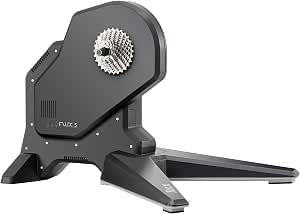 | Best for Quiet Training | Trainer type: Direct-drive smart bike trainer | Resistance: Electromagnetic | Maximum resistance: 1,500 W | VIEW LATEST PRICE | See Our Full Breakdown |
| Wahoo KICKR V6 Smart Bike Trainer with 11 Speed Cassette |  | Best for High-Intensity Training | Trainer type: Direct-drive smart bike trainer | Maximum power: 2,200 W | Power accuracy: ±1% | VIEW LATEST PRICE | See Our Full Breakdown |
| Garmin Tacx NEO 3M Smart Trainer |  | Best Premium Real-Road Feel | Trainer type: Direct-drive smart trainer | Maximum power: 2,200 W | Maximum gradient: 25% | VIEW LATEST PRICE | See Our Full Breakdown |
| Garmin Tacx Nēra Indoor Smart Trainer |  | Best for a More Natural Ride Feel | Brand: Garmin | Model: Tacx Nēra | Model number: 010-02418-60 | VIEW LATEST PRICE | See Our Full Breakdown |
| indoor cycling trainer | Weight | Connectivity | Warranty | Maximum power |
|---|---|---|---|---|
| Garmin Tacx Neo 2T Smart Train | 47.4 lb | ANT+ and Bluetooth | — | — |
| ThinkRider X2Max Smart Bike Tr | 35.2 lb | ANT+ and Bluetooth | — | 2000 W |
| Saris M2 Smart Indoor Electrom | 20 lb | ANT+ FE-C and Bluetooth | Limited lifetime | — |
| Sportneer Magnetic Indoor Bike | 19.3 lb | — | 1 year | — |
| COOSPO T10 Belt-Driven Direct | 16 kg | Bluetooth FTMS and ANT+ FE-C | 12 months | 2200 W |
| Wahoo KICKR CORE 2 Smart Bike | 13.6 kg | Wi-Fi | 2 years | 1,800 W |
| Wahoo KICKR CORE 2 Smart Bike | 13.6 kg | Built-in Wi-Fi | 1 year manufacturer | 1,800 W |
| Tacx Flux S Smart Bike Trainer | 50 lb | — | 2-year limited | — |
| Wahoo KICKR V6 Smart Bike Trai | 22 kg | 2.4 GHz Wi-Fi | 1 year | 2,200 W |
| Garmin Tacx NEO 3M Smart Train | 52 lb | Wi-Fi, Ethernet, ANT+, Bluetooth | 1-year limited | 2,200 W |
| Garmin Tacx Nēra Indoor Smart | 54.5 lb | Built-in Wi-Fi | 1-year limited | — |
More Details on Our Top Picks
Garmin Tacx Neo 2T Smart Trainer
The Garmin Tacx Neo 2T is the premium pick here for riders who want a quiet, direct-drive setup with broad bike compatibility. Its stronger magnets are designed to deliver high torque without slipping during hard efforts, while reduced vibration makes it a better fit for shared living spaces than the wheel-on Saris M2, which is specified at 69 dB at 20 mph. ANT+ and Bluetooth support app connections, and ANT+ Cycling Dynamics adds pedal-stroke data for riders who want more than basic power targets.
The tradeoff is its 47.4-pound weight: this is a trainer to set up and leave in place, not move after every session. A Tacx Premium trial is included, but continued access to its software features may require a subscription. Compared with the more affordable-feature-focused ThinkRider X2Max, the Neo 2T stands out for its noise reduction and analysis support, not portability.
Pros:- Stronger magnets are designed to reduce slipping during hard sprints.
- Reduced vibration and noise suit indoor training near other people.
- ANT+ and Bluetooth support a range of training apps and devices.
- Includes adapters for several common quick-release and thru-axle standards.
Cons:- At 47.4 pounds, it is cumbersome to move and store.
- The included Tacx Premium access lasts one month; continued use of its full features may require a subscription.
Best for: Dedicated indoor riders who want a quiet direct-drive trainer, broad axle support, and detailed pedal-stroke analysis.
Not ideal for: Riders who need to fold away or carry their trainer regularly, or who want to avoid software subscription costs.
- Resistance type:Magnetic, with 32 neodymium magnets
- Connectivity:ANT+ and Bluetooth
- Compatible operating systems:iOS, Android, macOS, and Windows
- Weight:47.4 lb
- Foldable:Yes
- Axle adapters included:130 mm QR, 135 mm QR, 12 × 142 mm thru-axle, and 12 × 142 mm Boost
- Included components:Front wheel support, quick-release and thru-axle skewers, SHIMANO/SRAM freehub, and one-month Tacx Premium software
Our verdict“Choose the Neo 2T if quiet, high-torque direct-drive training and pedal analysis matter more than portability.”
ThinkRider X2Max Smart Bike Trainer, 2000W, Simulates 18% Slope, ANT+ and Bluetooth
The ThinkRider X2Max makes its case with a stated 18% simulated slope and up to 2000 W of power, giving virtual riders plenty of headroom for steep-climb sessions and hard intervals. ANT+ and Bluetooth allow connection to apps such as Zwift, while the iron I-beam frame is designed to keep the trainer planted. Its stated power accuracy is ±2%, matching the COOSPO T10 on paper, though the T10 offers a higher 2200 W ceiling and belt-driven direct drive.
At about 58 dB at 30 km/h, the X2Max has a stated noise figure, but the supplied data does not establish that it is quieter than direct-drive alternatives. It also weighs 35.2 lb, and buyers must supply a compatible cassette. That cassette requirement adds setup work compared with the wheel-on Saris M2, which attaches to the bike’s rear wheel instead. I’d pick the X2Max for its climb simulation, not for easy relocation or an all-in-one setup.
Pros:- Simulates gradients up to 18% for demanding virtual climbs.
- Power output is specified up to 2000 W.
- ANT+ and Bluetooth support connections to cycling apps.
- Iron I-beam frame is designed for a stable ride.
Cons:- Cassette is not included, adding a separate compatibility and setup task.
- The 35.2-pound unit is not especially convenient to carry or store.
- The stated noise level may be noticeable in a quiet home.
Best for: Virtual riders who want substantial simulated climbing and high-power headroom in an electromagnetic trainer.
Not ideal for: Cyclists who want a ready-to-ride package without sourcing a cassette, or who need a lightweight trainer to move often.
- Resistance mechanism:Electromagnetic
- Maximum power:2000 W
- Power accuracy:±2%
- Maximum simulated slope:18%
- Connectivity:ANT+ and Bluetooth
- Noise level:About 58 dB at 30 km/h
- Weight:35.2 lb
- Dimensions:17.7 × 19.2 × 21.6 in
- Cassette:Not included
Our verdict“Pick the X2Max if steep virtual climbs are your priority and you are comfortable buying and installing a cassette separately.”
Saris M2 Smart Indoor Electromagnetic Bike Trainer
The Saris M2 suits riders who want app-controlled workouts without removing the rear wheel: its wheel-on design clamps the tire against an electronic resistance unit. That makes it a simpler match for cyclists who switch between indoor and outdoor riding than direct-drive choices such as the Garmin Tacx Neo 2T or COOSPO T10, which replace the rear wheel with a cassette-equipped trainer. ANT+ FE-C and Bluetooth provide app connectivity, and Zwift certification supports virtual training.
The convenience comes with tradeoffs. Saris specifies ±5% resistance accuracy, less precise than the ±2% figures listed for the ThinkRider X2Max and COOSPO T10. Tire contact also brings noise: the stated level is 69 dB at 20 mph, so a smooth, quiet ride is not its strongest selling point. The included steel skewer and clutch knob help with setup and consistent tire contact, while the limited lifetime warranty is a practical plus. Choose it for wheel-on simplicity, not maximum accuracy or quiet.
Pros:- Wheel-on setup avoids removing the bike’s rear wheel.
- ANT+ FE-C and Bluetooth connect to indoor cycling apps.
- Clutch knob helps maintain tire-to-roller contact.
- Includes a steel quick-release skewer and a one-month Rouvy subscription.
Cons:- Specified resistance accuracy is ±5%, looser than the ±2% figures of the X2Max and T10.
- Stated noise is 69 dB at 20 mph.
- Tire-on-roller design may be less appealing to riders seeking a direct-drive setup.
Best for: Road and mountain bike owners who want app-connected workouts but prefer to keep the rear wheel on their bike.
Not ideal for: Riders prioritizing low noise, tighter stated power accuracy, or a direct-drive feel for structured training.
- Resistance mechanism:Electronic
- Resistance accuracy:±5%
- Connectivity:ANT+ FE-C and Bluetooth
- Bike compatibility:Common road and mountain bike frames
- Maximum wheel size:29 in
- Noise level:69 dB at 20 mph
- Weight:20 lb
- Load capacity:300 lb
- Warranty:Limited lifetime
Our verdict“Choose the Saris M2 if keeping your rear wheel installed matters more than quieter operation or tighter stated accuracy.”
Sportneer Magnetic Indoor Bike Trainer for 26–28-Inch and 700C Wheels
The Sportneer Magnetic Trainer is the straightforward pick for riders who want a basic indoor stand rather than a smart trainer. Six resistance levels adjust through a handlebar remote, so you can change effort without stepping off the bike; the included front-wheel block and quick-release skewer also help keep setup simple. Unlike the Saris M2, it does not list ANT+ or Bluetooth app connectivity, and it offers manual resistance rather than electronically controlled workouts. That makes it a better fit for uncomplicated spinning than Zwift sessions or ERG-style training.
Its broad stated wheel range covers 26–28-inch and 700C bikes, but the rear-axle fit has limits, and thru-axle bikes need a separate version with an adapter. Tire choice affects noise, with road or slick tires recommended, so knobby tires may make indoor sessions less pleasant. The steel frame, wide base, and adjustable feet support stability, but buyers give up the smart controls and performance data available from the COOSPO T10.
Pros:- Six resistance levels can be changed with a handlebar remote.
- Includes a front-wheel block and quick-release skewer.
- Wide base and adjustable anti-slip feet support stability.
- Fits many 26–28-inch and 700C wheels.
Cons:- No ANT+ or Bluetooth app connectivity is listed.
- Noise depends on tire type; road or slick tires are recommended.
- Thru-axle bikes require a separate version with an adapter.
Best for: Cyclists with compatible quick-release bikes who want a manually controlled indoor stand for basic workouts.
Not ideal for: App-based training riders, owners of thru-axle bikes without the right adapter, or anyone who needs measured power and automatic resistance.
- Resistance mechanism:Magnetic
- Resistance levels:6
- Wheel compatibility:26–28 in or 700C
- Rear axle compatibility:4.92–6.57 in
- Weight:19.3 lb
- Dimensions:22 × 22 × 15.5 in
- Load capacity:300 lb
- Included components:Trainer stand, resistance remote, front wheel block, and quick-release skewer
- Warranty:1 year
Our verdict“Choose the Sportneer for basic, manually adjusted sessions on a compatible quick-release bike, but skip it for app-controlled training.”
COOSPO T10 Belt-Driven Direct Drive Indoor Bike Trainer
The COOSPO T10 is the strongest match in this group for riders building workouts around measured power and automatic resistance. Its belt-driven direct-drive layout is designed for smooth, quiet power transfer, while ±2% power accuracy, up to 2200 W, and automatic ERG control support interval sessions where holding a target matters more than manually adjusting effort. ANT+ FE-C and Bluetooth FTMS connect it to a broad list of training platforms. Compared with the wheel-on Saris M2, the T10 offers direct-drive operation and tighter stated accuracy; against the ThinkRider X2Max, it has a higher power ceiling but simulates a lower maximum grade, 15% versus 18%.
Compatibility needs a check before buying: the cassette is not included, SRAM XDR requires a separate freehub body, and Micro Spline is unsupported. At 16 kg, it is still a substantial piece of equipment, and its 12-month warranty is shorter than the Saris M2’s limited lifetime warranty. I’d favor it for structured app training, not for a grab-and-go wheel-on setup.
Pros:- ±2% stated power accuracy supports power-targeted workouts.
- Automatic ERG mode adjusts resistance to maintain a target power.
- Belt-driven direct drive is designed for smooth, quiet power transfer.
- Works with several major apps through Bluetooth FTMS and ANT+ FE-C.
Cons:- Cassette is not included.
- SRAM XDR needs a separate freehub body, and Micro Spline is not compatible.
- Its 15% maximum grade simulation is below the X2Max’s stated 18%.
Best for: Structured-training riders who want automatic ERG control, direct-drive operation, and broad app support.
Not ideal for: Cyclists who need a trainer ready without buying a cassette, or whose bike uses a Micro Spline cassette.
- Drive type:Belt-driven direct drive
- Maximum power:2200 W
- Power accuracy:±2%
- Maximum grade simulation:15%
- Connectivity:Bluetooth FTMS and ANT+ FE-C
- Axle compatibility:5 × 130/135 mm QR and 12 × 142/148 mm thru-axle
- Cassette compatibility:SHIMANO 8–12 speed and SRAM 8–11 speed; XDR requires a separate body and Micro Spline is not compatible
- Weight:16 kg
- Warranty:12 months
Our verdict“Choose the T10 for app-based, power-focused training if your cassette and axle standards are compatible and you are prepared to buy a cassette separately.”
Wahoo KICKR CORE 2 Smart Bike Trainer with Zwift Cog and Click Shifting
The KICKR CORE 2 with Zwift Cog and Click is the clearest pick here for riders who want to change virtual gears without swapping their bike’s cassette. Its included Cog and Click shifter pair with a wide range of 8- to 13-speed bikes, making it more adaptable across bikes than the CORE 2 with an 11-speed cassette. The direct-drive setup and 1,800-watt capacity suit structured sessions and hard efforts, while Wi-Fi supports pairing and automatic updates. The tradeoff is that those updates need an active Wi-Fi network, and this is an indoor-only trainer rather than a practical outdoor stand-in. Compared with the premium KICKR V6, it gives up higher power, tighter stated accuracy, and AXIS movement, but its included virtual shifting is the more distinctive draw.
Pros:- Zwift Cog and Click shifter are included for virtual gear changes
- Compatible with 8- to 13-speed bikes
- Direct-drive resistance suits structured sessions and hard efforts
- Wi-Fi supports pairing and automatic updates
Cons:- Automatic updates require an active Wi-Fi network
- Designed for indoor cycling rather than outdoor use
Best for: Zwift riders with an 8- to 13-speed bike who want virtual gear changes and plan to keep the trainer set up indoors.
Not ideal for: Riders who want outdoor portability, or those who need the KICKR V6’s higher power ceiling and side-to-side movement.
- Trainer type:Direct-drive indoor bike trainer
- Maximum power:1,800 W
- Bike compatibility:8- to 13-speed bikes
- Connectivity:Wi-Fi
- Resistance:Electronic
- Weight:13.6 kg
- Dimensions:20.4 × 23 × 18.5 in
- Warranty:2 years
Our verdict“Choose this CORE 2 if Zwift virtual shifting and broad drivetrain compatibility matter more than the KICKR V6’s higher performance ceiling.”
Wahoo KICKR CORE 2 Smart Bike Trainer with 11-Speed Cassette
This KICKR CORE 2 bundle makes sense for riders who want a conventional cassette-based direct-drive trainer and already use, or can use, an 11-speed drivetrain. The cassette is included, so there is less setup shopping than with a trainer sold without one; however, an 11-speed cassette may not match your bike, even though the trainer is listed as compatible with 8- to 13-speed bikes. Its 1,800-watt output, stated ±2% power accuracy, and simulated grades up to 16% cover demanding training without reaching the KICKR V6’s 2,200-watt and 20% figures. Compared with the Zwift Cog version, this is the more familiar cassette route, but it lacks that model’s included virtual shifting. Wi-Fi handles pairing and updates, with updates dependent on an active network.
Pros:- Includes an 11-speed cassette and setup accessories
- Compatible with bikes listed from 8 to 13 speeds
- Up to 1,800 W and simulated grades up to 16%
- Built-in Wi-Fi supports pairing and automatic updates
Cons:- Included cassette may not match the rider’s bike
- Automatic updates require an active Wi-Fi network
- Lower stated power and grade limits than the Wahoo KICKR V6
Best for: Riders with an 11-speed bike who want a direct-drive trainer bundle that includes a matching cassette and supports app-based training.
Not ideal for: Cyclists whose bike uses a different cassette speed and who do not want to replace or change drivetrain parts.
- Trainer type:Direct-drive indoor bike trainer
- Included cassette:11-speed
- Maximum power:1,800 W
- Power accuracy:±2%
- Maximum simulated grade:16%
- Connectivity:Built-in Wi-Fi
- Weight:13.6 kg
- Warranty:1 year manufacturer
Our verdict“Pick this bundle if your bike suits an 11-speed cassette and you prefer conventional gearing over the Zwift Cog model’s virtual shifting.”
Tacx Flux S Smart Bike Trainer
For riders sharing walls or training while others are nearby, the Tacx Flux S puts quiet operation ahead of the higher ceilings offered by the Wahoo KICKR V6 and Garmin Tacx NEO 3M. Its direct-drive, electromagnetic resistance is described as next-to-silent, while ±3% power accuracy is suited to tracking workouts without matching the more precise ±1% figures listed for those premium Wahoo and Garmin models. The Flux S simulates grades up to 10% and provides up to 1,500 watts of resistance, enough for many indoor sessions but less headroom for steep virtual climbs and very hard efforts. Its main practical drawback is its 50-pound weight and substantial footprint: it is a poor fit for riders who need to move or stow a trainer after every ride.
Pros:- Next-to-silent direct-drive operation suits shared living spaces
- ±3% power accuracy supports workout tracking
- Compatible with popular third-party training apps
- Two-year limited warranty
Cons:- 50-pound weight makes it difficult to move and store
- Large footprint needs dedicated floor space
- 1,500-watt resistance and 10% grade limit trail the Wahoo KICKR V6 and Garmin Tacx NEO 3M
Best for: Indoor cyclists in shared homes who prioritize quiet direct-drive training and have a dedicated place to leave the trainer set up.
Not ideal for: Riders who need a lightweight trainer to store between sessions, or who want steep grade simulation and ±1% power accuracy.
- Trainer type:Direct-drive smart bike trainer
- Resistance:Electromagnetic
- Maximum resistance:1,500 W
- Maximum gradient:10%
- Power accuracy:±3%
- Weight:50 lb
- Dimensions:22.99 × 19.49 × 9.99 in
- Warranty:2-year limited
Our verdict“Choose the Flux S if quiet operation matters more than portability, steep climbing simulation, or the tighter accuracy figures of premium alternatives.”
Wahoo KICKR V6 Smart Bike Trainer with 11 Speed Cassette
The Wahoo KICKR V6 is the performance-focused choice for riders who want more headroom for sprints and virtual climbs than either KICKR CORE 2 offers. Its 2,200-watt maximum, ±1% power accuracy, and simulated grades up to 20% make it better suited to demanding sessions than the CORE 2 models, which top out at 1,800 watts. KICKR AXIS feet add side-to-side movement, giving the bike some lateral motion rather than the fixed feel of a standard setup. Wi-Fi supports stable data transfer and automatic calibration, though the listed connectivity is limited to 2.4 GHz Wi-Fi. The cost in practicality is substantial: at 22 kg, with a large listed footprint, this is a trainer to leave in a dedicated training space. The Garmin Tacx NEO 3M goes further on simulated grades and adds multidirectional motion plates.
Pros:- 2,200-watt maximum power and simulated grades up to 20%
- ±1% power accuracy with automatic calibration
- KICKR AXIS feet provide side-to-side movement
- Wi-Fi supports stable data transfer
Cons:- 22 kg weight makes frequent moving difficult
- Large footprint calls for dedicated training space
- Connectivity is listed as 2.4 GHz Wi-Fi only
Best for: Experienced indoor cyclists who do hard sprint sessions and steep virtual climbs, and have a permanent place for a heavy trainer.
Not ideal for: Riders with limited floor space, those who need to carry the trainer often, or anyone wanting dual-band Wi-Fi.
- Trainer type:Direct-drive smart bike trainer
- Maximum power:2,200 W
- Power accuracy:±1%
- Maximum grade:20%
- Flywheel weight:16 lb
- Connectivity:2.4 GHz Wi-Fi
- Weight:22 kg
- Warranty:1 year
Our verdict“Choose the KICKR V6 for high-output training and side-to-side motion if you can dedicate space to a heavy trainer.”
Garmin Tacx NEO 3M Smart Trainer
The Garmin Tacx NEO 3M stands apart from the KICKR V6 by focusing not only on power and climbing but also on movement and changing virtual road texture. Its built-in multidirectional motion plates can be switched off, while virtual-flywheel effects simulate surfaces such as cobblestones and gravel. With ±1% power accuracy and grades up to 25%, it also exceeds the KICKR V6’s stated 20% grade limit. The pre-installed 11-speed cassette helps riders get started without buying one separately, though it may not match every drivetrain. This premium feature set comes with real compromises: the 52-pound trainer is cumbersome to move, and premium video and WorldTour rides in the Tacx app require a subscription. The motion may also feel unsuitable for some riders or setups.
Pros:- Multidirectional motion plates can be switched on or off
- Virtual flywheel simulates cobblestone and gravel surfaces
- ±1% power accuracy and grades up to 25%
- Pre-installed 11-speed cassette and no calibration requirement
Cons:- 52-pound weight makes it difficult to move
- Premium Tacx app video and WorldTour rides require a subscription
- Motion plates may not suit every riding style or setup
Best for: Experienced riders seeking a highly immersive indoor setup with simulated road surfaces, movement, and steep virtual climbs.
Not ideal for: Riders who need a portable trainer, dislike lateral movement, or do not want app features tied to a subscription.
- Trainer type:Direct-drive smart trainer
- Maximum power:2,200 W
- Maximum gradient:25%
- Power accuracy:±1%
- Cassette:Pre-installed 11-speed
- Connectivity:Wi-Fi, Ethernet, ANT+, Bluetooth
- Weight:52 lb
- Warranty:1-year limited
Our verdict“Choose the NEO 3M for immersive road-feel features and steep climbs if its weight, motion, and app subscription requirements fit your setup.”
Garmin Tacx Nēra Indoor Smart Trainer
The Garmin Tacx Nēra is the standout choice here for riders who want a smart trainer that moves with them, not just a fixed platform. Its built-in multidirectional motion adds a more natural feel during hard efforts, while 1% power and cadence accuracy and automatic calibration reduce setup guesswork. Compared with the Tacx Flux S, the Nēra puts more emphasis on movement and ride feel; it also arrives with a pre-installed cassette, which cuts down on initial setup. Foldable legs help with storage, but at 54.5 pounds, moving it regularly may be a chore. Wi-Fi connectivity and compatibility with Zwift and the Tacx Training app suit connected training, though some subscription features require a paid plan after the 45-day trial. I’d choose it for its ride experience, not for portability or the lowest-fuss ongoing app costs.
Pros:- Built-in multidirectional motion gives the bike room to move during efforts
- Power and cadence accuracy within 1%, with automatic calibration
- Pre-installed cassette and included axle adapters simplify setup
- Foldable legs and a built-in handle support storage
Cons:- At 54.5 pounds, it is heavy to transport or reposition often
- Some premium app features require a paid plan after the 45-day trial
Best for: Indoor cyclists who want responsive, accurate smart-trainer data and multidirectional movement for a more natural-feeling ride at home.
Not ideal for: Riders who need to carry or frequently move their trainer, or who want to use premium training-app features without a paid subscription.
- Brand:Garmin
- Model:Tacx Nēra
- Model number:010-02418-60
- Weight:54.5 lb
- Connectivity:Built-in Wi-Fi
- Power and cadence accuracy:Within 1%
- Included cassette:Pre-installed
- Warranty:1-year limited
Our verdict“Choose the Nēra if realistic movement and precise connected training matter more to you than easy transport or avoiding app subscription costs.”

How We Picked
I compared these trainers around the decisions that affect everyday indoor riding: resistance control, ride feel, setup and compatibility, build and storage, and the value of the features. Direct-drive units were judged partly on how well their design suits structured workouts and virtual riding, while wheel-on models were evaluated for their simpler bike attachment and the compromises that come with keeping the rear wheel in place. I also separated conventional trainers from the Tacx Nēra rollers, since they serve a different riding preference.
The order favors trainers that offer a useful mix of capable smart training, practical setup, and broad appeal. Premium models rank highly when their extra capabilities serve riders who will use them, but a higher feature ceiling alone does not make one the right pick for everyone. Specialized or simpler options rank lower overall while earning distinct roles for buyers who prioritize compactness, entry-level simplicity, wheel-on convenience, or a roller-based ride.
Factors to Consider When Choosing Best Indoor Cycling Trainers
Before choosing a model, I would match the trainer to your bike, routine, and available space rather than chase the longest feature list. These broader checks can prevent compatibility snags and help you decide whether premium control, simpler setup, or easier storage matters most.
Choose Direct-Drive, Wheel-On, or Rollers Based on Your Routine
Direct-drive trainers require removing the rear wheel and mounting the bike on the trainer, so they add a setup step but avoid tire contact with a roller. Wheel-on trainers keep the rear wheel installed, which can be appealing if you often move between indoor and outdoor riding. That convenience comes with tire pressure, tire wear, and roller tension to manage, and those details can affect consistency. Rollers ask you to balance the bike without the same fixed support, making them a different skill and riding experience rather than a simple substitute for a smart trainer. A common mistake is choosing by attachment style alone; think about how often you will mount the bike and whether you need structured resistance control. If you will ride indoors several times each week, the extra initial setup of direct drive may feel worthwhile.
Check Bike Compatibility Before Comparing Features
Trainer compatibility depends on more than whether a bike is described as road or gravel. Check the frame’s axle type and spacing, drivetrain speeds, cassette or freehub requirements, and any included adapters before buying. Virtual-shifting systems can reduce reliance on a conventional cassette, but they also tie some gear changes to a supported app and control setup. If several riders will share one trainer, list their bikes and drivetrains first; a setup that fits one bike may not suit the next without parts or adjustments. Avoid assuming that a cassette included with a trainer will match every bike in your household. When compatibility details are unclear, confirm them with the trainer maker and bike maker rather than relying on a product name.
Buy the Control Features You Will Actually Use
Smart resistance control matters most when you want workouts or virtual routes to change resistance automatically. Riders who mainly pedal at a steady effort may get less from advanced simulation than riders following structured sessions or interactive courses. ANT+ and Bluetooth support can help connect a trainer to apps and devices, but check which connections your chosen platform and equipment use. Virtual shifting can simplify gear changes within a compatible setup, while a traditional cassette may better match riders who prefer their bike’s familiar drivetrain. A common misstep is treating connectivity as a guarantee that every app feature will work; app support and subscription requirements can differ. Prioritize the control method you expect to use every week, not a feature you might try once.
Match Trainer Capacity to Your Training, Not Just Your Ambition
Resistance capacity and simulated gradient describe what a trainer can represent, but they do not tell the whole story of ride quality. For most buyers, stable resistance changes, smooth pedaling, and reliable app control will matter more than chasing a headline wattage or slope figure. Riders who do hard intervals, sprint work, or steep virtual climbs may have more reason to compare performance limits closely. Also think about whether the trainer supports the training modes you use, since a strong specification is less useful if your preferred app cannot access it. Avoid paying for maximum capability without a clear training need. If your training is growing more structured, choose enough headroom for your sessions while keeping setup and compatibility in view.
Plan for Noise, Floor Space, and Storage
Indoor training affects other people in your home as well as the rider, so consider both mechanical noise and vibrations through the floor. Direct-drive designs remove the tire-on-roller contact found in wheel-on setups, but the bike, drivetrain, and room still contribute sound. A mat can help protect flooring and reduce transmitted vibration, though it cannot make every setup silent. Measure the trainer’s footprint and the clearance needed to mount the bike, then decide whether you will leave it assembled or put it away after sessions. Foldable or more compact designs can help in shared rooms, but storage convenience may come with limits in stability or features. If noise is a concern, include tire choice, drivetrain maintenance, and room placement in the plan rather than expecting the trainer alone to solve it.
Set a Practical Budget for the Whole Training Setup
The trainer is only one part of the indoor-cycling setup: you may also need a mat, compatible cassette or adapters, a fan, and a device or app for workouts. Those additions can change which model is the better value for your needs. A premium trainer makes sense when you will use its added ride features and smart controls regularly, not simply because it sits higher in a product lineup. A simpler wheel-on or magnetic option may fit occasional sessions, but account for its differences in resistance control and maintenance. Before buying, price out required accessories and check whether the trainer’s package includes the parts you need. This broader comparison often matters more than comparing trainer specifications alone.
Frequently Asked Questions
Should I choose the Wahoo KICKR CORE 2 with Zwift Cog or the 11-speed cassette?
Choose the Zwift Cog and Click Shifting version if virtual shifting within a compatible setup is the main appeal and you want to avoid basing your indoor gears on a conventional cassette. Pick the 11-speed cassette version if you prefer a traditional drivetrain arrangement or want the trainer’s gearing to align with an 11-speed setup. Check your bike’s drivetrain and the apps you plan to use before deciding, since the two bundles are not interchangeable in how they handle shifting. If multiple bikes will share the trainer, compare their compatibility rather than choosing based on a single bike. The best fit depends on your riding setup and software preference, not just the trainer name.
Is a direct-drive trainer worth the extra setup over a wheel-on model?
A direct-drive trainer is a strong fit if you ride indoors often and want the rear wheel removed from the training setup. It avoids tire-to-roller contact and can make workout setup more consistent, though you still need the right axle fit and drivetrain arrangement. A wheel-on model is easier to attach without removing the rear wheel and may suit occasional sessions or riders who value quick bike changes. Its tire condition, inflation, and roller adjustment become part of the routine. Think about the number of weekly rides and how much mounting effort you will tolerate; frequent riders may prefer direct drive, while convenience-focused buyers may favor wheel-on.
Do I need a premium trainer like the Tacx NEO 2T, NEO 3M, or KICKR V6?
Premium models make the most sense when you train regularly and will use the capabilities that separate them from simpler options. Riders who follow demanding workouts, use virtual riding often, or value a more advanced feature set have more reason to compare these models closely. If your indoor sessions are occasional and mostly steady, a less elaborate smart trainer may cover your needs without paying for features that go unused. Compare the specific features and compatibility you want rather than treating the premium label as a guarantee of a better fit. Room, bike fit, and app support still matter whichever tier you choose.
Can I use these trainers with more than one bike?
Often, but sharing depends on each bike’s axle standard, frame clearance, drivetrain, and the trainer’s included or separately available adapters. A cassette-based direct-drive setup may also require attention to the bikes’ gearing, while a virtual-shifting configuration has its own supported setup. Wheel-on trainers avoid some drivetrain changes but still need a suitable fit and correct positioning. Before buying, write down the specifications for every bike that will use the trainer and confirm compatibility for each one. If one bike is used much more than the others, make that bike the first compatibility check.
Are Tacx Nēra rollers a good choice for a first indoor trainer?
The Tacx Nēra is best suited to riders who want a roller-style experience and feel comfortable balancing a bike while pedaling. Rollers can appeal to riders who value that distinct, open-feeling format, but they do not provide the same fixed support as a conventional trainer. Beginners who want to focus on app-guided workouts or ride without managing balance may find a direct-drive or wheel-on trainer easier to settle into. Consider where you will ride and whether you have enough clear space around the setup. If you are unsure, a more supported trainer format is usually the simpler starting point.
Conclusion
For most riders seeking a capable smart setup, I recommend the Wahoo KICKR CORE 2 with Zwift Cog and Click Shifting as the best overall choice; choose its 11-speed cassette version if you prefer conventional gearing. The COOSPO T10 is my best value candidate for buyers focused on a belt-driven direct-drive format, while the Garmin Tacx NEO 2T is the best premium pick for riders who want an advanced trainer and will use its added capabilities. Beginners who want to keep their rear wheel on can start by comparing the Saris M2 with the straightforward Sportneer magnetic trainer, accepting their different limits in smart control. For a distinct roller-based ride, look to the Tacx Nēra; for broad premium capability, compare the NEO 3M and KICKR V6. Match the final choice to your bike fit, training habits, room, and app preferences before committing.