For most buyers, the Eric Flag Adjustable Weighted Vest is the best overall pick in this lineup because its 0–40 lb range gives room to progress across several types of training. The Sportneer Adjustable Weighted Vest is a more approachable choice for lighter loads, while the CAP Adjustable Weighted Vest, 2.5–40 lb suits buyers who want a broad strength-training range. Adjustable weighted vests differ most in how much weight they hold, how easily that load changes, and how securely they fit during movement. A larger capacity can add versatility, but a snug, manageable fit may matter more for walking or running than the highest stated maximum. Read on for the full breakdown and guidance on matching a vest to your training.

Get workout gear delivered free with Prime
- Fast, free delivery on millions of items
- Prime Video, Amazon Music and more included
- Member-only deals all year
Complete the kit


Key Takeaways
Broad load ranges separate the most versatile picks. Eric Flag and CAP each reach 40 lb, while ONETWOFIT reaches 36 lb and Zelus offers a 4–32 lb range; these suit buyers planning to increase resistance over time.
Lower-capacity vests serve a different purpose. Sportneer’s 2–18 lb range and the 6–12 lb women’s options are better aligned with lighter walking or introductory training than heavy progressive loading.
Weight-adjustment format matters as much as maximum capacity. Removable weights let buyers change the load, but the vest’s fit and the way weight sits on the body affect how practical those changes feel during a workout.
Running-specific use calls for a fit-first choice. APEXUP’s running-oriented models and reflective ZELUS variants address movement and visibility needs, but buyers should still check that the vest stays secure at their intended pace.
Several listings overlap, so the name alone is not a differentiator. The lineup includes two reflective-stripe ZELUS entries and multiple APEXUP and CAP models; compare their stated load ranges and intended use rather than treating similar names as distinct advantages.
| APEXUP Adjustable Weighted Vest for Running and Strength Training |  | Best for Durable Outdoor Training | Brand: APEXUP | Available weights: 20 lb, 30 lb, and 40 lb | Weight blocks: Removable 2.5 lb cast iron blocks | VIEW LATEST PRICE | See Our Full Breakdown |
| Zelus Weighted Vest Adjustable 4-32 lb for Men and Women, Removable Weights |  | Best for Beginners | Brand: Zelus | Stated weight range: 4–32 lb | Base vest weight: 4 lb | VIEW LATEST PRICE | See Our Full Breakdown |
| Adjustable Weighted Vest for Women, 6-12 lb Ruck Vest with Iron Sand Weights |  | Best for Petite Women | Brand: UOPON | Weight range: 6–12 lb | Removable weights: 6 × 1 lb iron-sand blocks | VIEW LATEST PRICE | See Our Full Breakdown |
| ONETWOFIT Adjustable Weighted Vest, 2–36 lb |  | Best for Broad Load Progression | Brand: ONETWOFIT | Weight range: 2–36 lb | Bare vest weight: 2.1 lb | VIEW LATEST PRICE | See Our Full Breakdown |
| ZELUS Adjustable Weighted Vest with Removable Weights |  | Best for Simple Cardio and Walks | Brand: ZELUS | Material: Neoprene and iron sand | Weight options: 4–10 lb, 11–20 lb, or 20–32 lb | VIEW LATEST PRICE | See Our Full Breakdown |
| Eric Flag Adjustable Weighted Vest, 0–40 lb |  | Best for High-Rep Strength Training | Maximum weight: 40 lb | Included weights: 16 removable 2.4 lb iron weights | Empty vest weight: 1.6 lb | VIEW LATEST PRICE | See Our Full Breakdown |
| APEXUP Weighted Vest for Men – Adjustable Weight Vest for Running |  | Best for Outdoor Training and Visibility | Weight options: 20 lb, 30 lb, or 40 lb | Included weights: Removable 2.5 lb cast-iron blocks | Material: 1000D nylon | VIEW LATEST PRICE | See Our Full Breakdown |
| CAP Adjustable 20 lb Weighted Vest for Strength Training and Cardio | 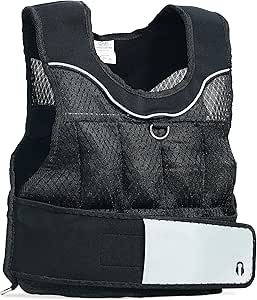 | Best for Fine-Grained Load Changes | Weight range: 1–20 lb | Packet fill: 1 lb iron-ore fines per packet | Material: Reinforced nylon and polyester, alloy steel, and neoprene | VIEW LATEST PRICE | See Our Full Breakdown |
| ZELUS Weighted Vest with Reflective Stripes |  | Best for Storage During Outdoor Walks | Available weights: 6, 8, 12, 16, 20, 25, or 30 lb | Material and fill: Neoprene and iron sand | Closure: Adjustable buckle straps | VIEW LATEST PRICE | See Our Full Breakdown |
| ZELUS Weighted Vest with Reflective Stripes |  | Best for Simple, Evenly Distributed Resistance | Available weights: 6, 8, 12, 16, 20, 25, and 30 lb | Listed item weight: 12 lb | Chest fit: 31.5–45 in | VIEW LATEST PRICE | See Our Full Breakdown |
| CAP Adjustable Weighted Vest, 2.5–40 lb |  | Best for Higher-Load Training | Adjustable weight range: 2.5–40 lb | Included weight: 40 lb | Weight packet size: 2.5 lb each | VIEW LATEST PRICE | See Our Full Breakdown |
| Paleclouds Adjustable Weighted Vest for Women, 6–12 lb |  | Best for Women’s Walking Workouts | Weight range: 6–12 lb | Included weights: 6 × 1 lb iron-sand bags | Material: Neoprene | VIEW LATEST PRICE | See Our Full Breakdown |
| Sportneer Adjustable Weighted Vest, 2–18 lb |  | Best Zip-Front Fit | Stated weight range: 2–18 lb | Included weights: 8 × 2 lb and 1 × 1 lb packs | Material: Neoprene | VIEW LATEST PRICE | See Our Full Breakdown |
| APEXUP Adjustable Weighted Vest with 6 Iron Sand Weights |  | Best for Multiple Load Options | Weight options: 4–10 lb, 12–18 lb, or 20–32 lb | Included weights: 6 removable iron-sand weights | Material: Neoprene | VIEW LATEST PRICE | See Our Full Breakdown |
| BAGAIL Adjustable Weighted Vest with Removable Weights |  | Best for Gradual Light-Load Progression | Base weight: 4 lb | Removable weights: 6 × 1 lb iron-sand bags | Listed weight range: 4–10 lb | VIEW LATEST PRICE | See Our Full Breakdown |
| adjustable weighted vest | Material | Closure | Included weights |
|---|---|---|---|
| APEXUP Adjustable Weighted Ves | 1000D nylon | — | — |
| Zelus Weighted Vest Adjustable | Neoprene | Adjustable buckle strap | 6 × 1 lb ironsand weights |
| Adjustable Weighted Vest for W | Premium chloroprene rubber (neoprene) | — | — |
| ONETWOFIT Adjustable Weighted | 1000D nylon | — | 16 cast iron blocks |
| ZELUS Adjustable Weighted Vest | Neoprene and iron sand | Hook and loop | Six removable iron-sand bags |
| Eric Flag Adjustable Weighted | Iron and 1000D Oxford nylon | Buckle | 16 removable 2.4 lb iron weights |
| APEXUP Weighted Vest for Men | 1000D nylon | — | Removable 2.5 lb cast-iron blocks |
| CAP Adjustable 20 lb Weighted | Reinforced nylon and polyester, alloy steel, and neoprene | Clip | — |
| ZELUS Weighted Vest with Refle | — | Adjustable buckle straps | — |
| ZELUS Weighted Vest with Refle | — | Adjustable buckle straps | — |
| CAP Adjustable Weighted Vest | Nylon and polyester | Hook and loop | — |
| Paleclouds Adjustable Weighted | Neoprene | — | 6 × 1 lb iron-sand bags |
| Sportneer Adjustable Weighted | Neoprene | Zipper | 8 × 2 lb and 1 × 1 lb packs |
| APEXUP Adjustable Weighted Ves | Neoprene | Buckle | 6 removable iron-sand weights |
| BAGAIL Adjustable Weighted Ves | Neoprene | — | — |
More Details on Our Top Picks
APEXUP Adjustable Weighted Vest for Running and Strength Training
The APEXUP stands out for buyers who want a durable vest with substantial load options. Removable 2.5 lb cast iron blocks let you choose among 20, 30, and 40 lb configurations, making it better suited to heavier strength sessions than the lighter Zelus 4–32 lb vest, whose included weights provide only 10 lb of usable load. Its 1000D nylon, reinforced stitching, and padded shoulder straps support regular training, while the adjustable waist belt helps limit shifting. Reflective strips add visibility for outdoor workouts. The tradeoff is a listed item weight of 14.92 kg, which is a serious handling and carrying burden and may make this a poor match for runners seeking a light, nimble fit. Its weight choices also start at 20 lb, so gradual progression from a very low load is limited.
Pros:- Removable 2.5 lb cast iron blocks provide adjustable loading
- 20, 30, and 40 lb options suit heavier training than lighter-entry vests
- 1000D nylon and reinforced stitching are suited to regular use
- Padded shoulders, an adjustable waist belt, and reflective strips support fit and outdoor visibility
Cons:- Listed item weight of 14.92 kg may be cumbersome to handle or wear
- The lightest listed configuration is 20 lb, limiting low-load progression
Best for: Strength trainees and experienced walkers who want a rugged vest with 20–40 lb load choices and reflective details for outdoor sessions
Not ideal for: Beginners or runners seeking a lightweight starting load; the listed item weight is substantial and the available configurations begin at 20 lb
- Brand:APEXUP
- Available weights:20 lb, 30 lb, and 40 lb
- Weight blocks:Removable 2.5 lb cast iron blocks
- Material:1000D nylon
- Fit features:Padded shoulder straps and adjustable waist belt
- Safety feature:Reflective strips
- Item weight:14.92 kg
- Recommended uses:Running, fitness, and strength training
Our verdict“Choose the APEXUP if you want a rugged vest for heavier training, but skip it if a light, low-load running vest is your priority.”
Zelus Weighted Vest Adjustable 4-32 lb for Men and Women, Removable Weights
For people starting with added resistance, this Zelus has a 4 lb base vest and six included 1 lb ironsand weights, giving a more approachable starting point than the APEXUP vest, whose listed choices begin at 20 lb. The neoprene construction, adjustable buckle strap, and reflective strips make it a practical option for walks, cardio, and moderate strength work, while the wide pocket keeps small essentials close. The key limitation is a mismatch in the weight details: although the product is described as adjustable from 4 to 32 lb, the listed included weights bring the maximum usable load to just 10 lb without extra weights. That makes it less suitable for buyers who expect a complete higher-load kit. Compared with the women-specific UOPON 6–12 lb vest, it offers a lower starting load and a broader stated audience.
Pros:- 4 lb base weight offers a lower starting point than several heavier vests
- Six included 1 lb ironsand weights allow small load adjustments
- Neoprene construction and an adjustable buckle strap support a flexible fit
- Reflective strips and a wide pocket add practical details for walks
Cons:- Included weights raise the usable load only to 10 lb, despite the stated 4–32 lb range
- Shipping item weight is listed as 10 pounds, which may be confusing alongside the vest’s weight details
Best for: Teens or adults beginning weighted walks or light workouts who prefer a low starting load, a pocket, and a soft neoprene vest
Not ideal for: Experienced trainees who need more than 10 lb from the included weights or buyers unwilling to source additional weights
- Brand:Zelus
- Stated weight range:4–32 lb
- Base vest weight:4 lb
- Included weights:6 × 1 lb ironsand weights
- Maximum load with included weights:10 lb
- Material:Neoprene
- Closure:Adjustable buckle strap
- Additional features:Reflective strips and wide waist pocket
Our verdict“Pick this Zelus for light, gradual training with a pocket, but choose a heavier-ready vest if you need more than 10 lb included.”
Adjustable Weighted Vest for Women, 6-12 lb Ruck Vest with Iron Sand Weights
This UOPON vest serves a specific fit need: its X-shaped cut is designed for women, with the product recommending wearers under 5’5″ and a 35″–45″ bust. Six removable 1 lb iron-sand blocks provide a 6–12 lb range, a narrower and lighter training window than the ONETWOFIT’s 2–36 lb range. That makes UOPON a more targeted choice for petite users seeking moderate resistance, rather than a general-purpose vest for heavy conditioning. Breathable chloroprene, enlarged mesh pockets, and reflective strips add comfort and convenience for walks or low-impact sessions. Its fit guidance is also its main limitation: taller users or those outside the listed measurements may find the cut less suitable. The product description mentions bone-density benefits, but I would treat that as a stated intended benefit, not a guaranteed result.
Pros:- X-shaped cut is designed around a women’s fit
- Six removable 1 lb blocks allow adjustment from 6 to 12 lb
- Breathable chloroprene and mesh pockets suit walking and moderate sessions
- Reflective strips support visibility outdoors
Cons:- Recommended fit guidance of under 5’5″ and 35″–45″ bust limits its likely audience
- The 12 lb maximum is far below heavy-load options such as ONETWOFIT
- The 6 lb starting load may be too much for some absolute beginners
Best for: Petite women under 5’5″ who match the listed bust guidance and want a 6–12 lb vest for walks or moderate training
Not ideal for: Taller wearers, buyers outside the listed fit guidance, or trainees who want a broad load range for heavier strength work
- Brand:UOPON
- Weight range:6–12 lb
- Removable weights:6 × 1 lb iron-sand blocks
- Material:Premium chloroprene rubber (neoprene)
- Design:X-shaped women’s fit
- Pockets and visibility:Enlarged mesh pockets and reflective strips
- Recommended bust:35″–45″
- Recommended height and weight:Under 5’5″; 110–130 lb
Our verdict“Choose this UOPON for a petite, women-focused fit and moderate loads, but look elsewhere if you need tall sizing or heavier resistance.”
ONETWOFIT Adjustable Weighted Vest, 2–36 lb
ONETWOFIT has one of the broadest stated ranges in this group, from a 2 lb bare vest to 36 lb, so it can accommodate a gentler start and later increases better than the APEXUP, which begins at 20 lb. Its 16 detachable cast iron blocks make that range useful for changing resistance, while the 1000D nylon shell, padded shoulders, waist belt, and reflective strips suit walking, running, and strength sessions. The 2.1 lb bare weight is still part of the load before any blocks are added, a point for buyers aiming for the lightest possible setup. Product details also conflict on shoulder-padding thickness, so I would not rely on a precise padding measurement when comparing fit. This is the flexible-load pick, though its metal buckle and block-based design may feel more structured than a soft neoprene vest.
Pros:- Stated 2–36 lb range supports progression from light to heavy training
- Includes 16 detachable cast iron blocks
- 1000D nylon, padded shoulder straps, and an adjustable waist belt support a secure training setup
- Reflective strips add visibility for outdoor use
Cons:- Bare vest weighs 2.1 lb before additional blocks are added
- Product details give conflicting shoulder-padding thickness measurements
- Structured cast iron blocks may be less appealing than soft-fill weights for buyers prioritizing a flexible feel
Best for: Walkers and strength trainees who want to start near 2 lb and increase toward a substantial load using detachable blocks
Not ideal for: Buyers who prioritize a soft, lightweight neoprene feel or need precise, consistent documentation of shoulder-padding dimensions
- Brand:ONETWOFIT
- Weight range:2–36 lb
- Bare vest weight:2.1 lb
- Included weights:16 cast iron blocks
- Material:1000D nylon
- Shoulder padding:Listed as 1.2 in; product details contain conflicting measurements
- Fit and closure:Adjustable waist belt with metal buckle
- Additional features:Reflective strips and removable logo
Our verdict“Choose ONETWOFIT if you want one vest to cover light starts through heavier training, and skip it if soft materials or precise padding specs matter most.”
ZELUS Adjustable Weighted Vest with Removable Weights
This ZELUS is a straightforward choice for users who want removable iron-sand weights without a rigid block system. Its listed weight options span 4–10 lb, 11–20 lb, or 20–32 lb, so buyers should choose the version that matches their training needs rather than assume every option is one vest covering the full range. That contrasts with ONETWOFIT, which is described as a single 2–36 lb system using cast iron blocks. Neoprene, hook-and-loop fastening, and an adjustable buckle strap make this model a softer-feeling option for cardio and strength sessions; reflective strips and a storage pocket are useful for outdoor walks. The tradeoff is the one-size-fits-most design, which may not secure every body comfortably. The product data also does not specify the weight of each included bag.
Pros:- Removable iron-sand bags let users adjust resistance within the selected option
- Neoprene construction offers a softer alternative to ONETWOFIT’s cast iron block design
- Reflective strips and a storage pocket suit outdoor walks
- Hook-and-loop fastening and an adjustable buckle strap provide two fit adjustments
Cons:- One-size-fits-most design may not fit every body securely
- The 4–10 lb, 11–20 lb, and 20–32 lb choices do not establish one vest’s complete adjustable span
- Weight per included bag is not specified
Best for: Teens and adults seeking a soft neoprene vest for walks or cardio, with a pocket for small essentials and a weight option suited to their routine
Not ideal for: Buyers who need a highly tailored fit, clearly specified per-bag weight increments, or one vest with a confirmed adjustable range across all listed options
- Brand:ZELUS
- Material:Neoprene and iron sand
- Weight options:4–10 lb, 11–20 lb, or 20–32 lb
- Included weights:Six removable iron-sand bags
- Closure:Hook and loop
- Fit adjustment:Adjustable buckle strap
- Additional features:Reflective strips and storage pocket
- Target audience:Teens and adults
Our verdict“Pick this ZELUS for a soft, pocket-equipped vest in a clearly chosen weight option, but not if you need precise sizing or block-by-block load details.”
Eric Flag Adjustable Weighted Vest, 0–40 lb
The Eric Flag is a strong fit for buyers who want to adjust resistance in small steps for calisthenics and strength work. Its 16 removable 2.4 lb iron weights let you change the load across 16 pockets, split evenly between the front and back. Compared with the CAP Adjustable 20 lb Weighted Vest, it offers a higher maximum load and more room to progress, though CAP’s 1 lb packets allow finer adjustments at lighter weights. The 1000D Oxford nylon is built to resist abrasion, while adjustable straps and a buckle closure help keep the vest secure during movement. The tradeoff is a 40 lb ceiling, below some heavier options in this roundup, and hand-wash-only care adds upkeep after sweaty sessions.
Pros:- Removable iron weights support progressive loading up to 40 lb
- Sixteen front and rear pockets distribute weight across the vest
- 1000D Oxford nylon is designed to resist tears and abrasion
- Adjustable straps and buckle closure help secure the fit
Cons:- The maximum load is 40 lb, limiting suitability for heavier resistance needs
- The 2.4 lb weight increments offer less precise adjustment than the CAP vest’s 1 lb packets
- Hand washing takes more effort than machine-cleanable care
Best for: Calisthenics and strength-training enthusiasts who want removable loads up to 40 lb and expect to increase resistance over time
Not ideal for: Buyers who need loads above 40 lb, very small weight increments, or a vest that can be machine washed
- Maximum weight:40 lb
- Included weights:16 removable 2.4 lb iron weights
- Empty vest weight:1.6 lb
- Material:Iron and 1000D Oxford nylon
- Fit:One size fits all
- Closure:Buckle
- Weight distribution:16 pockets: 8 front and 8 back
- Care:Hand wash
Our verdict“Choose the Eric Flag if you want a durable, high-capacity vest for progressive strength work and can manage its coarser increments and hand-wash care.”
APEXUP Weighted Vest for Men – Adjustable Weight Vest for Running
The APEXUP stands apart for buyers who train outdoors and want visibility features alongside adjustable resistance. Reflective strips add a practical signal for early or late workouts, while padded shoulder straps and a waist belt help keep the load from shifting. Its removable 2.5 lb cast-iron blocks offer 20, 30, and 40 lb configurations, but the supplied details do not establish whether those are fine-grained adjustment levels or separate configurations. Compared with the Eric Flag Adjustable Weighted Vest, APEXUP uses a similar 1000D nylon construction and reaches the same 40 lb ceiling, but its stated options are less specific about incremental loading. The padded straps and reinforced stitching suit vigorous sessions; on the other hand, the heavier configurations may overwhelm beginners, and the black-only color choice offers little variety.
Pros:- Removable 2.5 lb cast-iron blocks allow load changes
- Reflective strips support visibility during low-light outdoor workouts
- Padded shoulder straps and a waist belt help distribute the load
- 1000D nylon and reinforced stitching are suited to repeated training
Cons:- The available configurations start at 20 lb, which may be too heavy for beginners
- The stated 20, 30, and 40 lb options do not clarify the full range of incremental adjustments
- Only black is listed
Best for: Outdoor runners and fitness enthusiasts who want a 20–40 lb vest with reflective details and padded support
Not ideal for: Beginners seeking a light starting load or buyers who want clearly specified small weight increments
- Weight options:20 lb, 30 lb, or 40 lb
- Included weights:Removable 2.5 lb cast-iron blocks
- Material:1000D nylon
- Fit features:Padded shoulder straps and waist belt
- Construction:Reinforced stitching
- Visibility:Reflective strips
- Model/part number:APEXUP-322
- Color:Black
Our verdict“Pick the APEXUP for outdoor sessions where reflective details and padded support matter more than a clearly defined light-load progression.”
CAP Adjustable 20 lb Weighted Vest for Strength Training and Cardio
For buyers who want to build resistance gradually, the CAP’s removable 1 lb iron-ore packets make its 1–20 lb range easier to tune than the larger increments in the Eric Flag Adjustable Weighted Vest. That precision makes sense for walking, cardio, and bodyweight training where a small increase can change how a session feels. Padded shoulders and an adjustable waist belt help the vest stay in place, and reflective stripes support outdoor use in low light. Its main limitation is also its defining boundary: 20 lb is well below the 40 lb ceilings offered by Eric Flag and APEXUP, so experienced users may outgrow it. The listed maximum may also be too much for some beginners; the advantage is that the removable packets allow a lower starting load.
Pros:- Removable 1 lb packets allow fine adjustments from 1 to 20 lb
- Padded shoulders and an adjustable waist belt support a more secure fit
- Reflective stripes suit low-light outdoor workouts
- Designed for strength, cardio, walking, and bodyweight training
Cons:- The 20 lb maximum is lower than the Eric Flag and APEXUP options
- Its maximum listed weight may be too challenging for some beginners
- The listed construction includes several materials, so the vest may feel less straightforward to care for than a simple fabric model
Best for: Walkers and newer strength trainees who want to adjust resistance in 1 lb steps up to 20 lb
Not ideal for: Experienced trainees who need loads above 20 lb or buyers seeking a high-capacity vest for heavy calisthenics
- Weight range:1–20 lb
- Packet fill:1 lb iron-ore fines per packet
- Material:Reinforced nylon and polyester, alloy steel, and neoprene
- Closure:Clip
- Color:Black
- Model number:HHWV-CB020C
- Target use:Whole-body fitness
Our verdict“Choose the CAP if small, repeatable load increases matter more than having a maximum weight above 20 lb.”
ZELUS Weighted Vest with Reflective Stripes
This ZELUS model makes the most sense for buyers who want a weighted vest that can also carry a few small essentials. It pairs detachable front zipper pockets with a rear mesh pocket, a useful distinction from the CAP Adjustable 20 lb Weighted Vest, whose supplied details focus more on removable weight packets than personal-item storage. Reflective stripes and cushioned shoulder straps support outdoor walking or jogging, while adjustable buckles fit chest sizes from 31.5 to 45 inches. Unlike the removable iron-block vests from Eric Flag and APEXUP, this model uses iron sand distributed through neoprene; that avoids managing separate blocks but gives less flexibility to alter the load. Available weights range from 6 to 30 lb, though the listing’s 20 lb item-weight detail creates some ambiguity about the specific configuration. One-size fit may also exclude some bodies.
Pros:- Detachable front zipper pockets and a rear mesh pocket carry small essentials
- Reflective stripes support visibility outdoors
- Cushioned shoulder straps and adjustable buckles help with fit
- Available in listed weight options from 6 to 30 lb
Cons:- Iron-sand filling does not offer the same removable-weight adjustment as the Eric Flag or APEXUP vests
- The 31.5–45 inch chest range may not fit every wearer comfortably
- The listing states a 20 lb item weight while also advertising several weight options
Best for: Walkers and joggers who want a fixed-weight vest with pockets for keys or other small items
Not ideal for: Buyers who need frequent, precisely adjustable loading or whose chest measurement falls outside 31.5–45 inches
- Available weights:6, 8, 12, 16, 20, 25, or 30 lb
- Material and fill:Neoprene and iron sand
- Closure:Adjustable buckle straps
- Chest size:31.5–45 in
- Pockets:Detachable front zipper pockets and rear elastic-mesh pocket
- Shoulder straps:Cushioned
- Special features:Reflective stripes
- Listed item weight:20 lb
Our verdict“Choose this ZELUS if pockets and a range of fixed-weight choices matter more than swapping individual weights.”
ZELUS Weighted Vest with Reflective Stripes
This ZELUS is a straightforward choice for buyers who want evenly distributed resistance for walks, jogs, yoga, or strength sessions without handling removable blocks. Its iron-sand filling spreads weight through the vest, and adjustable buckle straps are listed for chest sizes from 31.5 to 45 inches. That differs from the Eric Flag Adjustable Weighted Vest, which lets users remove individual iron weights for more direct load changes; this ZELUS is simpler, but less adaptable once a weight is chosen. Reflective strips and a rear mesh pocket plus armband pouch add outdoor utility. The advertised range runs from 6 to 30 lb, while the item-weight field says 12 lb, so buyers should check that the selected configuration matches their intended load. The vest may also feel uncomfortable during long or intense workouts, and care calls for wiping rather than machine washing.
Pros:- Iron-sand filling distributes resistance across the vest
- Adjustable straps are listed for chest sizes from 31.5 to 45 inches
- Reflective strips support visibility during outdoor workouts
- Rear mesh pocket and armband pouch provide storage for small items
Cons:- The sand-filled design does not provide removable individual weights for precise load changes
- The listing shows a 12 lb item weight alongside a 6–30 lb available range
- May feel uncomfortable during extended or intense workouts and requires wipe-down care
Best for: Walkers and casual fitness users who prefer an evenly weighted vest with simple straps and small-item storage
Not ideal for: Progressive strength trainees who need removable weights, or users planning extended high-intensity sessions
- Available weights:6, 8, 12, 16, 20, 25, and 30 lb
- Listed item weight:12 lb
- Chest fit:31.5–45 in
- Material and fill:Iron sand, SBR, and spandex
- Closure:Adjustable buckle straps
- Features:Reflective strips, rear mesh pocket, and armband pouch
- Color:Black
- Brand:ZELUS
Our verdict“Choose this ZELUS for casual workouts and convenient storage if you do not need removable weights or extended-session comfort.”
CAP Adjustable Weighted Vest, 2.5–40 lb
The CAP Adjustable Weighted Vest suits buyers who want a wider loading range than lighter walking-focused options. Its 2.5-pound removable packets let you make smaller load changes, and the included 40 pounds gives it more headroom than the Paleclouds vest, which tops out at 12 pounds. Padded shoulders and an adjustable waist belt help distribute the load, while reflective stripes add visibility for outdoor sessions. The tradeoff is a less tailored feature set: unlike the Sportneer, it uses a hook-and-loop closure rather than a front zipper, and the stated 40-pound maximum is the limit despite any broader impression suggested by the title. I’d choose it for strength and cardio work where load capacity matters more than pockets or fine-grained fit details.
Pros:- Removable 2.5-pound packets support incremental load changes
- Included weight reaches 40 pounds, exceeding the lighter Paleclouds option
- Padded shoulders and an adjustable waist belt support a more secure carry
- Reflective stripes add visibility for outdoor workouts
Cons:- The maximum included load is 40 pounds, not a higher capacity implied by some title wording
- Hook-and-loop closure offers a different, less streamlined entry than Sportneer’s zipper
- No storage pocket is specified
Best for: Strength-training and cardio users who want removable weights up to 40 pounds and incremental 2.5-pound adjustments
Not ideal for: Buyers seeking a lightweight walking vest, a front storage pocket, or a more explicitly fitted zip-front design
- Adjustable weight range:2.5–40 lb
- Included weight:40 lb
- Weight packet size:2.5 lb each
- Material:Nylon and polyester
- Closure:Hook and loop
- Color:Black
- Target use:Strength training, cardio, running, and walking
- Warranty:30 days
Our verdict“Choose the CAP if you want a removable-weight vest with a 40-pound ceiling, but skip it if pockets or a zipper closure matter more.”
Paleclouds Adjustable Weighted Vest for Women, 6–12 lb
The Paleclouds vest is the lighter, more walking-oriented choice in this group. Its 6–12-pound range is far below the CAP’s 40-pound ceiling, but that smaller load may suit buyers who want added resistance without committing to a heavy training vest. Six one-pound bags make adjustments straightforward, while the U-shaped chest design, padded shoulders, and adjustable chest strap address comfort and fit. A front mesh pocket also gives it a practical advantage over the pocket-free CAP for carrying a small essential. The limits are real: 12 pounds will not satisfy users building toward heavier strength work, and the product details are inconsistent about the sandbag filling. I’d pick it for moderate walking and mixed light workouts, not progressive heavy loading.
Pros:- Six one-pound bags allow small adjustments across the stated range
- U-shaped chest design and padded shoulders support a comfort-focused fit
- Front mesh pocket carries small essentials
- Reflective strips add visibility outdoors
Cons:- 12-pound maximum is much lower than the CAP’s 40-pound capacity
- Product description gives inconsistent details about the bag filling
- No specific closure type is listed
Best for: Women seeking a relatively light vest for walking or cardio, with small weight increments and a pocket for essentials
Not ideal for: Runners or strength trainees who need more than 12 pounds of resistance or a clearly specified weight-fill material
- Weight range:6–12 lb
- Included weights:6 × 1 lb iron-sand bags
- Material:Neoprene
- Storage:Front mesh pocket
- Chest design:U-shaped
- Fit features:Padded shoulders and adjustable chest strap
- Visibility:Reflective strips
Our verdict“Pick Paleclouds for lighter walking and cardio sessions with handy storage, but choose a higher-capacity vest for heavier training.”
Sportneer Adjustable Weighted Vest, 2–18 lb
Sportneer’s clearest advantage over the APEXUP vest is its front zipper plus adjustable shoulder and waist straps, which make putting it on and fine-tuning the fit more direct. Its stated 2–18-pound range also starts below APEXUP’s listed 4-pound minimum, a useful distinction for people easing into weighted workouts. Removable packs and neoprene fabric suit walking, cardio, and strength sessions, and reflective strips run across the front and back. I would treat its capacity claims cautiously, though: the listing also mentions a 42-pound maximum, which conflicts with the stated range and included pack details. The straps require manual adjustment before use, so it is not a grab-and-go fit. Compared with the CAP, it has a zipper but substantially less clearly stated maximum load.
Pros:- Zipper and adjustable shoulder and waist straps allow fit changes
- Stated 2–18-pound range starts below APEXUP’s listed 4-pound minimum
- Removable weights support adjustment and cleaning
- Front and back reflective strips improve outdoor visibility
Cons:- Listing conflicts between the 2–18-pound range and a stated 42-pound maximum
- Straps need manual adjustment before use
- Recommended wear time is limited to no more than two hours
Best for: Buyers who prioritize a zip-front vest with adjustable shoulder and waist straps and want to start at a low stated load
Not ideal for: Anyone relying on a clearly verified high maximum load or wanting a vest that needs little setup before wearing
- Stated weight range:2–18 lb
- Included weights:8 × 2 lb and 1 × 1 lb packs
- Material:Neoprene
- Closure:Zipper
- Fit adjustment:Adjustable shoulder and waist straps
- Visibility:Front and back reflective strips
- Recommended wear time:No more than 2 hours
- Model number:Y22-82002-93
Our verdict“Choose Sportneer for a zip-front, adjustable fit and a low starting load, but avoid it if its conflicting capacity claims affect your buying decision.”
APEXUP Adjustable Weighted Vest with 6 Iron Sand Weights
APEXUP stands out for offering three stated weight options, from 4–10 pounds through 20–32 pounds, rather than one narrow range. That gives buyers a way to match the vest to lighter walking or more demanding strength work; the BAGAIL, by comparison, is described as a 4–10-pound option despite broader title references. Six removable iron-sand weights, reinforced stitching, and a front mesh pocket make this a flexible all-around design, while reflective straps support outdoor use. The main drawback is uncertainty about fit: no specific adjustment system is described, unlike Sportneer’s shoulder and waist straps. The listed item weight and size correspond to the 12–18-pound version, so buyers should confirm which option they are selecting. I’d favor it for load-range choice, not for precise sizing information.
Pros:- Three stated weight options cover a wider range of training needs
- Six removable iron-sand weights allow load changes
- Reinforced stitching and reflective straps suit regular outdoor use
- Front mesh pocket holds small workout essentials
Cons:- Specific fit and sizing adjustment details are not provided
- Listed item weight and size refer to the 12–18-pound option
- The selected weight option may not match every buyer’s preferred load
Best for: Buyers choosing among lighter and heavier vest configurations for walking, strength training, or other mixed workouts
Not ideal for: Shoppers who need detailed sizing guidance or a clearly described strap-adjustment system before ordering
- Weight options:4–10 lb, 12–18 lb, or 20–32 lb
- Included weights:6 removable iron-sand weights
- Material:Neoprene
- Listed item weight:18 lb
- Listed size:12–18 lb
- Closure:Buckle
- Pocket:Front mesh pocket
- Intended users:Men and women
Our verdict“Choose APEXUP if you want several stated load configurations, but verify the selected version and fit details before buying.”
BAGAIL Adjustable Weighted Vest with Removable Weights
BAGAIL is aimed at gradual progression rather than heavy loading: its 4-pound base and six removable one-pound bags are suited to small changes across the stated 4–10-pound size. That is a lighter proposition than APEXUP’s configurations reaching 32 pounds, so I’d choose BAGAIL for walking and jogging before heavier strength work. Its U-neck design, adjustable straps, and body-contouring shape are intended to help keep the vest secure, while the 10-inch front pocket offers more clearly described storage than the smaller, unspecified mesh pockets on Paleclouds and APEXUP. The care requirement is less convenient: it must be wiped clean and cannot be machine washed. The listing also references other weight ranges, so buyers should verify that the selected version matches the 4–10-pound specification.
Pros:- Six removable one-pound weights support gradual load changes
- Adjustable straps and U-neck design help tailor the fit
- Wide front pocket holds a phone and small essentials
- 360-degree reflective coverage supports low-light visibility
Cons:- The stated 4–10-pound size is light compared with APEXUP configurations reaching 32 pounds
- Must be wiped clean and cannot be machine washed
- Listing references other weight ranges, creating uncertainty about the selected version
Best for: Walkers and joggers who want a low-load vest with one-pound adjustments, a front pocket, and reflective coverage
Not ideal for: Buyers seeking heavy resistance, machine-washable gear, or a listing with one unambiguous weight configuration
- Base weight:4 lb
- Removable weights:6 × 1 lb iron-sand bags
- Listed weight range:4–10 lb
- Material:Neoprene
- Fit:Adjustable straps and U-neck design
- Pocket:10-inch-wide front pocket with Velcro closure
- Visibility:360° reflective coverage
- Care:Wipe clean with a damp cloth; do not machine wash
Our verdict“Choose BAGAIL for light, incremental walking or jogging workouts with useful storage, but look elsewhere for heavier loads or machine-washable care.”

How We Picked
I compared these 15 adjustable weighted vests around the decisions that most affect daily use: stated load range, whether weights can be removed, intended activity, and the likely demands of fit and movement. A wide range earned consideration for versatility, but I did not treat maximum capacity as an automatic advantage; a vest meant for running or lighter conditioning may be more useful when it is comfortable and stable at a lower load. I also separated lighter-capacity options from higher-capacity strength and rucking choices so buyers can compare products against a realistic training goal.
The ranking favors vests whose listed features support a clear use case and offer room to adjust training load. Options with overlapping names or similar stated functions are distinguished by their available range and specific features, such as reflective stripes or a women’s 6–12 lb configuration. Product information provided here does not establish details such as exact fit, weight distribution, durability, or adjustment speed, so I avoid claims that cannot be verified and recommend checking those points before buying.
| adjustable weighted vest | Closure |
|---|---|
| APEXUP Adjustable Weighted Ves | — |
| Zelus Weighted Vest Adjustable | Adjustable buckle strap |
| Adjustable Weighted Vest for W | — |
| ONETWOFIT Adjustable Weighted | — |
| ZELUS Adjustable Weighted Vest | Hook and loop |
| Eric Flag Adjustable Weighted | Buckle |
| APEXUP Weighted Vest for Men | — |
| CAP Adjustable 20 lb Weighted | Clip |
| ZELUS Weighted Vest with Refle | Adjustable buckle straps |
| ZELUS Weighted Vest with Refle | Adjustable buckle straps |
| CAP Adjustable Weighted Vest | Hook and loop |
| Paleclouds Adjustable Weighted | — |
| Sportneer Adjustable Weighted | Zipper |
| APEXUP Adjustable Weighted Ves | Buckle |
| BAGAIL Adjustable Weighted Ves | — |
Factors to Consider When Choosing Adjustable Weighted Vests
Choosing a vest is less about finding the largest number on the label and more about matching the load and fit to the activity you will repeat. I would start with your training plan, then check how the vest changes weight and whether its shape suits your movement.
Match the Load Range to Your Training Plan
Start by estimating the weight you can use comfortably now and the range you may want later, rather than buying by maximum capacity alone. A 0–40 lb vest can support progression, but it may be unnecessary if your sessions call for a modest added load. Lighter options such as 2–18 lb or 6–12 lb models may make more sense for walking or a gradual introduction to weighted exercise. A common mistake is to begin at the vest’s maximum because it is available; added load changes impact and fatigue, especially during repeated steps. Leave room to increase gradually, and choose a range that includes manageable increments. If the product listing does not explain increment size, check that detail before deciding.
Think About Movement Before Maximum Weight
Walking, running, and strength exercises place different demands on a vest. Running makes bounce and shifting more noticeable, while floor work can expose pressure points or straps that interfere with movement. A vest advertised for running may be a useful starting point, but the label does not tell you how it will fit your torso or stay secure. Check the adjustment points, sizing guidance, and whether the vest can be tightened over the clothing you plan to wear. Avoid assuming one design will feel equally suitable for every activity. If you mainly lift weights, comfort through your intended range of motion may matter more than reflective details or a running-oriented description.
Check How the Weights Are Added and Removed
Removable weights make it possible to tailor resistance across workouts, but the mechanism affects how convenient that flexibility is. Look for clear instructions about where weights go, how they are secured, and whether the load is distributed across the vest. If weights take effort to change, you may be less likely to adjust between exercises or keep the vest at a sensible starting load. The listing should also clarify whether the advertised range comes from included weights or requires separate purchases. Do not assume that two vests with similar maximums offer the same adjustment experience. When those details are missing, treat ease of adjustment as an open question rather than a guaranteed benefit.
Prioritize Fit and Weight Distribution
A vest can have a useful capacity and still feel awkward if it rides up, presses unevenly, or shifts as you move. Before buying, compare the seller’s sizing information with your body measurements and check whether the fit can be adjusted at the shoulders or torso. Weight placement also matters: an evenly balanced vest is generally easier to control than one that pulls toward a single area. Product names rarely provide enough detail to judge these points, so look for clear construction images and fit guidance. If you are between sizes or plan to wear the vest over layers, confirm the adjustment range. A secure fit is a better basis for regular use than a high load limit.
Decide Whether Visibility or a Specific Fit Is a Priority
Reflective stripes may be useful for outdoor sessions in low light, but they do not replace safe routes, visible clothing, or lights where needed. A reflective ZELUS model may suit buyers who walk or run outdoors, while a vest without that feature can still be the better match for indoor training or a different fit. Women’s 6–12 lb listings give buyers a defined lighter-load option, but the category label alone cannot confirm fit; use the sizing chart and dimensions. Consider where and when you will train before paying attention to a feature that may rarely matter. For mixed-use training, prioritize secure adjustment and a useful load range first, then treat visibility or styling as a tie-breaker.
Set a Realistic Standard for Build and Care
Weighted vests experience repeated movement, sweat, and friction, so seams, closures, and weight pockets deserve attention. Check the care instructions before buying, especially if you expect frequent outdoor or high-sweat sessions. Removable weights may simplify cleaning the vest body, but only if the listing explains how to take them out and store them safely. Look for clear information about materials and closures instead of assuming that a heavier capacity means a more durable build. A vest that is easy to clean and re-secure can be more practical than one with extra capacity you rarely use. If care or construction details are unclear, contact the seller or choose a listing with better documentation.
Frequently Asked Questions
Should I choose a vest that reaches 40 lb if I am new to weighted training?
Not necessarily. A high maximum gives room to progress, but it does not make a vest a better starting choice if the fit or weight increments do not suit you. The Sportneer’s 2–18 lb range and the 6–12 lb options offer more focused choices for lighter loading, while higher-capacity models make more sense if you already have a plan for heavier resistance. Check how much the load can change at a time before buying. Start with a weight that lets you maintain controlled movement rather than trying to use the vest’s full capacity.
Can I use the same adjustable vest for running and strength training?
Sometimes, but the best fit depends on how each activity feels in that vest. Running tends to reveal bouncing or shifting, while strength work may reveal restricted movement or pressure during floor exercises. APEXUP lists running-oriented models, and several other options have broader training descriptions, but product labels alone cannot confirm performance across every movement. Check fit adjustments and weight placement, then consider whether you can use a lighter load for higher-impact sessions. If you cannot get a secure fit, a vest suited to one activity may be a better choice than forcing a single model to cover both.
What should I check when two listings have nearly the same product name?
Compare the exact load range, included weights, adjustment method, fit information, and any distinct feature such as reflective stripes. This lineup includes duplicate reflective-stripe ZELUS entries and several APEXUP and CAP variants, so similar names do not prove the listings are identical. Check the model details and product images rather than relying on the headline alone. Confirm whether the stated weight range refers to the vest as sold and whether all removable weights are included. If key specifications conflict between the title and listing details, ask the seller before ordering.
Are reflective stripes enough to make a vest suitable for running outdoors at night?
Reflective stripes can help make a moving wearer more visible when light hits them, but they are only one part of nighttime visibility. Their usefulness depends on placement, coverage, and the direction of approaching light, details that a product title may not fully explain. Add other visibility measures when needed, such as a light or bright outer layer, and choose well-lit routes. Just as important, the vest must stay secure while you run; reflective details do not address bounce or fit. Treat them as a helpful feature, not a substitute for a safe setup.
How do I choose between a lighter vest and one with a wide weight range?
Choose a lighter, narrower range if your intended sessions will stay within that band and you value a simpler match to walking or introductory training. A wider range is useful when you have a clear progression plan or want one vest to cover more demanding strength and conditioning work. The Eric Flag and CAP models reach 40 lb, while ONETWOFIT reaches 36 lb and Zelus spans 4–32 lb; those figures indicate capacity, not comfort at every load. Check the starting weight and adjustment increments, since a large maximum is less useful if the vest cannot be set near your training needs. Fit and stable weight placement should settle close calls.
Conclusion
My best overall choice is the Eric Flag Adjustable Weighted Vest for its stated 0–40 lb range and broad scope for progression. For best value in practical range, I would compare the Zelus 4–32 lb and ONETWOFIT 2–36 lb models against their adjustment details and fit before choosing. The best premium-style pick in this lineup is the CAP Adjustable Weighted Vest, 2.5–40 lb, for buyers who want a high stated capacity from a strength-training-focused option, though the available information does not establish a premium build advantage. Beginners or buyers who prefer lighter loading should start their comparison with Sportneer at 2–18 lb or the 6–12 lb women’s options. For outdoor movement, look at APEXUP’s running-oriented models or the reflective ZELUS versions, then prioritize a secure fit; for any buyer, the right vest is the one whose load range and adjustment suit the workouts they will actually do.
Halloween Picks
halloween
As an affiliate, we earn on qualifying purchases.