

Finding the best running headphones requires balancing secure fit, sweat resistance, and situational awareness. My top overall pick is the Beats Powerbeats Pro 2 for its unmatched stability and integrated heart rate monitoring, while the Shokz OpenRun Pro 2 remains the gold standard for runners who need to hear traffic without blocking their ears. The primary tradeoff you will face is between noise isolation and safety; in-ear models offer better music immersion but can muffle environmental cues, whereas open-ear designs keep you connected to your surroundings. I have evaluated fifteen distinct models to help you decide which technology suits your running environment and training goals. Continue reading for a detailed breakdown of fit, battery life, and audio quality to make the right choice.

Get workout gear delivered free with Prime
- Fast, free delivery on millions of items
- Prime Video, Amazon Music and more included
- Member-only deals all year
Complete the kit


Key Takeaways
- Bone conduction headphones like the Shokz OpenRun series maintain the strongest market position for outdoor safety due to their open-ear design, despite traditionally lower bass response.
- Open-ear air conduction models (such as the Shokz OpenFit and JBL Endurance Pace) are emerging as a hybrid alternative, offering better sound quality than bone conduction while maintaining situational awareness.
- In-ear models with physical ear hooks (Beats Powerbeats Pro 2, Raycon) provide the highest security for high-intensity intervals, but often require a tighter seal that some runners find uncomfortable over long distances.
- Battery life claims in this category are heavily inflated by case charging; actual continuous playback on a single charge varies widely, with premium models averaging 6-8 hours and budget options often delivering less than 4 hours.
- Water resistance ratings (IPX4 vs IPX7) are a critical differentiator; lower-rated models may survive sweat but will fail in heavy rain or if dropped in puddles, a common scenario for winter runners.
| Beats Powerbeats Pro 2 Earbuds, HR Monitor, 45H Battery – Quick Sand |  | Best for Training Features | Total battery life: Up to 45 hours with charging case | Water resistance: IPX4 | Heart-rate monitoring: Built-in sensors | VIEW LATEST PRICE | See Our Full Breakdown |
| Shokz OpenRun Air 2 Bone Conduction Open-Ear Bluetooth Headphones – Black |  | Best for Road Awareness | Weight: 26.4 g | Design: Open-ear bone conduction | Battery life: Up to 10 hours | VIEW LATEST PRICE | See Our Full Breakdown |
| Raycon Bone Conduction Open-Ear Headphones, Gray |  | Best for Adjustable Open-Ear Fit | Design: Open-ear bone conduction | Fit: Adjustable hook style | Water resistance: IP68 | VIEW LATEST PRICE | See Our Full Breakdown |
| Soundcore Sport X20 Noise-Cancelling Sports Earbuds | 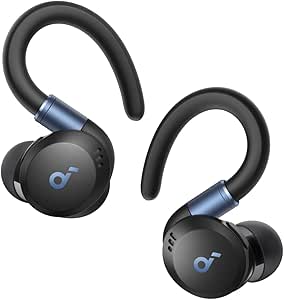 | Best for Secure, Isolated Training | Connectivity: Bluetooth 5.3 | Driver size: 11 mm dynamic drivers | Noise control: Active noise cancellation | VIEW LATEST PRICE | See Our Full Breakdown |
| SHOKZ OpenFit Air 2 Open-Ear Earbuds, Black |  | Best for Comfortable Long Wear | Weight: 7.2 g per earbud | Design: Open-ear with flexible earhooks | Frame material: 0.75 mm Ni-Ti alloy | VIEW LATEST PRICE | See Our Full Breakdown |
| i27 Wireless Earbuds, 54h Playtime, ENC Noise Cancelling, LED Power Display, IPX7 Waterproof, Earhooks (Black) |  | Best Value for Long Training Blocks | Brand and model: TRAUSI i27 | Playback per charge: Up to 6 hours | Total playback with case: Up to 54 hours | VIEW LATEST PRICE | See Our Full Breakdown |
| SHOKZ OpenRun Pro 2 Bone Conduction Bluetooth Sport Headphones, Orange | 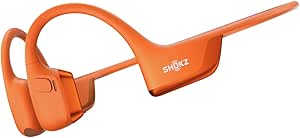 | Best Premium Open-Ear Running Headphones | Model: SHOKZ OpenRun Pro 2 (S820) | Audio design: Bone conduction and air conduction dual drivers | Battery life: Up to 12 hours | VIEW LATEST PRICE | See Our Full Breakdown |
| JBL Endurance Peak 4 Wireless Sport Earbuds with Adaptive Noise Cancelling, Black/Grey |  | Best for Noise Control and Harsh Weather | Driver size: 10 mm dynamic drivers | Playback per charge: Up to 12 hours with ANC off | Total playback with case: Up to 48 hours with ANC off | VIEW LATEST PRICE | See Our Full Breakdown |
| Soundcore V20i Open-Ear True Wireless Earbuds |  | Best Adjustable Open-Ear Fit | Design: Open-ear true wireless | Fit: Adjustable ear hooks with four positions | Drivers: 16 mm with titanium-coated domes | VIEW LATEST PRICE | See Our Full Breakdown |
| Bose SoundSport Wireless Earbuds, Sweatproof Bluetooth Headphones for Running and Sports, Black (Renewed) |  | Best for a Familiar Secure Fit | Brand and model: Bose SoundSport | Product condition: Renewed | Battery life: About 6 hours | VIEW LATEST PRICE | See Our Full Breakdown |
| SHOKZ OpenRun Bone Conduction Open-Ear Bluetooth Sport Headphones, Black |  | Best for Road Running Awareness | Audio technology: Bone conduction | Weight: 26 g | Water resistance: IP67; not suitable for swimming | VIEW LATEST PRICE | See Our Full Breakdown |
| BX17 Wireless Earbuds, Sports Bluetooth Headphones, 80 Hours Playtime | 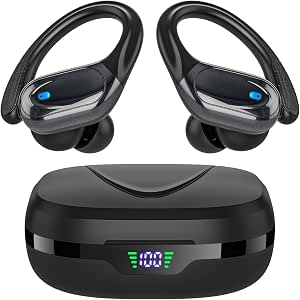 | Best for Secure In-Ear Fit | Brand: HAOYUYAN | Model: BX17 | Battery life per charge: Up to 15 hours | VIEW LATEST PRICE | See Our Full Breakdown |
| JBL Endurance Pace Open-Ear Sport Headphones |  | Best for Rugged Open-Ear Training | Brand: JBL | Model: JBL Endurance Pace | Design: Open-ear with titanium memory-wire neckband | VIEW LATEST PRICE | See Our Full Breakdown |
| SHOKZ OpenFit 2+ Open-Ear Earbuds, Grey, Dolby Audio,Wireless Charging | 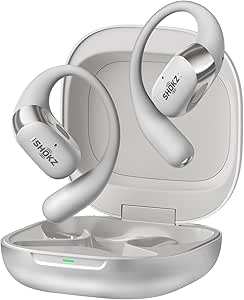 | Best for Open-Ear Sound Quality | Audio system: DualBoost with 17.3 mm low-frequency driver and independent tweeter | Audio features: Dolby Audio and OpenBass 2.0 | Weight: 74.8 g | VIEW LATEST PRICE | See Our Full Breakdown |
| Shokz OpenFit Pro Open-Ear Earbuds with Noise Reduction and Dolby Atmos (Black) |  | Best Premium Feature Set | Driver: 11 × 20 mm dual-diaphragm | Bluetooth version: 6.1 | Battery life per charge, noise reduction off: Up to 12 hours | VIEW LATEST PRICE | See Our Full Breakdown |
| running headphone | Water resistance | Weight | Battery life | Warranty |
|---|---|---|---|---|
| Beats Powerbeats Pro 2 Earbuds | IPX4 | 77.7 g | — | — |
| Shokz OpenRun Air 2 Bone Condu | IP67 | 26.4 g | Up to 10 hours | Two years |
| Raycon Bone Conduction Open-Ea | IP68 | 5.6 oz | — | One year |
| Soundcore Sport X20 Noise-Canc | — | — | Up to 12 hours per charge; up to 48 hours total playtime | 18 months |
| SHOKZ OpenFit Air 2 Open-Ear E | IP55 | 7.2 g per earbud | Up to eight hours per charge; up to 36 hours with case | — |
| i27 Wireless Earbuds | IPX7 | — | — | 90 days |
| SHOKZ OpenRun Pro 2 Bone Condu | IP55 | 30.3 g | Up to 12 hours | 2 years |
| JBL Endurance Peak 4 Wireless | — | — | — | — |
| Soundcore V20i Open-Ear True W | IP55 | — | Up to 8 hours per charge; up to 36 hours total | 18 months |
| Bose SoundSport Wireless Earbu | — | 22.68 g | About 6 hours | — |
| SHOKZ OpenRun Bone Conduction | IP67; not suitable for swimming | 26 g | Up to 8 hours | — |
| BX17 Wireless Earbuds | IPX7 | — | — | — |
| JBL Endurance Pace Open-Ear Sp | — | — | Up to 10 hours | 1 year |
| SHOKZ OpenFit 2+ Open-Ear Earb | IP55 | 74.8 g | — | — |
| Shokz OpenFit Pro Open-Ear Ear | IP55 | 99.32 g | — | 2 years |
More Details on Our Top Picks
Beats Powerbeats Pro 2 Earbuds, HR Monitor, 45H Battery – Quick Sand
The Powerbeats Pro 2 is the most feature-packed choice here for runners who also want workout data and a secure in-ear fit. Its adjustable-style earhooks, five ear-tip sizes, and physical volume controls help keep the earbuds in place and easy to operate mid-stride. The built-in heart-rate monitoring, ANC, and Transparency mode give it more training tools than the open-ear Shokz OpenRun Air 2, which instead prioritizes awareness of nearby traffic. Battery life is another strength: the case supplies up to 45 hours total, with a quick top-up for short-notice runs. The tradeoff is that the sealed fit and ANC can make outdoor awareness less immediate, and IPX4 protection is less robust than the IP67 Shokz or IP68 Soundcore Sport X20. I’d pick it for feature-rich training, not for maximum environmental awareness.
Pros:- Built-in heart-rate monitoring adds workout data without a separate chest strap.
- Earhooks, five ear-tip sizes, and physical controls support a stable, adjustable running fit.
- ANC and Transparency mode let runners switch between focused listening and ambient sound.
- Up to 45 hours of total listening with the case, plus a quick-charge option.
Cons:- IPX4 protection is lower than the IP67 Shokz OpenRun Air 2 and IP68 Soundcore Sport X20.
- An in-ear seal and ANC are less suited to runners who prioritize open environmental awareness.
- The USB-C charging cable is sold separately.
Best for: Runners who want heart-rate tracking, adjustable listening modes, and physical controls in a secure-fitting earbud.
Not ideal for: Road runners who want their ears fully open to traffic, or athletes who need stronger water and dust protection than IPX4.
- Total battery life:Up to 45 hours with charging case
- Water resistance:IPX4
- Heart-rate monitoring:Built-in sensors
- Noise modes:Active Noise Cancelling and Transparency
- Ear-tip sizes:Five
- Charging case:Wireless Qi charging
- Weight:77.7 g
- Model number:MX733DN/A
Our verdict“Choose the Powerbeats Pro 2 if you want heart-rate features and long case battery life in a secure, controllable fit.”
Shokz OpenRun Air 2 Bone Conduction Open-Ear Bluetooth Headphones – Black
For outdoor runners who want to hear approaching vehicles and other people, the Shokz OpenRun Air 2 makes a clear case for an open-ear design. Its bone-conduction audio leaves the ear canals open, while the lightweight 26.4 g frame and nickel-titanium earhooks are designed to stay put through movement. Compared with the Beats Powerbeats Pro 2, it gives up ANC, a sealed listening experience, and heart-rate tracking in favor of more direct awareness of surroundings. The IP67 rating also offers stronger stated water protection than the Beats’ IPX4, though this model is not intended for swimming. Battery life reaches 10 hours, below the Beats’ 45-hour case total and the Soundcore Sport X20’s 48-hour playtime. I’d favor it for regular outdoor routes, but not for noisy gyms or listeners seeking deep, private bass.
Pros:- Open-ear bone-conduction design leaves ear canals unobstructed.
- Light 26.4 g build and memory-alloy earhooks are suited to active movement.
- IP67 protection handles rain and sweat better on paper than the Beats Powerbeats Pro 2’s IPX4.
- A five-minute charge adds up to two hours of playback.
Cons:- Ten hours of battery life is shorter than the Soundcore Sport X20’s stated maximum playtime.
- Open-ear audio offers less isolation in loud gyms or beside heavy traffic.
- IP67 does not make the headphones suitable for swimming.
Best for: Road and trail runners who want a lightweight open-ear fit and awareness of surrounding sounds.
Not ideal for: Runners who mainly train in noisy gyms, want noise isolation, or need more than 10 hours of playback between charges.
- Weight:26.4 g
- Design:Open-ear bone conduction
- Battery life:Up to 10 hours
- Quick charge:Five minutes adds up to two hours of playback
- Water resistance:IP67
- Bluetooth version:6.0
- Earhook material:Nickel-titanium alloy
- Warranty:Two years
Our verdict“Pick the OpenRun Air 2 for outdoor runs where a light fit and awareness matter more than isolation or extended battery life.”
Raycon Bone Conduction Open-Ear Headphones, Gray
The Raycon Bone Conduction Headphones suit runners who dislike anything pressing into the ear canal but want an adjustable hook-style frame. Their open-ear bone-conduction setup keeps outside sound accessible, much like the Shokz OpenRun Air 2, and the IP68 rating is the strongest stated protection among these two open-ear bone-conduction picks. The product data, however, gives less detail about battery runtime and quick charging than Shokz does, making the OpenRun Air 2 the clearer choice for runners planning long outings or wanting a known 10-hour figure. Raycon also lists a two-hour charge time and no noise control, so it is a poor fit for loud gyms or anyone expecting isolation. I’d choose it for an adjustable, water-resistant open-ear design, while keeping expectations modest about audio in noisy settings.
Pros:- Open-ear bone conduction avoids in-ear pressure and leaves surrounding sounds accessible.
- IP68 water-resistance rating is higher than the Shokz OpenRun Air 2’s IP67 rating.
- Adjustable hook-style fit can be tailored to the wearer.
- Built-in microphone supports calls without removing the headphones.
Cons:- No noise control makes listening less effective in loud gyms and busy environments.
- The provided product data does not specify playback time, limiting battery-life comparisons with Shokz.
- The listed charging time is two hours, with no quick-charge benefit stated.
Best for: Runners who want an adjustable open-ear bone-conduction fit and prioritize water resistance over noise isolation.
Not ideal for: Gym runners and commuters who need to block background noise, or buyers who require clearly specified long battery runtime.
- Design:Open-ear bone conduction
- Fit:Adjustable hook style
- Water resistance:IP68
- Weight:5.6 oz
- Charging:Magnetic cable
- Battery charge time:Two hours
- Noise control:None
- Warranty:One year
Our verdict“Choose Raycon if adjustable open-ear comfort and IP68 protection are your priorities, and skip it if you need noise isolation or a clearly stated long runtime.”
Soundcore Sport X20 Noise-Cancelling Sports Earbuds
The Soundcore Sport X20 is the strongest match for runners who want a more secure in-ear fit and the option to reduce background noise. Its hooks rotate and extend to tailor the hold, while ANC and 11 mm drivers make it better suited to focused gym sessions than open-ear models such as the Shokz OpenRun Air 2 or SHOKZ OpenFit Air 2. The IP68 rating also offers broader stated protection against water, sweat, and dust than the Beats Powerbeats Pro 2’s IPX4. Soundcore lists up to 48 hours of playtime, though that total should not be confused with a single charge; the per-charge figure is up to 12 hours. The tradeoff is reduced awareness in ANC mode and a three-hour charging time. I’d choose it for adjustable fit and isolation, not for traffic-aware outdoor running.
Pros:- Earhooks rotate up to 30 degrees and extend 4 mm for fit adjustment.
- ANC supports focused listening in gyms and other noisy training spaces.
- IP68 rating covers water, sweat, and dust.
- Up to 12 hours per charge and up to 48 hours with the charging case.
Cons:- ANC and the in-ear design can reduce awareness of traffic compared with the Shokz OpenRun Air 2.
- A three-hour charging time is longer than the quick-charge options listed for several alternatives.
- The product connects by Bluetooth and has no headphone-jack option.
Best for: Runners and gym-goers who want adjustable earhooks, noise cancellation, and strong stated water and dust protection.
Not ideal for: Outdoor runners who need open-ear awareness, or buyers who want the shortest possible charging time.
- Connectivity:Bluetooth 5.3
- Driver size:11 mm dynamic drivers
- Noise control:Active noise cancellation
- Earhook adjustment:Up to 30° rotation and 4 mm extension
- Water and dust protection:IP68
- Battery life:Up to 12 hours per charge; up to 48 hours total playtime
- Battery charge time:Three hours
- Warranty:18 months
Our verdict“Choose the Sport X20 for a customizable, noise-cancelling fit in gym sessions, but favor open-ear Shokz models for traffic-aware runs.”
SHOKZ OpenFit Air 2 Open-Ear Earbuds, Black
The SHOKZ OpenFit Air 2 is aimed at runners who want an open-ear fit without the bone-conduction format of the Shokz OpenRun Air 2. Its flexible Ni-Ti alloy earhooks and 7.2 g per-earbud weight are designed for a light, breathable feel, while pressure-sensitive controls avoid the push-button approach used on the OpenRun Air 2. The open design helps keep ambient sound within reach, but it also provides less isolation than the Soundcore Sport X20, whose ANC is better suited to a loud gym. Battery life is up to eight hours per charge and up to 36 hours with the case, so it trails the Sport X20’s stated 48-hour total. IP55 protection is also below the OpenRun Air 2’s IP67. This is a comfort-first pick, not the most weather-protected or isolating option.
Pros:- Open-ear design helps maintain awareness and reduces ear-canal pressure.
- Flexible Ni-Ti alloy earhooks support a lightweight, active fit.
- Up to 36 hours of listening with the charging case.
- Four EQ presets and two customizable modes allow sound adjustments.
Cons:- Open-ear listening provides less isolation than the ANC-equipped Soundcore Sport X20.
- IP55 protection is below the Shokz OpenRun Air 2’s IP67 and the Sport X20’s IP68.
- Eight hours per charge is less than the OpenRun Air 2’s stated 10 hours.
Best for: Runners who prefer lightweight open-ear earbuds for extended wear and want customizable sound settings.
Not ideal for: Runners who train in loud gyms, need stronger protection from water and dust, or want the longest battery life in this group.
- Weight:7.2 g per earbud
- Design:Open-ear with flexible earhooks
- Frame material:0.75 mm Ni-Ti alloy
- Water resistance:IP55
- Battery life:Up to eight hours per charge; up to 36 hours with case
- Quick charge:Ten minutes provides up to three hours of listening
- Controls:Pressure-sensitive buttons
- EQ modes:Four presets and two customizable modes
Our verdict“Pick the OpenFit Air 2 for lightweight open-ear comfort and customizable EQ, but choose the Sport X20 for isolation or the OpenRun Air 2 for stronger water protection.”
i27 Wireless Earbuds, 54h Playtime, ENC Noise Cancelling, LED Power Display, IPX7 Waterproof, Earhooks (Black)
The i27’s strongest running case is long combined battery life: the earbuds are rated for six hours per charge, while the case brings total playback to 54 hours. That gives them an endurance advantage over the Soundcore V20i, rated for up to 36 hours total, though the i27’s individual-charge runtime is shorter than the JBL Endurance Peak 4’s 12 hours with ANC off. Their lightweight earhooks, three silicone tip sizes, and IPX7 rating suit runners who want a more anchored fit for sweaty workouts. A 10-minute charge is listed to add two hours of playback, handy when a run is coming up. The tradeoff is a basic feature set: the supplied information does not list multipoint pairing or an awareness mode, and the 90-day warranty is limited. IPX7 also does not mean they are designed for swimming or full submersion.
Pros:- Up to 54 hours of total playback with the charging case
- Lightweight earhooks and three silicone tip sizes support a steadier fit
- IPX7 water resistance suits sweaty sessions and wet-weather running
- 10-minute quick charge is rated for up to two hours of playback
Cons:- Six hours of playback per earbud charge is less than the JBL Endurance Peak 4’s listed 12 hours with ANC off
- No open-ear or Smart Ambient mode is listed, so hearing surroundings may be harder than with the SHOKZ OpenRun Pro 2
- The 90-day warranty is short
Best for: Runners who prioritize a secure earhook fit and long total battery life for frequent workouts.
Not ideal for: Runners who want open-ear awareness, detailed app controls, or a longer warranty.
- Brand and model:TRAUSI i27
- Playback per charge:Up to 6 hours
- Total playback with case:Up to 54 hours
- Charging case capacity:400 mAh
- Quick charge:10 minutes for up to 2 hours of playback
- Bluetooth:Version 5.4; range up to 15 m (50 ft)
- Water resistance:IPX7
- Earbud weight:7 g each
- Warranty:90 days
Our verdict“Choose the i27 if you want earhooks, water resistance, and a long-running case more than open-ear awareness or advanced app features.”
SHOKZ OpenRun Pro 2 Bone Conduction Bluetooth Sport Headphones, Orange
The OpenRun Pro 2 is the lineup’s premium pick for runners who want music without sealing off their ears. Its open-ear design keeps ambient sounds accessible, a meaningful difference from sealed options such as the JBL Endurance Peak 4, which adds adaptive noise cancelling instead. SHOKZ combines bone- and air-conduction drivers for a fuller sound approach than the simpler open-ear setup of the Soundcore V20i. A lightweight frame with memory wire and ergonomic hooks is designed to stay put through running and cycling, while the wind-resistant microphones target clearer calls outdoors. The tradeoffs are inherent to the format: open-ear listening gives up the isolation and bass containment of sealed earbuds, and the listed 12-hour battery life is below the JBL’s maximum 48 hours with its case. Its IP55 protection is also less robust on paper than the JBL’s IP68 rating.
Pros:- Open-ear listening leaves ambient sounds accessible during runs
- Bone- and air-conduction drivers combine for a more layered sound design than the Soundcore V20i
- Memory-wire frame and ergonomic hooks are designed to limit slipping
- Wind-resistant microphones and AI noise reduction support outdoor calls
Cons:- Open-ear construction provides less isolation and bass containment than sealed earbuds such as the JBL Endurance Peak 4
- 12-hour battery life is less than the JBL’s up to 48 hours total with its case
- IP55 protection is a lower listed resistance rating than the JBL Endurance Peak 4’s IP68
Best for: Road runners and cyclists who want a secure open-ear fit, awareness of nearby sounds, and stronger audio features.
Not ideal for: Runners seeking noise isolation, a pocketable earbud case, or the longest listed total battery life.
- Model:SHOKZ OpenRun Pro 2 (S820)
- Audio design:Bone conduction and air conduction dual drivers
- Battery life:Up to 12 hours
- Water resistance:IP55
- Bluetooth:Version 5.3; range up to 33 ft
- Weight:30.3 g
- Frame materials:Nickel-titanium alloy, plastic, and silicone
- Microphone features:Dual wind-resistant microphones with AI noise reduction
- Warranty:2 years
Our verdict“Pick the OpenRun Pro 2 if outdoor awareness and a stable open-ear frame matter more than isolation or case-backed battery life.”
JBL Endurance Peak 4 Wireless Sport Earbuds with Adaptive Noise Cancelling, Black/Grey
The Endurance Peak 4 suits runners who want a sealed, secure earbud fit and the option to reduce distractions. Its adaptive noise cancelling contrasts with the awareness-first SHOKZ OpenRun Pro 2, while Smart Ambient gives listeners a way to bring outside sound back in without removing the buds. The TwistLock hooks with memory wire are built for stability, and IP68 protection stands out for workouts in wet or dusty conditions. Battery life is another strength: JBL lists up to 12 hours from the earbuds and 48 hours total with the case, but the total figure applies with ANC off. That makes its endurance less compelling for runners who plan to use noise cancelling throughout. Compared with the i27, it offers more listening modes and multipoint, but its charging cable is not included.
Pros:- IP68 water and dust protection is well suited to demanding outdoor workouts
- TwistLock hooks and memory wire are designed to keep the earbuds secure
- Adaptive Noise Cancelling and Smart Ambient provide contrasting listening modes
- Bluetooth multipoint supports connections to more than one device
Cons:- The 48-hour total playback figure is specified with ANC off
- The charging cable is not included
- Sealed noise-cancelling earbuds do not provide the same inherent ambient awareness as the SHOKZ OpenRun Pro 2
Best for: Runners who want a secure sealed fit, adjustable noise control, multipoint connections, and strong water-and-dust protection.
Not ideal for: Runners who prefer open-ear awareness, need the longest battery estimate while using ANC, or expect a charging cable in the box.
- Driver size:10 mm dynamic drivers
- Playback per charge:Up to 12 hours with ANC off
- Total playback with case:Up to 48 hours with ANC off
- Fast charging:10 minutes for up to 4 hours of playback
- Water and dust resistance:IP68
- Fit:TwistLock liquid silicone ear hooks with memory wire
- Microphones:6 total, 3 per earbud
- Noise control:Adaptive Noise Cancelling and Smart Ambient
- Connectivity:Bluetooth multipoint, Google Fast Pair, and Audio Switch
Our verdict“Choose the JBL Endurance Peak 4 if you want a locked-in sealed fit and flexible noise control, and can accept shorter case endurance when ANC is on.”
Soundcore V20i Open-Ear True Wireless Earbuds
The V20i offers a flexible middle ground for runners who want open-ear awareness without a neckband-style frame. Its hooks have four adjustment positions, giving more room to tune the fit than the i27’s three included tip sizes, though the i27’s sealed earbuds may suit runners who want more sound isolation. Large 16 mm drivers, titanium-coated domes, and BassUp aim to give this open design more weight to its sound, while the soundcore app adds EQ, HearID, Spatial Audio, and lighting controls. Those extras make it more customizable than the straightforward SHOKZ OpenRun Pro 2, but may feel like clutter if a runner wants simple controls. Battery life reaches eight hours per charge and 36 hours total, short of the i27’s 54-hour case figure. IP55 protection is suitable for sweat, not a substitute for stronger water protection.
Pros:- Four-position adjustable hooks allow fit changes beyond the i27’s fixed earhook design
- Open-ear construction helps keep surrounding sounds audible
- App offers EQ, HearID, Spatial Audio, and firmware updates
- Bluetooth multipoint and four AI-enhanced microphones add everyday flexibility
Cons:- Open-ear design provides less isolation than sealed options such as the JBL Endurance Peak 4
- Up to 36 hours total playback is below the i27’s listed 54 hours
- Customizable lighting and app features may be unnecessary for runners seeking a simpler setup
Best for: Runners who want open-ear awareness in a true-wireless format and need adjustable hooks to fine-tune their fit.
Not ideal for: Runners who prioritize sound isolation, the longest case battery life, or a simple design without app and lighting features.
- Design:Open-ear true wireless
- Fit:Adjustable ear hooks with four positions
- Drivers:16 mm with titanium-coated domes
- Battery life:Up to 8 hours per charge; up to 36 hours total
- Charging time:1.5 hours
- Connectivity:Bluetooth 5.4 with multipoint
- Water resistance:IP55
- Microphones:4 with AI call enhancement
- Warranty:18 months
Our verdict“Choose the V20i if you want adjustable open-ear hooks and app-based sound customization, rather than sealed listening or maximum battery life.”
Bose SoundSport Wireless Earbuds, Sweatproof Bluetooth Headphones for Running and Sports, Black (Renewed)
The renewed SoundSport is the straightforward choice for runners who value a secure, winged fit and balanced sound over newer wireless features. Bose’s StayHear+ Sport tips and flexible wings are designed to hold the earbuds in place during movement, while active EQ adjusts sound across listening levels. Compared with the JBL Endurance Peak 4, the SoundSport lacks adaptive noise cancelling, Smart Ambient, and a stated case-based battery extension; its listed six-hour battery life makes it a better match for shorter runs than long training days. Bluetooth and NFC pairing offer a simple connection route, but the supplied data does not list multipoint or an app. Since this is a renewed product, buyers should also weigh the condition and coverage offered with the specific listing rather than treating it like a new set.
Pros:- StayHear+ Sport tips and flexible wings are designed to maintain a secure fit during exercise
- Active EQ supports balanced sound at different listening volumes
- Bluetooth and NFC pairing provide quick connection options
- Sweat- and weather-resistant design is intended for outdoor workouts
Cons:- Six-hour battery life is shorter than the JBL Endurance Peak 4’s listed 12 hours per charge with ANC off
- No active noise cancelling is listed
- Renewed condition may not suit buyers who want a new product with clearly specified coverage
Best for: Runners who prefer a traditional in-ear fit with flexible wings and mainly need headphones for shorter workouts.
Not ideal for: Distance runners who need long battery life, runners who want open-ear awareness, or buyers who require active noise cancelling.
- Brand and model:Bose SoundSport
- Product condition:Renewed
- Battery life:About 6 hours
- Connectivity:Bluetooth and NFC
- Weight:22.68 g
- Fit:StayHear+ Sport tips with flexible wings
- Sound feature:Balanced, full-range sound with active EQ
- Moisture protection:Sweat- and weather-resistant
- Controls:Inline remote for calls and music
Our verdict“Pick the renewed SoundSport for a familiar, wing-supported fit on shorter runs, but choose a newer option for longer battery life or modern noise-control modes.”
SHOKZ OpenRun Bone Conduction Open-Ear Bluetooth Sport Headphones, Black
The OpenRun’s bone-conduction design leaves the ear canal unobstructed, which makes it a strong choice for runners who want to hear traffic and other people without giving up audio. At 26 g, its wraparound frame is lighter and less intrusive than the ear-hook earbuds in this lineup, including the BX17. The IP67 rating and eight-hour battery also suit regular outdoor training, while a 10-minute charge can add up to 1.5 hours of listening.
The tradeoff is sound: bone conduction generally gives up bass impact and isolation compared with the SHOKZ OpenFit 2+ or JBL Endurance Pace. That open presentation also means busy streets can mask music or podcasts. Pick the OpenRun for awareness and a stable, earbud-free fit; skip it if you prioritize rich low frequencies or private listening.
Pros:- Open-ear bone conduction keeps the ear canals free for environmental awareness.
- Light 26 g wraparound frame is suited to movement without in-ear tips.
- IP67 water resistance supports sweaty and wet workouts.
- Eight-hour battery and a 10-minute quick charge suit training between charging windows.
Cons:- Open, bone-conduction sound offers less bass impact than the SHOKZ OpenFit 2+.
- No isolation means music and spoken audio can be difficult to hear in noisy areas.
- The design is not suitable for swimming despite its high water-resistance rating.
Best for: Road runners and cyclists who want a lightweight fit that keeps their ear canals open so they can hear nearby traffic.
Not ideal for: Listeners who want strong bass, sound isolation, or music that stays prominent beside heavy traffic.
- Audio technology:Bone conduction
- Weight:26 g
- Water resistance:IP67; not suitable for swimming
- Battery life:Up to 8 hours
- Quick charge:10 minutes for up to 1.5 hours of battery life
- Bluetooth version:5.1
- Bluetooth range:10 meters
- Charging:Magnetic induction
Our verdict“Choose the OpenRun if you want a lightweight, earbud-free running fit and awareness matters more than bass or isolation.”
BX17 Wireless Earbuds, Sports Bluetooth Headphones, 80 Hours Playtime
The BX17 is the in-ear pick for runners who find open-ear audio too easy to lose in street noise. Elastic ear hooks and three tip sizes help keep the earbuds seated during hard efforts, while the IPX7 rating suits sweaty sessions and splashes. Its case claims up to 80 hours of total playtime, a useful buffer for runners who do not want to charge after every workout.
That battery figure includes the case: each earbud charge is rated for up to 15 hours, so the BX17 is less appealing for long stretches away from power than its headline suggests. Unlike the SHOKZ OpenRun or JBL Endurance Pace, it seals the ears, reducing awareness of surroundings. ENC is described for calls, not as full music-listening noise cancellation. Choose it for a secure, more contained fit; skip it if hearing your environment is a priority.
Pros:- Elastic ear hooks and three silicone tip sizes help stabilize the fit during workouts.
- IPX7 protection is suited to sweat and splashes.
- Up to 80 hours of stated total playtime with the charging case.
- USB-C charging and an LED battery display make power status easier to manage.
Cons:- Up to 15 hours per charge is lower than the 80-hour total figure may suggest.
- In-ear fit blocks more environmental sound than the SHOKZ OpenRun and JBL Endurance Pace.
- ENC is specified for calls, with no stated active noise cancellation for music.
Best for: Runners who prefer in-ear sound, need ear hooks to keep earbuds secure, and want a case with extended total listening capacity.
Not ideal for: Road runners who want unobstructed awareness, or listeners seeking verified active noise cancellation for music.
- Brand:HAOYUYAN
- Model:BX17
- Battery life per charge:Up to 15 hours
- Total playtime with case:Up to 80 hours
- Driver size:14.3 mm
- Charging port:USB-C
- Water resistance:IPX7
- Call noise reduction:ENC
Our verdict“Pick the BX17 if secure in-ear fit and long case-supported runtime matter more than open-ear awareness.”
JBL Endurance Pace Open-Ear Sport Headphones
The JBL Endurance Pace pairs open-ear listening with IP68 protection, making it a compelling choice for runners who train in wet or dusty conditions and still want to hear what is around them. Its memory-wire titanium neckband is designed to stay in place without plugging the ears, while up to 10 hours of playback covers many training days. A 10-minute charge adds up to four hours, more than the quick-charge boost listed for the SHOKZ OpenRun.
Compared with the OpenRun, the JBL offers a longer stated quick-charge payoff and a higher water-and-dust rating, but its neckband may be less appealing to runners who want the lightest, simplest frame. Open-ear sound also cannot isolate music from traffic or gym noise. The charging cable is not included, so check that you have a compatible one. This is the rugged option, not the pick for listeners seeking a sealed, bass-forward fit like the BX17.
Pros:- IP68 rating provides strong water and dust protection for demanding workouts.
- Open-ear design helps maintain awareness of surroundings.
- Memory-wire titanium neckband is designed for a secure fit during movement.
- A 10-minute charge adds up to four hours of playback.
Cons:- The neckband may feel less minimal than the SHOKZ OpenRun’s lightweight wraparound frame.
- Open-ear audio does not block traffic or other background noise.
- Charging cable is not included.
Best for: Outdoor runners who train in rain or dusty conditions and want an open-ear fit with a secure neckband.
Not ideal for: Runners who want a compact in-ear design, full sound isolation, or a charging cable included in the box.
- Brand:JBL
- Model:JBL Endurance Pace
- Design:Open-ear with titanium memory-wire neckband
- Water and dust resistance:IP68
- Battery life:Up to 10 hours
- Quick charge:10 minutes for up to 4 hours of playback
- Microphones:Integrated beamforming microphones
- Warranty:1 year
Our verdict“Choose the Endurance Pace if you want rugged open-ear headphones and a quick charge that can cover a run at short notice.”
SHOKZ OpenFit 2+ Open-Ear Earbuds, Grey, Dolby Audio,Wireless Charging
The OpenFit 2+ puts sound detail ahead of the simpler bone-conduction approach while keeping the ears open. Its DualBoost system combines a 17.3 mm low-frequency driver with a separate tweeter, and Dolby Audio adds another listening mode through the app. For runners who want more bass and clearer musical separation than the SHOKZ OpenRun is designed to provide, that speaker-style setup is the main reason to choose this pair. Soft silicone contact points and nickel-titanium ear hooks aim to keep the fit comfortable and stable.
Battery life reaches 11 hours per charge and 48 hours with the case, with wireless charging and a 10-minute top-up for two hours of playback. The tradeoff is a larger case and a 74.8 g listed item weight, compared with the OpenRun’s 26 g frame. IP55 also offers less water protection than the JBL Endurance Pace’s IP68. Choose it for feature-rich open-ear listening, not for the lightest or most weatherproof setup.
Pros:- Separate low-frequency driver and tweeter are designed for fuller, more detailed open-ear sound.
- Soft silicone contact points and nickel-titanium ear hooks support an adjustable, secure fit.
- Up to 11 hours of playback per charge, with up to 48 hours using the case.
- Wireless charging and a 10-minute quick charge add convenience.
Cons:- The listed 74.8 g item weight is substantially higher than the SHOKZ OpenRun’s 26 g.
- IP55 protection is below the JBL Endurance Pace’s IP68 rating.
- Open-ear construction cannot provide the isolation of the in-ear BX17.
Best for: Runners who want open-ear awareness but care more about richer, more adjustable audio and wireless charging than minimal weight.
Not ideal for: Runners seeking a very light frame or the strongest water and dust protection for harsh conditions.
- Audio system:DualBoost with 17.3 mm low-frequency driver and independent tweeter
- Audio features:Dolby Audio and OpenBass 2.0
- Weight:74.8 g
- Water resistance:IP55
- Battery life per charge:Up to 11 hours
- Total battery life with case:Up to 48 hours
- Quick charge:10 minutes for up to 2 hours of playback
- Charging case:Supports wireless charging
- Multipoint:Connects to two devices at once
Our verdict“Choose the OpenFit 2+ if you want the richest feature set and fuller sound among these open-ear options, and can accept more weight.”
Shokz OpenFit Pro Open-Ear Earbuds with Noise Reduction and Dolby Atmos (Black)
The OpenFit Pro is the feature-led choice for runners who want open-ear listening with more control over distractions. Its large dual-diaphragm driver, Dolby Atmos support, and DirectPitch 3.0 are designed to deliver fuller audio while reducing sound leakage. AI-driven noise reduction adds another option without closing off the ears completely, setting it apart from the more straightforward SHOKZ OpenRun. With up to 50 hours total battery life and a 10-minute charge for up to four hours, it is also built for frequent use between charging sessions.
The key compromise is runtime when noise reduction is active: the stated per-charge figure drops from up to 12 hours with it off to six hours with it on. Its IP55 rating is less protective than the JBL Endurance Pace’s IP68, and open-ear headphones still cannot provide full isolation. Choose the Pro for audio features and adjustable awareness, not for long single-charge sessions with noise reduction enabled or the toughest weather protection.
Pros:- Dolby Atmos-optimized sound and large dual-diaphragm drivers target detailed, full audio.
- AI-driven noise reduction can reduce distractions while the design remains open-ear.
- Up to 50 hours of total battery life with the case.
- A 10-minute charge provides up to four hours of playback.
Cons:- Noise reduction cuts stated single-charge playback to about six hours.
- IP55 protection is below the JBL Endurance Pace’s IP68 rating.
- Open-ear design cannot fully isolate music from surrounding noise.
Best for: Runners who want advanced open-ear audio features, adjustable distraction reduction, and extensive case-supported battery life.
Not ideal for: Runners who need long single-charge sessions with noise reduction active, full sound isolation, or IP68-level protection.
- Driver:11 × 20 mm dual-diaphragm
- Bluetooth version:6.1
- Battery life per charge, noise reduction off:Up to 12 hours
- Battery life per charge, noise reduction on:Up to 6 hours
- Total battery life with case:Up to 50 hours
- Quick charge:10 minutes for up to 4 hours of playback
- Water resistance:IP55
- Weight:99.32 g
- Warranty:2 years
Our verdict“Choose the OpenFit Pro if you want premium open-ear audio features and can accept shorter per-charge runtime with noise reduction enabled.”

How We Picked
I selected these fifteen models based on three primary criteria: fit security, situational awareness, and durability. For runners, a headphone that falls out during a sprint or blocks out the sound of an approaching car is a failure, regardless of how good the audio sounds. I prioritized models with physical locking mechanisms, such as ear hooks or neckbands, and those with open-ear architectures that allow ambient noise to pass through naturally.
I also evaluated real-world durability by examining IP ratings and build materials. Headphones exposed to sweat and rain require robust sealing, so I excluded models with minimal water resistance. Finally, I considered the ecosystem of features, such as multipoint connectivity and heart rate monitoring, which add tangible value for data-driven runners. The ranking reflects a balance between these practical needs and overall audio performance.
| running headphone | Water resistance |
|---|---|
| Beats Powerbeats Pro 2 Earbuds | IPX4 |
| Shokz OpenRun Air 2 Bone Condu | IP67 |
| Raycon Bone Conduction Open-Ea | IP68 |
| Soundcore Sport X20 Noise-Canc | — |
| SHOKZ OpenFit Air 2 Open-Ear E | IP55 |
| i27 Wireless Earbuds | IPX7 |
| SHOKZ OpenRun Pro 2 Bone Condu | IP55 |
| JBL Endurance Peak 4 Wireless | — |
| Soundcore V20i Open-Ear True W | IP55 |
| Bose SoundSport Wireless Earbu | — |
| SHOKZ OpenRun Bone Conduction | IP67; not suitable for swimming |
| BX17 Wireless Earbuds | IPX7 |
| JBL Endurance Pace Open-Ear Sp | — |
| SHOKZ OpenFit 2+ Open-Ear Earb | IP55 |
| Shokz OpenFit Pro Open-Ear Ear | IP55 |
Factors to Consider When Choosing Best Running Headphones
Choosing the right running headphones involves more than just picking the brand with the best marketing. You must align the technology with your specific running environment and physiological needs.Open-Ear vs. In-Ear: The Safety Tradeoff
For road runners, open-ear designs (bone conduction or air conduction) are generally safer because they leave the ear canal open, allowing you to hear traffic, cyclists, and other pedestrians. In-ear models, especially those with Active Noise Cancellation (ANC), can create a dangerous bubble of isolation, particularly in low-visibility conditions. However, trail runners in quiet environments may prefer in-ear models for the immersive audio experience and better wind noise reduction. I recommend open-ear tech if you run on roads or urban sidewalks, and in-ear models if you run in controlled environments like treadmills or secluded trails.
Fit Security and Comfort Over Long Distances
A secure fit is non-negotiable; a headphone that shifts during a sprint disrupts your form and focus. Look for models with adjustable ear hooks or neckbands that distribute weight evenly, preventing the ‘pulling’ sensation common with standard earbuds. Comfort is equally important over long runs; rigid plastic housings can cause hot spots or pressure points after 30 minutes. Soft silicone tips and flexible titanium frames, as seen in many Shokz models, tend to fare better against sweat and movement. If you wear glasses, ensure the headphone arms do not conflict with your temple arms, a common pain point for runners.
Battery Life: Real-World Usage vs. Spec Sheets
Manufacturers often quote battery life based on low-volume playback with codecs that consume minimal power. In reality, running headphones used at higher volumes to overcome wind noise will drain faster. I recommend prioritizing models that offer at least 6 hours of continuous playback on a single charge for marathon training. If you do ultra-distance running, consider models with quick-charge capabilities that provide 1-2 hours of playback from a 5-minute charge. Don’t rely solely on the case battery; if your case dies mid-run, you are left with only the remaining earbud charge.
Water and Dust Resistance Ratings
Not all ‘waterproof’ claims are equal. IPX4 means protection against sweat and light rain, which is acceptable for casual runners. However, if you run in heavy rain, sweat profusely, or live in a humid climate, you need at least IPX7 (immersion up to 1 meter for 30 minutes). Bone conduction headphones often have higher IP ratings because they have fewer openings for water ingress. Check the warranty terms as well; many brands exclude water damage from their warranty, making the initial IP rating your primary line of defense.
Connectivity and Multipoint Pairing
Bluetooth 5.3 or higher offers more stable connections and lower latency, which is important if you watch videos or listen to guided workouts. Multipoint pairing allows you to connect to two devices simultaneously, such as your phone and a smartwatch or tablet. This feature is handy for runners who use their watch for music but need to answer calls on their phone. While not mandatory, it adds significant convenience for tech-savvy runners who juggle multiple devices during their training routine.
Frequently Asked Questions
Do bone conduction headphones sound worse than traditional earbuds?
Generally, yes, bone conduction headphones have less bass response and lower maximum volume than traditional in-ear models because they transmit sound through the cheekbones rather than the ear canal. However, newer models like the Shokz OpenRun Pro 2 have improved bass significantly using dual-driver technology. If you run in noisy urban environments, you might struggle to hear music over traffic with bone conduction. For most runners, the safety benefit of hearing the environment outweighs the slight reduction in audio fidelity, but audiophiles may prefer the richer sound of in-ear models.Can I use noise-canceling headphones for outdoor running?
Using Active Noise Cancellation (ANC) for outdoor running is risky because it masks critical environmental sounds like car horns, sirens, or footsteps. Some runners use ‘Transparency Mode’ or ‘Ambient Sound’ features to mitigate this, allowing external sounds to pass through while still providing some isolation. However, this can drain battery faster and may not be as effective as open-ear designs. I recommend avoiding full ANC for road running and reserving it for treadmill sessions or gym workouts where environmental awareness is less critical.How do I keep my running headphones from falling out?
The most effective solution is to choose headphones with a physical locking mechanism, such as ear hooks that wrap around the outer ear or neckbands that rest behind the neck. Standard stem-style earbuds are prone to dislodging during high-impact movements. Additionally, ensure you are using the correct tip size for in-ear models; tips that are too small will not create a secure seal, while tips that are too large will push themselves out as your jaw moves. Adjusting the fit before you start running is key to preventing mid-run adjustments.Are expensive running headphones worth the extra cost?
Paying more often buys you better durability, longer battery life, and more comfortable materials, but it does not always guarantee better sound quality for running. Premium models like the Beats Powerbeats Pro 2 or Shokz OpenFit Pro offer features like heart rate monitoring, superior sweat resistance, and advanced codec support that justify the price for serious runners. Budget options often fail in comfort or water resistance after a few months. If you run three or more times a week, the investment in a durable, well-fitting premium model is usually worth it compared to replacing cheaper pairs annually.Can I use running headphones with glasses or a hat?
Yes, but compatibility depends on the design. Bone conduction headphones and open-ear clips are generally safe with glasses because they do not enter the ear canal or press against the temple. In-ear models with large housings or bulky ear hooks can conflict with glasses arms, causing discomfort or pressure points. If you wear sunglasses or prescription glasses, I recommend choosing slim-profile earbuds or open-ear designs that leave space around the temple area. Trying them on with your glasses before purchasing is the best way to avoid discomfort.Conclusion
Choosing the right running headphones depends on your environment and priorities. For best overall performance and stability, the Beats Powerbeats Pro 2 stands out with its secure fit and integrated health tracking. Runners prioritizing safety and situational awareness should choose the Shokz OpenRun Pro 2 for its superior bone conduction audio and comfort. If you want a hybrid open-ear experience with better sound quality than bone conduction, the Shokz OpenFit Air 2 is an excellent choice. For budget-conscious beginners, the Raycon Bone Conduction Headphones offer solid performance at a lower entry point. Finally, those needing maximum noise isolation for gym sessions should look at the Soundcore Sport X20. Match your pick to your route and training style to stay safe and motivated.
Black Friday Picks

Oral-B iO Series 7 Deep Clean + Protect Rechargeable Electric Toothbrush, Black, with 2 Brush Heads and Charging Travel Case
As an affiliate, we earn on qualifying purchases.