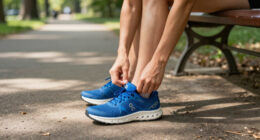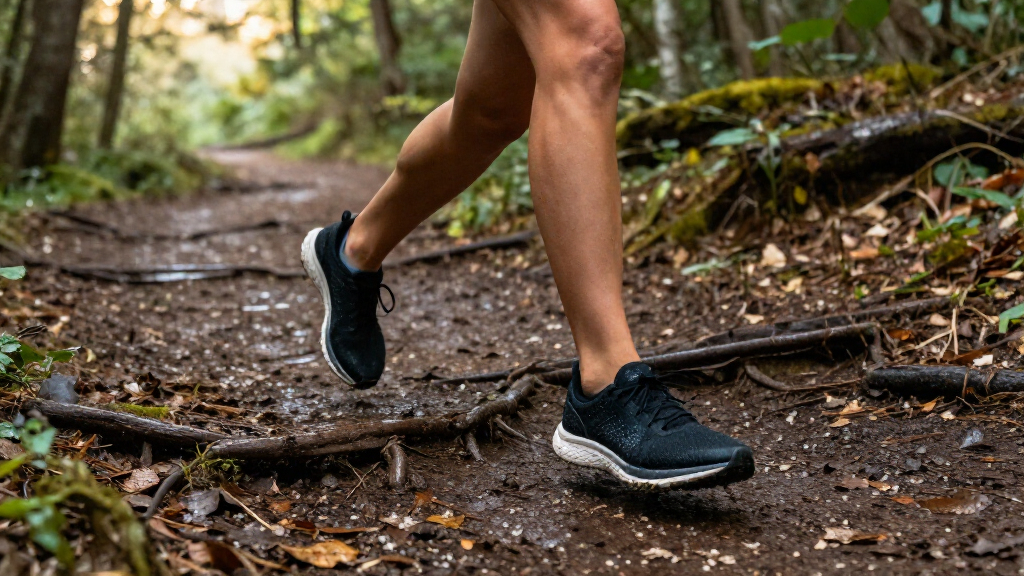
The best minimalist running shoes pair a roomy forefoot and low-profile feel with enough fit security and traction for the way you run. My best overall pick is the Xero Shoes Men’s Prio, a versatile option for runners who want one shoe for road runs and general training. For trail-focused buyers, the WHITIN Men’s Wide Barefoot Trail Running Shoes W51 and HOBIBEAR Minimalist Barefoot Trail Running Shoes are standouts to compare for their trail-oriented designs. The tradeoffs are real: thinner, more flexible shoes offer more ground feel but less underfoot protection, while firmer training models can feel less like a traditional barefoot shoe. Read on for the full breakdown, plus guidance on fit, terrain, and adapting to a minimalist style.

Get workout gear delivered free with Prime
- Fast, free delivery on millions of items
- Prime Video, Amazon Music and more included
- Member-only deals all year
Complete the kit


Key Takeaways
- The Prio is the most versatile pick in this group: its sneaker-like design makes more sense for mixed training and running than a trail-specific shoe.
- Trail use separates several options: HOBIBEAR and the WHITIN trail models suit off-road priorities better than the New Balance Minimus TR V2, which is positioned for training.
- Wide toe-box preferences are not identical to shoe fit: several models emphasize forefoot room, but buyers still need to check the particular model’s shape and sizing.
- The New Balance Minimus TR V2 is the clearest training-focused option: it may appeal to gym users, but it is a different choice from shoes built around a barefoot trail feel.
- Minimalist footwear has a learning curve: a thin, flexible sole may feel very different from a cushioned running shoe, so gradually increasing wear matters more than picking the thinnest option.
| HOBIBEAR Minimalist Barefoot Trail Running Shoes |  | Best for Easy-Care Versatility | Sole material: Rubber | Upper material: Textile | Inner material: Textile | VIEW LATEST PRICE | See Our Full Breakdown |
| Xero Shoes Men’s Prio Barefoot Sneaker |  | Best Overall for Mixed-Surface Running | Origin: Imported | Sole material: Rubber | Outer material: Polyester | VIEW LATEST PRICE | See Our Full Breakdown |
| MIFAWA Men’s Barefoot Shoes with Wide Toe Box and Zero Drop |  | Best for Adjustable Cushioning | Sole material: Rubber | Outer material: Rubber | Inner material: Ethylene Vinyl Acetate | VIEW LATEST PRICE | See Our Full Breakdown |
| New Balance Men’s Minimus TR V2 Training Shoes |  | Best for Gym Training | Origin: Imported | Sole material: Rubber | Outer material: Rubber | VIEW LATEST PRICE | See Our Full Breakdown |
| WHITIN Men’s Wide Barefoot Trail Running Shoes W51 | 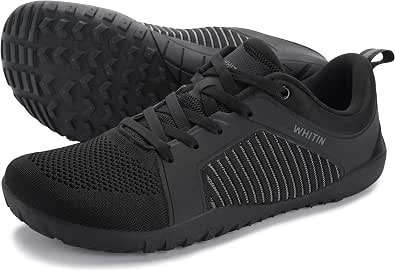 | Best for Trail Foot Hold | Sole material: Rubber | Outer material: Mesh | Inner material: Mesh | VIEW LATEST PRICE | See Our Full Breakdown |
| WHITIN Men’s Minimalist Trail Running Shoes |  | Best for a Simple, Vegan-Friendly Trail Shoe | Sole material: Rubber | Outer material: Knit | Inner material: Ethylene Vinyl Acetate | VIEW LATEST PRICE | See Our Full Breakdown |
| WHITIN Women’s Wide Barefoot Trail Running Shoes |  | Best for Wide-Toe-Box Trail Grip | Sole material: Rubber | Outer material: Mesh | Inner material: Fabric and synthetic | VIEW LATEST PRICE | See Our Full Breakdown |
| Men’s and Women’s Minimalist Barefoot Shoes with Wide Toe Box |  | Best for Workouts and Everyday Wear | Sole material: Rubber | Outer material: Mesh | Inner material: Ethylene Vinyl Acetate | VIEW LATEST PRICE | See Our Full Breakdown |
| minimalist running shoe | Sole material | Inner material | Outer material | Toe box |
|---|---|---|---|---|
| HOBIBEAR Minimalist Barefoot T | Rubber | Textile | — | Wide and flexible |
| Xero Shoes Men’s Prio Barefoot | Rubber | Polyester | Polyester | — |
| MIFAWA Men’s Barefoot Shoes wi | Rubber | Ethylene Vinyl Acetate | Rubber | Wide |
| New Balance Men’s Minimus TR V | Rubber | Cotton | Rubber | — |
| WHITIN Men’s Wide Barefoot Tra | Rubber | Mesh | Mesh | — |
| WHITIN Men’s Minimalist Trail | Rubber | Ethylene Vinyl Acetate | Knit | — |
| WHITIN Women’s Wide Barefoot T | Rubber | Fabric and synthetic | Mesh | Wide |
| Men’s and Women’s Minimalist B | Rubber | Ethylene Vinyl Acetate | Mesh | Wide |
More Details on Our Top Picks
HOBIBEAR Minimalist Barefoot Trail Running Shoes
The HOBIBEAR stands out for runners who want a flexible, washable shoe for trails, hikes, and gym sessions. Its zero-drop sole and wide toe box leave room for natural foot movement, while the knitted textile upper folds down for compact storage and can go in the washing machine. Compared with the WHITIN Men’s Wide Barefoot Trail Running Shoes W51, HOBIBEAR emphasizes easy care and a foldable upper rather than specified trail lugs and padded ankle support. That makes it appealing for mixed-use wear, but less clearly equipped for securing the foot over rough ground. The minimalist build also means less structure than a conventional running shoe, and the product details do not specify sizing or fit guidance, so buyers who need predictable support or precise fit information may prefer another option.
Pros:- Wide, flexible toe box allows room for toe splay
- Zero-drop rubber sole supports a level heel-to-forefoot platform
- Machine-washable knitted upper is convenient after muddy or sweaty outings
- Foldable construction suits travel and compact storage
Cons:- Minimal structure may not suit runners who rely on conventional support
- No sizing or fit details are provided
- Trail traction characteristics are not specified
Best for: Runners and gym-goers who want a washable, flexible barefoot-style shoe for varied light-to-moderate activities.
Not ideal for: Trail runners who need clearly specified lug depth, extra foot structure, or detailed sizing guidance before buying.
- Sole material:Rubber
- Upper material:Textile
- Inner material:Textile
- Closure:Quick-lock laces
- Sole design:Zero drop
- Toe box:Wide and flexible
- Care:Machine washable
Our verdict“Choose HOBIBEAR if easy cleaning and flexible mixed-use wear matter more than detailed trail traction or added structure.”
Xero Shoes Men’s Prio Barefoot Sneaker
The Prio makes the strongest all-around case here for runners who want a low-to-the-ground, zero-drop feel without giving up breathable materials or a more secure fit. Its mesh upper and moisture-wicking lining suit active wear, while the tensioning strap system and dual-chevron lugs add a measure of hold and traction across trails and other surfaces. Compared with the HOBIBEAR Minimalist Barefoot Trail Running Shoes, the Prio provides more detail about its traction and fit, including a stated true-to-size fit; HOBIBEAR, by contrast, is machine washable and foldable. The tradeoff is limited cushioning: the Prio’s flexible sole preserves ground feel but offers less padding than conventional athletic shoes. It is a better pick for runners already comfortable with minimalist footwear than for anyone seeking a soft, protective ride.
Pros:- Wide toe box supports natural toe splay
- Zero-drop, flexible sole keeps the foot close to the ground
- Breathable mesh and moisture-wicking lining suit active sessions
- Tensioning strap system and dual-chevron lugs add fit security and traction
Cons:- Low-to-the-ground design provides less cushioning than conventional athletic shoes
- Minimalist construction may feel too firm for runners seeking impact protection
Best for: Runners who want one breathable minimalist shoe for road sessions, gym work, and moderate trail use, and who prefer a stated true-to-size fit.
Not ideal for: Runners who need substantial cushioning or are moving directly from supportive shoes without a gradual adjustment period.
- Origin:Imported
- Sole material:Rubber
- Outer material:Polyester
- Inner material:Polyester
- Fit:True to size
- Design:Wide toe box, zero-drop profile, flexible low-to-the-ground sole
- Upper and lining:Breathable mesh upper with moisture-wicking lining
- Support and traction:Synthetic overlays with tensioning strap system; dual-chevron lugs
Our verdict“Pick the Prio for a versatile, breathable minimalist shoe with more specified traction and fit details than the HOBIBEAR.”
MIFAWA Men’s Barefoot Shoes with Wide Toe Box and Zero Drop
MIFAWA offers a useful middle ground for buyers who want a wide toe box and zero-drop platform but are not ready to commit to a fully bare-feeling ride. Its removable cushioned insole gives the wearer a choice: keep some padding and optional arch support, or remove it for a closer-to-ground feel. That makes it more adaptable than the Xero Shoes Men’s Prio Barefoot Sneaker, whose appeal centers on a flexible low-to-the-ground sole rather than a removable insole. The tradeoff is that taking the MIFAWA insole out also removes cushioning and arch support, so its feel changes substantially depending on setup. The buckle closure may also offer less fine adjustment than the lace-up WHITIN W51. This is best for casual runners and active users who value configurable comfort over a purpose-built trail fit.
Pros:- Wide toe box gives toes room to spread
- Zero-drop sole keeps heel and forefoot level
- Removable cushioned insole offers optional arch support
- Flexible rubber outsole is designed for indoor and outdoor grip
Cons:- Removing the insole also removes cushioning and arch support
- Buckle closure may be less adjustable than a lace-up fit
- Trail-specific traction details are not provided
Best for: Minimalist-curious runners who want a wide toe box and the option to retain cushioning or try a less padded setup.
Not ideal for: Trail runners who need precise lace adjustment, a specified trail-lug pattern, or consistent cushioning without changing the insole.
- Sole material:Rubber
- Outer material:Rubber
- Inner material:Ethylene Vinyl Acetate
- Closure type:Buckle
- Sole design:Zero drop
- Insole:Removable, cushioned
- Toe box:Wide
Our verdict“Choose MIFAWA if you want to tune cushioning with a removable insole rather than commit to the Prio’s low-to-the-ground setup.”
New Balance Men’s Minimus TR V2 Training Shoes
The Minimus TR V2 is the gym specialist in this group, built around training traction and durability rather than a classic barefoot running feel. Its FuelCell foam adds a propulsive sensation, while the herringbone rubber outsole and protective midfoot wraps suit workouts that include rope climbs and changes of direction. The sock-free liner option is another practical touch for indoor sessions. Compared with the Xero Shoes Men’s Prio Barefoot Sneaker, this New Balance model has more midsole foam and is more explicitly geared toward gym work; the Prio is the clearer choice for flexible, low-to-the-ground running across varied surfaces. The Minimus TR V2 also has an approximately 4 mm drop, so it is not zero-drop like the Prio or HOBIBEAR. Its added foam and protection come at the cost of a less purely minimalist platform.
Pros:- FuelCell foam provides a propulsive feel for training
- Herringbone rubber outsole adds traction and durability
- Midfoot rubber wraps protect the shoe during rope climbs
- Sock-free liner option supports barefoot-style gym wear
Cons:- Approximately 4 mm drop is not zero-drop
- Training-focused build is less suited to trail running than the Prio or WHITIN W51
- Added foam and protective wraps reduce the stripped-back feel of a barefoot shoe
Best for: Gym-focused athletes who want a low-profile trainer for strength work, rope climbs, and sock-free sessions rather than a dedicated trail-running shoe.
Not ideal for: Runners seeking a zero-drop shoe or a flexible barefoot-style platform for regular trail miles.
- Origin:Imported
- Sole material:Rubber
- Outer material:Rubber
- Inner material:Cotton
- Midsole:FuelCell foam with approximately 3% bio-based content
- Outsole:Herringbone rubber in forefoot and heel
- Drop:Approximately 4 mm
- Fit option:Sock-free wear
Our verdict“Pick the Minimus TR V2 for gym traction and protection, but choose the Prio if zero-drop running feel is your priority.”
WHITIN Men’s Wide Barefoot Trail Running Shoes W51
The WHITIN W51 is the most trail-specific choice here for runners who want forefoot room with a more secure upper. Its mesh construction, supportive TPU overlays, and padded ankle collar help hold the foot and shield it from debris, while the 3 mm lugs offer traction without hiding much ground feedback. Compared with the HOBIBEAR Minimalist Barefoot Trail Running Shoes, the W51 gives clearer trail-focused details and more heel and midfoot security; HOBIBEAR instead brings a machine-washable, foldable knit upper for easier care. The main limit is the shallow lug depth: 3 mm lugs may not grip well on every terrain, especially where trails are loose or especially challenging. Choose this model for moderate routes and a contained fit, not for deep mud or maximum underfoot protection.
Pros:- Spacious forefoot supports natural toe splay
- TPU overlays help secure the foot and shield it from debris
- Padded ankle collar helps hold the heel
- Rubber outsole balances traction with ground feedback
Cons:- 3 mm lugs may provide limited grip on some terrain
- Minimalist construction offers less cushioning and protection than conventional trail shoes
Best for: Trail runners who want a spacious forefoot, a held-in heel, and ground feedback on moderate routes.
Not ideal for: Runners tackling loose, muddy, or highly technical terrain who need deeper lugs and stronger protection.
- Sole material:Rubber
- Outer material:Mesh
- Inner material:Mesh
- Closure:Lace-up
- Trail lug depth:3 mm
- Forefoot:Spacious
- Upper support:Supportive TPU overlays
- Ankle collar:Padded
Our verdict“Choose the WHITIN W51 for moderate trails where foot hold and ground feel matter more than deep-lug traction.”
WHITIN Men’s Minimalist Trail Running Shoes
The WHITIN Men’s Minimalist Trail Running Shoes make the most sense for men seeking a straightforward barefoot-style trail shoe, with an anatomical shape, knit upper, and zero-drop sole. The elastic closure keeps the design simple, though it offers less fine-tuned adjustment than the lace-up WHITIN Women’s Wide Barefoot Trail Running Shoes. Its rubber outsole suits trail use, but the supplied details do not specify lug depth or a particular tread pattern, so I would favor the women’s model if wet- and dry-trail grip is a priority. Compared with the more adaptable fit options in the lineup, this pair’s appeal is its uncomplicated construction and vegan-friendly materials. The tradeoff is typical of a minimal build: expect less cushioning and support than a conventional running shoe, and skip it if you want a plush ride.
Pros:- Anatomical shape is designed to support natural foot comfort.
- Zero-drop sole provides a level platform for a barefoot-style stride.
- Vegan-friendly construction uses no animal products.
- Elastic closure keeps the fastening simple.
Cons:- Minimalist construction provides less cushioning and support than conventional running shoes.
- Elastic closure allows less fit adjustment than a lace-up design.
- No lug depth or tread pattern is specified, making trail-grip details harder to assess.
Best for: Men who want a basic, vegan-friendly zero-drop shoe for trail runs and prefer an elastic closure over laces.
Not ideal for: Runners who need substantial cushioning or structured support, or trail users who want specified lug details for judging grip.
- Sole material:Rubber
- Outer material:Knit
- Inner material:Ethylene Vinyl Acetate
- Closure type:Elastic
- Heel-to-toe drop:Zero drop
- Fit:True to size
- Vegan:Uses no animal products
Our verdict“Choose this WHITIN if you want a simple, vegan-friendly minimalist trail shoe, but pass if you need plush cushioning or detailed traction specifications.”
WHITIN Women’s Wide Barefoot Trail Running Shoes
Among these three picks, the WHITIN Women’s Wide Barefoot Trail Running Shoes offer the clearest trail-specific setup: a wide toe box, zero-drop sole, and 3 mm dual-directional lugs. That defined tread gives buyers more to go on than the WHITIN Men’s Minimalist Trail Running Shoes, whose product details do not list lug depth or tread pattern. Mesh and supportive overlays aim to balance foot movement with midfoot stability, while the lace-up closure gives more fit adjustment than the men’s shoe’s elastic fastening. The close-to-terrain feel is part of the point, not a hidden bonus: runners accustomed to cushioned soles may find it too firm and exposed. Compared with the all-activity B0CZJ1P3N8, this model is the more trail-focused choice, but it does not offer that shoe’s stated removable insole.
Pros:- Wide toe box allows room for natural toe movement.
- Zero-drop sole supports a level platform.
- Dual-directional 3 mm lugs are specified for wet and dry trail traction.
- Mesh and supportive overlays balance mobility with midfoot stability.
Cons:- Minimal cushioning leaves a close-to-terrain feel that may not suit runners used to padded shoes.
- Trail-focused design is less clearly aimed at everyday workouts than the versatile B0CZJ1P3N8.
- The supplied details do not specify a removable insole for changing underfoot support.
Best for: Women who want toe-spreading room and defined lug traction for barefoot-style runs on wet or dry trails.
Not ideal for: Trail runners seeking substantial cushioning, or buyers who want removable insoles for a more adjustable underfoot feel.
- Sole material:Rubber
- Outer material:Mesh
- Inner material:Fabric and synthetic
- Closure type:Lace-up
- Toe box:Wide
- Sole profile:Zero drop
- Lug depth:3 mm
- Tread:Dual-directional trail lugs
Our verdict“Pick this WHITIN for a wide toe box and specified trail lugs, and skip it if you want a cushioned ride or a more general-purpose shoe.”
Men’s and Women’s Minimalist Barefoot Shoes with Wide Toe Box
This unisex-style option is the most versatile of the three for people splitting time between workouts and everyday activities. It pairs a wide toe box and zero-drop platform with a removable insole that provides arch support, giving buyers a way to change the underfoot feel. That makes it a different proposition from the WHITIN Women’s Wide Barefoot Trail Running Shoes, which specify trail lugs and midfoot overlays but not a removable insole. A rubber lug sole is designed for varied terrain, though its lug depth and tread direction are not given; for trail runs where grip details matter, the women’s WHITIN is the more clearly specified choice. The flexible build favors freedom of movement over structure, and the zero-drop profile may feel unfamiliar to runners used to a raised heel.
Pros:- Wide toe box gives toes room to spread.
- Zero-drop sole creates a level platform.
- Removable insole provides an option for arch support.
- Rubber lug sole is designed for traction on varied terrain.
Cons:- Zero-drop profile may not suit runners accustomed to a raised heel.
- Flexible construction offers less support than a structured shoe.
- Lug depth and tread direction are not specified, unlike the WHITIN women’s trail model.
Best for: Men and women seeking one wide-toe-box minimalist shoe for workouts and everyday activities, with a removable insole for arch support.
Not ideal for: Runners who prefer a raised heel or need substantial structure, cushioning, or clearly specified trail-lug dimensions.
- Sole material:Rubber
- Outer material:Mesh
- Inner material:Ethylene Vinyl Acetate
- Closure type:Lace-up
- Heel drop:Zero drop
- Toe box:Wide
- Insole:Removable; provides arch support
- Sole design:Rubber lug sole
Our verdict“Choose this pair for flexible, wide-toe-box wear across workouts and daily activities, but look elsewhere if you need a structured shoe or detailed trail-grip specifications.”
How We Picked
I compared these eight shoes around the needs implied by minimalist running: a low-profile feel, room for natural toe splay, flexibility, and a design suited to the intended surface. I also weighed practical differences that shape daily use, including whether a shoe is aimed at road and mixed training, trail running, or gym workouts. Because fit and underfoot feel are personal, I treat wide-toe-box claims as a starting point rather than a guarantee that a particular shoe will fit every foot.
The ranking favors versatility and a clear use case over any single feature. The Prio leads as the most adaptable option in this lineup; trail-specific WHITIN and HOBIBEAR models rank well for off-road priorities, while the Minimus TR V2 earns a distinct place for training rather than barefoot-style running. The remaining options offer alternatives for shoppers prioritizing a wide fit or a simple minimalist design, but buyers should compare intended terrain and fit closely instead of treating all eight as interchangeable.
| minimalist running shoe | Inner material | Toe box | Outer material | Closure type |
|---|---|---|---|---|
| HOBIBEAR Minimalist Barefoot T | Textile | Wide and flexible | — | — |
| Xero Shoes Men’s Prio Barefoot | Polyester | — | Polyester | — |
| MIFAWA Men’s Barefoot Shoes wi | Ethylene Vinyl Acetate | Wide | Rubber | Buckle |
| New Balance Men’s Minimus TR V | Cotton | — | Rubber | — |
| WHITIN Men’s Wide Barefoot Tra | Mesh | — | Mesh | — |
| WHITIN Men’s Minimalist Trail | Ethylene Vinyl Acetate | — | Knit | Elastic |
| WHITIN Women’s Wide Barefoot T | Fabric and synthetic | Wide | Mesh | Lace-up |
| Men’s and Women’s Minimalist B | Ethylene Vinyl Acetate | Wide | Mesh | Lace-up |
Factors to Consider When Choosing Best Minimalist Running Shoes
Choosing a minimalist shoe is less about finding the thinnest sole and more about matching ground feel, protection, fit, and terrain to your running habits. These factors can help you avoid a common mistake: buying a shoe for its barefoot label when its shape or intended use does not suit your feet or routes.
Match the Sole to Your Running Surface
Roads, packed paths, and rocky trails place different demands on a minimalist shoe. A flexible, low-profile sole can feel direct on smooth ground, but sharp stones and uneven surfaces may make that same construction uncomfortable. Trail-focused tread can improve grip on loose ground, yet a more aggressive outsole may feel less natural on pavement. Think about where most of your weekly miles happen, not just the occasional route you hope to run. If your routes vary, a versatile design such as the Prio may make more sense than choosing a dedicated trail shoe by default. For frequent technical trails, prioritize traction and protection over the most minimal possible feel.
Treat Toe-Box Shape and Sizing as Separate Questions
A shoe advertised with a wide toe box may still fit differently across the midfoot, heel, and arch. Toe room matters because your forefoot needs space to spread, but too much movement elsewhere can cause slipping and rubbing. Check the brand’s sizing guidance and measure both feet later in the day, when they may be slightly larger. Leave enough space ahead of your longest toe without allowing your foot to slide on descents. Do not assume that a wide-foot label means every foot shape will find the same fit. When possible, use a return policy to compare sizes indoors before running in the shoes.
Adapt Gradually Instead of Judging by the First Run
Minimalist shoes ask your feet and lower legs to work differently from heavily cushioned running shoes. Switching all your mileage at once can leave you sore, even if the shoe feels comfortable during a short try-on. Begin with short, easy sessions or walking, then add time only when your body feels ready. Keep familiar shoes available while you adapt rather than forcing every run into the new pair. A thin sole is not a shortcut to better running form, and comfort should guide the pace of change. If persistent pain develops, stop and seek advice from a qualified health professional.
Decide How Much Protection You Actually Need
Less material underfoot can increase ground feedback, but it also leaves less between your foot and the surface. Runners accustomed to cushioned shoes may mistake a more protected minimalist model for a compromise, when it can be a sensible first step. On the other hand, choosing a shoe that feels too firm or restrictive may defeat the point if you want flexibility and natural movement. Consider your usual pace, surface, and tolerance for rough ground before prioritizing thinness. The New Balance Minimus TR V2 is training-oriented, while barefoot-style options in this lineup target a different feel. Choose for the experience you want rather than the label alone.
Separate Running Shoes from Training Shoes
Some minimalist-style footwear works across running and gym sessions, but the two activities reward different traits. Running places repeated demands on comfort over distance and reliable grip across your route. Strength training may call for a stable base and a secure fit during lateral movement. The Minimus TR V2 is the most clearly training-focused pick here, while the Prio is a more flexible all-around candidate. If you mainly lift, a running-first shoe may offer features you do not need. If you run regularly, do not choose a gym shoe solely because its low profile resembles a barefoot design.
Pay for the Fit and Use Case, Not the Barefoot Label
Minimalist shoes can vary in materials, construction, and intended terrain, but a higher price or familiar brand name does not automatically mean a better match. Spend more only when a specific difference matters to you, such as a fit that works for your foot or a build suited to your routes. Value-oriented choices may cover basic needs, while a more versatile design can be worthwhile if it replaces separate shoes for several activities. Avoid paying for features you will rarely use, such as trail grip when you run only on smooth paths. Compare the return policy and durability information alongside the shoe itself. The right purchase is the one that fits securely and suits your gradual adaptation plan.
Frequently Asked Questions
Can I switch from cushioned running shoes to minimalist shoes right away?
A sudden switch is not a good test of whether minimalist shoes suit you, since they change how your feet and lower legs handle each step. Start with short walks or brief, easy runs, then increase use gradually if you remain comfortable. Keep your regular running shoes in rotation while adapting. Avoid adding distance and speed at the same time. Persistent pain is a reason to stop and seek professional guidance.
Which shoe in this roundup makes the most sense for both running and gym workouts?
The Xero Shoes Men’s Prio is the most adaptable pick in this lineup for buyers who want one shoe for mixed use. The New Balance Minimus TR V2 is more specifically training-oriented, so it may suit gym sessions better than a running-first routine. For regular off-road miles, a trail-focused WHITIN or HOBIBEAR model may be a better fit than either. Consider how much of your week is spent running versus lifting before choosing a crossover pair. No single shoe here is automatically best for every surface and workout.
Are wide-toe-box shoes automatically right for wide feet?
No. A roomy forefoot can help toes spread, but the shoe may still feel narrow through the midfoot or loose at the heel. Foot shape varies, so the model’s overall fit matters as much as its wide-toe-box description. Check sizing information and try the shoes with the socks you plan to wear. A secure heel and midfoot should not require your toes to feel cramped. If fit is uncertain, choose a seller with a clear return process.
Should I choose a trail model if I sometimes run on dirt paths?
Not necessarily; occasional packed dirt does not always call for aggressive trail tread. Think about how often you encounter loose gravel, mud, rocks, or steep descents, where extra grip can matter more. A trail-oriented sole may feel less at home on pavement, especially if most of your runs are on roads. The WHITIN trail options and HOBIBEAR model are the more relevant comparisons for regular off-road use. For mixed routes, weigh the surface you run most often against the traction you need on your roughest routes.
Is a minimalist training shoe a good first minimalist running shoe?
It can be, but a training shoe may not match the feel or grip you want for outdoor running. The New Balance Minimus TR V2 is positioned for training, while the Prio is the more versatile option in this roundup for running and mixed use. Beginners should focus on a comfortable fit and a manageable level of ground feel rather than choosing the thinnest-looking sole. Start with short sessions whichever model you select. If the shoe feels uncomfortable during gradual use, it may not be right for your feet or routes.
Conclusion
For the broadest mix of running and everyday training, I’d choose the Xero Shoes Men’s Prio as best overall. Buyers seeking a best-value option should compare the WHITIN models by their intended terrain and fit, rather than choosing on a label alone; this lineup does not establish a single premium pick on price or materials, so I would favor the model that best suits your use. For beginners, the Prio’s versatility makes it a practical starting point, provided you adapt gradually. Trail runners should focus on the HOBIBEAR and WHITIN trail shoes, while gym-first buyers should look closely at the New Balance Minimus TR V2. Match the shoe to your surface and foot shape, then give your body time to adjust.
Black Friday Picks

Oral-B iO Series 7 Deep Clean + Protect Rechargeable Electric Toothbrush, Black, with 2 Brush Heads and Charging Travel Case
As an affiliate, we earn on qualifying purchases.