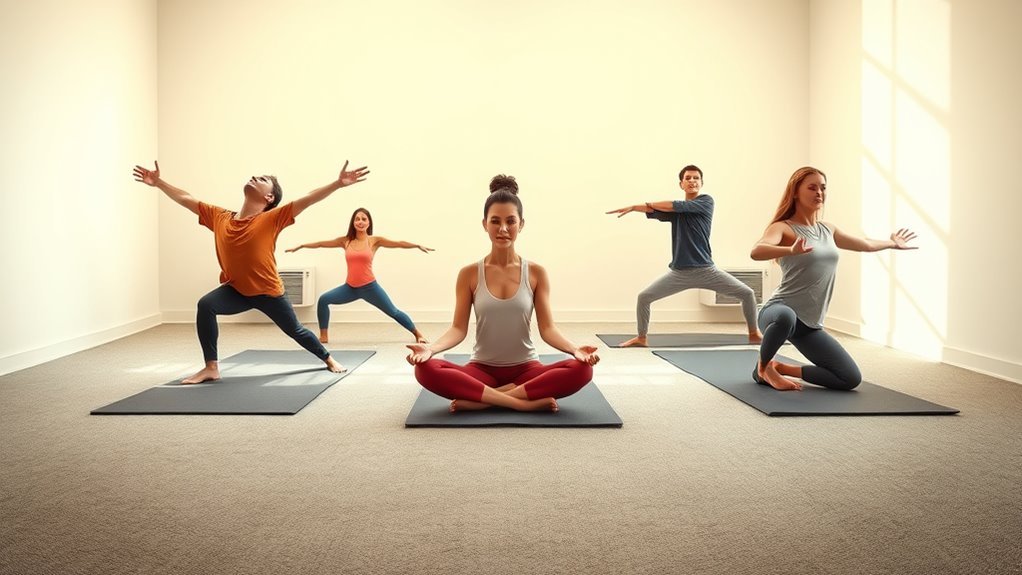
If you struggle to touch your toes, try beginner-friendly poses like the Standing Forward Bend with support, where you can use blocks or a chair to deepen the stretch comfortably. Incorporate seated forward folds with bent knees, gentle cat-cow movements, Child’s Pose for relaxation, and reclining hamstring stretches. These poses help improve flexibility gradually while staying safe. Keep practicing, and you’ll uncover more tips to enhance your flexibility and confidence over time.

Get workout gear delivered free — and shop member deals
- Fast, free delivery on millions of items
- Access to Prime Big Deal Days deals on October 6–7
- Prime Video, Amazon Music and more included
Key Takeaways
- Use supported poses like Standing Forward Bend with props to stretch safely without reaching toes.
- Practice Seated Forward Fold with bent knees to gently increase hamstring flexibility.
- Incorporate Reclining Hamstring Stretch to target tight muscles comfortably while lying down.
- Include Cat-Cow stretches to improve spine mobility and prepare the body for forward bends.
- Rest in Child’s Pose to relax and release tension, easing into forward stretches gradually.
As an affiliate, we earn on qualifying purchases.
Standing Forward Bend With Support
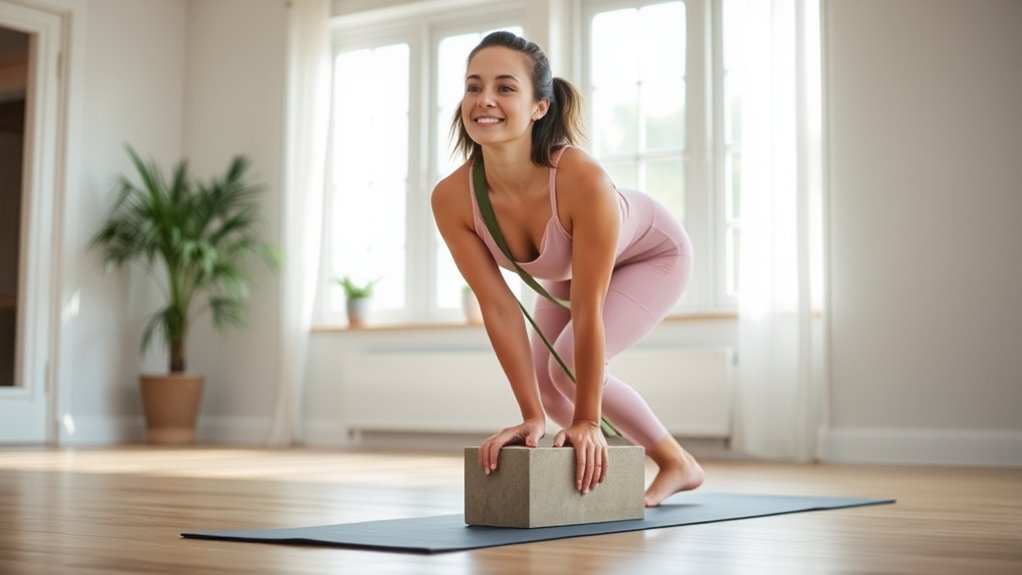
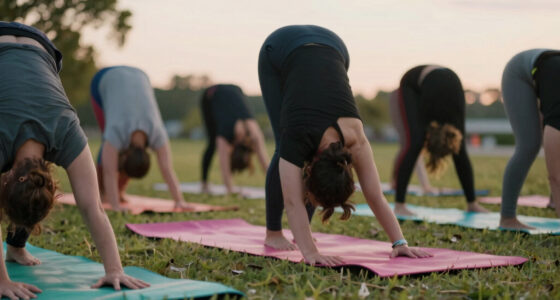
If you’re new to yoga, the Standing Forward Bend With Support is an excellent pose to help stretch your hamstrings and release tension in your back. It also boosts your balance improvement by providing stability with support, making it easier to deepen the stretch safely. As you fold forward, focus on your breathing techniques—inhale deeply to lengthen your spine, and exhale to relax into the stretch. Using props like a block or chair helps you maintain proper alignment and prevents strain. This pose encourages mindfulness of your breath, which can help calm your nervous system. Over time, consistent practice can improve your overall balance and flexibility, making it easier to progress into more advanced poses.
yoga chair support for stretching
As an affiliate, we earn on qualifying purchases.
As an affiliate, we earn on qualifying purchases.
Seated Forward Fold With Bent Knees
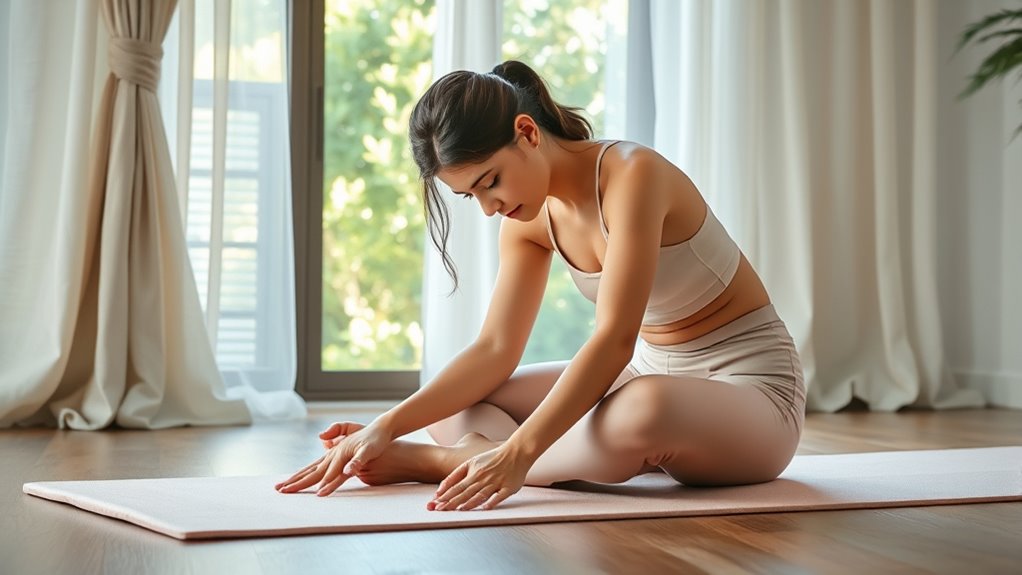
The Seated Forward Fold With Bent Knees is a gentle pose that helps stretch your hamstrings and lower back while keeping pressure off the knees. This variation encourages back relaxation and improves hip flexibility, making it accessible if you’re tight or new to yoga. As you fold forward, focus on lengthening your spine rather than reaching your toes, which helps prevent strain. Keep your knees bent comfortably to avoid over-stretching your hamstrings or aggravating back tightness. Incorporating at-home yoga technology practices can enhance your overall well-being and support sustainable health habits. Paying attention to proper alignment can also prevent injury and maximize the benefits of this pose. This pose promotes a calming effect, easing tension in the back muscles. Additionally, practicing this pose regularly can contribute to back health and increase overall flexibility.
As an affiliate, we earn on qualifying purchases.
Cat-Cow Stretch
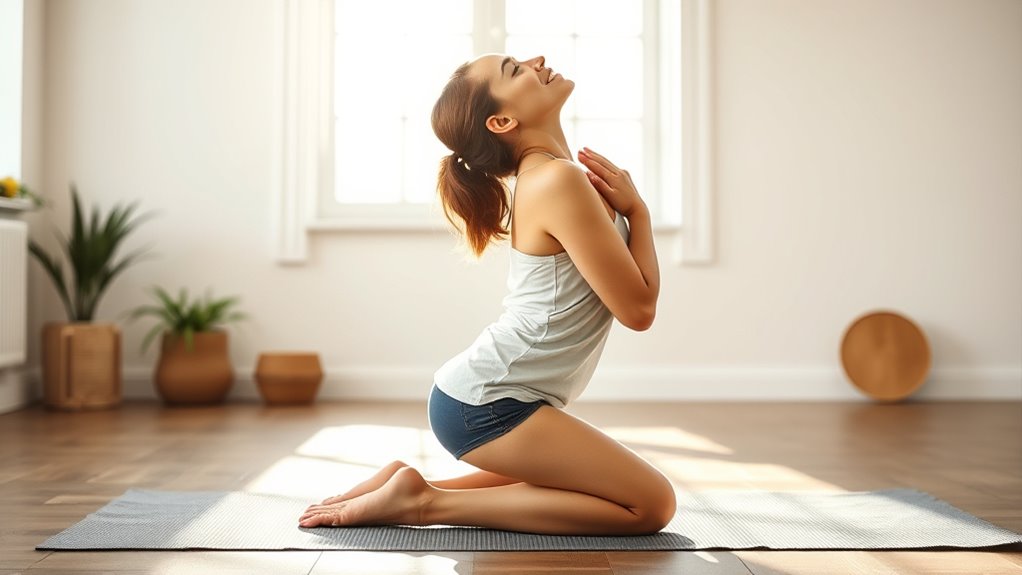
Moving from gentle forward folds, incorporating the Cat-Cow Stretch helps warm up your spine and improve mobility. To start, position yourself on your hands and knees, aligning your wrists under shoulders and knees under hips. As you inhale, arch your back, lifting your tailbone and chest in Cow pose. Exhale, round your spine, tucking your chin toward your chest in Cat pose. Focus on breathing techniques that synchronize your movement with each breath, promoting mental relaxation. This flow encourages mindfulness and helps ease tension in your back and neck. The rhythmic movement not only improves flexibility but also calms your mind, making it a perfect gentle stretch for beginners. Keep your movements smooth and controlled for maximum benefit. Incorporating adaptive lighting can enhance your practice environment, creating a calming atmosphere that supports mindfulness and relaxation. Additionally, practicing regular inspections of your body’s movement can help prevent strain and injury over time, ensuring your joint health remains optimal. Regularly checking in with your body’s muscle engagement can further improve your technique and safety during practice. Being mindful of your body positioning, especially during transitions, can also prevent unnecessary strain and enhance your overall experience.
As an affiliate, we earn on qualifying purchases.
Child’s Pose

Have you ever needed a moment to rest and reset during your practice? Child’s Pose offers that peaceful pause, helping you relax and reconnect. This pose encourages gentle stretching of your hips, thighs, and ankles while calming your mind. Focus on breathing techniques to deepen your relaxation, making each inhale and exhale more calming. It’s also an ideal position for meditation practices, promoting mindfulness and mental clarity. To enhance your experience, consider these tips:
Child’s Pose offers a calming, restorative break to relax, stretch, and reconnect through mindful breathing.
- Keep your forehead resting on the mat or a block
- Extend your arms forward or place them alongside your body
- Breathe slowly, focusing on your breath’s rhythm
- Use this pose as a break between more challenging poses
- Incorporate gentle visualization or positive affirmations
Recognizing the importance of mindfulness in yoga can help deepen your overall practice and promote better mental health. Developing mental clarity through mindful breathing can also enhance your ability to stay present during your daily activities. Additionally, focusing on proper alignment can prevent strain and improve your flexibility over time. Incorporating mindful breathing techniques into your routine can further support relaxation and stress reduction beyond the mat. Remember that body awareness during this pose can lead to improved posture and injury prevention in your everyday life.
Reclining Hamstring Stretch
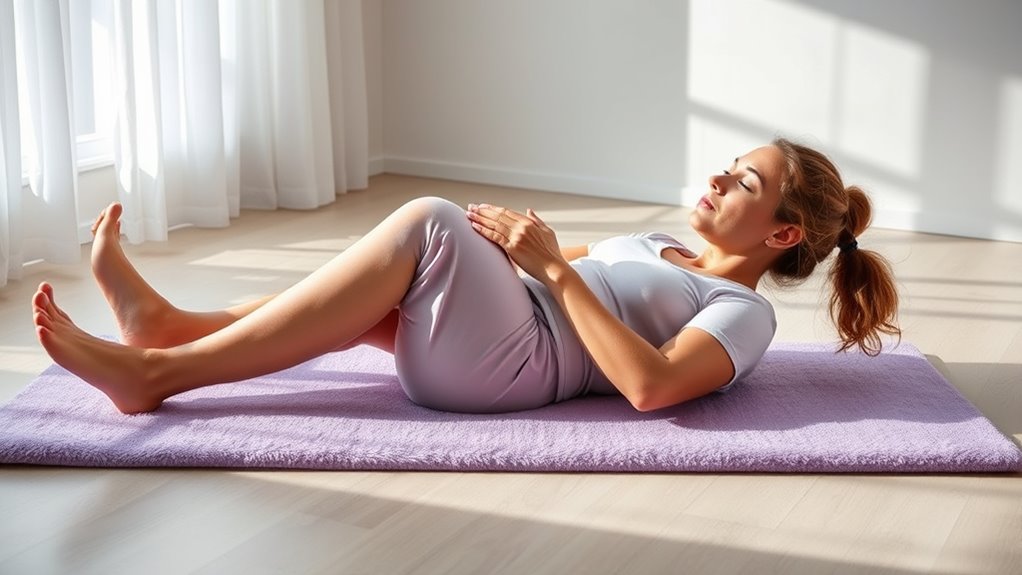
After resting in Child’s Pose to reset your mind and relax your body, you can gently extend into a Reclining Hamstring Stretch to target your hamstrings and lower back. Lie flat on your back and lift one leg, keeping it straight, while the other leg remains bent or flat on the floor. Use your hands or a strap around your raised foot to gently pull the leg toward you, feeling a stretch along the back of your thigh. Focus on maintaining a gentle pull without forcing it—this helps improve hamstring flexibility gradually. Incorporate stretching techniques like slow, controlled movements to avoid overstretching. Be mindful of your breathing, inhaling to prepare for each stretch and exhaling to deepen it. Repeating on both sides, breathing deeply to deepen the stretch and release tension, makes this pose accessible for beginners working on flexibility. Proper stretching techniques ensure safety and effectiveness for your practice, especially when considering appliance safety during your routines. Additionally, paying attention to your body’s signals can prevent overstretching and injury, which is a key aspect of content quality and safety.
Frequently Asked Questions
How Often Should I Practice These Poses for Improvement?
You should practice these poses at least three to four times a week to see steady progress. Remember, practice consistency is key, but don’t rush—patience and persistence matter most. Focus on holding each pose comfortably and gradually increasing your flexibility. Over time, with regular effort, you’ll notice improvement. Stick with it, stay motivated, and give your body time to adapt—results come with dedication and gentle persistence.
Can Beginners With Limited Flexibility See Progress Quickly?
While flexibility milestones vary, you’ll likely notice beginner progress sooner than expected if you practice regularly. Even small improvements can feel like big wins, boosting your confidence and motivation. Consistent effort helps your body adapt gradually, making it easier to reach your goals over time. Keep at it, and you’ll see steady progress, turning those initial challenges into accomplishments that keep you inspired on your yoga journey.
Are There Safety Precautions I Should Follow During These Poses?
Yes, you should follow safety guidelines during these poses. Always listen to your body, avoid pushing into pain, and use pose modifications if needed. For example, use blocks or cushions to support your flexibility limits. It’s important to practice slowly and consistently, respecting your limits to prevent injury. Remember, safety comes first, so don’t skip warm-ups and consult a yoga instructor if unsure about proper form or modifications.
Do I Need Special Equipment or Mats to Start?
Did you know that over 80% of yoga practitioners find using the right yoga equipment improves comfort and safety? You don’t need fancy yoga accessories to start; a simple yoga mat suffices. Basic yoga equipment like mats provides cushioning and grip, making poses easier and safer. As you progress, you might add blocks or straps, but initially, a good-quality yoga mat is all you need to begin your practice comfortably and confidently.
How Can I Incorporate Breathing Techniques Into These Poses?
To incorporate breathing techniques into these poses, focus on breathing awareness and use pranayama techniques like deep belly breathing or ujjayi breath. As you hold each pose, inhale slowly through your nose, feeling your lungs expand, then exhale fully. Maintain a steady, mindful breath to enhance relaxation and focus. Practicing these breathing techniques throughout your yoga session helps improve your posture, flexibility, and overall mindfulness.
Conclusion
So there you have it—five fantastic poses for those of us who can’t quite reach our toes without a little help. Don’t worry if you’re more “bendy” in the imagination than in reality. Remember, yoga’s about progress, not perfection. Keep practicing, breathe deeply, and soon enough, touching your toes might just become your new party trick. Until then, embrace the journey—and maybe invest in some comfy pants. Namaste, or whatever works for you!
Evergreen bestsellers Picks
bestsellers
As an affiliate, we earn on qualifying purchases.