
Ice baths help you reduce inflammation and muscle soreness quickly by constricting blood vessels and flushing out waste, making them great after intense exercise. Saunas, on the other hand, boost blood flow and relax your muscles, aiding recovery and flexibility. Both methods impact your hormones and mood differently—ice baths boost alertness, while saunas promote relaxation. Exploring these options further can help you optimize your recovery routine for better results.
Key Takeaways
- Ice baths reduce inflammation and muscle soreness quickly through blood vessel constriction and metabolic waste removal.
- Saunas enhance blood flow, relax muscles, and improve flexibility, supporting muscle repair and recovery.
- Cold exposure boosts alertness and mood via adrenaline and endorphin release, while saunas promote relaxation and stress reduction.
- Alternating between ice baths and saunas can optimize hormonal balance, inflammation control, and overall recovery benefits.
- Combining both methods offers comprehensive physical and mental health improvements during recovery.
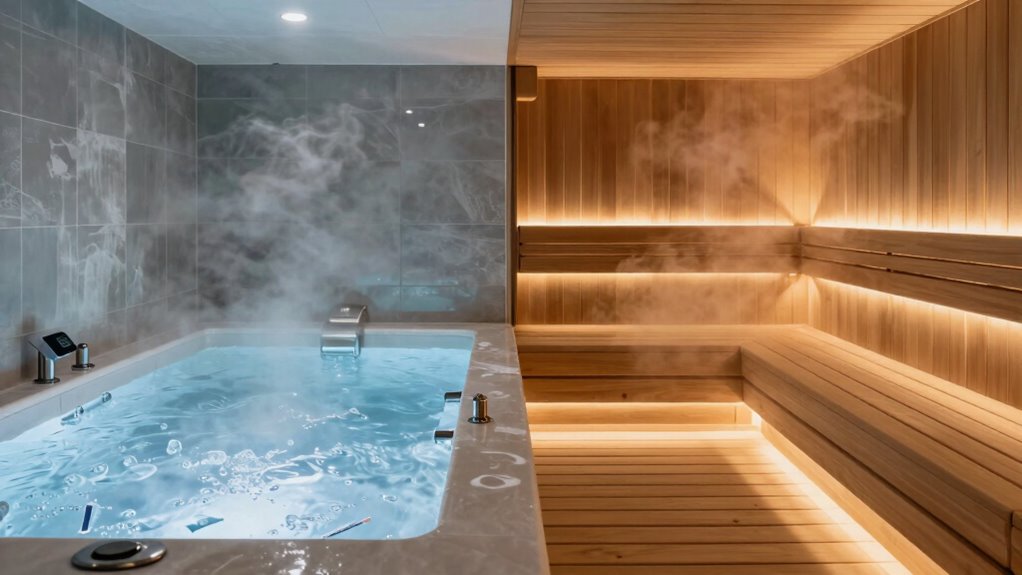
When it comes to recovery strategies after intense exercise, ice baths and saunas are two popular options that offer distinct benefits. Choosing between them depends on your goals, but understanding how each impacts your body can help you make an informed decision. Ice baths are known for their ability to reduce inflammation and muscle soreness quickly. When you immerse yourself in cold water, your blood vessels constrict, which helps flush out metabolic waste products and decrease swelling. This process can lead to faster recovery, especially if you’re dealing with acute muscle soreness or injury. On the other hand, saunas promote relaxation by increasing blood flow through heat exposure. This enhanced circulation delivers oxygen and nutrients to tired muscles, aiding in the repair process. The warmth also relaxes your muscles, reducing stiffness and promoting flexibility.
Ice baths reduce inflammation and muscle soreness quickly, aiding faster recovery after intense exercise.
Beyond physical effects, both recovery methods influence your mental health and hormonal balance. Cold exposure from ice baths can trigger a surge of adrenaline and norepinephrine, which may boost alertness and mood temporarily. Additionally, some research suggests cold immersion can help combat symptoms of depression by stimulating the release of endorphins. Saunas, however, tend to promote a calming effect, lowering stress levels and encouraging mental relaxation. The heat can activate the parasympathetic nervous system, helping you unwind and reduce anxiety. Regular sauna use has even been linked to improved mood and overall mental well-being, partly due to increased production of endorphins and other feel-good hormones. Moreover, exposure to biodiversity, such as natural environments, during recovery routines can further enhance mental health benefits.
Hormonal effects from these recovery strategies are also notable. Cold exposure may influence hormones related to stress and inflammation, such as cortisol, usually resulting in its reduction over time with consistent use. This can help stabilize mood and improve your overall hormonal balance. Sauna sessions, on the other hand, can temporarily elevate growth hormone levels, which are essential for muscle repair and recovery. Repeated sauna use has also been associated with improved regulation of hormones that control blood pressure and immune function, contributing to better long-term health. Additionally, the hormonal response to heat and cold exposure can vary depending on individual health and adaptation levels. Incorporating recovery practices like alternating between ice baths and saunas can optimize both physical and mental health benefits, creating a comprehensive recovery routine.
ice bath tub for muscle recovery
As an affiliate, we earn on qualifying purchases.
As an affiliate, we earn on qualifying purchases.
Frequently Asked Questions
Can Ice Baths and Saunas Be Combined for Optimal Recovery?
Yes, you can combine ice baths and saunas for best recovery through thermal contrast. This method involves alternating between cold and hot environments, which can enhance blood flow, reduce muscle soreness, and promote recovery synergy. You might start with an ice bath to reduce inflammation, then switch to a sauna to relax muscles and improve circulation. Just make sure you listen to your body and stay hydrated throughout the process.
How Long Should You Stay in an Ice Bath or Sauna?
Think of your body like a thermostat—staying within safe limits is key. For ice baths, aim for 10-15 minutes to promote temperature regulation and reduce inflammation. Saunas should be limited to 15-20 minutes to enhance mental clarity and relax muscles. I once spent 12 minutes in a sauna, feeling revitalized afterward. Always listen to your body and avoid overdoing it to prevent adverse effects.
Are There Any Health Conditions That Contraindicate These Recovery Methods?
Medical contraindications and individual health considerations can make ice baths or saunas unsuitable for some people. If you have cardiovascular issues, hypertension, or circulatory problems, these recovery methods might pose risks. Pregnant women, individuals with skin conditions, or those with certain respiratory illnesses should consult a healthcare professional before using ice baths or saunas. Always prioritize your health and seek medical advice if you’re unsure about your suitability.
Do Ice Baths or Saunas Affect Athletic Performance Long-Term?
You might think ice baths or saunas harm long-term athletic performance, but research suggests otherwise. Ice baths help reduce muscle inflammation, allowing quicker recovery, while saunas promote cardiovascular benefits, boosting endurance over time. Used appropriately, these methods can enhance your training consistency and resilience. Just remember, overdoing either may cause setbacks, so balance and listening to your body are key to maximizing their positive effects on your athletic journey.
What Are the Costs Associated With Regular Use of Each Method?
The costs for regular use of ice baths and saunas vary based on your setup. Ice baths require investment in a tub and maintenance of water quality, which can add up over time. Saunas involve initial purchase or membership fees and ongoing maintenance like cleaning and electricity. Cost considerations include energy bills for saunas and water/equipment costs for ice baths, so choose based on your budget and maintenance preferences.
As an affiliate, we earn on qualifying purchases.
Conclusion
Whether you prefer the chill of an ice bath or the warmth of a sauna, both offer unique recovery benefits. The cold sharpens your senses and reduces inflammation, like a brisk wake-up call. In contrast, the heat soothes muscles and relaxes your mind, much like a gentle hug. Choosing between them depends on your needs—each provides a different kind of relief, proving that recovery isn’t one-size-fits-all but a personalized journey.
As an affiliate, we earn on qualifying purchases.
As an affiliate, we earn on qualifying purchases.