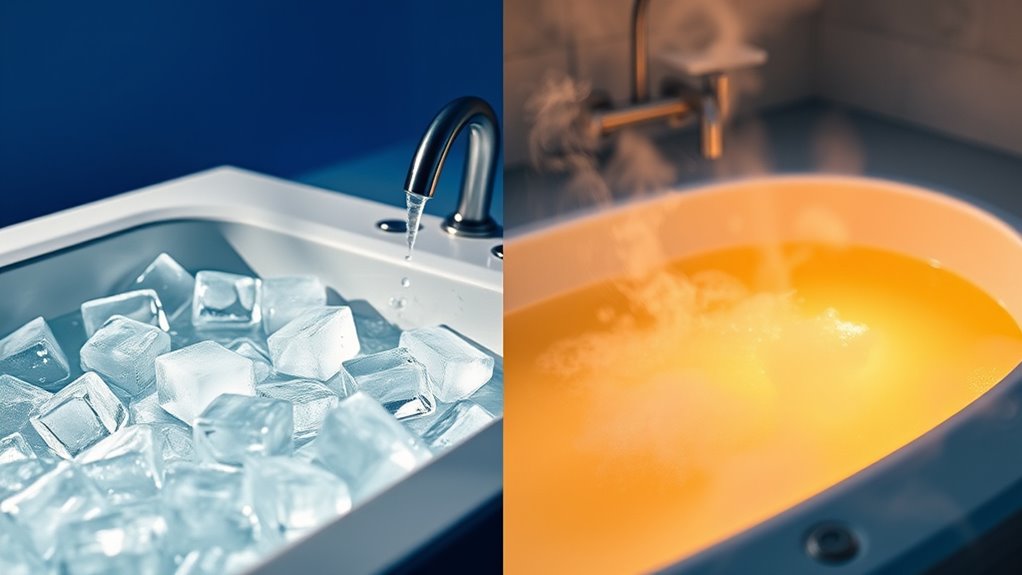
When it comes to workout recovery, ice baths and hot baths each have their perks. Ice baths reduce inflammation and pain, promoting quicker recovery. They’re great for mental toughness too. On the flip side, hot baths ease muscle tension and improve blood flow, which can help you relax and sleep better. Depending on your needs, you might even want to alternate between the two for maximum recovery. You’ll find more insights on enhancing your routine ahead!
Key Takeaways
- Ice baths effectively reduce inflammation and soreness, making them ideal for post-workout recovery.
- Hot baths promote muscle relaxation and improved blood flow, aiding in recovery and stress relief.
- Alternating between ice and hot baths can enhance overall recovery by combining their benefits.
- Ice baths build mental toughness through discomfort, while hot baths provide soothing mental relaxation.
- Choice between ice and hot baths depends on individual recovery goals and personal preferences.
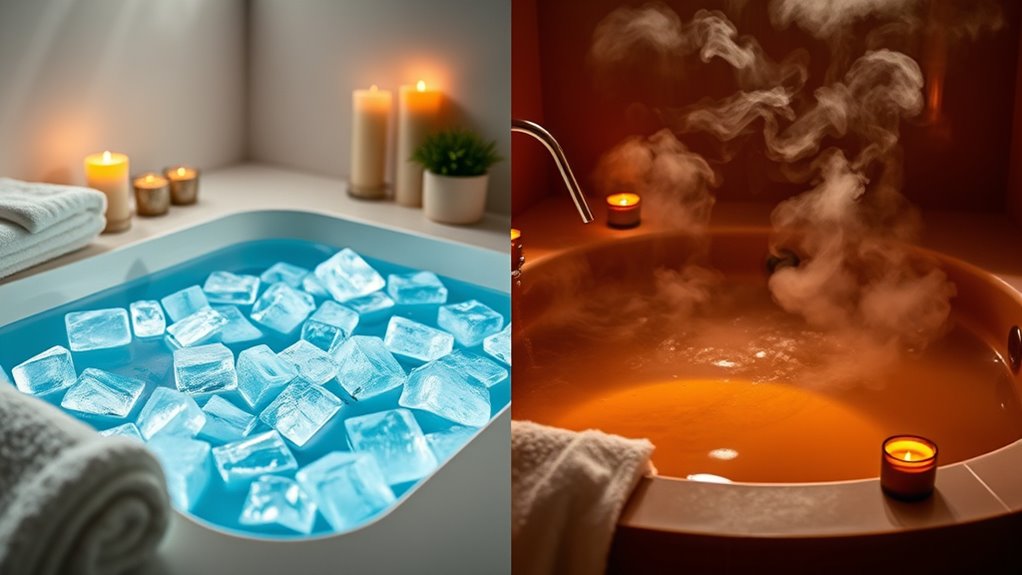
When it comes to recovery, choosing between an ice bath and a hot bath can feel overwhelming. You’ve probably heard various opinions on which method is better for relieving soreness and speeding up recovery. Both options have their own unique benefits, and it’s essential to understand how each can affect your body and mind.
Ice baths are known for their ability to reduce inflammation and numb pain. When you immerse yourself in cold water, your blood vessels constrict, helping to flush out metabolic waste and reduce swelling in your muscles. This process can lead to quicker recovery times, especially after intense workouts. However, the mental benefits of an ice bath shouldn’t be overlooked. The shock of cold water can stimulate your mind and help improve your focus. It can feel uncomfortable initially, but pushing through that discomfort can build mental resilience, something that’s critical in both workouts and life.
Ice baths reduce inflammation and numb pain, promoting quicker recovery while also enhancing mental focus and resilience.
On the other hand, hot baths provide a different set of advantages. The warmth encourages muscle relaxation, easing tension and promoting blood flow. This increased circulation helps deliver essential nutrients to your muscles, aiding in overall recovery. If you’ve had a tough workout, sinking into a hot bath can be incredibly soothing. The enveloping warmth can also be a great way to unwind mentally. It’s a chance to let go of the day’s stresses and enjoy a moment of peace. Many people find that hot baths help them sleep better, which is crucial for recovery.
The choice between an ice bath and a hot bath often comes down to personal preference and your specific recovery needs. If you’re dealing with significant soreness or inflammation, an ice bath might be your best bet. However, if you’re looking for a way to relax your muscles and ease stress, a hot bath could be more beneficial. Additionally, utilizing energy-efficient cloud servers can help track your recovery progress and optimize your workout routines.
Ultimately, you might find that alternating between the two methods works best for you. By incorporating both ice and hot baths into your recovery routine, you can enjoy the muscle relaxation benefits of heat while also harnessing the anti-inflammatory power of cold. Experiment with both and see how each affects your body and mind. Your recovery journey is unique, and by being attuned to your needs, you can find the ideal balance for your workout recovery.
Frequently Asked Questions
How Long Should I Stay in an Ice Bath or Hot Bath?
You should stay in an ice bath for about 10 to 15 minutes, while a hot bath can last up to 20 minutes. Always follow duration guidelines to avoid risks. Make sure to monitor your body’s response, as prolonged exposure can lead to numbness or overheating. It’s essential to take safety precautions, like having someone nearby and ensuring the temperature isn’t extreme, to keep your recovery both effective and safe.
Can I Alternate Between Ice Baths and Hot Baths?
Sure, you can totally alternate between ice baths and hot baths. Just think of it as your own personal spa day—if your spa had a polar bear and a sauna! Mixing bath temperatures can enhance your recovery techniques by improving blood circulation and reducing muscle soreness. So, jump in that chilly water, then roast yourself in the heat. Your muscles will appreciate the rollercoaster ride, and you’ll feel like a champion!
Are There Risks Associated With Ice Baths or Hot Baths?
Yes, there are risks associated with both ice baths and hot baths. You might experience thermal shock if you switch temperatures too quickly, which can be dangerous for your body. Additionally, prolonged exposure to extreme temperatures can lead to skin irritation, especially if you have sensitive skin. It’s important to listen to your body and avoid overdoing it, ensuring a safe and effective recovery routine. Always consult a professional if you’re unsure.
What Temperature Is Ideal for Ice Baths or Hot Baths?
For ice baths, aim for a temperature between 50°F to 59°F (10°C to 15°C). You should stay in for about 10 to 15 minutes for effective temperature regulation. For hot baths, maintain a temperature around 100°F to 104°F (37°C to 40°C) and soak for 15 to 20 minutes. Adjust the bath duration based on how your body feels, ensuring you listen to your limits for ideal recovery benefits.
Can I Use Ice Packs Instead of an Ice Bath?
Yes, you can use portable ice packs instead of an ice bath. They’re convenient for targeted relief, cooling specific areas like sore muscles or joints. While DIY ice baths immerse your whole body, ice packs provide flexibility and comfort in recovery. Just remember to wrap them in a cloth to prevent frostbite. Both methods help reduce inflammation and speed up recovery, but ice packs offer a more manageable option for your busy lifestyle.
Conclusion
In the battle of ice baths versus hot baths for workout recovery, it ultimately comes down to your personal preference and what feels best for your body. Ice baths can work wonders for reducing inflammation, while hot baths provide soothing relief and muscle relaxation. So, whether you chill out in ice or soak in warmth, you can’t go wrong. Just remember, choosing the right method can feel like discovering the fountain of youth for your muscles!