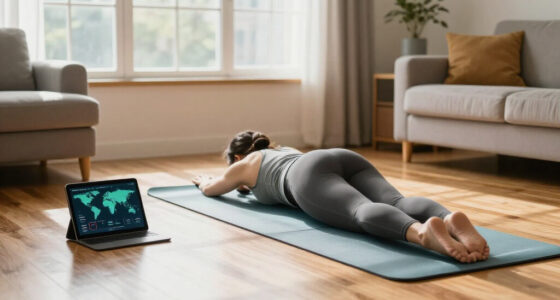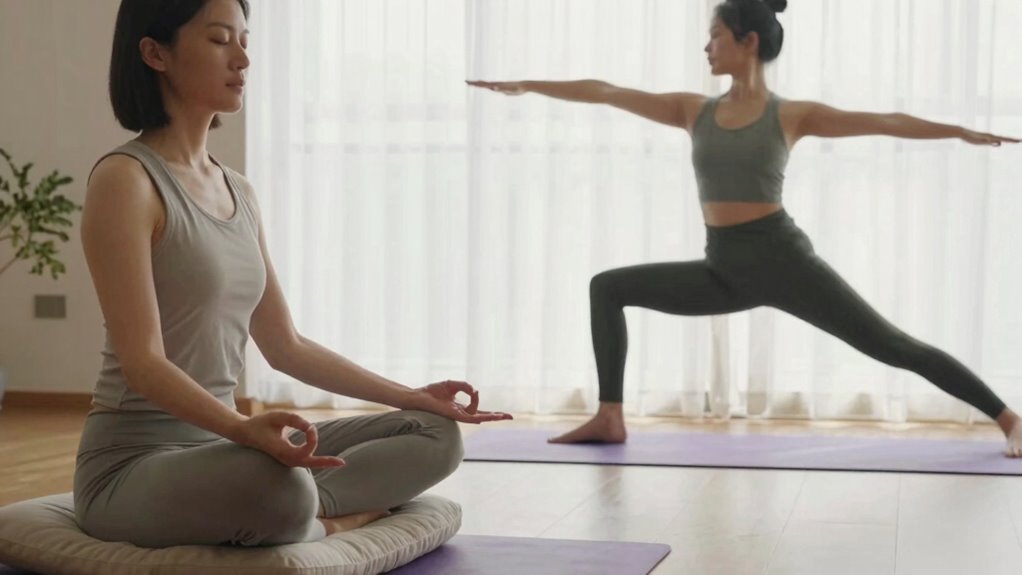

Meditation helps you achieve mental clarity, reduce stress, and gain emotional stability, making it ideal for calming the mind anytime and anywhere. Yoga, on the other hand, combines physical poses, breath work, and mindfulness to boost flexibility, strength, and overall physical health, while also supporting mental well-being. Both practices foster calmness and focus, but their benefits differ in emphasis. If you want to explore how each can enhance your life further, there’s more to discover below.

Get workout gear delivered free — and shop member deals
- Fast, free delivery on millions of items
- Access to Prime Big Deal Days deals on October 6–7
- Prime Video, Amazon Music and more included
Key Takeaways
- Meditation primarily enhances mental clarity, emotional stability, and stress reduction, while yoga improves physical flexibility, strength, and posture.
- Meditation focuses on mindfulness and mental stillness, whereas yoga combines physical postures, breath control, and mindfulness.
- Meditation can be practiced anywhere with minimal equipment, offering quick stress relief; yoga requires physical movement and a dedicated space.
- Yoga provides a full-body workout with physical benefits, while meditation emphasizes mental calmness and emotional resilience.
- Combining both practices yields balanced mental clarity, emotional stability, and physical vitality for holistic well-being.
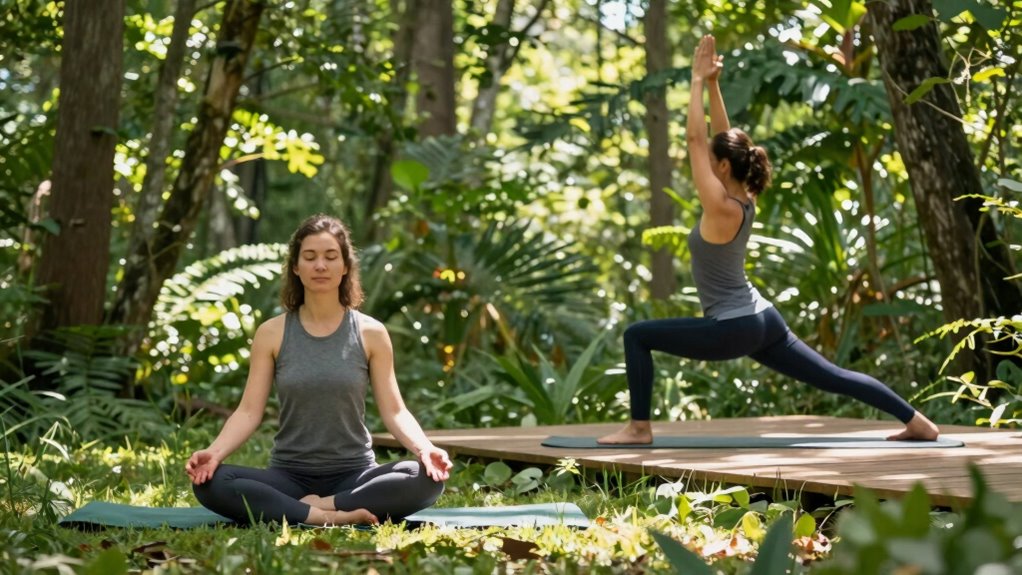
When it comes to achieving mental clarity and physical well-being, many people wonder whether meditation or yoga is the better choice. Both practices offer unique benefits, but understanding their differences can help you decide which suits your goals best. Meditation primarily focuses on mindfulness practices—training your mind to stay present, reduce stress, and cultivate inner peace. It involves sitting quietly, often in a comfortable position, and directing your attention inward. Over time, meditation can improve your concentration, emotional regulation, and overall mental health. You don’t need special equipment or a specific environment; just a quiet space and a few minutes each day can make a significant difference.
On the other hand, yoga incorporates physical postures, or asanas, along with breath control and meditation techniques. It’s a holistic approach that combines movement and mindfulness to enhance both physical and mental well-being. During yoga, you flow through various poses that stretch, strengthen, and balance your body. These physical postures can improve flexibility, build strength, and promote better posture. Additionally, the mindfulness component in yoga encourages you to stay present during each movement, fostering a sense of calm and focus. The physical aspect of yoga makes it particularly appealing if you’re looking to improve your fitness while also calming your mind.
While meditation emphasizes mental clarity through focused attention and mindfulness practices, yoga offers a more dynamic way to achieve mental and physical harmony. If you’re seeking stress reduction, emotional stability, and mental resilience, meditation might be your preferred choice. Its simplicity allows you to practice anywhere, anytime, making it accessible and easy to incorporate into busy schedules. Incorporating proper technique in both practices can significantly enhance their benefits and prevent injuries. Additionally, understanding the benefits of mindfulness can deepen your practice and amplify your results. Incorporating landscaping elements or creating a dedicated outdoor space can enhance your meditation environment and promote consistency.
In essence, meditation and yoga complement each other well. Meditation sharpens your mental focus, while yoga enhances your physical health and body awareness. Choosing between them depends on your personal goals: if mental calm is your priority, start with meditation. If you want a full-body workout with mental benefits, yoga might be better. Many find that combining both practices yields the best results, giving you mental clarity and physical vitality in a balanced way.
Frequently Asked Questions
Can Meditation and Yoga Be Practiced Together Effectively?
Yes, you can practice meditation and yoga together effectively. Focus on mindfulness integration during your yoga sessions to deepen awareness, and synchronize your breathing to enhance relaxation. Combining these practices helps you cultivate mental clarity and physical flexibility simultaneously. Set aside dedicated time to seamlessly blend meditation’s mental calm with yoga’s movement, creating a holistic experience that benefits both your mind and body.
Which Is More Suitable for Stress Relief: Meditation or Yoga?
If stress relief is your goal, yoga might be your best bet. Its breathing techniques and mindfulness practices help calm your mind and relax your body simultaneously. But don’t overlook meditation—its focused attention and deep breathing also ease tension and promote mental clarity. The real secret? Combining both can amplify their stress-busting effects, giving you a powerful toolkit to stay calm and centered no matter what life throws at you.
Do Meditation and Yoga Require Different Physical Abilities?
Meditation and yoga generally don’t require advanced physical abilities. Meditation mainly involves seated or lying positions, focusing on breathing techniques and mental calmness, so posture alignment isn’t strict. Yoga, however, involves various poses that may demand flexibility and strength, but many routines can be adapted to your level. Both practices emphasize breathing techniques, making them accessible regardless of your physical condition, especially with modifications.
How Long Should I Practice Each to See Benefits?
You should practice breathing techniques and mindfulness exercises daily for at least 10 to 15 minutes to notice benefits. Consistency is key, so gradually increase your practice time as you become more comfortable. Regular practice helps reduce stress, improve focus, and boost overall well-being. Whether you do yoga or meditation, dedicating a short daily routine allows you to experience mental clarity and physical relaxation over time.
Are There Any Health Risks Associated With Either Practice?
You might think meditation and yoga are completely safe, but overlooking potential risks can be a disaster. While generally beneficial, they could pose mental health challenges like anxiety or physical safety concerns if done improperly or with underlying health issues. Always listen to your body, consult a healthcare professional if needed, and practice with qualified instructors to minimize risks. Prioritize your health to truly enjoy the life-changing benefits these practices offer.
Conclusion
Ultimately, whether you choose meditation or yoga, you’re beginning on a journey to enhance your well-being. Each offers unique benefits—meditation calms the mind like a gentle troubadour, while yoga strengthens your body like a seasoned blacksmith. Think of it as selecting between a quill and a sword in your quest for balance. Whichever path you take, remember that the pursuit of inner harmony is timeless, much like the wisdom passed down through the ages from wise sages.
Evergreen bestsellers Picks
bestsellers
As an affiliate, we earn on qualifying purchases.