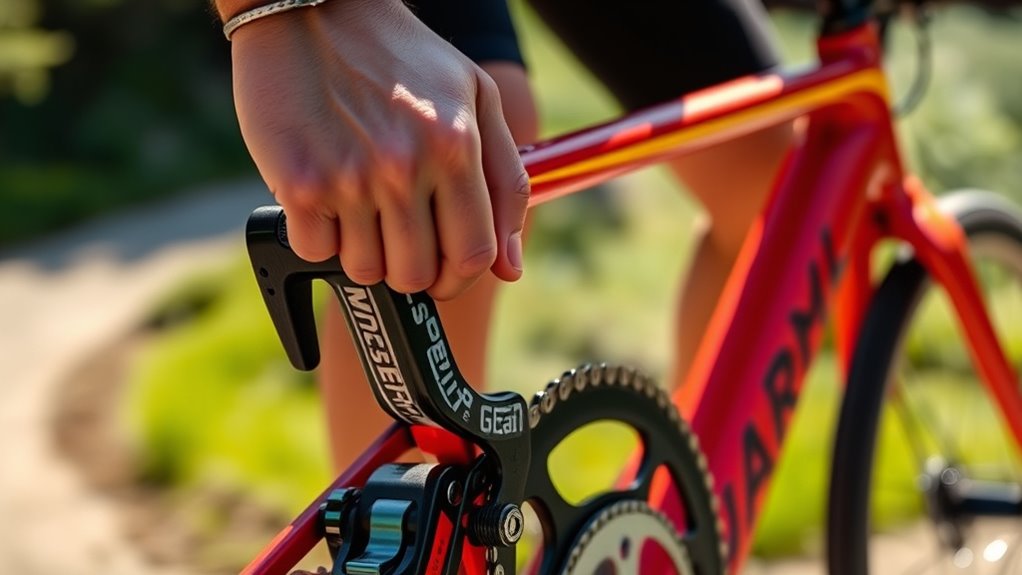

To change gears properly on a bike, start by understanding your bike’s gear ratios and shifting mechanisms. Use your right hand for the rear derailleur and your left for the front. When shifting, pedal lightly to avoid damage and don’t put too much pressure on the pedals. Shift to a lower gear when climbing or struggling, and to a higher gear on flat stretches. Mastering these techniques can improve your ride. Stay tuned to learn even more tips!
Key Takeaways
- Use your right hand for the rear derailleur and your left hand for the front derailleur when shifting gears.
- Pedal lightly while shifting to prevent damage to the gears and ensure smooth transitions.
- Avoid applying excessive pressure on the pedals during gear changes to maintain control.
- Shift to lower gears when climbing hills and higher gears on flat terrain for optimal performance.
- Practice shifting during casual rides to become more familiar and proficient with your bike’s gear system.
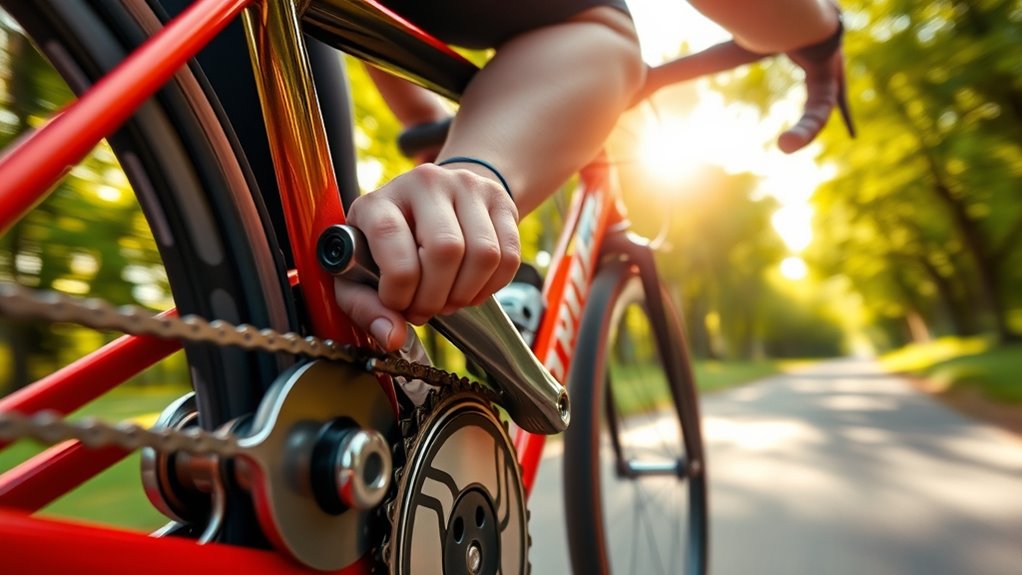
Changing gears on a bike can seem tricky at first, but once you get the hang of it, you’ll find it enhances your riding experience considerably. Understanding how gear ratios work is essential for making your rides smoother and more efficient. When you shift gears, you’re essentially changing the ratio between how hard you’re pedaling and how fast you’re going. A lower gear ratio makes it easier to pedal, perfect for hills or starting from a stop, while a higher gear ratio allows for faster speeds on flat terrain.
Mastering bike gear shifts enhances your ride, making it smoother and more efficient for any terrain.
To change gears effectively, it’s important to know when to shift. Pay attention to the terrain and your pedaling rhythm. If you’re struggling to pedal up a hill or your legs feel like they’re spinning without much power, it’s time to shift to a lower gear. Conversely, if you’re cruising on flat ground and your legs are working too hard, shift up to a higher gear. This transition helps maintain your cadence, allowing for a more enjoyable ride.
Don’t forget about gear maintenance, either. Keeping your bike’s drivetrain clean and well-lubricated can substantially affect how smoothly your gears shift. Regular maintenance prevents dirt and grime from building up, which can cause your chain to skip or get stuck. Make it a habit to wipe down your chain after every few rides and apply a suitable lubricant. This simple step essentially ensures you’re ready to shift gears seamlessly whenever necessary.
When you’re ready to shift, use your right hand for the rear derailleur and your left for the front derailleur. Make sure you’re pedaling lightly as you shift to avoid putting unnecessary strain on the gears. If you shift while applying too much pressure, you could damage the system or miss the shift entirely. Practice makes perfect, so don’t hesitate to experiment with shifting during a casual ride.
Lastly, remember that your bike may have different systems, so familiarize yourself with your specific gear setup. Whether you’re riding a road bike, mountain bike, or hybrid, each type has its distinct gear ratios and shifting mechanisms. Over time, you’ll learn how to read the terrain and adjust accordingly, making your rides not only smoother but also more enjoyable. Embrace the learning curve, and soon you’ll be shifting gears like a pro! Additionally, understanding the importance of gear maintenance can help ensure your bike remains in optimal condition, enhancing both performance and longevity.
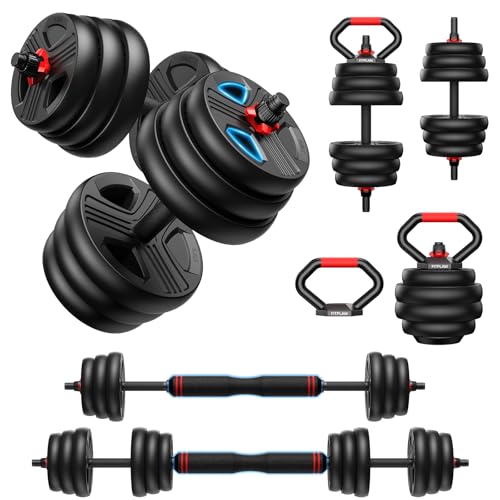
FDS1 Adjustable dumbbell set, 45lbs Free Weights set with upgraded nut, 5 in 1 Weight Set Used as Kettlebells, Barbell, Push up Stand, Fitness Exercise for Home Gym Suitable Men/Women
- Multifunctional 5-in-1 Design: Transforms into dumbbells, kettlebells, barbells, and more
- Dual-Lock Nut System: Red and black locks prevent weight shifting
- Adjustable Weight Options: Customize weights from light to heavy
As an affiliate, we earn on qualifying purchases.
Frequently Asked Questions
What Gear Should I Use for Uphill Riding?
For uphill riding, you should select a lower gear to maximize your climbing efficiency. This allows you to pedal smoothly without straining too much. As you ascend, shift to an easier gear that helps maintain a steady cadence. Remember to anticipate the incline; if it gets steeper, don’t hesitate to adjust your gear. Keep these gear selection tips in mind, and you’ll tackle those hills with confidence and ease.
How Do I Fix a Slipping Chain?
To fix a slipping chain, start by checking the gear alignment; misaligned gears can cause slippage. Next, guarantee your chain’s properly lubricated. If it’s dry or dirty, clean it and apply fresh lube. Inspect the chain for wear or damage, as a worn chain may need replacement. Finally, tighten any loose components. Regular maintenance will help prevent slipping and improve your bike’s performance. Keep riding smoothly!
When Should I Replace My Bike Chain?
You should replace your bike chain every 1,000 to 2,000 miles, depending on your riding style and conditions. Regular chain maintenance helps extend its life, so check for wear frequently. If you notice skipping gears or a stretched chain, it’s time for a replacement. Make certain the new chain is compatible with your bike’s gears to guarantee smooth shifting and peak performance. Keeping an eye on this will enhance your riding experience.
Can I Change Gears While Pedaling Backwards?
No, you can’t change gears while pedaling backwards. Most bike gears are designed for forward motion, and attempting to shift while going backwards can damage the drivetrain. To shift gears effectively, focus on your pedal technique; keep pedaling forward and apply pressure evenly. Always make certain gear compatibility between your bike’s components to prevent unnecessary wear. Sticking to forward pedaling helps you maintain control and makes shifting smoother and more efficient.
How Do Weather Conditions Affect Gear Shifting?
Weather conditions greatly affect gear shifting. In rainy conditions, your bike’s components can become slippery, making shifts feel less precise. You might need to shift more carefully to avoid skipping gears. Windy weather can also impact your ride; if you’re battling headwinds, you may want to shift to lower gears to maintain your speed. Always adjust your gear choices based on the weather to enhance your biking experience and maintain control.

Trailoom Microfiber Gym Towels, Quick Dry, Highly Absorbing, Odor-Free
- High Absorbency: Instant moisture absorption for workouts
- Fast Drying: Dries up to three times faster
- Bacteria-Free: Rapid moisture evaporation prevents bacteria
As an affiliate, we earn on qualifying purchases.
Conclusion
Mastering gear changes on your bike is like learning to dance; once you find your rhythm, everything flows seamlessly. When you shift gears at the right moments, you’ll glide over hills and winds with ease. Remember, practice makes perfect—so don’t hesitate to experiment with your bike’s gears until it feels just right. With a little patience, you’ll be spinning through your rides effortlessly, enjoying every twist and turn along the way. Happy biking!

Acteon Microfiber Gym Towels 5 Pack, Quick Dry Silver ION Odor-Free Sweat Towel, Super Absorbent Fast Drying for Men & Women, Workout, Yoga, Running, Hiking, Travel – 16x30.5 Inch
- Odor-Free with Silver Ions: Prevents odors and wicks moisture
- Quick Dry Microfiber: Absorbs five times its weight, dries fast
- Durable and Lightweight: Long-lasting, easy to wash, comfortable to wear
As an affiliate, we earn on qualifying purchases.

2026 Updated Adjustable Dumbbell Set of 2, 5-in-1 Weights Dumbbell Set with Storage Box, 25lbs Adjustable Weights with Anti-slip Silicone Grip, Weight Set For Home Gym Suit both Men and Women
- Weight Range: 4 to 25 lbs per dumbbell
- Quick Adjustment: Switch weights in 1 second
- Space Saving: Replaces 5 dumbbell sets
As an affiliate, we earn on qualifying purchases.