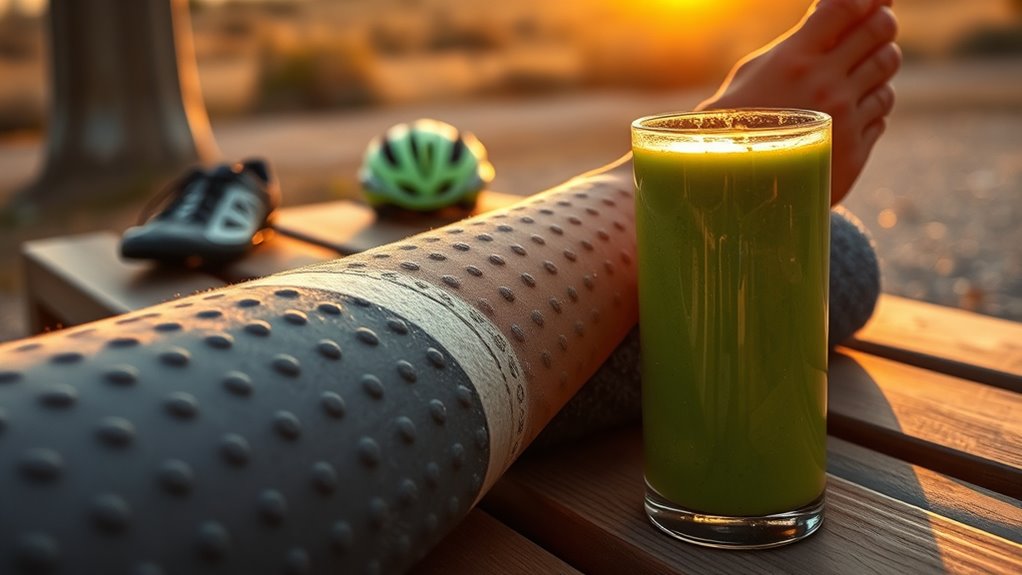
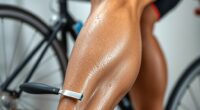
To ease muscle soreness after rides, focus on hydration, nutrition, and recovery. Replenish fluids immediately post-ride and consume electrolyte drinks to restore balance. Eat a mix of carbs and protein within 30 minutes—like bananas with nut butter—to enhance muscle repair. Incorporate gentle stretching or cycling to promote recovery. Don’t forget to prioritize rest days and maintain healthy eating habits for overall well-being. Discover more effective strategies to boost your cycling recovery and performance.
Open a free Amazon Business account
Business pricing, bulk buying and tax-exempt orders.
As an affiliate, we earn on qualifying purchases.
Key Takeaways
- Hydrate promptly after rides to replenish fluids and combat dehydration, supporting muscle function and recovery.
- Consume a 3:1 carbohydrate to protein ratio within 30 minutes post-ride to optimize muscle repair.
- Incorporate active recovery methods, like gentle cycling or stretching, to reduce soreness and improve flexibility.
- Maintain balanced meals with lean proteins, whole grains, and healthy fats to support overall health and reduce inflammation.
- Establish consistent routines for hydration, nutrition, and rest to enhance recovery and long-term cycling performance.

How can you bounce back stronger from your cycling workouts? Recovery is just as essential as the ride itself, and it starts the moment you step off your bike. To ease muscle soreness and enhance your performance, you’ll want to focus on two key areas: hydration strategies and nutrition timing. These elements play a critical role in how quickly and effectively you recover.
First off, let’s talk hydration. After a long ride, your body’s dehydrated, and replenishing those lost fluids should be your top priority. Aim to drink water consistently during your ride, but don’t stop there. Once you’re done, have a drink that contains electrolytes, as they help restore balance and support muscle function. Coconut water or sports drinks can be great options. If you’ve pushed yourself hard, consider rehydrating with a protein shake mixed with water. This approach not only helps with hydration but also provides essential nutrients to kickstart recovery.
Next, you need to think about nutrition timing. You might not realize it, but what you eat after your ride can profoundly impact your recovery. Aim to consume a combination of carbohydrates and protein within 30 minutes of finishing your workout. This timeframe is essential because your body’s like a sponge, ready to absorb nutrients and repair muscle tissue. A good rule of thumb is to follow a 3:1 ratio of carbs to protein. A banana with a scoop of nut butter or a smoothie with yogurt and berries will do the trick.
Throughout the day, keep your meals balanced, incorporating whole foods like lean meats, whole grains, and plenty of fruits and vegetables. These foods provide the vitamins and minerals your body needs to recover effectively. Don’t forget about healthy fats, either; they play a role in reducing inflammation and promoting overall recovery.
Lastly, listen to your body. If you’re feeling particularly sore, consider active recovery options like gentle cycling or stretching. Incorporating rest days into your routine is just as important as the rides themselves. You’ll be amazed at how much stronger you feel when you give your muscles the time they need to heal and adapt. Remember, establishing healthy habits around your recovery can greatly enhance your overall performance and well-being.
Frequently Asked Questions
How Long Should I Rest Before Cycling Again After Soreness?
You should typically rest for 1 to 3 days before cycling again after experiencing soreness. Recovery timing varies based on the intensity of your ride and how your body feels. Listen to your body; if soreness persists, consider an extra day of rest. Incorporate light stretching or low-impact activities during this rest duration to promote healing. Remember, it’s better to take a little extra time than to push too soon and risk injury.
Can I Use Ice or Heat for Muscle Soreness?
When your muscles feel like they’ve been through a storm, you can definitely turn to ice or heat for relief. Ice therapy soothes inflammation and numbs pain, while heat application relaxes tight muscles and improves blood flow. You’ve got to listen to your body—if it’s swollen, ice it; if it’s stiff, warm it up. Each method has its magic, so switch between them to find your perfect balance and speed up recovery.
What Are the Best Stretches for Post-Ride Recovery?
To enhance your post-ride recovery, focus on dynamic stretching and foam rolling. Start with dynamic stretches like leg swings or arm circles to promote flexibility and blood flow. Afterward, use a foam roller on your quads, hamstrings, and calves to relieve tightness and improve circulation. Don’t forget to hold each stretch for at least 15 seconds and roll over each muscle group for about a minute. You’ll feel the difference in your recovery!
Are There Specific Foods That Help Muscle Recovery?
Yes, specific foods can definitely help muscle recovery. Focus on increasing your protein intake, as it’s essential for repairing muscle tissue. Incorporate antioxidant foods like berries, spinach, and nuts into your meals to reduce inflammation and oxidative stress. These nutrients work together to speed up recovery and enhance your performance. So, after your rides, grab a smoothie with protein powder and some mixed berries for a delicious recovery boost!
How Can I Prevent Muscle Soreness in Future Rides?
Preventing muscle soreness is like building a fortress around your body. Start with proper bike fit; it guarantees your body isn’t strained during rides. Implement hydration strategies before, during, and after cycling to keep your muscles primed and ready. Incorporate a warm-up and cool-down routine to ease your muscles into and out of activity. Finally, listen to your body—rest when needed, and you’ll ride stronger, avoiding that dreaded soreness.
Conclusion
As you pedal through your cycling journey, remember that recovery is just as crucial as the ride itself. Like the phoenix rising from the ashes, your muscles need time to rebuild and rejuvenate. Embrace the strategies we’ve discussed, from hydration to gentle stretching, and watch your performance soar. With each ride, you’re not just chasing the horizon; you’re crafting a stronger, more resilient version of yourself. So gear up for the next adventure, ready to conquer the road ahead!
Flea & tick season Picks
flea and tick prevention
As an affiliate, we earn on qualifying purchases.