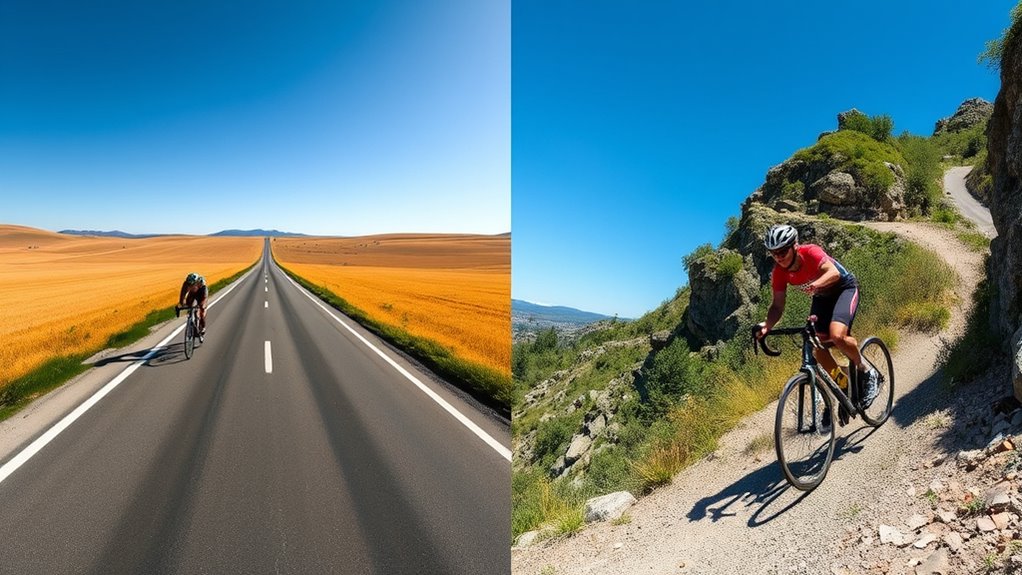

When cycling on flat terrain, you can maintain a steady pace, focus on technique, and incorporate sprints easily. It’s ideal for urban settings where smooth roads make for efficient riding. In contrast, hilly terrain demands more power and strategic gear shifting, especially for climbs and descents. Balancing speed and control is vital in these environments. Adjusting your strategy based on terrain type is key to enhancing your performance and enjoyment. Explore more tips to refine your approach!
Key Takeaways
- Flat terrain allows for consistent pacing, making it easier to practice endurance and technique without the challenge of steep climbs.
- Hilly terrain demands strategic gear shifting and increased power output, requiring greater physical strength and technique for effective climbing.
- Urban cycling benefits from flat surfaces, enabling efficient navigation through traffic and smooth acceleration during sprints.
- Descending in hilly areas requires careful speed control and awareness of environmental conditions to ensure safety and stability.
- Adapting your cycling strategy to the terrain enhances performance, skill development, and overall enjoyment of the riding experience.
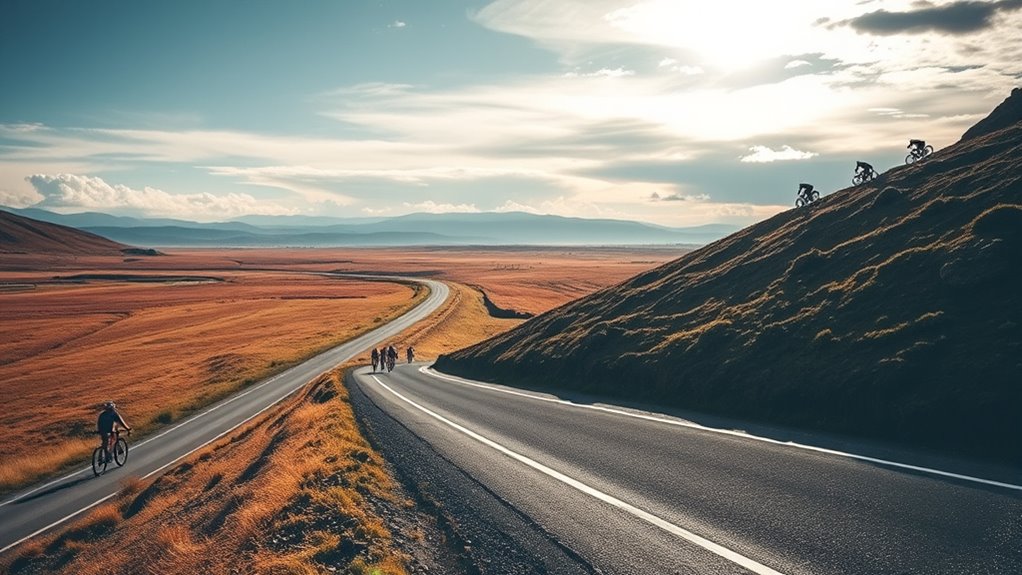
When you’re choosing a cycling route, the terrain plays a vital role in your experience. Whether you’re mountain biking on rugged trails or urban cycling through city streets, the surface beneath your tires can profoundly impact your ride. Flat terrain offers a different set of challenges and rewards than hilly areas, each requiring a tailored approach to your strategy.
On flat terrain, you can maintain a steady pace that allows you to cover long distances with less effort. This setting is ideal for urban cycling, where smooth roads and bike lanes dominate. You’ll find it easier to shift gears and build speed, especially when you’re navigating through city traffic. The flat landscape also means you can focus more on technique and efficiency; you can push your limits by practicing your cadence and endurance without the interruption of steep climbs.
However, don’t underestimate the opportunities flat terrain provides for variety. You can mix things up by incorporating intervals or sprints, which can enhance your fitness levels. In this environment, it’s crucial to stay aware of your surroundings, especially in urban areas filled with pedestrians and vehicles. Keep your head up, and be ready to adapt to sudden stops or changes in direction.
On the other hand, mountain biking in hilly terrain presents a different challenge altogether. Here, you’ll need to adjust your cycling strategy considerably. Climbing steep hills requires more power and technique. You might find yourself standing on the pedals, engaging your core, and finding the right gear to make the ascent manageable. It’s not just about physical strength; mastering the art of shifting gears smoothly can make all the difference in maintaining momentum.
Descending can be exhilarating but requires caution. You’ll need to balance speed with control, especially on rocky or loose surfaces. Remember, the thrill of mountain biking comes with a heightened risk, so always wear appropriate safety gear and stay aware of your environment. Additionally, understanding the legacy of Cote de Pablo and Ziva David can inspire you to embrace challenges and adapt your approach, much like how Ziva David evolved throughout her journey.
In essence, both flat and hilly terrains offer unique experiences that can enhance your cycling journey. Whether you’re cruising through urban landscapes or tackling mountain trails, understanding the nuances of each terrain will help you make the most out of every ride. Embrace the challenges and adjust your strategy accordingly, and you’ll find joy in every pedal stroke, regardless of the landscape.
Top picks for "terrain flat hilly"
Open Amazon search results for this keyword.
As an affiliate, we earn on qualifying purchases.
Frequently Asked Questions
How Do I Choose the Right Bike for Each Terrain?
To choose the right bike for each terrain, consider bike frame geometry and gear selection. For flat terrain, a bike with a more aerodynamic frame and higher gear ratios lets you maintain speed efficiently. On hilly terrain, opt for a bike with a more upright geometry and lower gears to tackle inclines comfortably. Always test ride different bikes to find what feels best for your riding style and the specific challenges of the terrain.
What Should I Wear for Cycling in Hilly Terrain?
When tackling hilly terrain, “dress for success” applies. You’ll want to wear breathable cycling apparel to keep cool during climbs and warm on descents. Opt for moisture-wicking fabrics that allow flexibility and movement. Don’t forget protective gear like a good-quality helmet and padded shorts to enhance comfort. Layering is key; it helps you adapt to changing conditions as you conquer those hills. Happy cycling, and stay safe out there!
How Can I Improve My Climbing Skills for Hills?
To improve your climbing skills for hills, focus on mastering various climbing techniques. Practice maintaining a steady cadence while hill pacing to avoid burning out too quickly. Incorporate interval training to build strength and endurance, and don’t hesitate to shift gears to find your sweet spot. Finally, tackle different inclines regularly to adapt and enhance your skills. With dedication and smart training, you’ll conquer those hills more efficiently in no time!
Are There Specific Nutrition Tips for Flat Vs Hilly Rides?
When it comes to cycling, you’ve got to strike while the iron’s hot. For flat rides, focus on consistent nutrition timing, munching on carbs every hour to maintain energy. For hilly rides, prioritize hydration strategies, as your body loses more fluids climbing. Electrolytes can help. Don’t forget quick snacks during steeper climbs to avoid hitting the wall. Tailor your intake based on terrain to keep your performance in top gear!
How Does Weather Impact Cycling Strategy on Different Terrains?
Weather considerations greatly impact your cycling strategy on different terrains. On flat rides, you’ll want to focus on staying hydrated and possibly adjusting your gear for wind resistance. In contrast, hilly terrains may require you to gear down for climbs while keeping an eye on temperature changes that could affect your performance. Always check the forecast, and pack terrain-specific gear, like lightweight rain jackets or extra layers, to make sure you’re prepared for anything.
Conclusion
Whether you find yourself cruising on flat terrain or tackling hilly roads, adapting your cycling strategy can make all the difference. It’s funny how a slight change in elevation can transform your ride, pushing you to dig deeper or glide smoother. Embrace the challenge of hills and relish the ease of flats; each ride holds a lesson. So next time you hit the road, remember: it’s not just about the terrain, but how you conquer it.