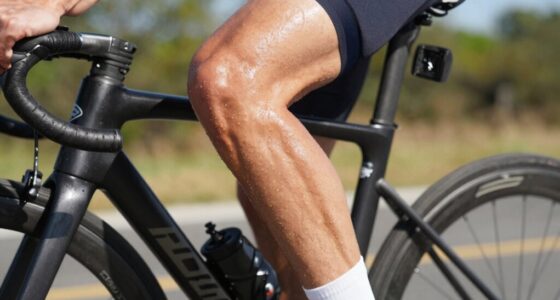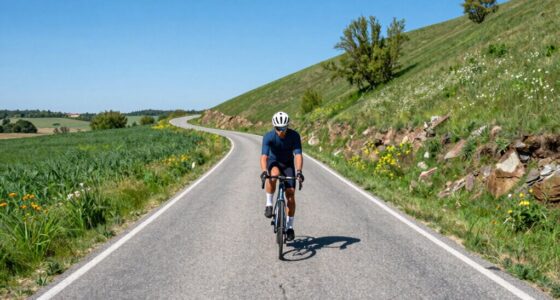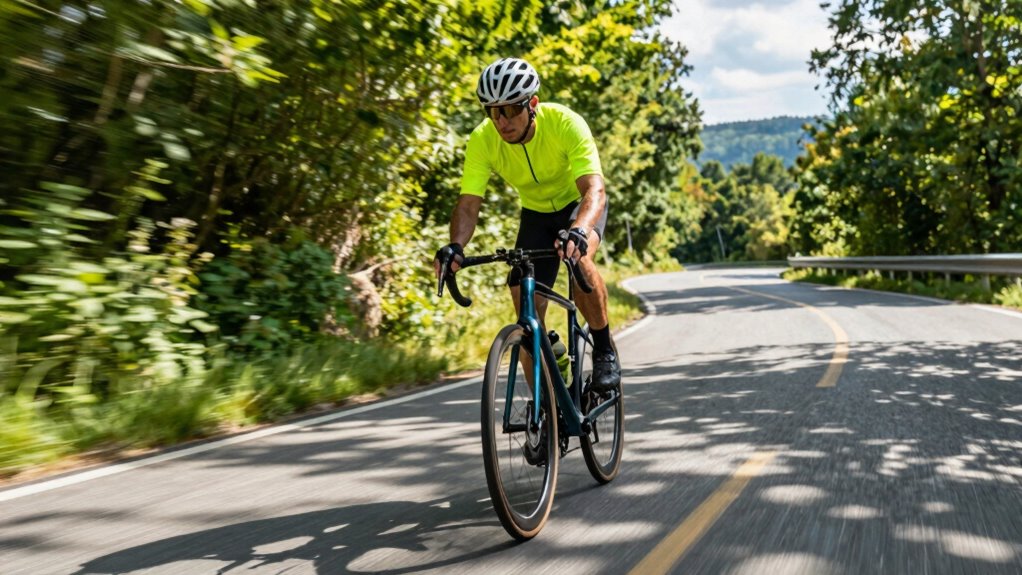

To climb hills without burning out, pace yourself by maintaining a steady cadence of 70-90 RPM and avoid all-out efforts at the start. Shift gears early before the incline gets steep, and keep your effort manageable with smooth, controlled movements. Listen to your body, stay relaxed, and focus on breathing evenly. Developing endurance through regular hill-specific workouts and using digital tools can boost your confidence. Keep going, and you’ll discover even more tips for efficient climbing ahead.

Get workout gear delivered free — and shop member deals
- Fast, free delivery on millions of items
- Access to Prime Big Deal Days deals on October 6–7
- Prime Video, Amazon Music and more included
Key Takeaways
- Maintain a steady, moderate cadence of 70-90 RPM to conserve energy and prevent fatigue.
- Shift to lower gears early before tackling the hill to keep effort manageable and smooth.
- Pace yourself with consistent effort, avoiding all-out pushes at the start of the climb.
- Incorporate interval training to build endurance and develop efficient climbing techniques.
- Stay relaxed, monitor effort levels, and focus on controlled breathing to avoid overexertion.
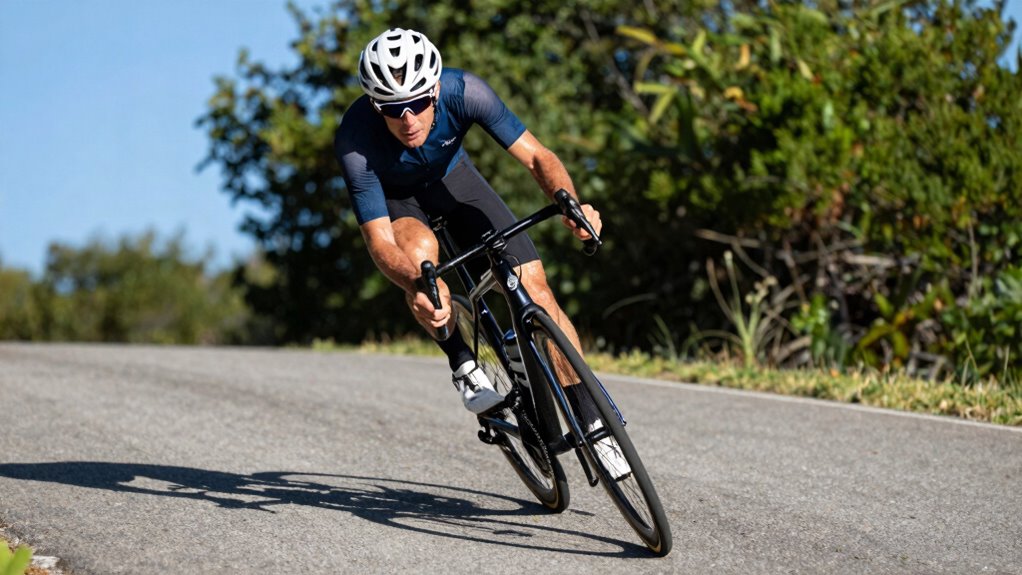
Climbing hills on a bike can be challenging, especially if you push too hard and risk burning out early. To tackle hills effectively, you need to focus on building your cycling endurance and mastering gear shifting. Maintaining a steady pace is essential; rather than going all out at the start, conserve your energy for the climb. When you set out, aim for a comfortable cadence—around 70 to 90 revolutions per minute—so you don’t tire your legs too quickly. Pushing too hard in the initial stages often leads to fatigue, making it harder to finish the ascent strong.
Gear shifting plays a critical role in managing your effort during a hill climb. As you approach the incline, shift to a lower gear before you start climbing. This allows you to spin more easily and maintain a consistent cadence without overexerting yourself. If you find yourself struggling, don’t just grind harder in a high gear—shift down to keep the effort manageable. Proper gear management helps you conserve energy and prevents your legs from burning out prematurely. Practice shifting smoothly, so you avoid sudden jerks that can throw off your rhythm or cause mechanical issues. Learning to anticipate terrain changes and shift early keeps your momentum steady. Additionally, understanding emerging trends in digital tools, like bike computers or apps, can help you monitor and improve your climbing efficiency. Incorporating these tools into your routine can provide real-time feedback and motivate you to push your limits safely. Developing efficient shifting techniques is also crucial for maintaining a smooth, energy-efficient climb. Moreover, staying aware of your effort level helps you avoid overexertion and maintain a sustainable pace. Building your cycling endurance takes time and consistent effort. Incorporate longer, steady rides into your routine, gradually increasing distance and intensity. Over time, your muscles adapt, allowing you to sustain effort longer without fatigue. Interval training—alternating between high-intensity efforts and recovery periods—also improves your overall endurance and power output. When climbing, focus on controlled breathing and staying relaxed. Tension in your upper body or gripping the handlebars tightly wastes energy and wears you out faster. Keep your torso upright and shoulders loose to maximize efficiency.
During the climb, listen to your body. If you start feeling overly fatigued, ease off slightly rather than pushing to the point of exhaustion. Maintaining a consistent pace, aided by smart gear shifting, helps you avoid sudden drops in energy. Remember, hill climbing isn’t about speed; it’s about steady, sustainable effort. With patience and practice, your cycling endurance will improve, making those hills feel more manageable over time. Keep your focus on smooth gear changes and maintaining a steady cadence, and you’ll find yourself conquering hills without burning out early. Developing a training plan that includes hill-specific workouts can further accelerate your progress and confidence.
As an affiliate, we earn on qualifying purchases.
Frequently Asked Questions
What Gear Should I Use for Steep Hills?
When tackling steep hills, use a lower gear to maintain a steady cadence, preventing overexertion. Regular bike maintenance guarantees smooth shifting and reliable performance. Additionally, implement nutrition strategies like staying hydrated and consuming carbs beforehand to sustain your energy. This combo helps you keep momentum, reduces fatigue, and prevents burning out, making climbs easier and more manageable. Focus on gear choice, bike upkeep, and proper nutrition for ideal hill climbing.
How Can I Maintain Momentum on a Hill?
Ever wonder how to keep your momentum when tackling a hill? In mountain biking or urban commuting, staying steady and smooth is key. You should shift to a lower gear early, pedal consistently, and avoid sudden pushes. Keep your cadence steady, lean slightly forward, and maintain momentum by focusing on smooth, continuous pedaling. This approach prevents burnout and helps you conquer hills efficiently, no matter the terrain.
What’s the Best Breathing Technique for Hill Climbing?
To improve your hill climbing, focus on maintaining a steady breathing rhythm, such as inhaling for three seconds and exhaling for three seconds. This helps control your heart rate and prevents fatigue. Breathe deeply through your nose and mouth, filling your lungs completely. By matching your breathing to your effort, you stay relaxed, conserve energy, and sustain your stamina longer, making hill climbs more manageable.
How Do I Prevent Saddle Soreness During Climbs?
To prevent saddle soreness during climbs, guarantee your bike fit is correct for mountain biking or road cycling. Use a padded saddle or cycling shorts with chamois for extra comfort. Adjust your saddle height and tilt to avoid pressure points. Take regular breaks and shift your position to reduce friction. Staying hydrated and maintaining good core strength also helps. These tips keep you comfortable and focused during tough mountain biking or road cycling climbs.
Should I Stand or Sit When Climbing Steep Hills?
When climbing steep hills, think of the saying “keep your powder dry.” You should sit to maintain momentum and conserve energy, especially if your bike is well-maintained and shifts smoothly. Stand occasionally to power through tough spots, but don’t overdo it. Stay hydrated with good hydration strategies, and make sure your bike is in top shape. This combo keeps your legs fresh and your ride smooth, preventing burnout.
As an affiliate, we earn on qualifying purchases.
Conclusion
Remember, slow and steady wins the race. When climbing hills, don’t rush or push too hard—listen to your body and maintain a steady pace. Use your gears wisely and stay relaxed to conserve energy. Keep your breathing steady, and don’t forget to stay hydrated. With patience and persistence, you’ll conquer those hills without burning out. After all, as they say, “Rome wasn’t built in a day,” so take your time and enjoy the ride.
cycling endurance training equipment
As an affiliate, we earn on qualifying purchases.
As an affiliate, we earn on qualifying purchases.
As an affiliate, we earn on qualifying purchases.
Fall Picks
fall essentials
As an affiliate, we earn on qualifying purchases.