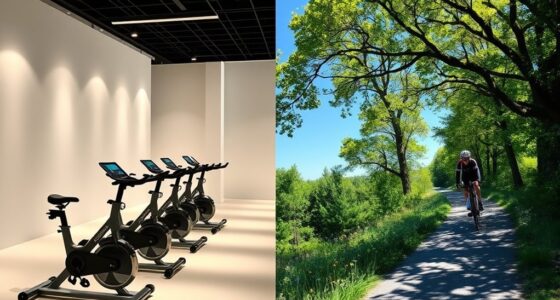
To climb hills on a bike without burning out, shift to an easier gear before you start. Keep a steady cadence and avoid grinding too hard, as this can tire you out quickly. Pace yourself—begin at a manageable effort and monitor your heart rate. Break the climb into sections to stay focused and celebrate small milestones. Remember to breathe deeply and evenly to maintain your stamina. There’s more to discover about optimizing your climb efficiently.

Get workout gear delivered free with Prime
- Fast, free delivery on millions of items
- Prime Video, Amazon Music and more included
- Member-only deals all year
Key Takeaways
- Shift to an easier gear before starting the climb to conserve energy and maintain a steady cadence.
- Start at a manageable effort level and aim for a steady pace throughout the climb.
- Divide the climb into manageable sections to reduce mental burden and boost motivation.
- Practice deep, steady breathing to enhance stamina and maintain mental clarity during the ascent.
- Monitor your heart rate and slow down if fatigue sets in to prevent burnout.

Climbing hills on a bike can feel intimidating, especially if you’re not prepared. A steep incline can seem like an insurmountable challenge, but with the right gear selection and pacing strategies, you can conquer those hills without burning out. Understanding the best gear for your bike and how to pace yourself is essential for a successful ascent.
First, let’s talk about gear selection. Choosing the right gear can make all the difference when you’re faced with a challenging hill. If your bike has multiple gears, shift to an easier gear before you start climbing. This way, you won’t have to struggle as you begin the ascent. You want to maintain a cadence that allows you to pedal fluidly without exhausting yourself too quickly. If you find yourself grinding in a high gear, it’s time to shift down. Remember, it’s better to spin your legs steadily in an easier gear than to push hard and tire out quickly.
Choosing the right gear is crucial for tackling hills; shift to an easier gear to maintain a smooth and steady cadence.
Next, focus on your pacing strategies. As you approach the hill, it’s essential to find a rhythm that feels comfortable. Start off at a manageable effort; you don’t want to sprint at the base and risk burning out halfway up. Aim for a steady pace that you can maintain throughout the climb. If you have a watch or bike computer, keep an eye on your heart rate, ensuring you’re not overexerting. It’s perfectly fine to slow down if you start feeling fatigued—this is a marathon, not a sprint.
Additionally, break the hill into sections in your mind. Instead of focusing on the entire climb, think about reaching halfway, then the three-quarters mark. This technique can help lessen the mental burden of a long climb. As you conquer each section, you’ll gain a sense of accomplishment that can boost your motivation.
Lastly, remember to breathe. Deep, steady breaths can help you maintain your stamina and keep your mind clear. If you start to feel overwhelmed, take a moment to focus on your breathing rather than the steepness of the hill. Understanding your gear selection strategy can greatly enhance your climbing efficiency.
bike gear shifters for hill climbing
As an affiliate, we earn on qualifying purchases.
As an affiliate, we earn on qualifying purchases.
Frequently Asked Questions
What Gear Ratio Is Best for Climbing Steep Hills?
For climbing steep hills, a lower gear ratio is best. You’ll want to optimize your gear ratio to make pedaling easier, allowing you to maintain momentum without burning out. Use effective gear shifting techniques, such as shifting down before the incline hits, to prepare your legs. This way, you can tackle the steepness without straining yourself too much. Remember, finding the right balance can make your climbs smoother and more enjoyable.
Should I Eat Before a Long Hill Climb?
You’ll feel like a superhero if you eat before a long hill climb! Proper nutrition timing is vital for maintaining energy. Fuel up with energy snacks about 30 minutes prior, like bananas or energy bars. This way, your body has the carbs it needs to tackle that steep incline without burning out. Don’t underestimate the power of a good pre-ride snack; it can make all the difference in your performance!
How Do I Choose the Right Bike for Hill Climbing?
When choosing the right bike for hill climbing, focus on lightweight frames and gearing options that suit steep inclines. Look for a bike that allows for an efficient riding posture, as it’ll help conserve energy. Don’t forget about bike maintenance; keeping your gears smooth and tires in good shape can make a big difference. Test ride a few options to find what feels comfortable and responsive for your hill-climbing adventures.
What Type of Shoes Are Best for Climbing Hills on a Bike?
For climbing hills on a bike, you’ll want shoes designed for cycling with proper shoe fit and efficient cleat positioning. Look for shoes that offer a stiff sole to maximize power transfer, while ensuring they fit snugly without pinching. Position your cleats correctly to optimize your pedal stroke, allowing for better energy use during climbs. A good pair of cycling shoes can make a significant difference in your hill-climbing performance.
How Can I Improve My Overall Stamina for Hills?
To improve your stamina for hills, you’ll want to embrace endurance training. Picture yourself gliding up a steep incline, each pedal stroke powering you forward. Incorporate longer rides into your routine, gradually increasing distance and intensity. Don’t underestimate mental preparation; visualize conquering those hills. Break your rides into manageable segments, focusing on breathing and pacing. Soon, you’ll find that what once felt intimidating becomes a challenge you can tackle with confidence and ease.
As an affiliate, we earn on qualifying purchases.
Conclusion
Conquering hills on your bike is like climbing a ladder; each rung takes effort, but reaching the top is worth it. Remember to pace yourself, shift gears wisely, and breathe deeply. You wouldn’t sprint up a ladder, so don’t rush those inclines. With practice and patience, you’ll find climbing becomes a rewarding challenge instead of a chore. Embrace the journey, and soon, those formidable hills will feel like stepping stones to greater adventures.
As an affiliate, we earn on qualifying purchases.
bike computer with section tracking
As an affiliate, we earn on qualifying purchases.
As an affiliate, we earn on qualifying purchases.
Halloween Picks
halloween
As an affiliate, we earn on qualifying purchases.