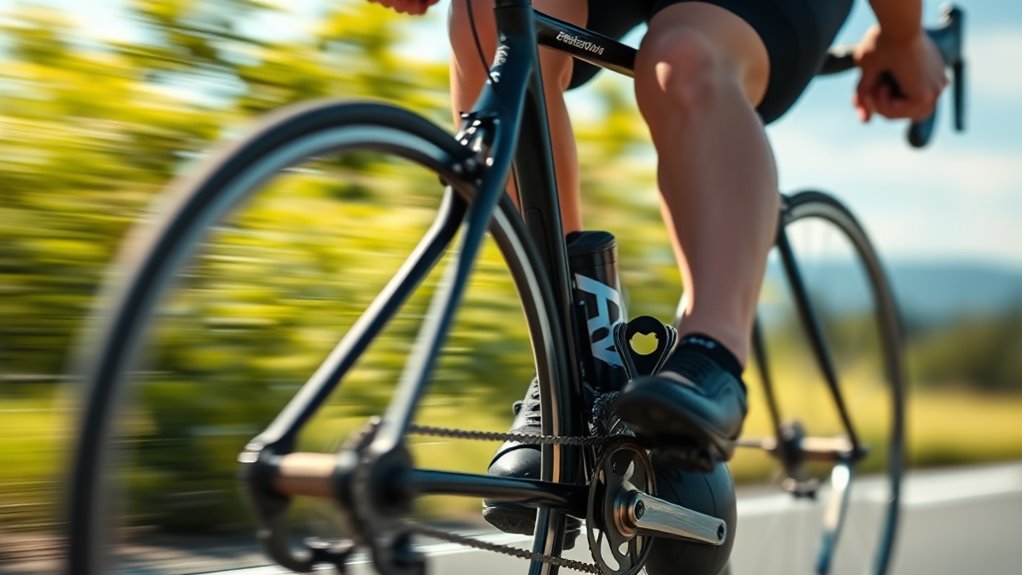

Cadence is crucial for your cycling performance. A higher cadence means less muscle strain and better cardiovascular efficiency, helping you ride smoother and longer. To improve your cadence, experiment with gear selection, shift during climbs, and use interval training to boost your stamina. Set specific RPM goals during your rides, and track your metrics with a cycling computer. With consistent practice, maintaining a suitable cadence becomes second nature. Keep going, and you’ll discover even more strategies to enhance your ride.
Key Takeaways
- Cadence, or pedal RPM, is essential for efficient cycling, reducing muscle strain and enhancing cardiovascular performance.
- Selecting easier gears allows for faster spinning, helping maintain a steady and efficient cadence during rides.
- High-intensity interval training improves cadence adaptability, enabling cyclists to sustain higher RPMs over time.
- Setting specific RPM goals and using tracking devices aids in conscious practice for cadence improvement.
- Regularly adjusting gears and monitoring cadence leads to measurable improvements in overall cycling efficiency and enjoyment.

Have you ever wondered how cadence affects your cycling performance? Your cadence, or the number of revolutions per minute (RPM) of your pedals, plays a vital role in how efficiently you ride. A higher cadence often means reduced muscle strain and improved cardiovascular efficiency. By focusing on your cadence, you can enhance your overall cycling experience, making every ride more effective and enjoyable.
Cadence, or your pedal RPM, is key to efficient cycling, reducing strain and boosting cardiovascular performance for a more enjoyable ride.
One way to improve your cadence is through your gear selection. Choosing the right gear can considerably influence your RPM. When you shift to an easier gear, you can spin faster without as much resistance, allowing your legs to maintain a higher cadence. This can be particularly beneficial during climbs or when you’re trying to recover on flat sections. Experiment with different gears during your rides to find the sweet spot that allows you to maintain a steady and efficient cadence. You’ll notice that with practice, you’ll develop a better feel for which gears work best for different sections of your ride.
Training intensity also plays a key role in your cadence. If you’re consistently pushing yourself at a high intensity, your body will adapt over time, allowing you to sustain a higher cadence for more extended periods. Incorporate interval training into your routine—alternate between high-intensity sprints and lower-intensity recovery phases. This type of training not only boosts your overall fitness but also helps in finding that ideal cadence that works for you. During these intervals, pay attention to how your cadence fluctuates and adjust your gear accordingly, so you’re not overexerting yourself.
Another effective way to improve your cadence is to practice it consciously. On your next ride, set a goal to maintain a specific RPM for a segment of your ride. Use a cycling computer or a smartwatch to monitor your cadence, making adjustments as needed. If you find yourself slowing down, shift to an easier gear to keep that RPM up. The more you consciously work on your cadence, the more natural it will become, and soon enough, you won’t have to think about it as much.
Ultimately, by focusing on gear selection and training intensity, you can greatly enhance your cadence. With consistent practice and mindful adjustments, you’ll see improvements in your overall cycling performance, allowing you to enjoy the ride even more.

COOSPO GPS Cycling Computer BC107 & Bike Cadence/Speed Sensor BK467, Wireless Bike GPS Speedometer with 2.4 Inch Auto-Backlight Display, Bluetooth/ANT+ Bicycle Computer GPS Sync with Strava
- Package Includes: Bike computer and sensor included
- Wireless Data Transmission: ANT+ and Bluetooth 4.0 support
- Performance Monitoring: Tracks speed and cadence data
As an affiliate, we earn on qualifying purchases.
As an affiliate, we earn on qualifying purchases.
Frequently Asked Questions
What Is the Ideal Cadence for Competitive Cycling Events?
The ideal cadence for competitive cycling events usually falls between 80 to 100 RPM. Maintaining cadence consistency is essential for peak performance, as it helps you sustain energy and speed throughout the race. You need to carefully consider your gear selection, as the right gears will allow you to maintain that perfect cadence without overexerting. Experiment during training to find what works best for you, and practice to improve your efficiency.
How Does Cadence Affect Overall Cycling Performance?
Cadence directly impacts your overall cycling performance by enhancing pedal efficiency and managing fatigue. When you maintain an ideal cadence, you distribute your energy effectively, allowing for sustained power output over longer distances. If you pedal too slowly, you risk fatigue and decreased speed. Conversely, a higher cadence can reduce muscle strain, helping you to maintain endurance. Focusing on your cadence helps you ride faster and longer with less fatigue.
Can Cadence Be Improved Without a Power Meter?
Yes, you can improve your cadence without a power meter. Focus on cadence training by maintaining a steady rhythm while you ride. Experiment with gear selection to find a combination that allows you to pedal comfortably at a higher cadence. Use a bike computer or a smartphone app to track your RPM, and aim to gradually increase it over time. Consistent practice will help you develop a smoother, more efficient pedaling style.
What Are Common Mistakes Cyclists Make Regarding Cadence?
Cyclists often stumble like a ship caught in a storm when it comes to cadence. One common mistake is poor gear selection; riding in too high a gear can make your legs feel like lead. Also, neglecting pedal technique can throw you off balance, causing inefficient strokes. Focus on keeping a smooth, circular motion and selecting the right gear for your terrain. This’ll help you glide through rides with grace and power.
How Does Terrain Influence Ideal Cadence?
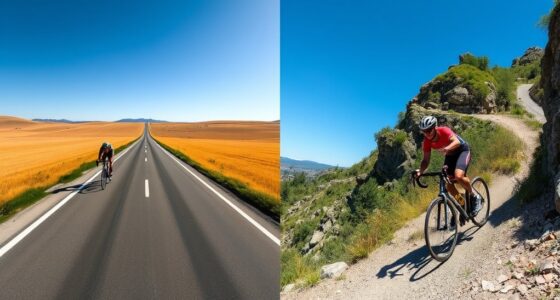
Terrain considerably influences your ideal cadence. On steep climbs, you’ll need to adapt your cadence by shifting to a lower gear, allowing you to maintain a steady rhythm without overexerting yourself. Conversely, on flat or downhill sections, you can select higher gears and increase your cadence for efficiency. By adjusting your gear selection based on the terrain, you can optimize your performance and enjoy a smoother ride overall.

Tailcle 3×7 Speed Bike Shifter Set, 21 Speed Twist Grip Gear Shifters
- Gear Shifter Type: 3×7 Speed Twist Grip
- Number of Gears: 21-Speed Set
- Gear Shifter Configuration: Left 3-speed, Right 7-speed
As an affiliate, we earn on qualifying purchases.
As an affiliate, we earn on qualifying purchases.
Conclusion
Just as a river flows smoothly when it finds its rhythm, so too does your cycling journey thrive with an ideal cadence. Embracing this rhythm not only enhances your performance but also transforms your experience on the bike. As you refine your pedal strokes and find your pace, remember that each rotation brings you closer to your goals. So, let your cadence sing like a well-tuned melody, guiding you effortlessly through the landscapes of your cycling adventures.

Cycle Reebok: Foundations and Interval Training with Robert Sherman
As an affiliate, we earn on qualifying purchases.
As an affiliate, we earn on qualifying purchases.

Garmin Forerunner® 165 Music, Running Smartwatch, Colorful AMOLED Display, Training Metrics and Recovery Insights, Music on Your Wrist, Turquoise
- Built-in GPS and Heart Rate: Tracks pace, distance, and heart rate
- Vivid AMOLED Touchscreen: Bright, colorful display with button controls
- Lightweight 43mm Design: Comfortable for daily wear
As an affiliate, we earn on qualifying purchases.
As an affiliate, we earn on qualifying purchases.