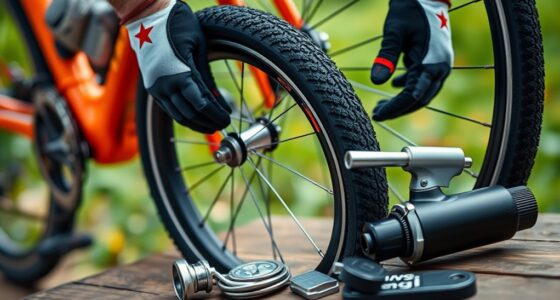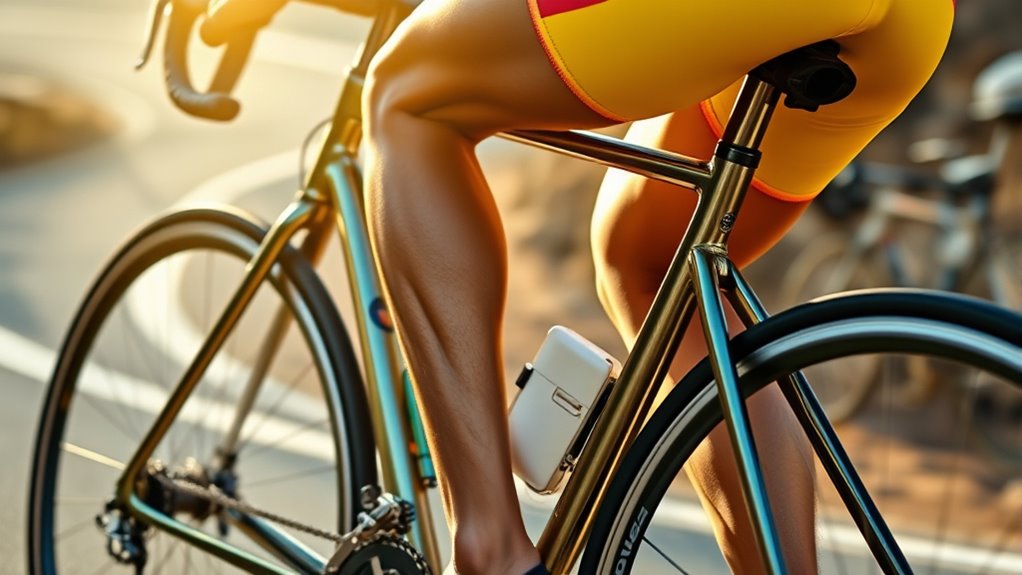

Yes, cycling is great for building leg muscle. It effectively engages your quadriceps, hamstrings, calves, and glutes with each pedal push, helping to strengthen and tone your legs. Whether you’re commuting or hitting the trails, consistent cycling builds muscle mass and improves endurance, all while being low-impact on your joints. By varying your cycling routines, you can target different muscle groups and keep your workouts exciting. Discover more about how cycling can transform your leg muscles!
Key Takeaways
- Cycling activates multiple leg muscle groups, including quadriceps, hamstrings, calves, and glutes, promoting overall muscle engagement.
- Consistent cycling sessions can significantly strengthen and tone leg muscles, leading to increased muscle mass over time.
- High-resistance cycling and hill climbing effectively recruit more muscle fibers, enhancing strength and endurance.
- Interval training with short bursts of high-intensity pedaling stimulates muscle development while improving cardiovascular health.
- Developing leg muscles through cycling increases metabolic rate, aiding in fat loss and contributing to a more defined appearance.
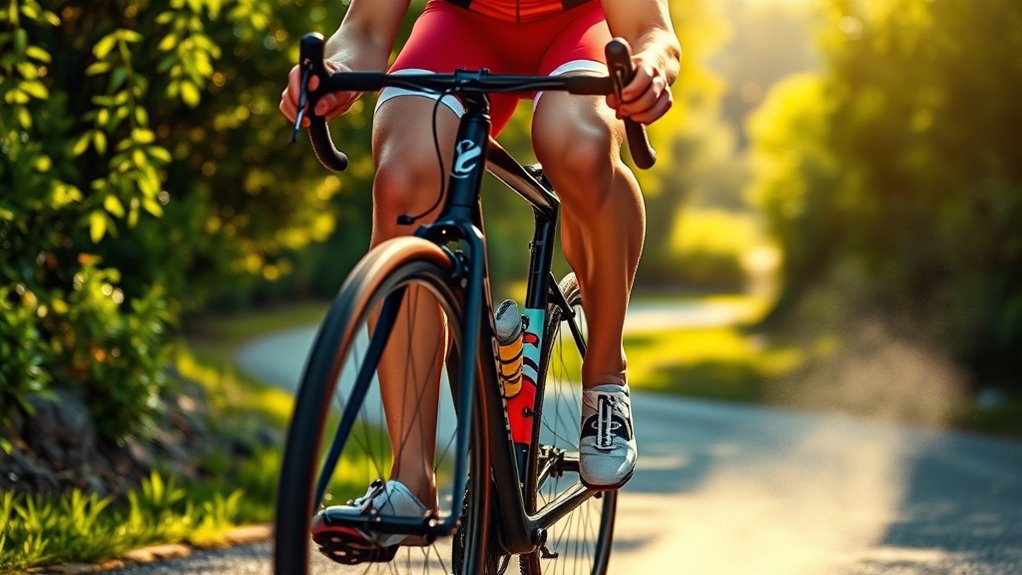
When you hop on a bike, you might wonder if it really helps build leg muscle. The answer is a resounding yes. Cycling is an excellent way to develop your leg muscles and improve your overall fitness. Whether you’re commuting, cruising through your neighborhood, or tackling challenging trails, pedaling works your quadriceps, hamstrings, calves, and glutes. Each push of the pedal engages these muscle groups, helping you strengthen and tone them over time.
Cycling effectively builds leg muscle, engaging your quadriceps, hamstrings, calves, and glutes for strength and toning.
One of the primary cycling benefits is the ability to build muscle endurance. Unlike weightlifting, cycling is a low-impact exercise, making it easier on your joints while still providing a solid workout. You can ride for extended periods, which helps your muscles adapt and grow stronger without the wear and tear that can come from other forms of resistance training. This endurance not only enhances your biking experience but also translates well into other physical activities, giving you more stamina in daily life.
As you pedal, you’ll notice that different types of cycling can target your leg muscles in various ways. For instance, climbing hills or opting for higher resistance settings on a stationary bike will recruit more muscle fibers, increasing strength. On the other hand, cycling at a steady pace on flat terrain is great for building endurance. Mixing these styles can keep your workouts fresh and ensure you’re hitting all your leg muscles effectively.
Incorporating intervals into your cycling routine can also ramp up the muscle-building process. Short bursts of high-intensity pedaling followed by recovery periods challenge your legs and stimulate muscle growth. This method not only helps you build strength but also enhances your cardiovascular fitness, making cycling a well-rounded workout.
Additionally, cycling can improve your overall body composition. As your leg muscles become more developed, you’ll likely notice increased metabolism, which can contribute to fat loss. This means that while you’re building muscle endurance and strength, you’re also shedding unwanted weight, helping your legs look more toned and defined. Top TDS meters can also help ensure the quality of water you’re consuming during your cycling sessions, which is essential for optimal performance and recovery.

Trailoom Microfiber Gym Towels, Quick Dry, Highly Absorbing, Odor-Free
- High Absorbency: Instant moisture absorption for workouts
- Fast Drying: Dries up to three times faster
- Bacteria-Free: Rapid moisture evaporation prevents bacteria
As an affiliate, we earn on qualifying purchases.
Frequently Asked Questions
Can Cycling Help With Weight Loss in Addition to Building Leg Muscle?
Yes, cycling can definitely help with weight loss in addition to building leg muscle. The cycling benefits include burning calories while strengthening your legs, which boosts your metabolism. As you pedal, you engage multiple muscle groups, increasing your overall energy expenditure. Plus, it’s a low-impact workout, making it easier on your joints. So, hop on that bike regularly, and you’ll notice progress in shedding pounds while toning your legs at the same time!
How Often Should I Cycle for Maximum Muscle Gain?
To optimize muscle gain, you should cycle at least three to four times a week. This cycling frequency allows your legs to adapt and grow stronger. Mix in high-intensity interval training and longer endurance rides to challenge your muscles effectively. Remember to incorporate rest days for recovery, as that’s when muscle repair happens. Staying consistent with your cycling routine will guarantee you maximize your muscle gain while enjoying the process!
Are There Specific Cycling Techniques to Enhance Leg Muscle Growth?
Yes, you can enhance leg muscle growth through specific cycling techniques. Incorporate interval training by alternating between high-intensity bursts and recovery periods; this boosts muscle engagement. Additionally, focus on resistance cycling by increasing the bike’s resistance to challenge your muscles further. You’ll activate different muscle fibers, leading to better strength and growth. Mixing these techniques in your routine will maximize your leg gains and improve overall cycling performance.
Does Cycling Target All Leg Muscle Groups Equally?
Cycling doesn’t target all leg muscle groups equally. Your quadriceps and calves get significant muscle activation, especially at higher cycling intensity. However, your hamstrings and glutes may not engage as much unless you’re focusing on specific techniques, like standing up while pedaling or using higher resistance. To maximize overall leg muscle growth, consider incorporating varied cycling styles and intensities into your routine, ensuring a more balanced workout for all muscle groups.
What Type of Bike Is Best for Building Leg Muscle?
For building leg muscle, a stationary bike with adjustable pedal resistance is your best bet. These bikes allow you to ramp up the resistance, targeting different muscle groups in your legs effectively. A sturdy bike frame, like an upright or spin bike, provides better stability during intense workouts. Experiment with various resistance levels to challenge your legs, and you’ll see significant gains in strength and endurance over time.
Conclusion
In summary, cycling is like a sculptor chiseling away at a block of stone, shaping your legs into powerful muscles over time. Whether you’re pedaling on flat roads or tackling steep hills, every ride contributes to muscle growth and endurance. So, hop on your bike and embrace the journey; you’ll not only build strength but also boost your overall fitness. Keep cycling, and watch your legs transform into a masterpiece of strength and stamina.

Trailoom Microfiber Gym Towels, Quick Dry, Highly Absorbing, Odor-Free
- High Absorbency: Instant moisture absorption for workouts
- Fast Drying: Dries up to three times faster
- Bacteria-Free: Rapid moisture evaporation prevents bacteria
As an affiliate, we earn on qualifying purchases.

HPYGN Resistance Bands, Exercise Bands with Handles, Fitness Bands, Workout Bands with Door Anchor and Ankle Straps, for Heavy Resistance Training, Physical Therapy, Shape Body, Yoga, Home Workout Set
- Full-Body Resistance Levels: 5 adjustable resistance bands up to 150lbs
- Durable Heavy-Duty Construction: Natural latex, steel buckles, non-slip handles
- Enhanced Safety & Comfort: Secure grip, joint protection, sweat-absorbent handles
As an affiliate, we earn on qualifying purchases.