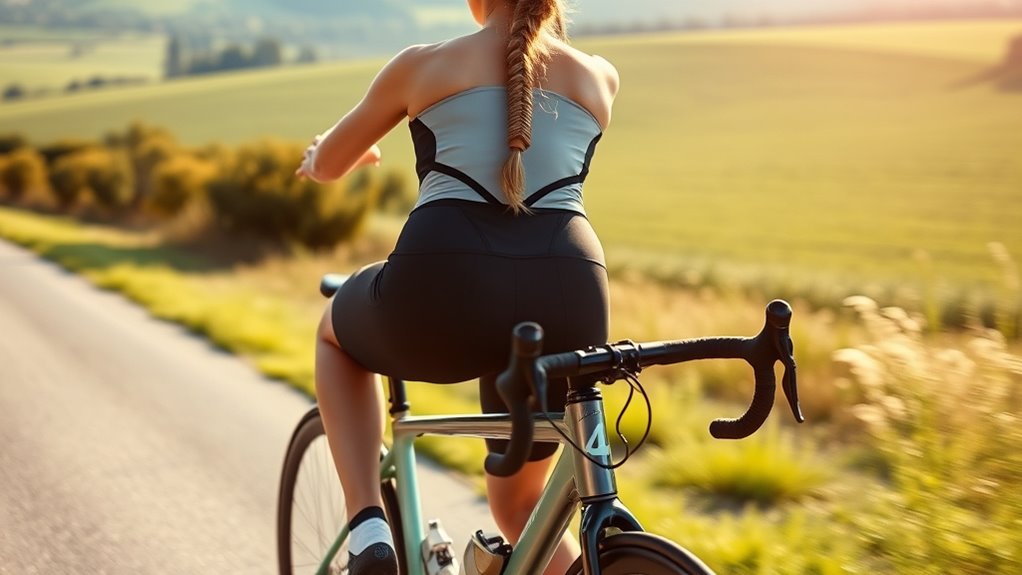

To avoid back pain while cycling, make sure your bike is properly fitted. Adjust saddle height so it aligns with your hip level and position handlebars at a height that allows for a slight elbow bend. Engage your core and keep shoulders relaxed to maintain good posture. Use slightly bent elbows to cushion shocks and reduce strain. Regular stretching and strengthening exercises can also help. Discover more tips on enhancing your cycling comfort and performance.
Key Takeaways
- Ensure proper bike fit by adjusting saddle height to align with hip level to prevent discomfort and body contortion.
- Position handlebars at a height that allows for a slight elbow bend and a straight back to reduce lower back stress.
- Engage your core while cycling to stabilize your body and maintain a relaxed upper body posture.
- Keep your shoulders relaxed and avoid hunching to minimize tension and fatigue in the upper back.
- Regularly incorporate stretching and strengthening exercises to improve flexibility and support back health during rides.
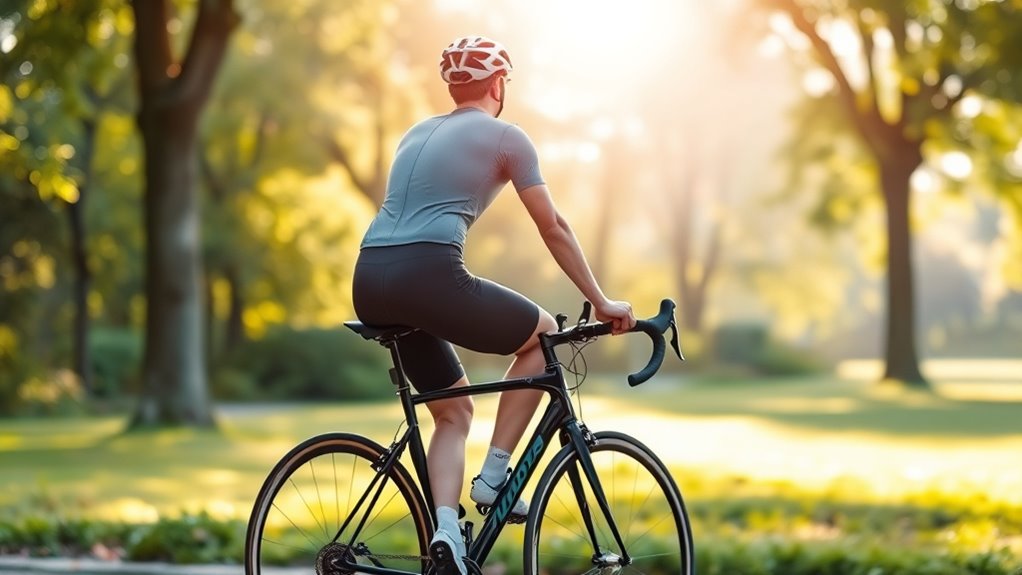
Whether you’re a casual rider or a seasoned cyclist, maintaining proper cycling posture is essential for both comfort and performance. You’ve probably experienced some discomfort or pain after a long ride, and much of that can be traced back to how you position your body on the bike. If you don’t pay attention to your bike fit, you risk straining your back and other muscles, which can take the fun out of cycling.
First, let’s talk about bike fit. A proper bike fit is crucial for achieving the right posture. When your bike is fitted to your specific measurements, it allows you to ride comfortably without contorting your body. If your saddle is too high or too low, or if your handlebars are positioned incorrectly, you might find yourself hunching over or stretching awkwardly, leading to back pain. Make sure your seat height is aligned with your hip when standing next to the bike. This simple adjustment can make a world of difference.
Next, consider your handlebar height. If they’re too low, you’ll end up leaning forward excessively, which puts unnecessary pressure on your lower back. Ideally, your handlebars should be at a height that allows you to maintain a slight bend in your elbows while keeping your back straight. You might need to make some ergonomic adjustments to find the sweet spot. Using riser bars or adjusting the stem can really help you achieve a more comfortable riding position.
Now, let’s focus on your core and upper body. Engaging your core while riding not only helps stabilize your body but also takes some of the stress off your back. Try to keep your shoulders relaxed and down, avoiding the tendency to hunch. Keeping your elbows slightly bent can also help absorb shocks from the road, preventing strain on your back.
Lastly, don’t forget about stretching and strengthening exercises. Incorporating regular stretching into your routine can improve your flexibility and help maintain proper posture while riding. Focus on your back, hips, and hamstrings to counteract any tightness that might develop. Additionally, consider incorporating aquatic exercises into your training regimen, as they provide a low-impact way to enhance your strength and flexibility.
Frequently Asked Questions
How Often Should I Adjust My Bike Fit?
You should adjust your bike fit whenever you notice discomfort or changes in your riding style. Regularly check your bike saddle height and handlebar positioning, especially after long rides or if you’ve changed your training routine. It’s a good idea to reassess your fit every few months to ensure it’s still ideal for your body. A well-fitted bike enhances your performance and keeps you riding comfortably, so don’t hesitate to make those adjustments!
What Are the Signs of Poor Cycling Posture?
If you think bad posture isn’t a big deal, consider this: it can lead to discomfort and injuries. Signs of poor cycling posture include back pain, neck strain, and numbness in your hands. You might notice your shoulders hunching or your wrists bending awkwardly. Focusing on bike ergonomics can help you identify these issues, while posture correction techniques can keep you riding comfortably and efficiently. Don’t ignore these warning signals!
Can Cycling Contribute to Other Injuries Aside From Back Pain?
Yes, cycling can definitely contribute to other injuries aside from back pain. You might experience bike saddle discomfort, which can lead to numbness or pain in your groin area. Additionally, poor posture while riding can result in shoulder strain, causing discomfort and tension in your upper body. To prevent these issues, it’s essential to maintain a proper riding position and adjust your bike setup for maximum comfort and support.
Is Stretching Necessary Before Cycling for Posture?
“An ounce of prevention is worth a pound of cure.” Stretching’s definitely necessary before cycling for ideal posture. When you incorporate stretching into your pre-ride routines, you enhance flexibility and reduce muscle tension, which helps you maintain a better riding position. By warming up your muscles, you’ll improve your overall performance and decrease the risk of injuries. So, don’t skip those stretches; they’re key to a comfortable and effective cycling experience!
How Do I Choose the Right Bike for My Posture?
To choose the right bike for your posture, start with the bike frame size. It should match your height and leg length for ideal comfort. Next, adjust the saddle height; your leg should have a slight bend when the pedal’s at the lowest point. This setup helps you maintain a good posture while riding. Don’t hesitate to test different bikes to find the one that feels just right for you.
Conclusion
To keep your back happy while cycling, think of your posture as the sturdy backbone of your ride. By adjusting your saddle and handlebars, you’re setting up a strong foundation, like a well-tuned symphony. Remember to engage your core and relax your shoulders, letting your body flow with the rhythm of the road. With these adjustments, you’ll glide through your rides, free from pain, and embrace the freedom of the open trail. Happy cycling!