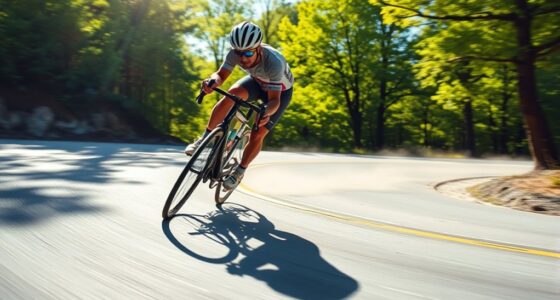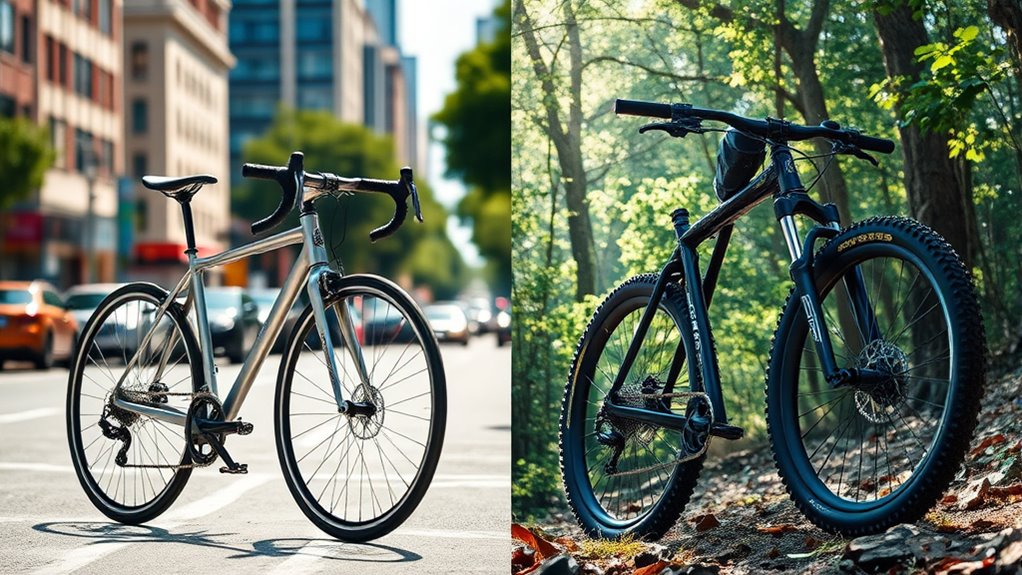

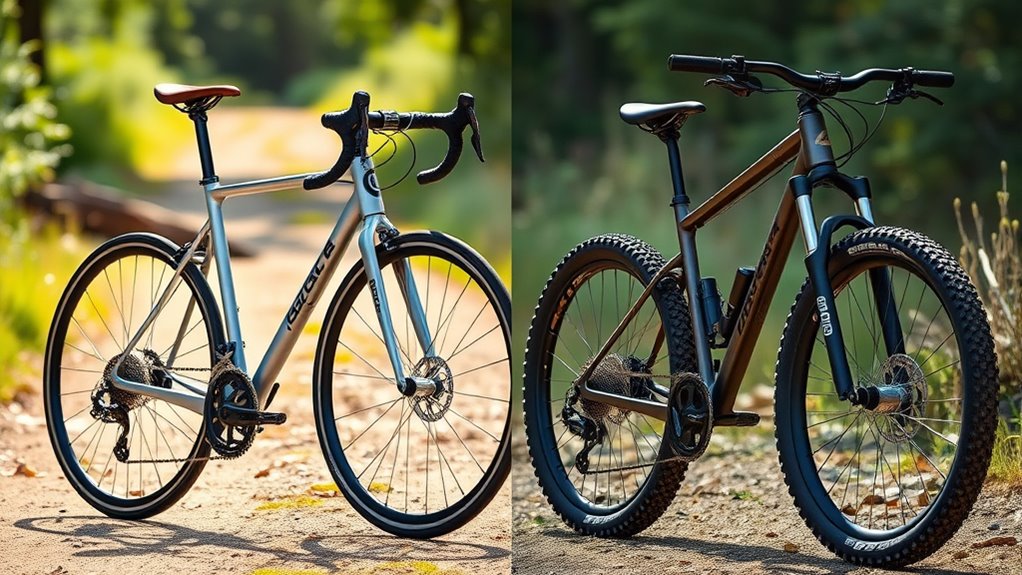
Road bikes are lightweight with sleek frames and narrow tires designed for paved surfaces, offering an aerodynamic riding position. Mountain bikes have sturdier frames, knobby tires, and upright positions suited for rough trails and off-road terrain. They also differ in gear ranges, braking systems, and weight—road bikes favor speed and efficiency, while mountain bikes prioritize durability and control. Want to discover which bike suits your style? Keep exploring to find out more.
Key Takeaways
- Road bikes are lightweight, designed for paved surfaces, and promote an aerodynamic riding position, while mountain bikes are heavier, built for off-road trails with upright posture.
- Road bikes feature smooth tires with minimal tread for speed, whereas mountain bikes have knobby tires for better grip on rough terrain.
- Road bikes typically have 11-20 gears optimized for speed, while mountain bikes have 18-30 gears suited for climbing and varied terrain.
- Road bikes usually use rim or lightweight disc brakes, while mountain bikes employ hydraulic disc brakes for durability on rugged trails.
- Road bikes are more portable and less expensive, ideal for commuting and racing, whereas mountain bikes are sturdier, costlier, and built for off-road adventures.
Design and Frame Construction

When it comes to design and frame construction, road bikes and mountain bikes have distinct features tailored to their specific terrains. Road bikes typically feature lightweight frames made from materials like aluminum, carbon fiber, or steel, emphasizing speed and efficiency on paved surfaces. Their frames have a sleek, aerodynamic design with a focus on rigidity and minimal weight. Mountain bikes, on the other hand, prioritize durability and shock absorption, often built with sturdier materials like aluminum or steel. Their frame design is more robust, with geometry that provides stability on uneven terrain. Suspension design plays a vital role here: road bikes generally lack suspension to keep weight low, while mountain bikes incorporate front or full suspension systems to absorb shocks from rough trails. Additionally, the frame geometry of mountain bikes is designed to enhance control and stability during off-road riding. Enhanced material properties contribute significantly to the durability and performance differences between the two bike types. Furthermore, the engineering considerations for each bike type are optimized to match their specific riding conditions and rider needs. Recognizing these design differences can help riders choose the appropriate bike for their intended use.

Trailoom Microfiber Gym Towels, Quick Dry, Highly Absorbing, Odor-Free
- High Absorbency: Instant moisture absorption for workouts
- Fast Drying: Dries up to three times faster
- Bacteria-Free: Rapid moisture evaporation prevents bacteria
As an affiliate, we earn on qualifying purchases.
Tire Types and Tread Patterns
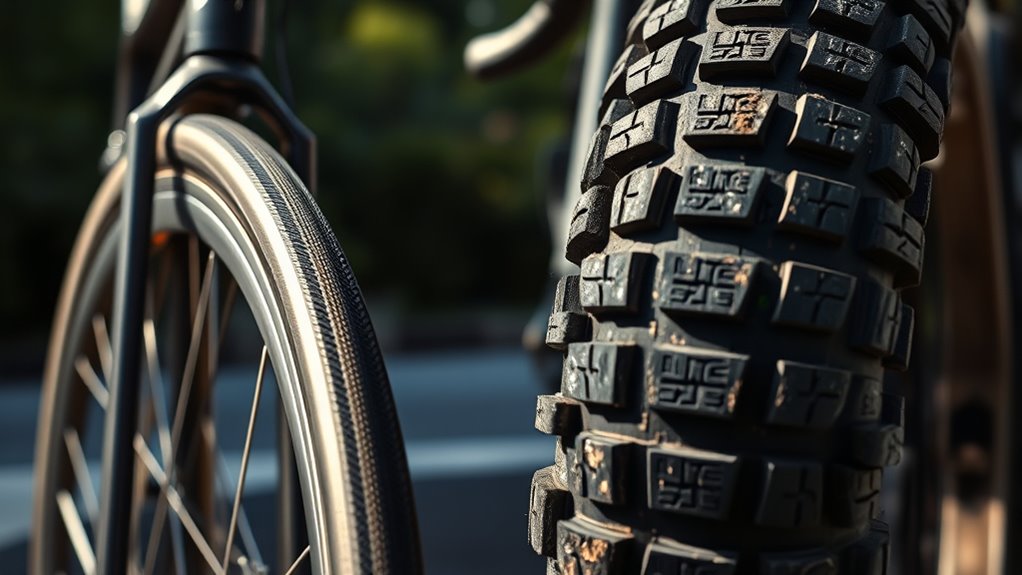
Tire types and tread patterns are vital features that distinguish road bikes from mountain bikes, as they are designed to enhance performance on different terrains. Road bike tires typically have smooth or lightly treaded surfaces, which reduce rolling resistance and increase speed on paved surfaces. Their tread pattern design focuses on minimizing contact with the ground, offering a sleek ride. Mountain bike tires, on the other hand, feature knobby and aggressive tread patterns that provide better grip on uneven, loose, or muddy trails. Tire durability is essential for mountain biking, as rough terrains wear tires faster. Conversely, road tires prioritize light weight and efficiency. Understanding these differences helps you choose tires that match your riding style and terrain, ensuring safety and peak performance. Additionally, tire pressure plays a crucial role in optimizing performance and safety for both types of bikes. Proper inflation can also protect your tires from damage and maintain traction, which is especially important on challenging trails or roads. Proper tire maintenance extends the lifespan of your tires and ensures consistent performance across different rides. Moreover, selecting the right tread pattern can significantly improve your riding experience by enhancing grip and control in various conditions.

Trailoom Microfiber Gym Towels, Quick Dry, Highly Absorbing, Odor-Free
- High Absorbency: Instant moisture absorption for workouts
- Fast Drying: Dries up to three times faster
- Bacteria-Free: Rapid moisture evaporation prevents bacteria
As an affiliate, we earn on qualifying purchases.
Riding Positions and Comfort
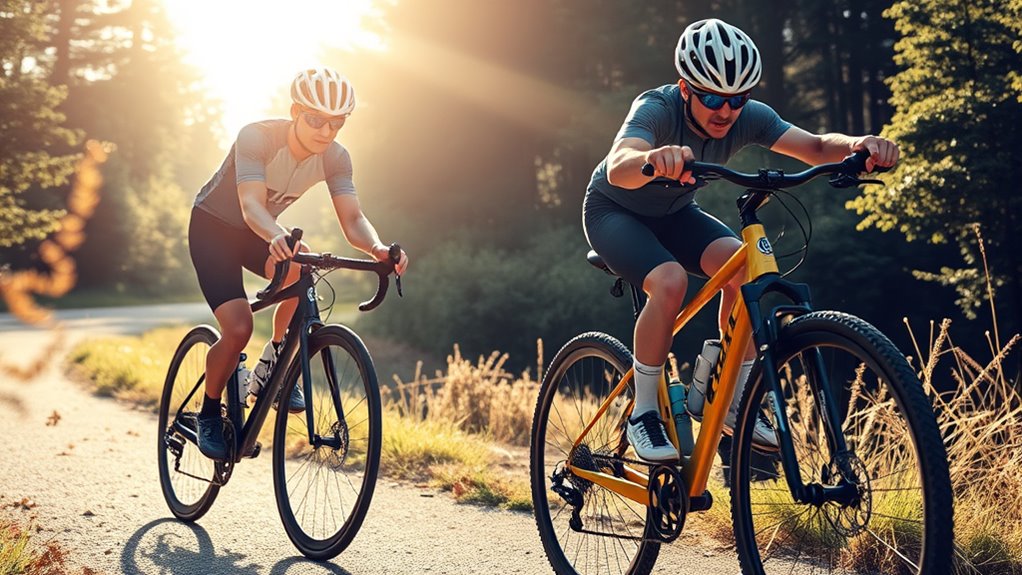
Your riding position considerably affects comfort on both bike types. Road bikes typically have a more aerodynamic posture, which can cause strain over long rides, while mountain bikes offer a more upright stance for better control. Understanding these differences helps you choose a bike that fits your ergonomics and riding style. Additionally, considering investment options such as Gold IRAs can provide financial stability for long-term goals beyond cycling. Proper bike fitting can significantly enhance comfort and prevent injuries during extended rides, and understanding auditory processing techniques can also improve your overall awareness and safety on the trails. Recognizing the importance of ergonomic design in bike setup can further optimize comfort and performance during your rides, especially since proper installation, such as downrod installation for flush mount fans, plays a role in overall comfort and efficiency in related environments.
Riding Posture Differences
Riding posture plays a essential role in determining comfort and efficiency on both road and mountain bikes. Your riding stance influences how well you handle your bike and how comfortable you feel during rides. On a road bike, your riding posture is more aerodynamic, with a forward-leaning stance that reduces wind resistance. In contrast, mountain biking encourages a more upright riding stance for better control. Consider these differences:
- Road bike riders adopt a low, stretched-out riding stance for speed.
- Mountain bikers maintain a more upright posture for maneuverability.
- The riding posture impacts weight distribution, affecting handling.
- Comfort varies based on your riding stance, especially on long distances or technical terrain.
- Understanding plant parts and their proper use in herbal remedies can also improve overall health and cycling stamina.
Understanding these differences helps optimize your riding experience for each bike type.
Comfort and Ergonomics
Comfort and ergonomics are essential considerations when choosing between a road bike and a mountain bike, as each setup influences how your body feels during rides. Your riding position impacts comfort, with road bikes promoting a more aerodynamic posture and mountain bikes encouraging an upright stance. Proper bike accessories, like ergonomic grips and padded saddle covers, can enhance comfort, especially on longer rides. Wearing suitable riding apparel, such as moisture-wicking jerseys and padded shorts, also helps reduce fatigue and discomfort. Adjusting saddle height and handlebar position further improves ergonomics, ensuring you maintain a natural, relaxed posture. Incorporating Free Floating components can also improve ride comfort by allowing for more natural movement. Paying attention to bike fit is crucial to prevent soreness and injury, ensuring that your riding experience remains enjoyable. Additionally, understanding and adjusting ergonomic design features on your bike can significantly contribute to long-term comfort. Ensuring that your bike setup allows for proper weight distribution helps maintain balance and reduces strain during rides. A well-considered riding posture can make a significant difference in how comfortable you feel over time. Prioritizing comfort and ergonomics allows you to enjoy your ride more and minimizes the risk of soreness or injury, regardless of which bike type you choose.
Gear Systems and Drivetrain
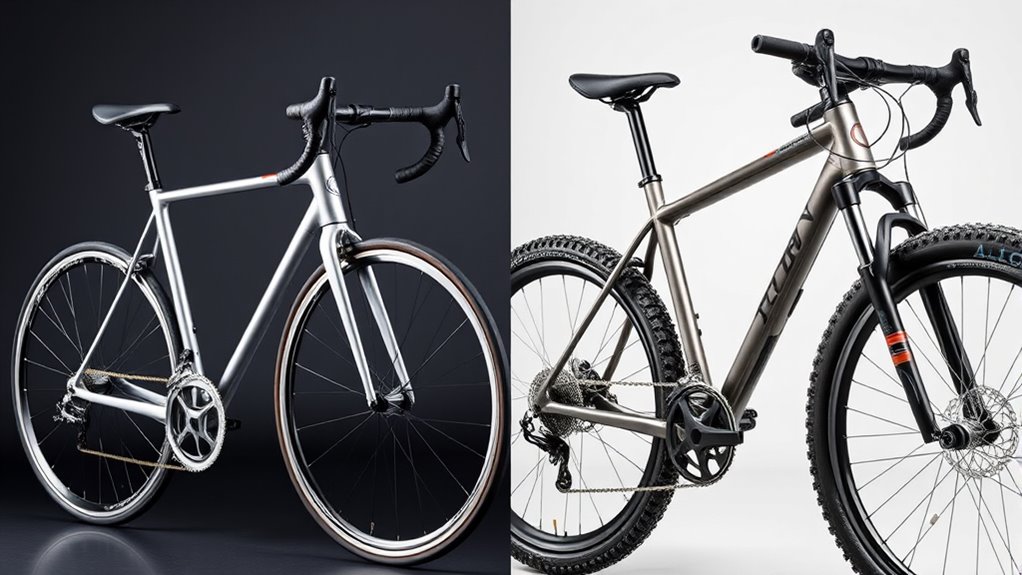
When comparing gear systems, you’ll notice that mountain bikes often offer a wider range of gears for tackling tough terrains, while road bikes focus on efficient, high-speed gearing. The drivetrain components, like shifters and derailleurs, differ in design and complexity depending on the bike type, affecting maintenance needs. Understanding these differences helps you choose a bike that matches your riding style and minimizes upkeep. Additionally, crypto pump trends can sometimes influence the popularity of certain gear setups among enthusiasts. Recognizing the gear ratio differences can also assist riders in optimizing performance for specific riding conditions, and being aware of component durability is essential for long-term reliability. Being familiar with the drivetrain design can further help in selecting a bike that offers easier maintenance and better performance over time. Moreover, considering component compatibility ensures that upgrades and repairs remain straightforward and cost-effective, contributing to overall bike longevity.
Gear Range Differences
The gear systems on road bikes and mountain bikes are designed to serve different riding needs by offering varying gear ranges. Your bike’s gear range determines how easily you can tackle different terrains. Mountain bikes typically have a wider gear range, allowing for low gear ratios that help you climb steep inclines. Conversely, road bikes focus on higher gear ratios for speed on flat surfaces.
- Mountain bikes feature more gears, often 18-30, providing a broad gear range for diverse terrains.
- Road bikes usually have fewer gears, around 11-20, optimized for speed and efficiency.
- The gear ratios on mountain bikes favor torque for climbing, while road bike ratios favor cadence.
- Your choice depends on terrain, with wider gear ranges offering more versatility for mountain biking.
Drivetrain Components and Maintenance
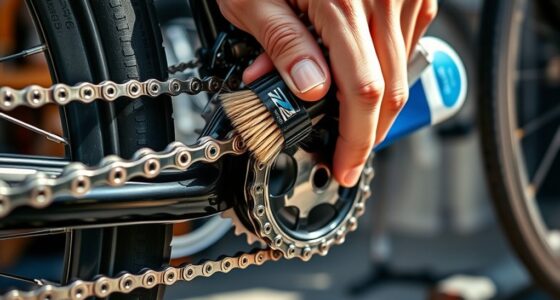
Drivetrain components are essential for translating your pedaling effort into forward motion, and understanding their maintenance needs can keep your bike running smoothly. Your pedal stroke directly influences how efficiently power moves through the drivetrain, so keeping everything in good shape matters. Regularly check and clean your chain, applying chain lubrication to prevent rust and reduce friction. A well-lubricated chain ensures smooth shifting and prolongs component lifespan. Keep an eye on the gears and derailleur alignment to avoid skipping or grinding. On mountain bikes, dirt and mud can quickly accumulate, requiring more frequent cleaning. On road bikes, lighter lubrication suffices. Proper maintenance of your drivetrain components enhances performance, saves you money, and makes every ride more enjoyable.
Braking Mechanisms
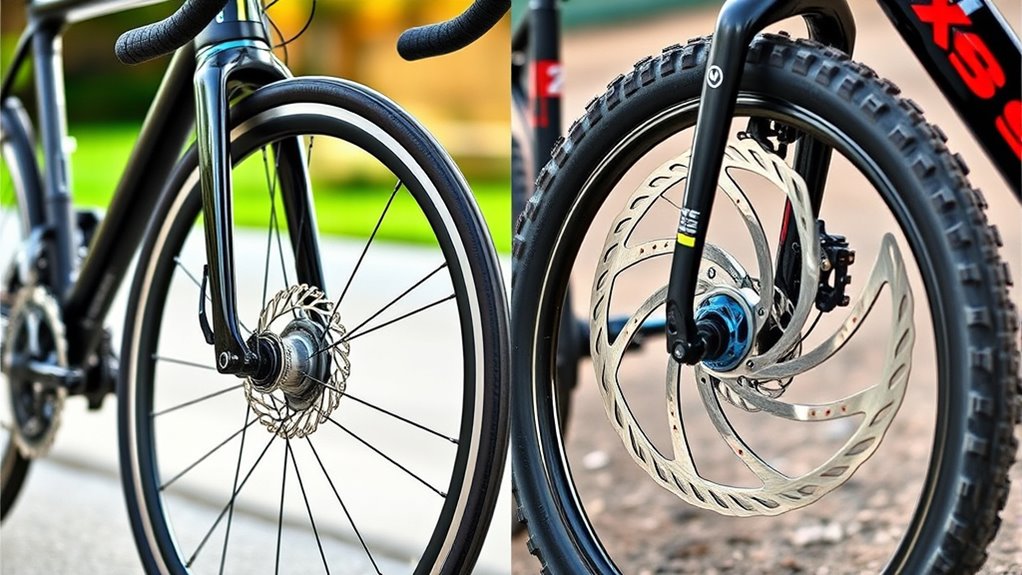
Braking mechanisms are vital for controlling speed and ensuring safety on both road and mountain bikes, but the types and designs vary markedly between the two. You’ll encounter different systems tailored to each bike’s demands.
Braking systems vary greatly between road and mountain bikes, tailored to their specific riding needs.
- Road bikes often use rim brakes or lightweight disc brakes, relying heavily on brake pad materials for effective stopping power.
- Mountain bikes typically feature hydraulic disc brakes, which perform well in rough terrain and mud.
- The choice of brake pad materials—such as rubber, sintered metal, or organic compounds—affects durability and braking performance.
- Regular maintenance and proper adjustment of these mechanisms are essential for safety and maximum braking efficiency.
Understanding these differences helps you choose the right braking system for your riding style and terrain.
Typical Terrain and Usage
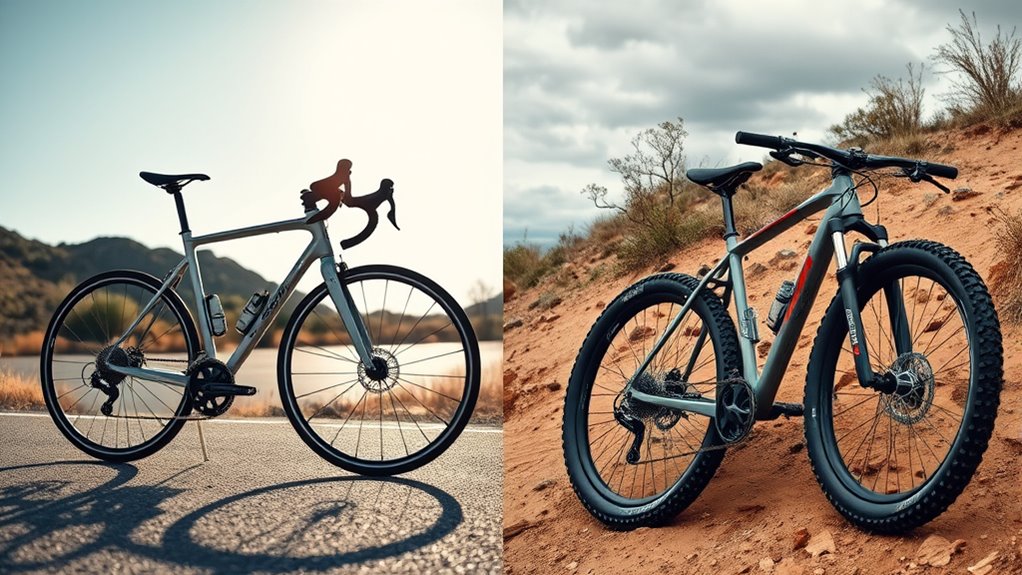
Road bikes excel on paved surfaces and smooth roads, making them ideal for commuting, long-distance rides, and racing. They’re perfect for urban commuting because of their sleek design and efficiency. Mountain bikes, on the other hand, are built for rough terrain, such as trails, dirt paths, and rocky areas, making them suitable for off-road adventures and trail riding.
| Terrain Type | Suitable Bike Type |
|---|---|
| Paved roads | Road bike |
| Rough trails | Mountain bike |
| City streets | Road bike |
| Forest paths | Mountain bike |
Choosing the right bike depends on your typical terrain and usage needs, including considerations like bike storage in urban environments.
Weight and Portability
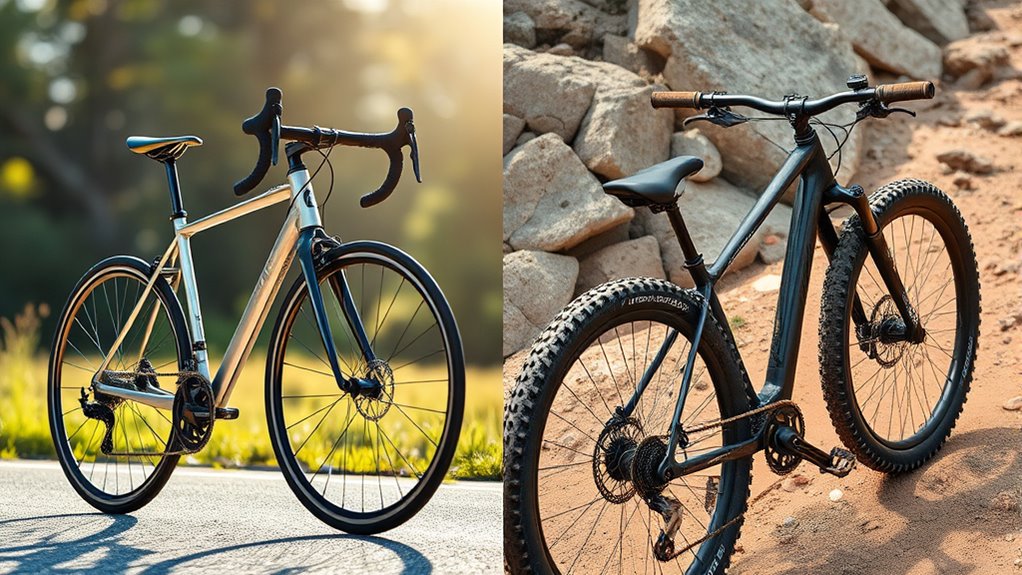
When it comes to weight and portability, mountain bikes are generally heavier and bulkier because they’re built to withstand tough terrains and often feature sturdier frames, wider tires, and more suspension components. This extra weight can impact your aero efficiency, making climbing and sprinting more challenging. Additionally, their bulkier design limits storage options, making it harder to carry gear or accessories.
- Mountain bikes tend to be heavier, affecting speed and ease of transport.
- Road bikes are lighter, designed for quick handling and better aero efficiency.
- Portability favors road bikes, which are easier to carry on public transit or store in tight spaces.
- Mountain bikes’ weight and size make them less convenient for packing or traveling.
Price Range and Maintenance
Mountain bikes typically have a higher initial price due to their durable frames, advanced suspension systems, and specialized components, making them a more significant investment upfront. When considering pricing options, mountain bikes generally cost more than road bikes, especially for models with high-end features. Maintenance costs also tend to be higher because of the complex suspension and off-road components that require regular upkeep. Here’s a comparison:
| Aspect | Road Bike | Mountain Bike | Notes |
|---|---|---|---|
| Price Range | $500 – $2,500 | $1,000 – $5,000 | Mountain bikes are usually more expensive |
| Maintenance Costs | Lower | Higher | Due to suspension and rugged use |
| Durability | Moderate | High | Built for tough terrains |
| Component Complexity | Simpler | More complex | More parts to maintain |
| Long-term Investment | Moderate | High | Higher initial cost but durable |
Choosing a bike depends on your budget and maintenance willingness.
Frequently Asked Questions
Which Bike Is Better for Commuting in Urban Environments?
For urban commuting, a road bike often offers better urban comfort with its lightweight frame and smooth tires, making city rides effortless. Its bike versatility allows you to navigate city streets efficiently. You’ll appreciate the speed and ease of riding on paved surfaces. Plus, its design helps you stay comfortable during longer commutes. So, if you prioritize urban comfort and versatile performance, a road bike is typically the better choice for city life.
How Do Bike Types Influence Riding Safety?
Sure, your bike type can make safety a wild ride. A road bike’s slick tires need helmet safety and smooth surfaces, while a mountain bike’s knobby tires demand extra traction and caution on tricky trails. Choosing the right bike for your terrain boosts safety, but don’t forget your helmet. After all, whether you’re cruising city streets or conquering trails, safety gear and proper tires keep you upright and smiling.
Can Mountain Bikes Be Used Effectively on Paved Roads?
Yes, you can use mountain bikes effectively on paved roads, but keep in mind that their tire traction and suspension systems are designed for rough terrain. The wider tires and knobby tread provide good grip, but they might feel sluggish on smooth surfaces. The suspension can absorb bumps, offering comfort, but it may add weight and reduce efficiency. For the best ride, consider switching to tires optimized for pavement if possible.
Are There Specific Accessories Recommended for Each Bike Type?
You’ll want specific accessories to enhance safety and efficiency. For both bike types, a sturdy bike lock and proper lighting accessories boost security and visibility. Mountain bikers might prefer helmet styles with more coverage, while road cyclists choose aerodynamic helmets. Gear shifters should match your bike’s design, ensuring smooth shifts. Don’t overlook the importance of lighting accessories for early mornings or late evenings, making every ride safer and more enjoyable.
How Does Riding Experience Affect Bike Choice?
Your riding experience influences your bike choice because it impacts your riding comfort and terrain adaptation. If you’re a beginner, you might prefer a mountain bike for its stability and versatility on rough trails, boosting your confidence. More experienced riders often choose a road bike for smoother rides, prioritizing speed and efficiency. Your familiarity with different terrains and comfort levels guides you toward the bike that best matches your skills and riding goals.
Conclusion
Choosing between a road bike and a mountain bike depends on your adventure style. Whether you’re craving blazing fast rides on smooth pavement or tackling rugged trails, each bike is built for a specific thrill. Your perfect ride will transform your journeys—making every pedal stroke feel like flying or conquering mountains. Remember, the right bike isn’t just a choice; it’s your ticket to *unleashing* a new world of excitement. Gear up, and let your adventure begin!