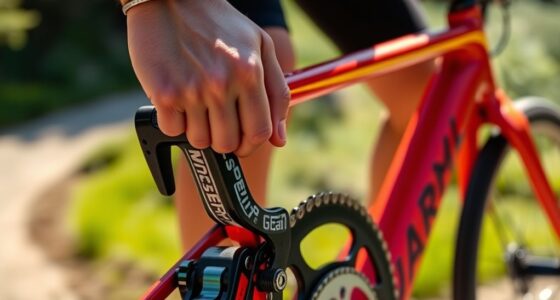
When you get a flat tire, start by removing the wheel using quick-release levers or a wrench, then deflate the remaining air and pry the tire off with tire levers, starting opposite the valve. Pull out the inner tube and inspect it for punctures, checking both sides and the inside of the tire for sharp objects. Patch or replace the tube, reseat the tire, and carefully inflate. Reattach the wheel and check for proper alignment—learn more to master each step confidently.
Key Takeaways
- Remove the wheel and deflate the tire completely using the quick-release or wrench.
- Pry the tire off the rim with tire levers, starting opposite the valve.
- Inspect and locate the puncture on the inner tube, then patch or replace it.
- Reinstall the tube, ensuring it’s not twisted, and seat the tire back onto the rim.
- Inflate the tire to the recommended PSI and reattach the wheel, checking for proper alignment.
Step-by-Step Guide to Fixing a Flat Tire
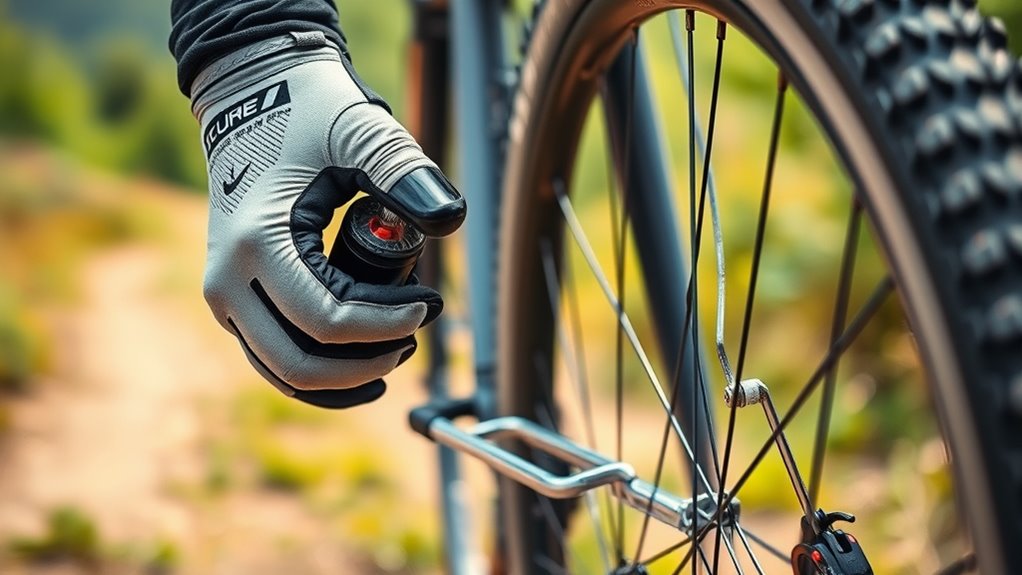
A flat tire can happen unexpectedly, but fixing it is a straightforward process if you know what to do. The key to avoiding frequent flats and ensuring your bike stays in top shape is proper tire maintenance. Regularly check your tires for embedded debris, cuts, or worn spots, and keep the pressure at the recommended PSI. Maintaining correct tire pressure not only improves riding efficiency but also helps prevent punctures caused by pinch flats or excessive flexing. By paying attention to tire condition and pressure, you reduce the chances of getting stranded with a flat out on the road or trail.
When you notice your tire has gone flat, the first step is to remove the wheel from your bike. If you have quick-release levers, open them up; if not, you’ll need a wrench to loosen the axle nuts. Once the wheel is free, deflate the tire completely if there’s still some air inside. This makes removing the tire easier. Next, carefully pry the tire away from the rim using tire levers, starting at a point opposite the valve stem. Work your way around, gently lifting the bead over the rim edge. Be cautious not to damage the rim or the inner tube during this process. Once the tire is loose, pull out the inner tube, inspecting it for punctures or damage. If the tube is punctured, locate the hole by inflating the tube slightly and listening or feeling for escaping air, or submerging it in water and watching for bubbles.
Before installing the new or repaired tube, check the inside of the tire and rim for sharp objects or debris that could cause puncture recurrence. This is where good tire maintenance plays a role—regularly inspecting and cleaning your tires helps with puncture prevention. Proper tire inspection and maintenance are essential for keeping flats at bay and ensuring your safety during rides. Additionally, using puncture-resistant tires or sealants can provide extra protection against flats, especially on rough terrains. Applying a tire sealant inside the tube or tire can further reduce the likelihood of punctures by sealing small holes as they occur. It’s also beneficial to monitor tire pressure regularly, since under-inflation can increase the risk of flats and damage. When everything’s clear, insert the new or patched tube into the tire, aligning the valve with the rim’s hole. Carefully work the tire bead back onto the rim, starting opposite the valve and working your way around. Be sure the tube isn’t twisted or pinched between the tire and rim. Once the tire is seated properly, inflate the tube gradually to the recommended pressure, checking that the bead is evenly seated and there are no bulges or pinched areas. To ensure the longevity of your repairs, consider proper inflation techniques for consistent pressure and safety.
Finally, reinstall the wheel onto your bike, tighten the quick-release or axle nuts securely, and give the wheel a spin to ensure everything’s properly aligned. Regular tire maintenance and puncture prevention strategies can save you time and hassle, keeping your rides smooth and safe. With these steps, fixing a flat becomes just another part of responsible bike care.
Frequently Asked Questions
How Often Should I Check My Bike Tires for Flats?
You should check your bike tires for flats at least once a week, especially before long rides. Keep an eye on tire pressure, as under-inflated tires increase puncture risks. Regularly inspecting for embedded debris or cuts helps prevent flats. By maintaining proper tire pressure and inspecting frequently, you reduce the chances of unexpected flats, making your rides smoother and safer. Don’t forget to reinflate to the recommended PSI after checking.
Can I Fix a Flat Tire Without Removing the Wheel?
Yes, you can fix a flat tire without removing the wheel. Start by releasing some tire pressure and then use tire levers to loosen the tire bead from the rim. Carefully pull out the inner tube to locate the leak, patch it, or replace it if needed. Once repaired, reinsert the inner tube, ensure the tire bead seats properly, and pump it up to the correct tire pressure before riding again.
What Tools Do I Need to Repair a Flat Tire?
To repair a flat tire, you’ll need a tools checklist that includes tire levers, a pump, and a patch kit for tire patching. Tire levers help you remove the tire from the rim, the pump inflates it back up, and the patch kit seals punctures. Make sure to clean the area before applying the patch, then reassemble everything and check for leaks. These tools make tire repair straightforward and quick.
How Do I Prevent Flats From Happening?
To help you enjoy smoother rides, embrace proactive tire maintenance and puncture prevention. Regularly check your tire pressure, keeping it within recommended levels, and inspect your tires for embedded debris or wear. Consider investing in puncture-resistant tires or sealant to add an extra layer of protection. Additionally, avoid riding through rough terrain or over sharp objects, minimizing the risk of flats and ensuring your cycling experience remains seamless and enjoyable.
Is It Safe to Ride on a Partially Flat Tire?
Riding on a partially flat tire isn’t safe because it compromises your tire pressure and riding safety. You risk losing control, damaging the rim, or causing a crash. It’s best to stop and fix the flat as soon as possible. Proper tire pressure ensures safe, efficient riding. Always check your tire pressure before riding to prevent flats and maintain ideal riding safety.
Conclusion
Now you know how to quickly and confidently fix a flat tire on your bike. With a little bit of bravery and basic tools, you breeze through the bump and bruise of a broken tire. Remember, practice makes perfect, so don’t be discouraged if it feels tricky at first. Stay steady, stay prepared, and soon you’ll be pedaling past problems, proud of your puncture-proof prowess. Keep cycling smoothly and confidently—your journey just got a whole lot easier!