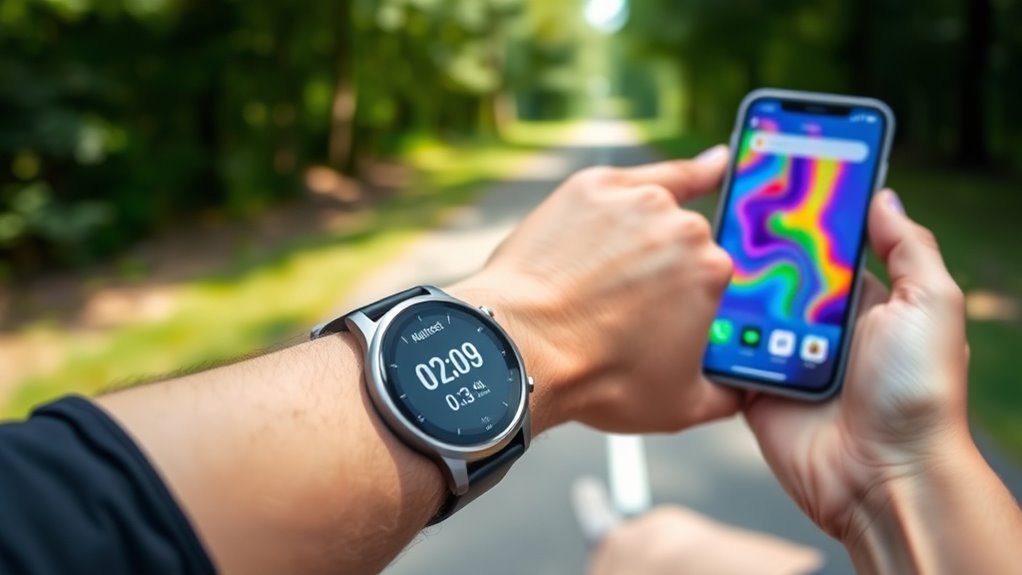

If you’re deciding between a GPS watch and a phone app, a GPS watch usually offers more accurate tracking, better battery life, and quick access to detailed metrics, making it ideal for serious runners. Phone apps are convenient and free but can drain your phone’s battery and offer less precise data, especially indoors or in dense areas. To find out which suits your running style and needs best, keep exploring the details below.
Key Takeaways
- GPS watches offer more accurate and reliable tracking due to dedicated sensors and GPS chips.
- Phone apps are more convenient and easier to use but may drain smartphone batteries quickly.
- Watches provide advanced features like real-time heart rate, customizable data, and detailed metrics suited for serious runners.
- Budget-friendly phone apps are suitable for casual jogging, while GPS watches are better for long-term, intensive training.
- Longer battery life and specialized features make GPS watches more cost-effective for dedicated runners over time.
Accuracy and Precision in Tracking

When it comes to tracking your activities, the accuracy and precision of your device matter most. A GPS watch often offers more reliable data because of its dedicated sensors and GPS chip, giving you precise distance, pace, and route tracking. Its water resistance guarantees you can push your limits without worry, even in rain or sweat-heavy workouts. The design aesthetics of a GPS watch also matter; a sleek, well-built device stays secure and comfortable during intense runs. Phone apps, while convenient, may struggle with signal interference or GPS errors, especially during indoor or dense urban runs. Overall, a GPS watch provides consistent accuracy, making it the smarter choice for serious runners who prioritize precise tracking and durability. Additionally, device durability ensures that your investment withstands the rigors of regular exercise sessions. To optimize your training, leveraging accurate data can help you make informed adjustments to your running regimen. Moreover, the battery life of a GPS watch typically exceeds that of phone apps, allowing longer workout sessions without interruption. For those seeking even more precise insights, some GPS watches incorporate advanced sensors that can track heart rate and other vital metrics simultaneously. Regular calibration of your device can further enhance the tracking accuracy, ensuring reliable performance over time.
Convenience and Ease of Use

You’ll find that GPS watches offer quick access and setup, so you can start tracking without hassle. Phone apps often provide seamless data sync, making it easy to view your progress across devices. Both options aim to simplify your experience, but their convenience depends on how you prefer to use them. Additionally, some smart devices integrate local automation features, allowing for more personalized and efficient workout routines. Incorporating power management strategies can further enhance the reliability of these devices during your runs. Moreover, optimizing battery life is essential to ensure your device remains functional throughout longer runs, especially when utilizing energy-saving settings to extend usage time. Considering device compatibility can also help ensure your chosen method integrates smoothly with your existing gear and apps.
Quick Access and Setup
GPS watches are designed for quick, hassle-free setup, allowing you to get started with minimal effort. With intuitive interfaces, you can easily access essential features like heart rate monitoring and weather resistance settings right from the start. Most models require just a few button presses or screen taps to configure your preferences, saving you time before your run. The setup process is straightforward, even if you’re new to fitness tech. Plus, many GPS watches automatically sync with your existing health profiles, making initial setup seamless. Once configured, you can quickly access critical stats and weather conditions directly on your wrist, giving you instant updates without fumbling through menus or needing a phone. This convenience makes GPS watches an excellent choice for runners looking for quick, easy setup.
Seamless Data Sync
Seamless data synchronization enhances the overall convenience of using a GPS watch, guaranteeing your activity stats are always up-to-date without extra effort. With smooth syncing, you can effortlessly track heart rate monitoring, see your progress, and access social sharing features. Here’s what makes it simple:
- Automatic updates keep your run data current across devices.
- Real-time heart rate monitoring syncs instantly for accurate insights.
- Seamless transfer allows you to share achievements on social platforms immediately.
- Minimal setup means you spend less time managing data and more time running.
This effortless syncing ensures your stats are accurate, and sharing your milestones feels natural and quick, making your running experience more enjoyable.
Features and Customization Options

When comparing a GPS watch and a phone app, understanding their features and customization options is essential. With a GPS watch, you can often monitor heart rate in real-time, customize data screens, and set personalized alerts for pace or distance. Many watches also offer advanced metrics, like cadence or elevation, tailored to your running style. Phone apps typically provide extensive options for social sharing, allowing you to easily upload and compare your runs with friends. They may also let you adjust map views, display preferred stats, or choose different training modes. While watches focus on quick, glanceable data, apps often give deeper customization through settings and integrations. Both options aim to enhance your experience, but your choice depends on which features matter most to your training.
Cost and Budget Considerations

When comparing GPS watches and phone apps, you’ll notice price differences that affect the overall value you get. Budget-friendly options are available for both, but it’s important to take into account long-term costs like subscriptions or replacements. Understanding these factors helps you choose the solution that fits your financial plan best. Additionally, considering the performance and features of each device can influence your overall satisfaction and investment. For example, some GPS watches offer advanced tracking capabilities that may justify higher prices for serious runners. Moreover, the durability and maintenance requirements of each device can impact their long-term usability and cost-effectiveness, especially since some devices are designed to withstand exposure to water or sweat. It’s also worth noting that the integration with fitness apps can enhance your workout tracking experience and motivate ongoing use.
Price Differences and Value
While GPS watches tend to have a higher upfront cost, they often offer better long-term value because they are specifically designed for fitness tracking and outdoor activities, reducing the need for additional devices. When you do a price comparison, consider that a GPS watch’s initial expense might seem steep, but its durability and dedicated features boost overall value assessment. Moreover, GPS watches may provide more accurate market analysis and tracking data, which can be crucial for serious runners. Additionally, the tailored fitness monitoring capabilities of GPS watches can enhance training effectiveness over time. For example, the specialized sensors built into GPS watches often deliver more precise metrics than smartphone apps, making them a worthwhile investment for dedicated athletes. Furthermore, investing in a GPS watch can be advantageous because of its dedicated hardware, which ensures consistent performance even in challenging outdoor environments.
Budget-Friendly Options Available
If you’re working with a tight budget, there are plenty of affordable GPS options that won’t compromise your fitness tracking needs. Many budget-friendly GPS watches and phone apps offer accurate tracking without breaking the bank. Affordable alternatives include entry-level GPS watches from brands like Garmin or Fitbit, which provide essential features at a lower cost. Additionally, free or low-cost phone apps such as Strava or MapMyRun deliver reliable tracking and social features, making them cost-effective solutions for runners. These options allow you to stay on top of your training without overspending. Affordable fitness technology continues to evolve, offering more features at lower prices for budget-conscious runners. For example, some of these devices incorporate core features like heart rate monitoring and GPS accuracy, ensuring that you can train effectively without investing in high-end equipment. This way, you get essential features without sacrificing quality. Moreover, many of these devices are designed with durability and battery life in mind, providing long-lasting performance during extended workouts.
Long-Term Cost Implications
Long-term cost considerations play a crucial role in choosing between a GPS watch and a phone app, as initial savings may be offset by ongoing expenses. First, subscription fees for premium app features can add up over time, making the app more costly. Second, GPS watches might require replacement costs if they break or become outdated, adding to long-term expenses. Third, a watch may need occasional band replacements or battery upgrades, impacting your budget. Fourth, phone apps generally have no hardware costs but could require extra data plans. Weighing these factors helps you determine which option aligns with your budget and running habits. Remember, initial affordability doesn’t always translate to long-term savings.
Battery Life and Charging Needs

Battery life is a key factor to contemplate when choosing between a GPS watch and a phone app. GPS watches often feature longer battery life, with some models offering solar charging options to extend usage during long runs. Battery indicators on watches give you real-time updates, so you know when to recharge. Phone apps, on the other hand, tend to drain your phone’s battery quickly, especially with GPS and background activities active. This means you might need to carry a portable charger or plan your runs around power sources. Consider how often you’ll need to recharge each device. A watch with solar charging can reduce the frequency of recharges, while phone apps require more attention to battery management to avoid interruptions during your run. Vetted – Serat Nest
Compatibility and Integration With Other Devices

Compatibility and seamless integration are crucial factors when choosing between a GPS watch and a phone app. You want your device to work smoothly with your existing gear while maintaining data security. Consider these points:
- Device Compatibility: Ensure the device syncs easily with your smartphone, fitness trackers, or smart home devices.
- Data Security: Pick options from reputable brands with strong encryption to protect your personal and health data.
- Brand Reputation: Trust brands known for reliable integration and regular updates, minimizing bugs and compatibility issues.
- Ecosystem Integration: Check if the device works seamlessly within your preferred fitness or health platforms, making data sharing effortless.
Choosing a device with good compatibility and trusted integration safeguards your data and enhances your overall experience.
Overall Suitability for Different Running Styles

When choosing between a GPS watch and a phone app, it’s important to contemplate how well each suits your running style. If you focus on heart rate monitoring and precise interval training, a GPS watch often offers better accuracy and dedicated features. For casual runners or those doing light cardio, a phone app might suffice. Consider your pace and training needs: a watch provides real-time stats and customizable interval options, while apps rely on your phone’s sensors. The table below highlights suitability for different styles:
| Running Style | Heart Rate Monitoring | Interval Training |
|---|---|---|
| Competitive/Track | Excellent | Precise, customizable |
| Casual Jogging | Basic, sufficient | Limited |
| Endurance/Long-distance | Accurate | Effective with apps |
Frequently Asked Questions
Which Option Offers Better GPS Signal Stability in Urban Environments?
A GPS watch generally offers better signal stability in urban environments because it’s designed to handle urban interference better. Phone apps often face signal disruption due to dense buildings and tall structures that block GPS signals. With a dedicated GPS watch, you’re less likely to experience frequent signal disruptions, ensuring more accurate tracking during your runs. So, if reliable GPS in cities matters, a GPS watch is the smarter choice.
How Do Weather Conditions Affect Tracking Accuracy for Each Device?
Weather impact can affect tracking accuracy for both devices, especially in heavy rain, snow, or fog. Signal interference from weather conditions may cause GPS signals to weaken or drop temporarily. GPS watches, being closer to your wrist, might experience less interference than phone apps, which rely on a phone’s antenna. Still, both devices can face accuracy issues during severe weather, so stay aware of potential tracking discrepancies.
Are There Specific Safety Features Available Only on GPS Watches or Phone Apps?
Imagine a guardian watching over your run—both GPS watches and phone apps offer safety features like live tracking and emergency alerts. GPS watches often include heart rate monitoring and longer battery life, ensuring continuous safety even on long routes. Phone apps might provide quick access to contacts. Both can keep you safe, but GPS watches tend to offer more dedicated safety features tailored for runners on the move.
How Well Do These Devices Track Different Types of Runs, Like Trail or Treadmill?
You’ll find that GPS watches generally offer better trail accuracy because they can navigate varied terrains more precisely, especially with built-in topographical maps. Treadmill tracking is often less accurate on both devices, but GPS watches tend to provide more consistent data thanks to their advanced sensors. Phone apps may struggle with trail accuracy due to signal loss in remote areas, though they usually handle treadmill tracking quite well indoors.
Can Either Device Provide Real-Time Coaching or Training Plans?
You’ll find that many GPS watches and phone apps offer handy training plans and coaching features, making your running journey more enjoyable. While some devices can provide real-time coaching, others may require you to sync or check in periodically. Your best bet is choosing a device with built-in coaching features or compatibility with apps that offer personalized training plans, helping you stay motivated and on track effortlessly.
Conclusion
Choosing between a GPS watch and a phone app is like picking the right running partner—each has its strengths. A GPS watch offers dedicated reliability and features, while a phone app provides convenience and versatility. Consider your running style and needs like tuning a fine instrument. Ultimately, the best tool is the one that keeps you motivated and moving forward, turning your runs into a journey of discovery rather than just a routine.