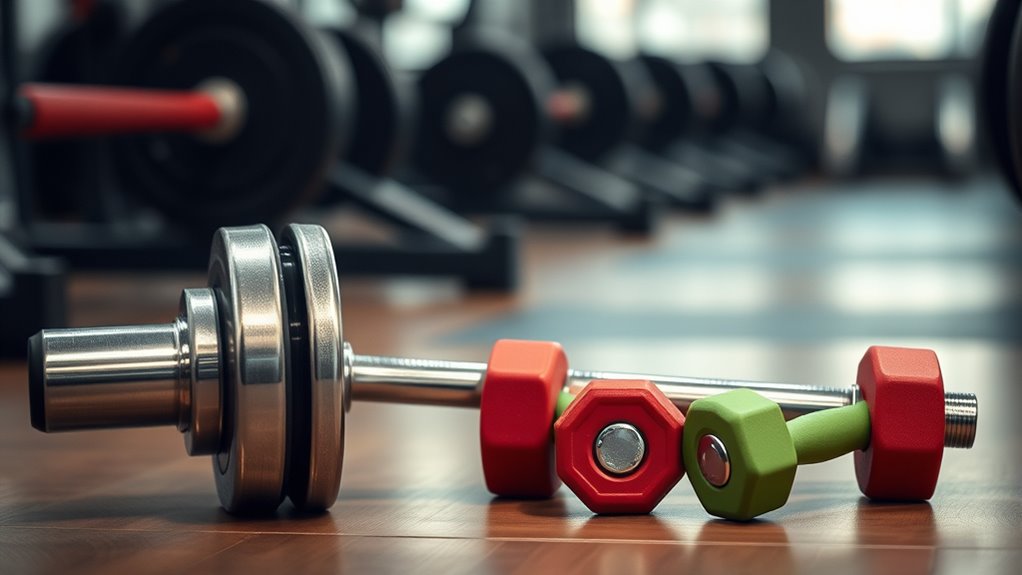

When choosing between barbells and dumbbells, consider your fitness goals. Barbells excel at building maximum strength through heavy compound lifts, while dumbbells engage more stabilizing muscles and allow a greater range of motion. Dumbbells also help correct muscular imbalances and are easier on your joints. Mixing both tools in your workouts maximizes benefits and keeps your routine fresh. If you want to explore more differences and their impacts, stick around for deeper insights.

Get workout gear delivered free with Prime
- Fast, free delivery on millions of items
- Prime Video, Amazon Music and more included
- Member-only deals all year
Key Takeaways
- Barbells allow for heavier lifts in compound movements, while dumbbells require more muscle stabilization and engagement.
- Dumbbells provide a greater range of motion, offering more natural movement patterns and reducing joint strain.
- Barbells are ideal for maximum strength development, whereas dumbbells help correct muscular imbalances by training each side independently.
- Dumbbells facilitate a wider variety of exercises, enhancing workout diversity and helping to avoid plateaus.
- The choice between barbells and dumbbells depends on individual fitness goals, emphasizing either strength or muscle stabilization.

When it comes to strength training, choosing between a barbell and dumbbell can considerably impact your workout routine. Each tool offers unique benefits, and your choice can influence how effectively you engage your muscles. Barbells typically allow you to lift heavier weights, making them ideal for compound movements like squats, deadlifts, and bench presses. These exercises target multiple muscle groups at once, promoting overall strength gains. The added stability of a barbell means you can focus more on lifting heavier, which can lead to increased muscle mass over time.
Choosing between barbells and dumbbells significantly affects your strength training, as each offers distinct advantages for muscle engagement.
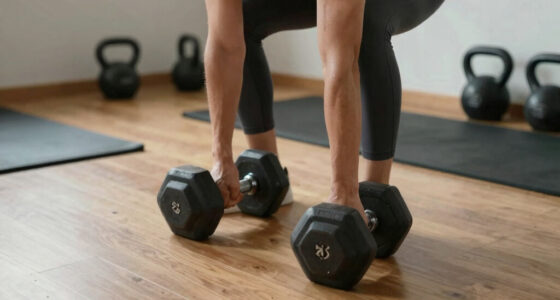
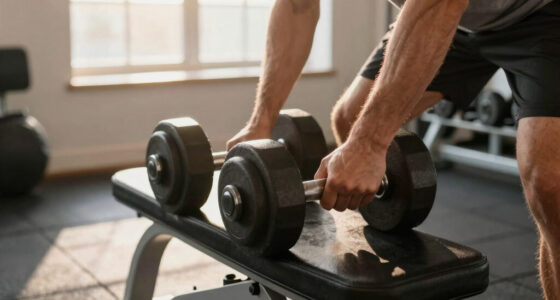
On the other hand, dumbbells provide a greater range of motion and require more muscle engagement to stabilize your movements. When you use dumbbells, each side of your body works independently, helping to correct any muscular imbalances. This is particularly beneficial if you’ve got one side that’s stronger than the other. Plus, the versatility of dumbbells allows for a wide variety of exercises, giving you the chance to mix up your routine and avoid plateaus. You can perform curls, tricep extensions, and even lunges with dumbbells, which makes them great for targeting specific muscle groups or enhancing your overall workout variety.
Another key difference lies in the way each tool impacts your joints. Dumbbells can be easier on your joints since they allow for a more natural movement pattern. You can adjust your grip and angle to suit your body’s mechanics, reducing the risk of injury. Barbells, while excellent for heavy lifting, can sometimes force your joints into positions that may not feel comfortable. If you’re concerned about joint health, incorporating dumbbells into your routine might be a better option. Additionally, understanding common repairs related to physical strain can help you maintain your strength training equipment effectively.
Ultimately, both barbells and dumbbells have their place in a balanced strength training program. If you’re looking to build maximum strength, you might lean towards barbells for those heavy lifts. But if you want to focus on muscle engagement and enhancing your workout variety, dumbbells should be your go-to. Consider alternating between the two, as this will help you reap the benefits of both tools. By doing so, you’ll create a more all-encompassing strength training regimen that promotes muscle growth, improves balance, and keeps your workouts fresh and exciting. So, weigh your options and decide which one aligns best with your fitness goals.
Frequently Asked Questions
Which Is Safer for Beginners, Barbells or Dumbbells?
Dumbbells are generally safer for beginners. They allow for a more natural range of motion, helping you maintain proper grip and balance control. With dumbbells, you’re less likely to get pinned under a weight, which can be intimidating. Plus, they promote muscle development more evenly, reducing the risk of injury. When starting out, it’s essential to feel confident and secure, and dumbbells can provide that comfort while you build strength.
Can I Build Muscle Using Only Dumbbells?
Yes, you can definitely build muscle using only dumbbells! They allow for excellent muscle activation and help you target different muscle groups effectively. With a wide range of exercises, you can create a diverse workout variety that keeps your routine engaging. Just make sure to progressively increase the weights and maintain proper form. By incorporating dumbbells into your training, you’ll not only build strength but also enhance your overall fitness.
What Equipment Is Better for Home Workouts?
For home workouts, dumbbells often win due to their versatility and compact size. They’re easier to store and require less space than barbells. You can use weighted accessories like resistance bands and kettlebells to further enhance your routine without taking up much room. If space is a concern, opt for adjustable dumbbells. They provide a range of weights while maintaining a tidy workout area, allowing you to maximize your training without clutter.
How Should I Store Barbells and Dumbbells?
“Out of sight, out of mind,” so keep your barbells and dumbbells organized! Use storage solutions like racks or shelves to prevent clutter. Make certain weights are evenly spaced to avoid damage and make access easy. For maintenance, regularly wipe them down to remove sweat and dust, and check for any signs of wear. By storing your equipment properly, you’ll extend its life and keep your workout space tidy and inviting!
Are There Specific Injuries Related to Barbells or Dumbbells?
Yes, there are specific injuries related to barbells and dumbbells. Both can lead to joint strain, especially if you don’t use proper form or lift weights that are too heavy. To prevent injuries, focus on injury prevention techniques, like warming up and gradually increasing your load. Always listen to your body; if you feel pain, stop immediately. Incorporating rest days and varying your routine can also help reduce the risk of injury.
Conclusion
In the world of fitness, barbells and dumbbells are like two knights in a grand tournament, each wielding their unique strengths. Barbells, the heavyweights, offer stability and power, while dumbbells, the agile contenders, enhance flexibility and balance. Choosing between them isn’t about picking a winner; it’s about finding the right ally for your journey. Embrace both, and you’ll forge a path to strength that’s as diverse as the challenges you’ll face along the way.
Fall Picks
fall essentials
As an affiliate, we earn on qualifying purchases.