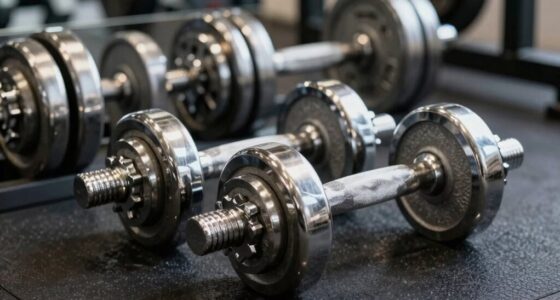
For home strength training, adjustable dumbbells can replace a rack of fixed weights, but the mechanism affects how easy they are to use and where they fit. The Bowflex SelectTech 552 and PowerBlock EXP Stage 1 both cover a broad range of common exercises, yet they make different compromises: Bowflex prioritizes straightforward dial selection and a familiar silhouette, while PowerBlock prioritizes compact storage and the option to add heavier stages.

Get workout gear delivered free with Prime
- Fast, free delivery on millions of items
- Prime Video, Amazon Music and more included
- Member-only deals all year

FITPLAM 5-in-1 Adjustable Dumbbell Set with Dual-Lock Nuts
- ✔ Dumbbell range: 6–22.5 lb per dumbbell
- ✔ Total set weight options: 20, 35, 45, 55, 70, or 90 lb
- ✔ Barbell range: 7.5–45.8 lb

UNNMIIY Adjustable 5-in-1 Dumbbell Set, 2–22.5 lb per Dumbbell
- ✔ Dumbbell range: 2–22.5 lb per dumbbell
- ✔ Configurations: Dumbbells, barbell, kettlebells, push-up stands
- ✔ Weight-piece contents: Cement and iron sand with PE exterior

FEIERDUN Adjustable Dumbbell Set with Barbell, Kettlebell, and Push-Up Stand
- ✔ Dumbbell range: 6–22.5 lb per dumbbell
- ✔ Kettlebell range: 4–19.5 lb
- ✔ Barbell range: 8–45 lb
That makes this a choice between convenience and long-term flexibility. Bowflex is the easier recommendation for people who want a simple, recognizable dumbbell for moderate loads and do not expect to outgrow its 52.5-pound ceiling. PowerBlock makes more sense for lifters who value floor space, want a firmer path to heavier weights, or can adapt to its enclosed handle design. Neither is the right purchase if you need heavy loads immediately and do not want to buy expansion kits.
At a Glance
| Criteria | Bowflex SelectTech 552 | PowerBlock EXP Stage 1 | Winner |
|---|---|---|---|
| Weight range | 5–52.5 lb per dumbbell, in 2.5 lb increments through 25 lb and larger steps above | 5–50 lb per dumbbell at Stage 1; expansion kits raise capacity | A |
| Adjustment method | Rotating dial selects the load; unused plates remain in the base | Selector pin changes the load between nested weight plates | Depends |
| Footprint and storage | Longer, traditional dumbbell profile; base needs a stable shelf or floor space | Short, compact block shape; efficient to store, though the base still needs space | B |
| Grip and exercise feel | Familiar handle and shape for many standard movements | Hand sits inside a padded frame, which can feel unusual on some movements | A |
| Expandability | Fixed at 52.5 lb; no heavier SelectTech 552 expansion path | Expandable to higher stages with separately purchased kits | B |
| Durability and care | Selector mechanism and plate alignment call for careful placement and handling | Simple pin selection, but exposed frame and handle should be kept clear of obstructions | Depends |
| Price and value | Often costs less upfront than an expandable PowerBlock setup | Higher total cost if you add stages; strong value if you use the added range | Depends |
FITPLAM 5-in-1 Adjustable Dumbbell Set with Dual-Lock Nuts
For a home gym where one set needs to cover several kinds of training, FITPLAM offers the most clearly differentiated package in this group. It converts into dumbbells, a barbell, kettlebells, weight plates, and push-up stands, while the listed storage footprint is under two square feet. That combination makes it easier to justify in a small room than a collection of separate tools. Its dual-lock nuts add a second locking step, which is a meaningful design distinction beside the other sets’ described locking nuts. Still, none of the listings independently verifies performance or safety in use, so we should treat this as a design feature, not proof of a particular outcome.The main limit is familiar across this roundup: each dumbbell tops out at 22.5 pounds. FITPLAM’s stated barbell range reaches 45.8 pounds, but that does not make it a substitute for heavier dumbbells if our pressing or rowing strength is already beyond the set’s range. Compared with UNNMIIY, FITPLAM starts at 6 pounds rather than 2, so it is less accommodating for very light work. Compared with FEIERDUN, its listed kettlebell range reaches 23 pounds and it gives a clear storage claim. We should skip it if we want fast weight changes: detachable plates and nuts require more handling than a dial system.
Pros:
- Converts into dumbbells, barbell, kettlebells, weight plates, and push-up stands.
- Dual-lock nuts provide a distinct two-step securing design.
- Listed storage footprint is under two square feet.
- PE-coated plates are described as helping protect floors and reduce noise.
Cons:
- Dumbbell load tops out at 22.5 pounds per hand.
- Plate changes and assembly are slower than quick-adjust systems.
- Foam on the barbell connector may wear with heavy use, according to the supplied product details.
Best for: Home exercisers who want several training configurations in a small storage area and value a two-step locking design.
Not ideal for: Advanced lifters who need dumbbells heavier than 22.5 pounds each, or anyone who wants rapid weight changes between sets.
Bottom line: FITPLAM is the strongest all-round home pick here when compact storage and multiple configurations matter more than fast adjustments or heavier dumbbell loading.
“FITPLAM is the strongest all-round home pick here when compact storage and multiple configurations matter more than fast adjustments or heavier dumbbell loading.”
UNNMIIY Adjustable 5-in-1 Dumbbell Set, 2–22.5 lb per Dumbbell
UNNMIIY is the easiest fit for lighter starting work because its stated range begins at 2 pounds per dumbbell. That lower entry point distinguishes it from FITPLAM and FEIERDUN, both of which list a 6-pound minimum. For new exercisers, rehabilitation-style light resistance when appropriate, or movements where smaller load steps are useful, the difference may matter more than a few pounds at the top end. Like the other two, UNNMIIY converts among dumbbells, a barbell, kettlebells, and push-up stands, so it can cover varied home sessions without requiring separate equipment.The tradeoff is that its weight pieces contain cement and iron sand rather than solid metal. The listing also specifies a foam-covered connector and textured ABS bars, but gives fewer concrete performance and storage details than FITPLAM’s explicit dual locks and under-2-square-foot claim. Against FEIERDUN, UNNMIIY has the lighter minimum load, while FEIERDUN lists its kettlebell range directly. The shared 22.5-pound-per-dumbbell ceiling remains the limiting factor for strength progression. We should choose this set for its lighter entry point, not assume that its materials or adjustment hardware will feel like a premium, fast-changing dumbbell.
Pros:
- Starts at 2 pounds per dumbbell, the lightest minimum in this comparison.
- Converts into dumbbells, a barbell, kettlebells, and push-up stands.
- Textured bars and locking nuts are specified for grip and securing plates.
- Detachable parts are designed to store in less than two square feet.
Cons:
- Maximum dumbbell load is 22.5 pounds per hand.
- Weight pieces contain cement and iron sand rather than solid metal.
- Adjusting between configurations requires handling detachable parts.
Best for: Beginners and home exercisers who want to start with lighter dumbbell loads and use one set for varied exercises.
Not ideal for: Lifters who need heavier dumbbells, prefer solid-metal weight components, or expect frequent rapid changes during circuit training.
Bottom line: UNNMIIY is the most suitable of these three when a lighter starting load matters more than premium materials or a higher weight ceiling.
“UNNMIIY is the most suitable of these three when a lighter starting load matters more than premium materials or a higher weight ceiling.”
FEIERDUN Adjustable Dumbbell Set with Barbell, Kettlebell, and Push-Up Stand
FEIERDUN makes the most sense when we already know that kettlebell work belongs in our home routine. It lists a 4–19.5-pound kettlebell range, alongside 6–22.5 pounds per dumbbell and 8–45 pounds for the barbell. Those figures help us compare expected loading across configurations, and they are more explicit than UNNMIIY’s supplied specifications for its kettlebell range. The set also converts into weight plates and a push-up stand, giving it a similarly broad role to FITPLAM’s all-in-one format.Where FEIERDUN falls behind the top pick is in the details that ease home ownership. Its dimensions are listed, but no storage-footprint claim is provided; its threaded knobs are described, but there is no dual-lock feature like FITPLAM’s. Compared with UNNMIIY, it also starts at 6 pounds per dumbbell, so it is less flexible for lighter training. The 22.5-pound dumbbell ceiling is still the same as both competitors, and the detachable plates mean adjustments involve assembly. Choose FEIERDUN for the clearly stated kettlebell range and simple multi-configuration use, while skipping it if lightweight starting loads, compactness evidence, or a more distinctive locking design is central to our decision.
Pros:
- Lists separate dumbbell, kettlebell, and barbell weight ranges.
- Converts into dumbbells, barbell, kettlebell, weight plates, and push-up stand.
- Threaded locking knobs are designed to secure the detachable plates.
- Padded connector is shaped to fit the neck during barbell use.
Cons:
- Dumbbell range begins at 6 pounds, heavier than UNNMIIY’s 2-pound minimum.
- No storage-footprint measurement is supplied.
- Plate changes require assembling detachable components; dumbbells cap at 22.5 pounds each.
Best for: Home exercisers who plan to alternate between dumbbells, barbell work, and kettlebell exercises and want the kettlebell load range stated.
Not ideal for: Beginners seeking very light dumbbells, advanced lifters needing more than 22.5 pounds per hand, or apartment users who need a confirmed small storage footprint.
Bottom line: FEIERDUN is a reasonable choice when its specified kettlebell range fits our plans, but it offers less evidence of compact storage and lighter-load flexibility than the other picks.
“FEIERDUN is a reasonable choice when its specified kettlebell range fits our plans, but it offers less evidence of compact storage and lighter-load flexibility than the other picks.”
As an Amazon Associate we earn from qualifying purchases.
Key Differences
The clearest difference is what happens as your training changes. The SelectTech 552 is a complete product within its stated range: you choose a load, lift, and return it to its tray. That makes it appealing for general fitness, accessory work and moderate strength training. Its ceiling is also firm. If your rows, presses or lower-body exercises outgrow 52.5 pounds per hand, you will need a different set of weights.
PowerBlock is a more compact starting point with a growth path. Stage 1 reaches 50 pounds per hand, slightly below Bowflex’s maximum, but optional stages can extend its capacity. That path costs extra and should be treated as part of the purchase decision, not as free future-proofing. In exchange, the block design takes up less room than many conventional adjustable dumbbells. The tradeoff is feel: the enclosed grip is not as familiar, and some users may prefer Bowflex’s open, traditional shape.
For a buyer who expects to stay below 50 pounds, Bowflex is usually the simpler value. For someone who trains hard, has limited storage and expects to need more weight later, PowerBlock is the more adaptable system. Compare the complete cost of the PowerBlock stage you are likely to need, not just the entry set, and check that its handle feel suits the movements you do most.
Detailed Comparison
Weight range (Bowflex SelectTech 552 wins — minor)
Bowflex reaches 52.5 pounds per dumbbell, while the Stage 1 PowerBlock reaches 50. The difference is minor for most home routines: both cover common presses, rows, curls and raises, and the extra 2.5 pounds at Bowflex’s top end rarely changes a beginner’s choice. PowerBlock can go heavier with expansion stages, but that is a separate purchase. Bowflex wins for maximum weight out of the box; PowerBlock wins only if you count its upgrade path.
Adjustment speed and simplicity (minor difference)
Bowflex uses a dial to select a load, while PowerBlock uses a selector pin. Both are designed to change weight between sets without handling a rack of plates. Which feels faster depends on the user’s preference and the position of the dumbbell in its base, so the gap is minor. Bowflex has the more intuitive presentation for people used to conventional dumbbells; PowerBlock is direct once its pin system is familiar. Try the control if possible, especially if quick changes are central to circuit training.
Space and storage (PowerBlock EXP Stage 1 wins — moderate)
PowerBlock’s short, block-like body is the better fit for a small workout corner or a shelf with limited depth. Bowflex’s longer shape feels more like a standard dumbbell but occupies more length. This is a moderate practical difference when storage is tight, though both require their own bases and a stable place to set them down. PowerBlock wins for compact storage; Bowflex is easier to handle for someone who wants the usual dumbbell outline.
Grip and exercise feel (Bowflex SelectTech 552 wins — moderate)
Bowflex’s open, conventional dumbbell form is more familiar for standard lifts and transitions. PowerBlock surrounds the hand with a frame and uses a padded handle, which may feel secure to some users but restrictive to others, particularly on movements where the dumbbell rotates or rests near the body. This is a moderate difference because comfort depends on hand size, exercise selection and preference. Bowflex is the safer general pick for familiar handling; test PowerBlock before buying if its frame could interfere with your routine.
Room to grow (PowerBlock EXP Stage 1 wins — major)
The SelectTech 552 stops at 52.5 pounds per hand. PowerBlock EXP can be expanded by buying additional stages, so it has the clear advantage for people who may progress to heavier loads. The gap is major for experienced lifters or anyone planning years of progressive strength work, but small for a new exerciser whose training stays within the initial range. PowerBlock wins on flexibility; its cost rises with each stage, so buy it for a realistic need rather than a vague promise to upgrade someday.
Care and durability (moderate difference)
Both systems benefit from being placed carefully into their bases and kept clear of impacts. Bowflex’s dial-and-plate system asks for attention to alignment when changing and returning weights. PowerBlock’s pin and nested plates are mechanically straightforward, though the frame can collect obstructions if stored carelessly. Neither is a substitute for fixed dumbbells in a setting where weights are routinely dropped. There is no universal winner: normal, controlled home use favors either, while rough handling makes both a poor fit.
Price and value (moderate difference)
Bowflex generally asks less upfront than a PowerBlock setup equipped for heavier loads, and its full range comes in one purchase. PowerBlock Stage 1 can be a competitive compact option if 50 pounds is enough; adding stages increases the total. Bowflex wins for predictable out-of-box value under its ceiling. PowerBlock is better value for a buyer who will use the extra capacity, since an upgrade can extend the same system instead of replacing a capped set. Price alone does not settle it: count the likely lifetime load, storage value and cost of upgrades.
Bowflex SelectTech 552: Pros and Cons
Pros:
- Traditional dumbbell shape and familiar handling
- Reaches 52.5 pounds per hand without add-on stages
- Dial selection is straightforward for many users
- Often lower upfront cost than an expanded PowerBlock setup
Cons:
- Cannot expand beyond 52.5 pounds per hand
- Longer profile takes more storage space
- Requires careful return to the base and attention to plate alignment
PowerBlock EXP Stage 1: Pros and Cons
Pros:
- Compact shape suits smaller home gyms
- Can grow to heavier loads through expansion stages
- Selector pin makes load changes direct
- A useful long-term system for lifters who expect to progress
Cons:
- Stage 1 tops out at 50 pounds per hand
- Expansion stages add to the total cost
- Enclosed grip can feel unfamiliar or restrictive
- Block shape may be less comfortable for some exercises
Who Should Choose What
Choose Bowflex SelectTech 552 if:
- You want familiar dumbbell handling for standard home workouts.
- Your likely working weights will stay below 52.5 pounds per hand.
- You want one purchase with its full weight range and do not need expansion.
- You prefer a dial and a conventional shape over an enclosed handle.
Choose PowerBlock EXP Stage 1 if:
- Your workout area has limited storage depth.
- You expect to outgrow 50 pounds and value the option to add stages.
- You are willing to pay more over time for a system that can reach heavier loads.
- You have tried the enclosed handle and find it comfortable for your main lifts.
Skip both if: You routinely need more than 50 pounds per hand now, plan to drop weights, or want the most natural feel and capacity of fixed dumbbells. Compare heavier fixed pairs or a different adjustable system built for your load.
Value for Money
For most new or intermediate home lifters, the Bowflex SelectTech 552 is the better value if its 52.5-pound ceiling covers the next several years of training. It delivers the full range in one purchase, and paying extra for PowerBlock expansion makes little sense if you are unlikely to use it. Its compactness and upgrade path justify PowerBlock’s higher total cost only when space is scarce or heavier training is a concrete goal.
Price the PowerBlock you would actually use. If Stage 1 is enough, it can be a tidy alternative with a lower storage burden. If you expect to buy additional stages soon, compare that complete cost against heavier fixed dumbbells or another adjustable set. Paying more is worthwhile when it preserves a useful, comfortable system as your strength increases; it is wasteful when the expansion capacity stays unused.
Final Verdict
Choose the Bowflex SelectTech 552 for the straightforward home setup: it feels more like a conventional dumbbell, covers common training needs and costs less than a fully expanded alternative. For the majority of buyers who do not lift beyond its ceiling, Bowflex is the clearest recommendation.
Choose PowerBlock EXP Stage 1 if storage space is your first constraint or you have a realistic plan to progress beyond 50 pounds per hand. Its expansion path is the deciding advantage, but only when you budget for the stages and like the enclosed grip. The biggest question is not which one has the cleverer selector; it is whether you will outgrow a fixed range. If yes, buy PowerBlock. If no, buy Bowflex.
Frequently Asked Questions
Are Bowflex SelectTech 552 or PowerBlock EXP better for beginners?
Both can suit beginners. Bowflex is easier to recommend if you want a familiar shape and expect to train within its range. PowerBlock is a good beginner choice if compact storage matters or you want an upgrade path, provided its enclosed handle feels comfortable.
Can PowerBlock get heavier than Bowflex SelectTech 552?
Yes. PowerBlock EXP can reach higher capacities through separately purchased expansion stages. Bowflex SelectTech 552 is capped at 52.5 pounds per dumbbell, so lifters who expect to need heavier adjustable weights have the clearer long-term path with PowerBlock.
Which adjustable dumbbells take up less space?
PowerBlock’s short block design is generally more compact than the longer Bowflex dumbbells. Both need room for their bases and safe lifting, but PowerBlock has the advantage when storage depth is limited.
Is PowerBlock worth paying more for?
It is worth the higher total cost if you need a compact set or will use the heavier expansion stages. If your training will remain under Bowflex’s 52.5-pound limit, Bowflex is usually the stronger value because its full range comes in the initial purchase.